Skip to content

Tag: research

Le sensazioni di F-Zero

Quando inizio a concettualizzare un nuovo gioco o una feature, preferisco concentrarmi sulle sensazioni piuttosto che sul numero di feature. Per me, pensare alle impressioni che un gioco lascia dopo averlo giocato è un gran modo per iniziare ad individuare i sistemi utili a realizzarlo.

  • Quale promessa emotiva facciamo al giocatore?
  • Cosa dovrebbe sentire durante e dopo una partita?

Caso: F-Zero (SNES, 1990)

Il primo passo è nominare il feeling dominante. Per F-Zero, il feeling potrebbe essere “velocità”. Ma io preferisco andare un po’ più in la: la sensazione di essere appena in controllo di qualcosa di troppo potente.

Nel gioco c’è una tensione continua tra la macchina che vorresti domare e la pista che ti sfugge. La promessa emotiva è: sei sul filo del rasoio, dimostra di esser competente.

Come si sente questo feeling nel corpo e nella mente?

La texture emotiva di F-Zero è: freddo, metallico, teso ma non ansioso, solitario, futuristico, irreversibile.

Individuiamo le adiacenze e antagonismi del campo emotivo

Attorno al target feeling ci sono emozioni che lo sostengono e emozioni che lo contraddicono.

Adiacenti a F-Zero: concentrazione intensa, adrenalina calibrata, crescita di competenza percepibile, solitudine dignitosa, futuro come estetica.

Antagonisti a F-Zero: comfort, umorismo, nostalgia, calore, casualità percepita. Se il giocatore sente che ha perso per colpa del caso e non propria, la promessa si rompe.

Come si traduce questo feeling in scelte concrete?

Cerchiamo di individuare tutti gli elementi che F-Zero mette a disposizione, la palette emotiva che i designer hanno potuto usare quando progettavano il gioco

Visuals: colori neon saturi su fondi scuri. La pista è leggibile in un frame. L’orizzonte si avvicina alla velocità della luce. Il Mode 7 offriva il linguaggio visivo della velocità stessa su quella piattaforma.

Audio: Mute City, Big Blue, Silence — synth-wave aggressivo, bpm alti, melodie forti. Il battito cardiaco del gioco. I crash sounds sono metallici e definitivi.

Ambiente: piste sospese nel vuoto. Nessun mondo vivo sotto di te: solo abisso o paesaggio lontanissimo. Lo spazio è apertissimo verticalmente e ristrettissimo lateralmente. La pista è il mondo.

Personaggi: durante la gara non esistono. Il pilota scompare dentro la macchina. I profili di Captain Falcon, Samurai Goroh, Dr. Stewart e Pico vivono solo nel manuale. Non so se fu una scelta intenzionale, forse anche per questo era uno dei giochi meno preferiti di Myiamoto. Nessuna narrativa durante il gioco, solo corsa.

Cosa spezzerebbe il mood?

È bene identificare cosa non vogliamo nel nostro gioco. Ad esempio, nel caso di F-Zero

  • Musica lenta o soffice romperebbe la tensione ritmica
  • Colori caldi o pastello contraddirebbe la promessa “futuro metallico”
  • Elementi umoristici porterebbero calore, che è il contrario esatto del freddo asettico di F-Zero
  • Narrazione durante la gara (anche una riga di testo) spezzerebbe il flusso
  • Risultati percepiti come casuali se perdo per colpa del gioco, la fantasia di controllo potrebbe crollare

Le design heuristics

Dal canvas si ricavano principi brevi, riutilizzabili in fase di revisione:

  1. Velocità > comfort
  2. Leggibilità > dettaglio visivo
  3. Tensione senza ansia: il gioco può essere difficile, ma la colpa è sempre tua
  4. Futuro come estetica: non spiegarlo, mostrarlo
  5. La macchina è il personaggio: qualsiasi feature che aggiunga umanità al pilota durante la gara è un anti-pattern

Come mai F-Zero fu memorabile?

Il motivo è che ogni scelta (grafica, sonora, meccanica) serve la stessa promessa emotiva. Non c’è nulla di superfluo, ma soprattutto non c’è nulla che contraddica.

E il punto di questo post, il motivo per cui ti passo questo emotional canvas è proprio questo. I giochi di oggi costano sempre di più, secondo me dal punto di vista design sarebbe bene pensare meglio a queste cose, prima ancora di pensare a tutti i componenti di cui abbiamo bisogno.

Il design migliore fa la cosa giusta con tutta la forza disponibile.
Il Taglio del Giocatore

Matthew Ball è diventato il Chief Strategy Officer di XBOX. In una recente intervista al Summer GameFest 2026, ha dichiaratp: sappiamo cosa vogliamo fare, ma non siamo ancora pronti a dirlo al mondo.

Rispetto la trasparenza. Ma il problema che vedo io riguarda l’intera industria. I giochi moderni continuano a essere progettati con un’aspettativa implicita: che il giocatore abbia voglia, tempo e pazienza di percorrere un’esperienza lineare dall’inizio alla fine. Un’avventura, un RPG, un narrative game. Ti sediamo davanti a un’opera che va vissuta come un film lungo 60+ ore. Il contratto sociale è quello.

Io lo capisco. Final Fantasy VII, The Legend of Zelda, GTA — erano esperienze in cui abitare. Ma chi sono i giocatori di oggi? Non sono io a 13 anni. Sono ragazzi cresciuti su Roblox, Minecraft, TikTok. Nessuna di queste piattaforme richiede di iniziare dall’inizio per avere senso. Le esperienze sono modulari, riavviabili, frammentate.

Roblox non ha un finale. Minecraft non ha una storia principale. Nemmeno TikTok ha un episodio 1. Queste sono feature architetturali che rispecchiano come le nuove generazioni consumano l’esperienza digitale.

Il taglio del giocatore

Ho avuto un’idea semplice e forse un po’ radicale. E se progettassimo un gioco lungo — un RPG, un’avventura — non per essere abbreviato, ma per essere tagliato dal giocatore stesso?

La regola di base: non si tratta di togliere contenuto. Si tratta di dare al giocatore gli strumenti per montare la propria esperienza.

Caratteristiche del sistema

Build paths differenziati. Un guerriero e un mago nella stessa avventura dovrebbero avere percorsi diversi. Immagina quindi la stessa storia, ma filtrata attraverso le competenze del personaggio. Scegli un personaggio e giochi una fase a seconda delle sue caratteristiche. Poi passi alla successiva, oppure rigiochi la stessa sezione con un altro specialista.

Entry points narrativi. Come in una serie TV con episodi autoconclusivi, ogni sessione dovrebbe avere un inizio e una fine riconoscibili. Il giocatore che torna dopo tre settimane non deve ricominciare daccapo mentalmente: può rientrare da un punto di accesso progettato, con un breve recap contestualizzato.

Ritmo variabile, non difficoltà variabile. All’inizio di ogni sessione, il gioco ti chiede implicitamente: hai 20 minuti o tre ore? Il flusso si adatta. È rispetto del tempo reale del giocatore.

Skip intelligente senza penalità. Se hai già completato una quest simile, oppure se la fase è noiosa, il sistema ti permette di riassumere e saltare (senza perdere ricompense, possibilmente). La scelta è sempre tua. Il gioco non ti punisce per averla presa.

Il taglio come agency. La verità è questa: nei giochi la libertà sta in quello che decidi di non fare. I giochi cinematografici corrono il rischio di ridursi a map marker, checklist, indicatori di completamento, eccetera. Tutto progettato per assicurarsi che tu non salti niente.

Cosa risolverebbe questo sistema?

La paura dell’industria è: meno contenuto = meno valore percepito = meno acquisti. Ma guardate Roblox. Ogni singola esperienza dura 15–30 minuti, e la piattaforma è “infinita”. L’architettura modulare moltiplica il valore. Un RPG da 80 ore che rispetta i tuoi ritmi vale più di uno da 80 ore che ti fa sentire in colpa quando smetti.

Matthew Ball si è rifiutato di rispondere a molte domande. Ma quella che il conduttore non gli ha fatto è questa: state ripensando il formato del prodotto, o solo la piattaforma?

Perché se i giochi continuano ad aspettarsi un giocatore che si siede per 40 ore di fila, non perderete le nuove generazioni a causa di Roblox. Le perderete perché non avete cambiato il linguaggio. Roblox è solo la lingua che loro già parlano.

Ocarina of Time: lezione magistrale su come progettare una tragedia

C’è un articolo di Renan Fontes su Goomba Stomp che analizza The Legend of Zelda: Ocarina of Time come tragedia classica. Link perde l’infanzia per salvare un mondo al quale non può più tornare, e anche quando Zelda lo rimanda indietro nel tempo, è la conferma definitiva della perdita.

Vale la pena leggerlo. Io l’ho fatto in occasione dell’annuncio del remake di questo grande classico.

Il meccanismo tragico

Il nucleo della tesi di Fontes è semplice: Link è un orfano di guerra, già separato dai Kokiri ancora prima che la storia inizi. La Spada del Coraggio lo punisce per la sua impazienza con sette anni di sonno. Risvegliandosi adulto in un Hyrule devastato, è diventato qualcun’altro.

Nel finale, Zelda rimanda Link al passato, ma Navi se ne va esattamente in quel momento. Anche se potessi tornare bambino, tu non saresti più lo stesso. Il tempo non si può non vivere.

Questa sensazione non arriva dalla narrativa scritta in sé, ma da come il gioco è stato costruito intorno a un’identità emotiva coerente, e da come i picchi memorabili sono stati distribuiti con cura.

Peak-End: i momenti che restano

La psicologia del peak-end ci dice che le persone non ricordano un’esperienza come la media di ogni secondo vissuto. Ricordano i picchi emotivi e il finale. Il resto si sedimenta, ma non determina il giudizio.

In OoT, il picco è probabilmente la partenza di Navi. È il silenzio nel Tempio del Tempo quando il mondo riprende forma. È Saria che dice addio senza sapere che è un addio definitivo.

Un gioco mediocre avrebbe messo il picco emozionale nella boss fight. OoT lo mette nella perdita silenziosa. Il finale (Link bambino nel cortile del castello, Zelda che lo guarda da lontano) non chiude niente. Lascia aperta una ferita. Quella ferita che i giocatori portano con sé per decenni. La stessa che a me personalmente cambiò i connotati interiori.

Lezione: il picco più potente spesso non coincide con il climax meccanico. Se vuoi che un’esperienza venga ricordata in un certo modo, progetta la memoria, piuttosto che l’evento.

La promessa emotiva

OoT ha un’identità emotiva precisa: malinconia eroica. La sensazione che crescere costi qualcosa di irrecuperabile, e che il coraggio non ti salvi dal pagarlo.

Ogni elemento del gioco è caricato con quell’atmosfera. La musica (Saria’s Song, il Bolero of Fire, la Canzone del Tempo) anticipa l’azione e la commenta. I templi sembrano luoghi abbandonati da qualcuno che amava ancora stare lì. Hyrule Field di notte è grande e silenziosa come una promessa che potrebbe non mantenere.

Quando un gioco sa qual è la sua promessa emotiva, ogni scelta diventa coerente. I colori, il silenzio nei dialoghi, la distanza tra i personaggi sono vettori della stessa sensazione.

Lezione: assieme alla progettazione di meccaniche o sistemi, vale la pena nominare in modo preciso l’emozione che vuoi lasciare dietro. Raccomando qualcosa di specifico. Questo può dar luogo a conversazioni scomode con il team o i superiori. Ma è importante.

Player Need Satisfaction: perché la perdita fa male

La Self-Determination Theory divide i bisogni psicologici fondamentali in tre aree: autonomia (sento di agire), competenza (sento di migliorare), relazionalità (sento di appartenere).

OoT è una tragedia anche perché li soddisfa tutti e tre, per poi rimuoverli prima dei titoli di coda.

Hai autonomia: scegli dove andare, quando tornare, come usare gli strumenti. Hai competenza: diventi adulto, batti nemici impossibili, padroneggi magie. Hai relazionalità: Saria, Navi, Malon, i sages; una rete di legami costruita pezzo per pezzo.

Poi il gioco smonta tutto.

  • Saria è intrappolata nella foresta per sempre
  • Navi se ne va senza spiegazioni
  • Zelda ti manda indietro, ma la versione di te che ha vissuto quei sette anni non può tornare.

Lezione: la perdita in un gioco fa male in proporzione a quanto il giocatore aveva investito nel costruire qualcosa. Se vuoi che un finale tragico abbia peso, i bisogni psicologici devono essere stati soddisfatti prima di essere negati.

Conclusione

Fontes ha scritto un’analisi narrativa. Ma sotto c’è qualcosa di più interessante: OoT funziona come tragedia perché le scelte di design e le scelte narrative puntano nella stessa direzione. È coerenza. Ed io sono felice che mia figlia possa rivivere in versione aggiornata questa grande esperienza.

Leggi l’articolo originale su Goomba Stomp

Non fatevi distrarre

Questa settimana c’è stato il Sony State of Play, ed è stato presentato il nuovo God of War. Il gioco presenta come protagonista la moglie di Kratos, e come companion un cubo, diverso da quello che ci si aspetterebbe. Dopo l’evento scrollavo su LinkedIn, e gli “esperti” avevano tutti la loro da dire. Il personaggio è sbagliato. Il cubo non ha senso. Cambiare il sesso del protagonista non ha mai funzionato con altri franchise.

Guardare la reazione di una persona che ha realmente lavorato al gioco vale più di cento post LinkedIn messi insieme. Sinceramente, sono un po’ stanco delle persone che usano questa capacità degli algoritmi di spingere post polemici. Soprattutto quando quelle persone non fanno videogiochi, non stanno nella trincea. Preferisco sentire la passione di chi sui giochi ci lavora davvero.

Altra cosa che voglio far notare è che Santa Monica Studios ha dimostrato ampiamente di essere capace di far giochi di successo. Dovremmo tutti rispettare l’esperienza e riconoscere che chi ne sa più di noi ha probabilmente ragione. Io sto smettendo di seguire podcast e canali che fanno solo polemiche, perchè distraggono da ciò che importa.

Freshness is safer in ideation stage

When two medics decided to make Baldur’s Gate, they didn’t have experience with CRPGs. When Mr. Myiamoto directed FZero on SNES he wasn’t a veteran in racing games. When a marketing guy from Ubisoft decided to make a realistic-style JRPG together with a programmer, he didn’t have previous experience in the genre.

Still, many companies publish job offers for specific positions requiring previous experience in the specific genre they are developing. It’s because of the belief that higher skill means faster results, and more important, less risks. This happens a lot on high-quality games and mobile F2P, because these business models became managed in a McKinsian way. And that, kids, is why they are in trouble.

Still, games like PRAGMATA are showing that there are audiences eager to new experiences, with unique blends of mechanics. I don’t know their stories, but I am playing the game and I wouldn’t be surprised if among their team there are designers with no previous experience with 3D action-adventure games. Video games like PRAGMATA are only possible when you are open to a completely different perspective, and when you let people work. I believe it’s hard to find this fit if your job offer filters opportunities out.

Experience within a genre is very important, don’t get me wrong. But the more I work, the more I realize I am full of biases. The more experience I get, the more I push for research and playtesting. New audiences are playing in ways often ignored by a big portion of developers, a sort of tunnel vision you have when you make always the same thing over and over.

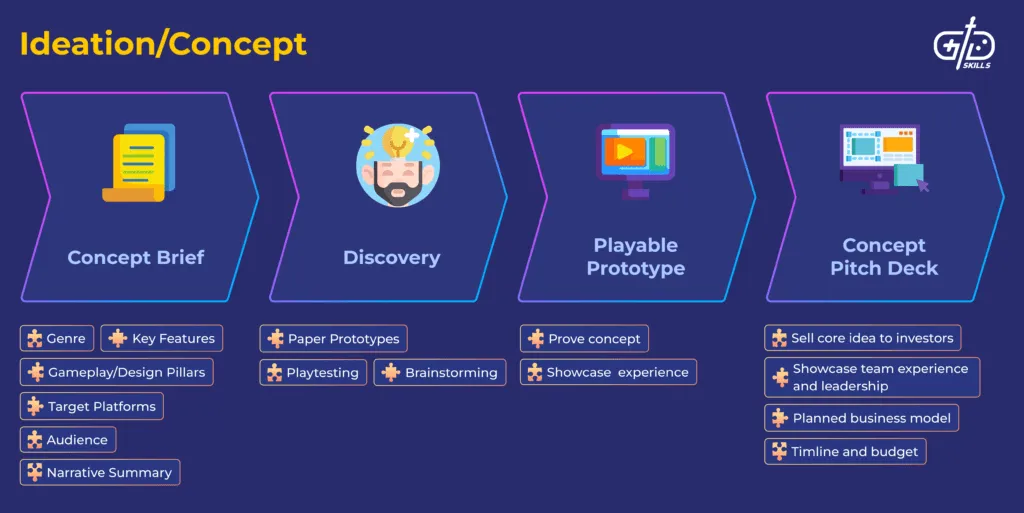
read more: https://gamedesignskills.com/game-development/stages-of-game-development-process/

This is one of the reasons that led me to be a freelancer, also if it comes with a price as everything good in our life. Probably the worst one is when a client wants me to tell them the hour using their own clock. They close to proposal, because they don’t really understand (and they actively ignore) the opportunities of ideation stage.

A potential use case for Microsoft

I read the last email that the new CEO of XBox sent to her employees. It is honestly an inspiring take on what’s next for XBOX, I am positive about this person. Maybe the fact she is not a games veteran is good for her actual position. Or maybe I am just a dreamer, I don’t know.

There is one use case that I believe they can tackle pretty “easily”, and position themselves like the platform for everyone they want to become. There are successful f2p midcore titles that occupy too much space on the smartphone. Often they require the latest models to run at the higher quality. I believe that the f2p player doesn’t care of having a copy of what he is playing.

If XBOX manages to become the platform from which you can play the “Genshin Impacts” of the future in cloud on streaming, and maybe engage with mods and UGC for your fav games, there is the chance from them to become THE platform of the future. A sort of Roblox for Mobile f2p games. Of course, there are lots of limitation that may come from Apple and Google. Still, if they manage to do this right, they can really disrupt the market in my opinion.

Three loops of Expedition 33

These days I am playing Clair Obscur: Expedition 33 pretty intensively (when other 40y-old-man-duties permit) these days. And I am also completing my bootcamp on videogames design and conceptualization. A class I gave was based on the 3 main loops of a game, and today I want to apply this knowledge to the 2025 GOTY.

Moment-to-moment (second-to-second)

This first loop is the central one, and it describes what the player does the most. You can say it describes the core dynamic, somehow. In case of Expedition33:

  • Action: Reactive turn-base combat
  • Challenge: groups of nevrons (enemies)
  • Reward: skill points, loot

WHY to repeat this loot: the game is divided in zones within an open world, the Player wants to complete the zone to unlock the next.

Core loop

The core loop is what the Player does the most during the game and gives meaning to the moment-to-moment loop. We can say that it considers the game session as a whole.

  • Action: Improve team stats
  • Challenge: complete zone sections
  • Reward: Advance with the story

WHY to repeat this loot: as any good JRPG it’s about the map! You want to play to unlock new venues and discover new places into the map.

Metagame loop

This loop describes what keeps the Players engaged, what makes them think “I need to return back into the game because I want to…”. Describes the features and mechanics that make me think into the game when I am not playing it. In the case of Expedition33:

  • Action: defeat bosses
  • Challenge: what will happen in the story?
  • Reward: plot twists and secrets discoveries

WHY to repeat this loot: the game is one great adventure story!

A simple idea for AI in games

Of the many applications of AI in games, I am more interested in those that can unlock new form of experiences. First thing that comes to mind is narrative, of course, but since as a developer you are paying for hosting a server with an LLM I think you need to focus more on the return of the investment on that infrastructure.

One idea is to have new forms of special offers related with the fact that you can or cannot engage with certain systems within a game. Maybe you played heavily during the last event, but you have no time this week. You can say it, and the system can find special solutions for you. Just one example.

In the blacksmith’s house, a wooden skewer

The recent stock market fluctuations following the arrival of AI tech that promises to generate interactive worlds from simple prompts speak volumes about the current lack of video game literacy.

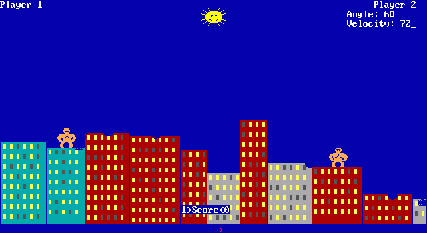
Almost every veteran I know—myself included—started by modding, not just “creating.” My journey began with Q-Basic to tweak Gorillas, then modifying voices in Worms, creating custom avatars for Baldur’s Gate, and hacking Diablo hash codes.

https://en.wikipedia.org/wiki/Gorillas_(video_game)

The best designers were often protagonists of the modding scene, diving into forums to figure out how to add value to the games they loved.

We’ve seen this cycle before. Tech giants often launch “revolutionary” gaming projects to fuel corporate career leaps, only to abandon them when the next trend arrives. But the real issue is the demand for shortcuts. Some entrepreneurs will try to use Genie3 to chase quick profits with flashy trailers, and some might even succeed in the short term.

Long-term success belongs to those who actually expand the horizons of gaming.

Reaching new audiences and solving the distribution puzzle requires more than a “genie.” It requires deep knowledge. While technocrats push “prompting and scrolling,” the smartest players are busy mastering history, philosophy, and art.

My advice? If you want to break into the market, stop looking for shortcuts. Work hard to engage your audience and start by modding what already exists. Read history books, and myths. Rack your brains, expose your work, and take risks.

You are far more likely to find success through craftsmanship than by playing a “word slot machine” and hoping for a believable game.

My take on Highguard

I was watching the last Deconstructor of Fun podcast, shooter monthly, on Highguard.

I downloaded the game days ago, completed the tutorial and played three matches. I am not really into hero shooters, but I have to admit that I also had the sensation, as these expert say, that the game was not properly play tested. Which is a common issue in the industry that leads to many games to fail miserably. You need to engage with your future clients, especially with service games. You cannot simply launch early access anymore, early access in current market is perceived as a full launch, especially if you game has been announced in “pompa magna” at The Game Awards by Jeff Keighley in person.

Regarding the market segmentation

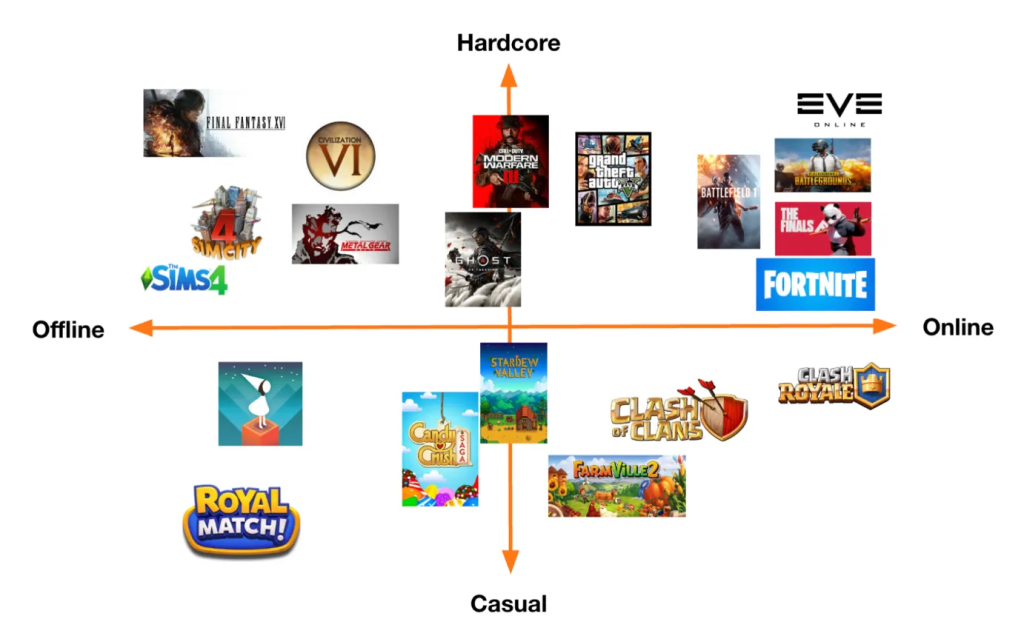
The experts seem to agree (but not fully) on the fact that there are just two kind of profitable shooter genres: tactical and battle royale. I am not sure about that, I prefer this Owen Mahoney’s segmentation:

Owen Mahoney’s view of the industry

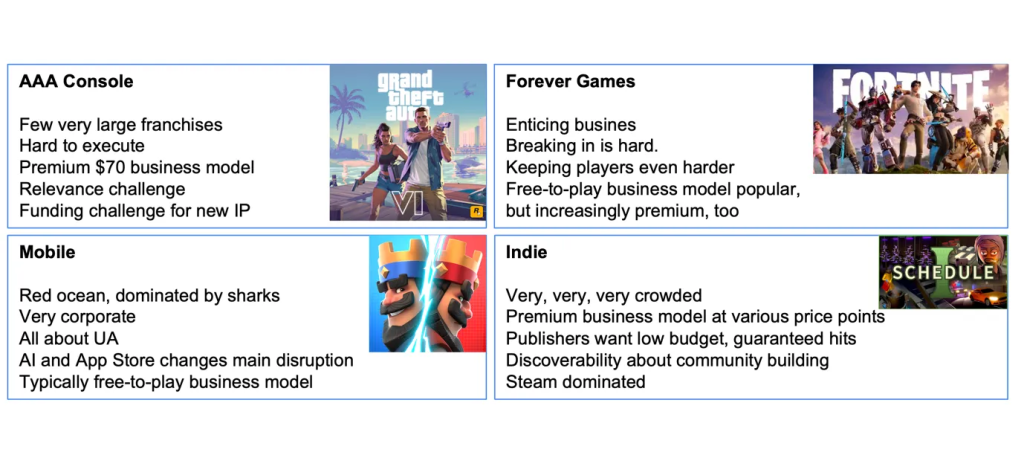
I believe that shooter as a genre fits in at least 2 quadrants: online and offline hardcore. Nicholas Lovell also has his view on the industry in general.

Nicholas Lovell’s view on the industry

And we know there are AAA fps, forever fps like Fortninte, mobile FPS, and also indies who build on top of boomer shooters. Finally, there is Christopher Dring view of the industry:

watch here: https://www.thegamebusiness.com/p/there-is-no-such-thing-as-a-video

Under this lens, I see games like STALKER being fps with stories. Fortnite and so on, are for socializing, but also competition/sport. COD and Battlefield as well. Boomer shooters are for passing the time, especially indies like this one.

I believe that the market is more complex and varied than the one pictured by Phillip Black in the DoF shooter monthly podcast.

What I do believe about the game modes

In the podcast, they insisted that the right number of people should be 5vs5 or 3vs3vs3, and I agree with them. But I believe that are also other problems with general game pacing:

  • Mining crystal is not the best during a shooter session, in my humble opinion. I know it’s a basic in Fortnite, but there you can then build things instantly. Here, instead, is to buy stuff from a vendor.
  • The vendor itself is slow and boring, can be put in another place
  • Upgrading/reparing walls is not so exciting, too.

First idea I would try to pitch and eventually design is to buy weapons and repair walls when you die. You die and while you wait, your “soul” can repair stuff. I know, maybe you prefer to watch what is happening, but that can be an extra cam or something while you fix things.

Another thing I noticed is that the most exciting part is when you raid or you need to defend from a raid. Still, I had the feeling that the attackers, the raiders, were stronger than the defenders. Maybe it’s just psychological, but I would like to try something asymmetrical, like 3vs5 (5 defenders).

Running on the horse while shooting is also cool, I remember that from RDR2, which lead designer works for Highguard. Maybe there can be the moment of earning crystals instead of mining.

3 ideas I would pitch:

  1. Buy weapons and manage base on death
  2. Asymmetrical raids
  3. Earn crystals while killing people from the horse

Maybe these would create more exciting/unique moments for Highguard.