Skip to content

Tag: research

قطع اللاعب

كُتبت هذه المقالة أصلاً باللغة الإيطالية بقلم Paolo Gambardella. تمت ترجمتها بواسطة وكيل ذكاء اصطناعي وقد تحتوي على أخطاء.

ماثيو بول أصبح كبير مسؤولي الاستراتيجية في Xbox. في مقابلة حديثة خلال Summer GameFest 2026، صرّح قائلاً: نحن نعرف ما نريد فعله، لكننا لسنا مستعدين بعد لإخبار العالم.

أحترم هذا الصراحة. لكن المشكلة التي أراها تتجاوز Xbox وتطال الصناعة بأسرها. الألعاب الحديثة لا تزال تُصمَّم بافتراض ضمني: أن اللاعب لديه الشهية والوقت والصبر الكافي لاجتياز تجربة خطية من أولها إلى آخرها. مغامرة، RPG، لعبة سردية. تجلس أمام عمل يُفترض أن تعيشه كأنه فيلم يمتد لأكثر من 60 ساعة. هذا هو العقد الضمني بينك وبين اللعبة.

أفهم ذلك تماماً. Final Fantasy VII، وThe Legend of Zelda، وGTA — كانت تجارب تسكن فيها وتعيش داخلها. لكن مَن هو اللاعب اليوم؟ ليس أنا في سن الثالثة عشرة. بل شبابٌ ترعرعوا على Roblox وMinecraft وTikTok. لا واحدة من هذه المنصات تشترط أن تبدأ من الصفر كي تفهمها. التجارب فيها معيارية وقابلة للاستئناف في أي لحظة ومجزّأة بطبيعتها.

Roblox ليس لها نهاية. Minecraft ليس فيها قصة رئيسية. وحتى TikTok لا يوجد فيها “الحلقة الأولى”. هذه سمات معمارية تعكس بدقة كيف تستهلك الأجيال الجديدة التجربة الرقمية.

مونتاج اللاعب

خطر لي فكرة بسيطة وربما جذرية بعض الشيء. ماذا لو صمّمنا لعبة طويلة — RPG أو مغامرة — لا بهدف اختصارها، بل لكي يُعيد اللاعب نفسه مونتاجها؟

القاعدة الأساسية: لا يتعلق الأمر بحذف المحتوى. بل بمنح اللاعب الأدوات ليُركّب تجربته الخاصة.

مواصفات النظام

مسارات بناء متمايزة. المحارب والساحر في المغامرة ذاتها يجب أن يسلكا طريقين مختلفين. تخيّل القصة نفسها، لكنها تُصفَّى عبر قدرات الشخصية. تختار شخصيتك فتلعب مرحلة وفق خصائصها، ثم تنتقل إلى التالية، أو تُعيد اللعب في المقطع ذاته بمتخصص آخر.

نقاط دخول سردية. كما في المسلسل الذي يكتفي كل حلقة بنفسها، ينبغي أن يكون لكل جلسة بداية ونهاية واضحتان. اللاعب الذي يعود بعد ثلاثة أسابيع لا يحتاج إلى إعادة ترتيب الأحداث في ذهنه من الأول: يمكنه الدخول من نقطة وصول مُصمَّمة لذلك، مع ملخص سياقي مختصر.

إيقاع متغير، لا صعوبة متغيرة. في بداية كل جلسة، تسألك اللعبة ضمنياً: هل معك 20 دقيقة أم ثلاث ساعات؟ وتتكيّف التجربة بناءً على ذلك. هذا احترام حقيقي لوقت اللاعب.

تخطّي ذكي بلا عقوبة. إذا أكملت مهمة مشابهة من قبل، أو كانت المرحلة مملة، يتيح لك النظام تلخيصها والتخطي عنها دون أن تخسر مكافآتها. القرار دائماً بيدك، واللعبة لا تُعاقبك على اتخاذه.

المونتاج بوصفه حرية اختيار. الحقيقة هي هذه: في الألعاب، الحرية الحقيقية تكمن فيما تقرر ألّا تفعله. الألعاب السينمائية تجازف بأن تتحوّل إلى مجرد علامات على الخريطة، وقوائم مهام، ومؤشرات إتمام، وما شابه ذلك. كل شيء مُصمَّم لضمان ألّا تفوّتك شاردة ولا واردة.

ماذا يحلّ هذا النظام؟

خشية الصناعة هي: محتوى أقل = قيمة مُدركة أقل = مبيعات أقل. لكن انظروا إلى Roblox. كل تجربة فيها تستمر 15 إلى 30 دقيقة، والمنصة “لا نهاية لها”. البنية المعيارية تُضاعف القيمة. لعبة RPG مدتها 80 ساعة تحترم إيقاعك تستحق أكثر بكثير من لعبة بالعدد ذاته من الساعات تجعلك تشعر بالذنب كلما أوقفتها.

ماثيو بول رفض الإجابة عن كثير من الأسئلة. لكن السؤال الذي لم يطرحه عليه المحاور هو هذا: هل تُعيدون التفكير في صيغة المنتج نفسه، أم في المنصة فحسب؟

لأنه إذا واصلت الألعاب افتراض وجود لاعب مستعد للجلوس 40 ساعة متواصلة، فلن تخسروا الأجيال الجديدة بسبب Roblox. ستخسرونهم لأنكم لم تغيّروا لغتكم. Roblox ليست المنافس — بل هي اللغة التي يتحدثونها أصلاً.
أوكارينا الزمن: درس في كيفية تصميم مأساة

كُتبت هذه المقالة أصلاً باللغة الإيطالية بقلم Paolo Gambardella. تمت ترجمتها بواسطة وكيل ذكاء اصطناعي وقد تحتوي على أخطاء.

ثمة مقال بقلم رينان فونتيسعلى Goomba Stomp يحلّل The Legend of Zelda: Ocarina of Time بوصفها مأساةً كلاسيكية. لينك يخسر طفولته كي ينقذ عالمًا لن يستطيع العودة إليه، وحتى حين تُعيده زيلدا إلى الوراء في الزمن، فذلك ليس إلا تأكيدًا نهائيًا على ما ضاع.

يستحق القراءة. وقد قرأتُه بمناسبة الإعلان عن ريميك هذا الكلاسيكي العظيم.

الآلية المأساوية

جوهر أطروحة Fontes بسيط: لينك يتيم حرب، منفصل عن الكوكيري حتى قبل أن تبدأ القصة. سيف الشجاعة يعاقبه على تسرّعه بسبع سنوات من النوم. حين يستيقظ بالغًا في هايرول المُدمَّرة، يكون قد أصبح شخصًا آخر.

في الخاتمة، تُعيد زيلدا لينك إلى الماضي، لكن نافي تغادر في تلك اللحظة بالذات. حتى لو أمكنك العودة طفلًا، أنت لن تكون الشخص ذاته بعد الآن. الزمن لا يمكن أن يُعاش مرتين.

هذا الإحساس لا يصدر عن النص المكتوب في حد ذاته، بل عن طريقة بناء اللعبة حول هوية عاطفية متسقة، وعن الكيفية التي وُزِّعت بها اللحظات الذروة بعناية.

الذروة والنهاية: اللحظات التي تبقى

يُخبرنا علم نفس الذروة والنهاية أن الناس لا يتذكرون تجربةً ما كمتوسط كل لحظة عاشوها. يتذكرون الذروات العاطفية والنهاية. كل ما بينهما يترسّب، لكنه لا يحكم الحكم.

في OoT، الذروة هي على الأرجح رحيل نافي. هي الصمت في معبد الزمن حين يستعيد العالم شكله. هي سارية تودّع دون أن تعلم أنه وداع أبدي.

لعبة متوسطة كانت ستضع الذروة العاطفية في معركة الزعيم. OoT تضعها في الخسارة الصامتة. النهاية — لينك طفلًا في فناء القلعة، وزيلدا تراقبه من بعيد — لا تُغلق شيئًا. تترك جرحًا مفتوحًا. ذلك الجرح الذي يحمله اللاعبون معهم لعقود. الجرح نفسه الذي غيّر شيئًا في أعماقي أنا شخصيًا.

درس: الذروة الأقوى كثيرًا ما لا تتزامن مع الكليماكس الميكانيكي. إن أردت أن تُتذكَّر تجربة ما بطريقة معينة، فصمِّم الذاكرة، لا الحدث.

الوعد العاطفي

لـ OoT هوية عاطفية محددة: الحنين البطولي. الشعور بأن النضج يكلّفك شيئًا لا يمكن استرداده، وأن الشجاعة لن تُعفيك من دفع ثمنه.

كل عنصر في اللعبة محمّل بتلك الأجواء. الموسيقى (Saria’s Song، وBolero of Fire، وأغنية الزمن) تسبق الحدث وتُعلّق عليه. المعابد تبدو أماكن هجرها أناس كانوا لا يزالون يحبون البقاء فيها. Hyrule Field ليلًا رحبة وصامتة كوعد قد لا يتحقق.

حين تعرف لعبة ما وعدها العاطفي، تصبح كل خيارة متسقة. الألوان، والصمت في الحوارات، والمسافة بين الشخصيات — كلها ناقلات للإحساس ذاته.

درس: إلى جانب تصميم الميكانيكيات والأنظمة، يستحق الأمر أن تُسمّي بدقة العاطفة التي تريد أن تتركها خلفك. أنصح بشيء محدد. قد يُفضي هذا إلى نقاشات غير مريحة مع الفريق أو المسؤولين. لكنه ضروري.

إشباع احتياجات اللاعب: لماذا تؤلم الخسارة

تُقسّم نظرية تقرير الذات الاحتياجات النفسية الأساسية إلى ثلاثة محاور: الاستقلالية (أشعر أنني أتصرف بإرادتي)، والكفاءة (أشعر أنني أتطور)، والانتماء (أشعر أنني جزء من شيء).

OoT مأساة أيضًا لأنها تُشبع الثلاثة، ثم تنتزعها قبل تترات النهاية.

لديك استقلالية: تختار إلى أين تذهب، ومتى تعود، وكيف تستخدم أدواتك. لديك كفاءة: تصبح بالغًا، وتهزم أعداءً يبدون مستحيلين، وتُتقن السحر. لديك انتماء: سارية، ونافي، ومالون، والحكماء — شبكة علاقات بُنيت قطعة قطعة.

ثم تفكّك اللعبة كل شيء.

  • سارية محاصرة في الغابة إلى الأبد
  • نافي ترحل بلا تفسير
  • زيلدا تُعيدك إلى الوراء، لكن النسخة منك التي عاشت تلك السنوات السبع لا يمكنها العودة.

درس: الخسارة في اللعبة تؤلم بقدر ما استثمر اللاعب في بناء شيء ما. إن أردت لنهاية مأساوية أن يكون لها ثقل، يجب أن تكون الاحتياجات النفسية قد أُشبعت قبل أن تُنتزع.

خاتمة

Fontes كتب تحليلًا سرديًا. لكن تحته شيء أكثر إثارة للاهتمام: OoT تعمل كمأساة لأن خيارات التصميم وخيارات السرد تسير في الاتجاه ذاته. هذا هو الاتساق. وأنا سعيد لأن ابنتي ستستطيع أن تعيش هذه التجربة العظيمة في نسختها المحدَّثة.

اقرأ المقال الأصلي على Goomba Stomp

لا تدعوا أنفسكم تنحرفون عن التركيز

كُتبت هذه المقالة أصلاً باللغة الإيطالية بقلم Paolo Gambardella. تمت ترجمتها بواسطة وكيل ذكاء اصطناعي وقد تحتوي على أخطاء.

هذا الأسبوع انعقد حدث Sony State of Play، وكان من أبرز ما عُرض فيه الجزء الجديد من God of War. اللعبة تضع زوجة كراتوس في دور البطولة، ويرافقها مكعّب بدلاً من الرفيق المعتاد الذي قد يتوقعه المرء. بعد الحدث، كنت أتصفح LinkedIn، وكان لكل “خبير” رأيه الجاهز. الشخصية غلط. المكعب ما له معنى. تغيير جنس البطل ما نجح يوماً مع أي franchise أخرى.

مشاهدة ردة فعل شخص عمل على اللعبة فعلاً تساوي مئة بوست على LinkedIn مجتمعين. بصراحة، بدأت أتضايق من الناس الذين يستغلون قدرة الخوارزميات على تضخيم المحتوى الجدلي. خصوصاً حين يكون هؤلاء الناس بعيدين كل البعد عن صناعة ألعاب الفيديو، لم يختبروا العمل الميداني فيها يوماً. أنا أفضّل أن أسمع شغف من يعمل على الألعاب فعلاً.

شيء آخر أودّ الإشارة إليه: Santa Monica Studios أثبتت بما لا يدع مجالاً للشك أنها قادرة على صنع ألعاب ناجحة. كلنا يجب أن نحترم الخبرة ونُقرّ بأن من يعرف أكثر منا على الأرجح محق. أنا شخصياً بدأت أتوقف عن متابعة البودكاست والقنوات التي لا تقدم سوى الجدل والانتقادات، لأنها تُشتّت الانتباه عمّا يهم حقاً.

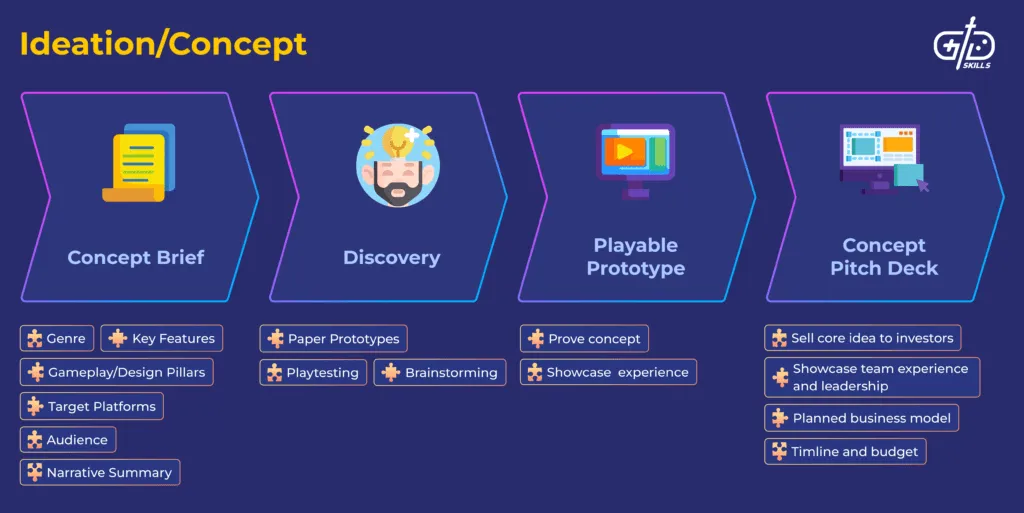
Freshness is safer in ideation stage

When two medics decided to make Baldur’s Gate, they didn’t have experience with CRPGs. When Mr. Myiamoto directed FZero on SNES he wasn’t a veteran in racing games. When a marketing guy from Ubisoft decided to make a realistic-style JRPG together with a programmer, he didn’t have previous experience in the genre.

Still, many companies publish job offers for specific positions requiring previous experience in the specific genre they are developing. It’s because of the belief that higher skill means faster results, and more important, less risks. This happens a lot on high-quality games and mobile F2P, because these business models became managed in a McKinsian way. And that, kids, is why they are in trouble.

Still, games like PRAGMATA are showing that there are audiences eager to new experiences, with unique blends of mechanics. I don’t know their stories, but I am playing the game and I wouldn’t be surprised if among their team there are designers with no previous experience with 3D action-adventure games. Video games like PRAGMATA are only possible when you are open to a completely different perspective, and when you let people work. I believe it’s hard to find this fit if your job offer filters opportunities out.

Experience within a genre is very important, don’t get me wrong. But the more I work, the more I realize I am full of biases. The more experience I get, the more I push for research and playtesting. New audiences are playing in ways often ignored by a big portion of developers, a sort of tunnel vision you have when you make always the same thing over and over.

read more: https://gamedesignskills.com/game-development/stages-of-game-development-process/

This is one of the reasons that led me to be a freelancer, also if it comes with a price as everything good in our life. Probably the worst one is when a client wants me to tell them the hour using their own clock. They close to proposal, because they don’t really understand (and they actively ignore) the opportunities of ideation stage.

A potential use case for Microsoft

I read the last email that the new CEO of XBox sent to her employees. It is honestly an inspiring take on what’s next for XBOX, I am positive about this person. Maybe the fact she is not a games veteran is good for her actual position. Or maybe I am just a dreamer, I don’t know.

There is one use case that I believe they can tackle pretty “easily”, and position themselves like the platform for everyone they want to become. There are successful f2p midcore titles that occupy too much space on the smartphone. Often they require the latest models to run at the higher quality. I believe that the f2p player doesn’t care of having a copy of what he is playing.

If XBOX manages to become the platform from which you can play the “Genshin Impacts” of the future in cloud on streaming, and maybe engage with mods and UGC for your fav games, there is the chance from them to become THE platform of the future. A sort of Roblox for Mobile f2p games. Of course, there are lots of limitation that may come from Apple and Google. Still, if they manage to do this right, they can really disrupt the market in my opinion.

Three loops of Expedition 33

These days I am playing Clair Obscur: Expedition 33 pretty intensively (when other 40y-old-man-duties permit) these days. And I am also completing my bootcamp on videogames design and conceptualization. A class I gave was based on the 3 main loops of a game, and today I want to apply this knowledge to the 2025 GOTY.

Moment-to-moment (second-to-second)

This first loop is the central one, and it describes what the player does the most. You can say it describes the core dynamic, somehow. In case of Expedition33:

  • Action: Reactive turn-base combat
  • Challenge: groups of nevrons (enemies)
  • Reward: skill points, loot

WHY to repeat this loot: the game is divided in zones within an open world, the Player wants to complete the zone to unlock the next.

Core loop

The core loop is what the Player does the most during the game and gives meaning to the moment-to-moment loop. We can say that it considers the game session as a whole.

  • Action: Improve team stats
  • Challenge: complete zone sections
  • Reward: Advance with the story

WHY to repeat this loot: as any good JRPG it’s about the map! You want to play to unlock new venues and discover new places into the map.

Metagame loop

This loop describes what keeps the Players engaged, what makes them think “I need to return back into the game because I want to…”. Describes the features and mechanics that make me think into the game when I am not playing it. In the case of Expedition33:

  • Action: defeat bosses
  • Challenge: what will happen in the story?
  • Reward: plot twists and secrets discoveries

WHY to repeat this loot: the game is one great adventure story!

A simple idea for AI in games

Of the many applications of AI in games, I am more interested in those that can unlock new form of experiences. First thing that comes to mind is narrative, of course, but since as a developer you are paying for hosting a server with an LLM I think you need to focus more on the return of the investment on that infrastructure.

One idea is to have new forms of special offers related with the fact that you can or cannot engage with certain systems within a game. Maybe you played heavily during the last event, but you have no time this week. You can say it, and the system can find special solutions for you. Just one example.

In the blacksmith’s house, a wooden skewer

The recent stock market fluctuations following the arrival of AI tech that promises to generate interactive worlds from simple prompts speak volumes about the current lack of video game literacy.

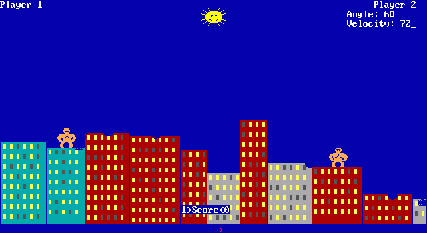
Almost every veteran I know—myself included—started by modding, not just “creating.” My journey began with Q-Basic to tweak Gorillas, then modifying voices in Worms, creating custom avatars for Baldur’s Gate, and hacking Diablo hash codes.

https://en.wikipedia.org/wiki/Gorillas_(video_game)

The best designers were often protagonists of the modding scene, diving into forums to figure out how to add value to the games they loved.

We’ve seen this cycle before. Tech giants often launch “revolutionary” gaming projects to fuel corporate career leaps, only to abandon them when the next trend arrives. But the real issue is the demand for shortcuts. Some entrepreneurs will try to use Genie3 to chase quick profits with flashy trailers, and some might even succeed in the short term.

Long-term success belongs to those who actually expand the horizons of gaming.

Reaching new audiences and solving the distribution puzzle requires more than a “genie.” It requires deep knowledge. While technocrats push “prompting and scrolling,” the smartest players are busy mastering history, philosophy, and art.

My advice? If you want to break into the market, stop looking for shortcuts. Work hard to engage your audience and start by modding what already exists. Read history books, and myths. Rack your brains, expose your work, and take risks.

You are far more likely to find success through craftsmanship than by playing a “word slot machine” and hoping for a believable game.

My take on Highguard

I was watching the last Deconstructor of Fun podcast, shooter monthly, on Highguard.

I downloaded the game days ago, completed the tutorial and played three matches. I am not really into hero shooters, but I have to admit that I also had the sensation, as these expert say, that the game was not properly play tested. Which is a common issue in the industry that leads to many games to fail miserably. You need to engage with your future clients, especially with service games. You cannot simply launch early access anymore, early access in current market is perceived as a full launch, especially if you game has been announced in “pompa magna” at The Game Awards by Jeff Keighley in person.

Regarding the market segmentation

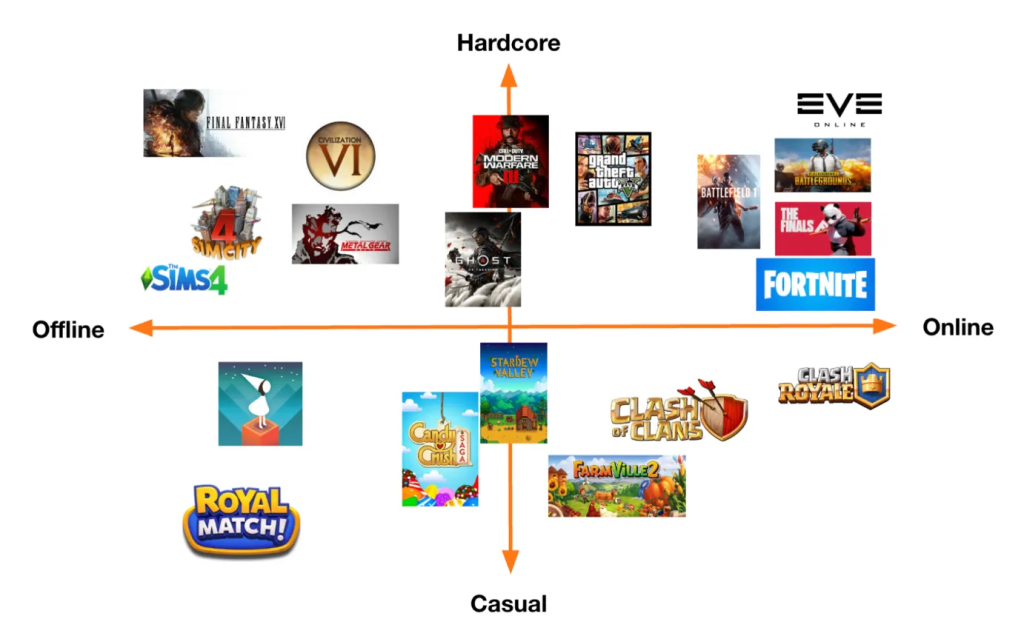
The experts seem to agree (but not fully) on the fact that there are just two kind of profitable shooter genres: tactical and battle royale. I am not sure about that, I prefer this Owen Mahoney’s segmentation:

Owen Mahoney’s view of the industry

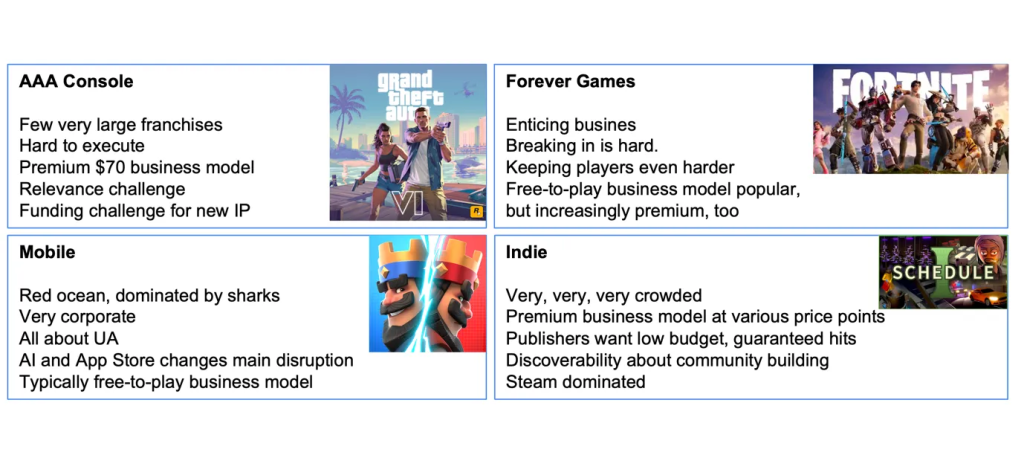
I believe that shooter as a genre fits in at least 2 quadrants: online and offline hardcore. Nicholas Lovell also has his view on the industry in general.

Nicholas Lovell’s view on the industry

And we know there are AAA fps, forever fps like Fortninte, mobile FPS, and also indies who build on top of boomer shooters. Finally, there is Christopher Dring view of the industry:

watch here: https://www.thegamebusiness.com/p/there-is-no-such-thing-as-a-video

Under this lens, I see games like STALKER being fps with stories. Fortnite and so on, are for socializing, but also competition/sport. COD and Battlefield as well. Boomer shooters are for passing the time, especially indies like this one.

I believe that the market is more complex and varied than the one pictured by Phillip Black in the DoF shooter monthly podcast.

What I do believe about the game modes

In the podcast, they insisted that the right number of people should be 5vs5 or 3vs3vs3, and I agree with them. But I believe that are also other problems with general game pacing:

  • Mining crystal is not the best during a shooter session, in my humble opinion. I know it’s a basic in Fortnite, but there you can then build things instantly. Here, instead, is to buy stuff from a vendor.
  • The vendor itself is slow and boring, can be put in another place
  • Upgrading/reparing walls is not so exciting, too.

First idea I would try to pitch and eventually design is to buy weapons and repair walls when you die. You die and while you wait, your “soul” can repair stuff. I know, maybe you prefer to watch what is happening, but that can be an extra cam or something while you fix things.

Another thing I noticed is that the most exciting part is when you raid or you need to defend from a raid. Still, I had the feeling that the attackers, the raiders, were stronger than the defenders. Maybe it’s just psychological, but I would like to try something asymmetrical, like 3vs5 (5 defenders).

Running on the horse while shooting is also cool, I remember that from RDR2, which lead designer works for Highguard. Maybe there can be the moment of earning crystals instead of mining.

3 ideas I would pitch:

  1. Buy weapons and manage base on death
  2. Asymmetrical raids
  3. Earn crystals while killing people from the horse

Maybe these would create more exciting/unique moments for Highguard.

Ubisoft and the “Efficiency Trap”: Why Algorithmic Logic Can’t Save a Lost Vision

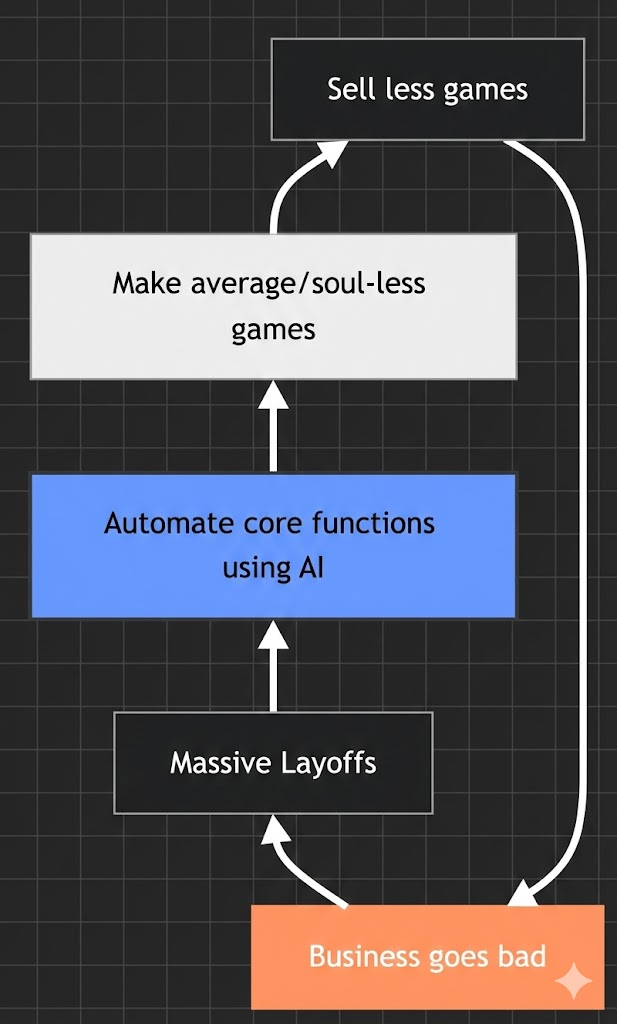
The recent news regarding Ubisoft isn’t just another headline about industry layoffs; it’s a “leading indicator” of a systemic crash. When the numbers don’t add up, the corporate playbook is predictably uninspired: cut the talent, automate the core, and pray the spreadsheet balances itself out.

But creativity isn’t an assembly line, Ubisoft might be the “canary in the coal mine” for an industry chasing its own tail. This isn’t just a trend; it’s a form of “drowning.” When inefficiency (ROI) drops too low, leadership grabs whatever is in reach—AI, NFT initiatives, or massive restructuring—often without even knowing what questions to ask their experts. They are borrowing against a future they don’t understand, hoping that money alone can catch the wind.

The “Glass Ceiling” of the French Elite

A company is only as brave as its leadership, and here we find a significant bottleneck. Ubisoft’s executive team is roughly 90% French, educated at the same elite business schools (ESSEC, ISG), with tenures spanning 30 years.

While these credentials are impressive on paper, they’ve created a cultural monoculture. This “upper-middle-class business elite” is now tasked with innovating for a global, diverse audience they are increasingly disconnected from. When leadership hasn’t seen the inside of another studio in three decades, they stop leading and start rehashing.

The AI Gamble: Partner or “Slop” Generator?

The debate around AI in development is often polarized. Someone argues that AAA gaming is “dead” without AI to reduce the staggering $200m+ budgets. I don’t disagree that budgets are exploding, but I disagree that AI is the silver bullet for quality.

AI isn’t the root of the problem, but it’s a risky “solution”. Relying on a technology that hasn’t yet delivered on its creative promises to save your strategy is a bet, not a plan. If you use AI to generate “slop,” you might save on costs, but you’ll lose the player.

From Rational Design to Brand Decay

Ubisoft once had a superpower: Rational Game Design. It was a method that allowed them to optimize the creation of epic adventures while maintaining a clear vision. But as they chased whales, “Games as a Service,” and unsustainable growth, they lost the creative DNA that made them special.

A software (and AI is just that) cannot solve a brand crisis. AI can’t fix the fact that Ubisoft has distanced itself from player fantasies and instinct—things that aren’t taught in prestigious business schools.

The Opportunity in the Chaos

The failure of long-term vision in these managers is an opening. The collapse of the old guard creates space for those who actually understand imagination and positioning.

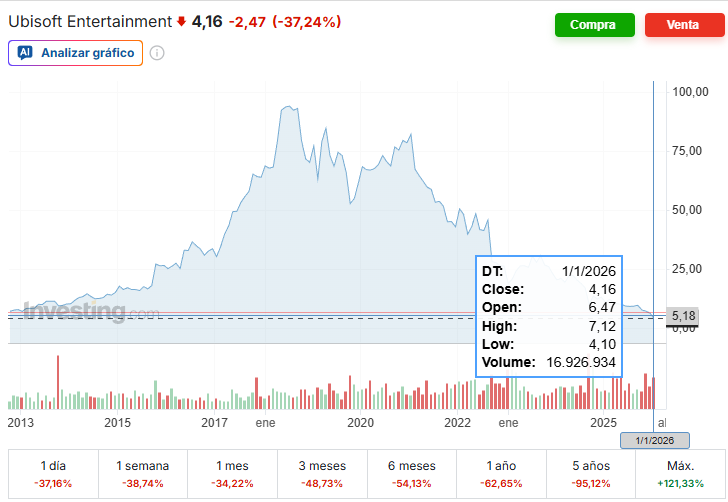
Ubisoft’s stock may be back to 1998 levels, but the talent is still out there. The question is: will they be allowed to lead, or will they be replaced by an algorithm until there’s nothing left to automate?