Skip to content

Tag: research

El Corte del Jugador

Esta entrada fue escrita originalmente en italiano por Paolo Gambardella. Ha sido traducida por un agente de inteligencia artificial y puede contener imprecisiones.

Matthew Ball se ha convertido en el Chief Strategy Officer de XBOX. En una entrevista reciente en el Summer GameFest 2026, declaró: sabemos lo que queremos hacer, pero todavía no estamos listos para contárselo al mundo.

Respeto la transparencia. Pero el problema que yo veo afecta a toda la industria. Los juegos modernos siguen diseñándose con una expectativa implícita: que el jugador tenga ganas, tiempo y paciencia para recorrer una experiencia lineal de principio a fin. Una aventura, un RPG, un narrative game. Te sientan delante de una obra que hay que vivir como una película de 60+ horas. Ese es el contrato social.

Lo entiendo. Final Fantasy VII, The Legend of Zelda, GTA — eran experiencias en las que habitar. Pero ¿quiénes son los jugadores de hoy? No soy yo con 13 años. Son chavales criados en Roblox, Minecraft, TikTok. Ninguna de esas plataformas te exige empezar desde el principio para tener sentido. Las experiencias son modulares, reiniciables, fragmentadas.

Roblox no tiene un final. Minecraft no tiene una historia principal. TikTok tampoco tiene un episodio 1. Estas son features arquitectónicas que reflejan cómo las nuevas generaciones consumen la experiencia digital.

El corte del jugador

Tuve una idea sencilla y quizás un poco radical. ¿Y si diseñáramos un juego largo — un RPG, una aventura — no para abreviarlo, sino para que lo cortara el propio jugador?

La regla básica: no se trata de eliminar contenido. Se trata de darle al jugador las herramientas para montar su propia experiencia.

Características del sistema

Build paths diferenciados. Un guerrero y un mago en la misma aventura deberían tener recorridos distintos. Imagina la misma historia, pero filtrada a través de las habilidades del personaje. Eliges un personaje y juegas una fase según sus características. Luego pasas a la siguiente, o repites la misma sección con otro especialista.

Entry points narrativos. Como en una serie con episodios autoconclusivos, cada sesión debería tener un inicio y un final reconocibles. El jugador que vuelve después de tres semanas no tiene que ponerse al día desde cero: puede retomar desde un punto de acceso diseñado para ello, con un breve recap contextualizado.

Ritmo variable, no dificultad variable. Al inicio de cada sesión, el juego te pregunta de forma implícita: ¿tienes 20 minutos o tres horas? El flujo se adapta. Es respetar el tiempo real del jugador.

Skip inteligente sin penalización. Si ya has completado una quest parecida, o si la fase se hace cuesta arriba, el sistema te permite resumirla y saltártela (sin perder recompensas, a ser posible). La decisión siempre es tuya. El juego no te castiga por tomarla.

El corte como agency. La verdad es esta: en los juegos la libertad está en lo que decides no hacer. Los juegos cinematográficos corren el riesgo de quedarse en map markers, checklists, indicadores de completado, etcétera. Todo diseñado para asegurarse de que no te saltes nada.

¿Qué resolvería este sistema?

El miedo de la industria es: menos contenido = menos valor percibido = menos ventas. Pero mirad Roblox. Cada experiencia dura 15–30 minutos, y la plataforma es “infinita”. La arquitectura modular multiplica el valor. Un RPG de 80 horas que respeta tus ritmos vale más que uno de 80 horas que te hace sentir culpable cuando lo dejas.

Matthew Ball se negó a responder muchas preguntas. Pero la que el presentador no le hizo es esta: ¿estáis repensando el formato del producto, o solo la plataforma?

Porque si los juegos siguen esperando a un jugador que se sienta 40 horas seguidas, no perderéis a las nuevas generaciones por culpa de Roblox. Las perderéis porque no habéis cambiado el lenguaje. Roblox es solo el idioma que ellos ya hablan.
Ocarina of Time: una lección magistral sobre cómo diseñar una tragedia

Esta entrada fue escrita originalmente en italiano por Paolo Gambardella. Ha sido traducida por un agente de inteligencia artificial y puede contener imprecisiones.

Hay un artículo de Renan Fontes en Goomba Stomp que analiza The Legend of Zelda: Ocarina of Time como tragedia clásica. Link pierde la infancia para salvar un mundo al que ya no puede volver, y aunque Zelda lo manda atrás en el tiempo, eso no hace sino confirmar definitivamente la pérdida.

Merece la pena leerlo. Yo lo hice con motivo del anuncio del remake de este gran clásico.

El mecanismo trágico

El núcleo de la tesis de Fontes es sencillo: Link es un huérfano de guerra, ya separado de los Kokiri antes incluso de que empiece la historia. La Espada del Coraje lo castiga por su impaciencia con siete años de sueño. Al despertar adulto en un Hyrule devastado, se ha convertido en otra persona.

Al final, Zelda manda a Link al pasado, pero Navi se marcha justo en ese momento. Aunque pudieras volver a ser niño, tú ya no serías el mismo. El tiempo vivido no se puede deshacer.

Esa sensación no viene de la narrativa escrita en sí, sino de cómo el juego se construyó alrededor de una identidad emocional coherente, y de cómo los momentos memorables se distribuyeron con cuidado.

Peak-End: los momentos que perduran

La psicología del peak-end nos dice que las personas no recuerdan una experiencia como el promedio de cada segundo vivido. Recuerdan los picos emocionales y el final. El resto se sedimenta, pero no determina el juicio.

En OoT, el pico es probablemente la marcha de Navi. Es el silencio en el Templo del Tiempo cuando el mundo vuelve a tomar forma. Es Saria despidiéndose sin saber que es una despedida definitiva.

Un juego mediocre habría puesto el pico emocional en el combate contra el jefe final. OoT lo pone en la pérdida silenciosa. El final (Link de niño en el patio del castillo, Zelda mirándolo desde lejos) no cierra nada. Deja abierta una herida. Esa herida que los jugadores llevan consigo durante décadas. La misma que a mí personalmente me cambió por dentro de una forma que no esperaba.

Lección: el pico más poderoso a menudo no coincide con el clímax mecánico. Si quieres que una experiencia se recuerde de una determinada manera, diseña el recuerdo, no solo el evento.

La promesa emocional

OoT tiene una identidad emocional precisa: melancolía heroica. La sensación de que crecer tiene un coste irrecuperable, y de que el valor no te salva de pagarlo.

Cada elemento del juego está impregnado de esa atmósfera. La música (Saria’s Song, el Bolero of Fire, la Canción del Tiempo) anticipa la acción y la comenta. Los templos parecen lugares abandonados por alguien que todavía amaba estar allí. Hyrule Field de noche es tan grande y silenciosa como una promesa que podría no cumplirse.

Cuando un juego sabe cuál es su promesa emocional, cada decisión cobra coherencia. Los colores, el silencio en los diálogos, la distancia entre los personajes son vectores de una misma sensación.

Lección: junto al diseño de mecánicas o sistemas, merece la pena nombrar con precisión la emoción que quieres dejar atrás. Recomiendo algo específico. Esto puede dar lugar a conversaciones incómodas con el equipo o los responsables. Pero es importante.

Player Need Satisfaction: por qué duele la pérdida

La Teoría de la Autodeterminación divide las necesidades psicológicas fundamentales en tres áreas: autonomía (siento que actúo), competencia (siento que mejoro), relación (siento que pertenezco).

OoT es una tragedia también porque las satisface las tres, para luego quitártelas justo antes de los créditos.

Tienes autonomía: eliges adónde ir, cuándo volver, cómo usar las herramientas. Tienes competencia: te conviertes en adulto, derrotas enemigos imposibles, dominas la magia. Tienes relación: Saria, Navi, Malon, los sages; una red de vínculos construida pieza a pieza.

Luego el juego lo desmonta todo.

  • Saria queda atrapada en el bosque para siempre
  • Navi se va sin explicaciones
  • Zelda te manda atrás, pero la versión de ti que vivió esos siete años no puede volver.

Lección: la pérdida en un juego duele en proporción a cuánto ha invertido el jugador en construir algo. Si quieres que un final trágico tenga peso, las necesidades psicológicas deben haberse satisfecho antes de ser negadas.

Conclusión

Fontes escribió un análisis narrativo. Pero debajo hay algo más interesante: OoT funciona como tragedia porque las decisiones de diseño y las decisiones narrativas apuntan en la misma dirección. Es coherencia. Y me alegra que mi hija pueda revivir en versión actualizada esta gran experiencia.

Lee el artículo original en Goomba Stomp

No os dejéis distraer

Esta entrada fue escrita originalmente en italiano por Paolo Gambardella. Ha sido traducida por un agente de inteligencia artificial y puede contener imprecisiones.

Questa semana se celebró el Sony State of Play, y se presentó el nuevo God of War. El juego tiene como protagonista a la mujer de Kratos, y como compañero un cubo, bastante diferente de lo que uno esperaría. Después del evento estaba scrolleando por LinkedIn, y los “expertos” tenían todos algo que decir. El personaje está mal. El cubo no tiene sentido. Cambiar el sexo del protagonista nunca ha funcionado en otras franquicias.

Ver la reacción de alguien que ha trabajado de verdad en el juego vale más que cien posts de LinkedIn juntos. Sinceramente, estoy un poco harto de la gente que aprovecha esta capacidad de los algoritmos para darle visibilidad a los posts polémicos. Sobre todo cuando esas personas no hacen videojuegos, no están en las trincheras. Prefiero escuchar la pasión de quienes trabajan de verdad en los juegos.

Otra cosa que quiero señalar es que Santa Monica Studios ha demostrado de sobra que sabe hacer juegos de éxito. Todos deberíamos respetar la experiencia y reconocer que quien sabe más que nosotros probablemente tiene razón. Estoy dejando de seguir podcasts y canales que solo viven de la polémica, porque distraen de lo que realmente importa.

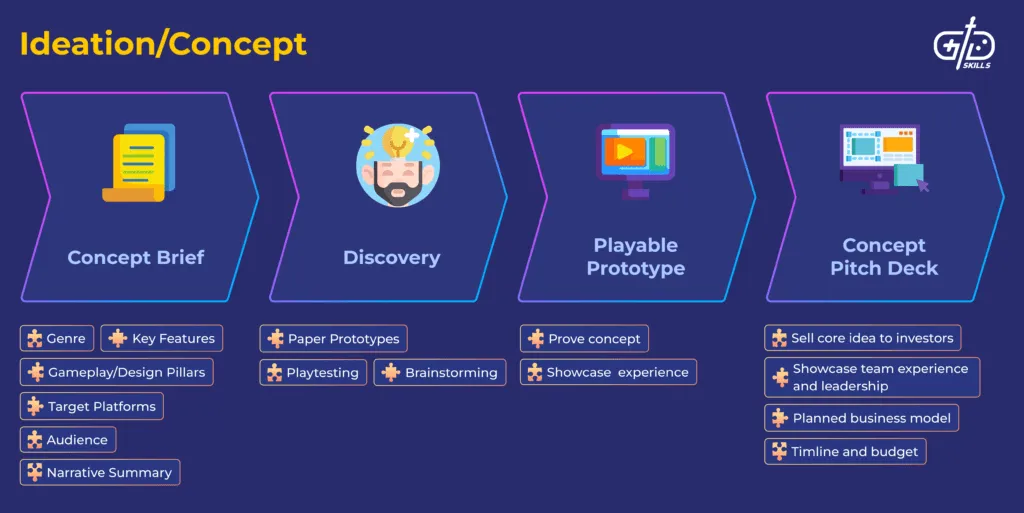
Freshness is safer in ideation stage

When two medics decided to make Baldur’s Gate, they didn’t have experience with CRPGs. When Mr. Myiamoto directed FZero on SNES he wasn’t a veteran in racing games. When a marketing guy from Ubisoft decided to make a realistic-style JRPG together with a programmer, he didn’t have previous experience in the genre.

Still, many companies publish job offers for specific positions requiring previous experience in the specific genre they are developing. It’s because of the belief that higher skill means faster results, and more important, less risks. This happens a lot on high-quality games and mobile F2P, because these business models became managed in a McKinsian way. And that, kids, is why they are in trouble.

Still, games like PRAGMATA are showing that there are audiences eager to new experiences, with unique blends of mechanics. I don’t know their stories, but I am playing the game and I wouldn’t be surprised if among their team there are designers with no previous experience with 3D action-adventure games. Video games like PRAGMATA are only possible when you are open to a completely different perspective, and when you let people work. I believe it’s hard to find this fit if your job offer filters opportunities out.

Experience within a genre is very important, don’t get me wrong. But the more I work, the more I realize I am full of biases. The more experience I get, the more I push for research and playtesting. New audiences are playing in ways often ignored by a big portion of developers, a sort of tunnel vision you have when you make always the same thing over and over.

read more: https://gamedesignskills.com/game-development/stages-of-game-development-process/

This is one of the reasons that led me to be a freelancer, also if it comes with a price as everything good in our life. Probably the worst one is when a client wants me to tell them the hour using their own clock. They close to proposal, because they don’t really understand (and they actively ignore) the opportunities of ideation stage.

A potential use case for Microsoft

I read the last email that the new CEO of XBox sent to her employees. It is honestly an inspiring take on what’s next for XBOX, I am positive about this person. Maybe the fact she is not a games veteran is good for her actual position. Or maybe I am just a dreamer, I don’t know.

There is one use case that I believe they can tackle pretty “easily”, and position themselves like the platform for everyone they want to become. There are successful f2p midcore titles that occupy too much space on the smartphone. Often they require the latest models to run at the higher quality. I believe that the f2p player doesn’t care of having a copy of what he is playing.

If XBOX manages to become the platform from which you can play the “Genshin Impacts” of the future in cloud on streaming, and maybe engage with mods and UGC for your fav games, there is the chance from them to become THE platform of the future. A sort of Roblox for Mobile f2p games. Of course, there are lots of limitation that may come from Apple and Google. Still, if they manage to do this right, they can really disrupt the market in my opinion.

Three loops of Expedition 33

These days I am playing Clair Obscur: Expedition 33 pretty intensively (when other 40y-old-man-duties permit) these days. And I am also completing my bootcamp on videogames design and conceptualization. A class I gave was based on the 3 main loops of a game, and today I want to apply this knowledge to the 2025 GOTY.

Moment-to-moment (second-to-second)

This first loop is the central one, and it describes what the player does the most. You can say it describes the core dynamic, somehow. In case of Expedition33:

  • Action: Reactive turn-base combat
  • Challenge: groups of nevrons (enemies)
  • Reward: skill points, loot

WHY to repeat this loot: the game is divided in zones within an open world, the Player wants to complete the zone to unlock the next.

Core loop

The core loop is what the Player does the most during the game and gives meaning to the moment-to-moment loop. We can say that it considers the game session as a whole.

  • Action: Improve team stats
  • Challenge: complete zone sections
  • Reward: Advance with the story

WHY to repeat this loot: as any good JRPG it’s about the map! You want to play to unlock new venues and discover new places into the map.

Metagame loop

This loop describes what keeps the Players engaged, what makes them think “I need to return back into the game because I want to…”. Describes the features and mechanics that make me think into the game when I am not playing it. In the case of Expedition33:

  • Action: defeat bosses
  • Challenge: what will happen in the story?
  • Reward: plot twists and secrets discoveries

WHY to repeat this loot: the game is one great adventure story!

A simple idea for AI in games

Of the many applications of AI in games, I am more interested in those that can unlock new form of experiences. First thing that comes to mind is narrative, of course, but since as a developer you are paying for hosting a server with an LLM I think you need to focus more on the return of the investment on that infrastructure.

One idea is to have new forms of special offers related with the fact that you can or cannot engage with certain systems within a game. Maybe you played heavily during the last event, but you have no time this week. You can say it, and the system can find special solutions for you. Just one example.

In the blacksmith’s house, a wooden skewer

The recent stock market fluctuations following the arrival of AI tech that promises to generate interactive worlds from simple prompts speak volumes about the current lack of video game literacy.

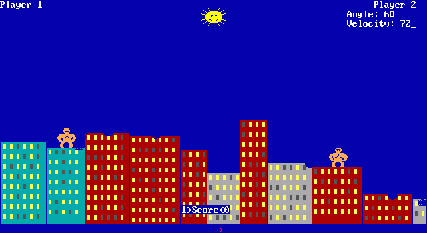
Almost every veteran I know—myself included—started by modding, not just “creating.” My journey began with Q-Basic to tweak Gorillas, then modifying voices in Worms, creating custom avatars for Baldur’s Gate, and hacking Diablo hash codes.

https://en.wikipedia.org/wiki/Gorillas_(video_game)

The best designers were often protagonists of the modding scene, diving into forums to figure out how to add value to the games they loved.

We’ve seen this cycle before. Tech giants often launch “revolutionary” gaming projects to fuel corporate career leaps, only to abandon them when the next trend arrives. But the real issue is the demand for shortcuts. Some entrepreneurs will try to use Genie3 to chase quick profits with flashy trailers, and some might even succeed in the short term.

Long-term success belongs to those who actually expand the horizons of gaming.

Reaching new audiences and solving the distribution puzzle requires more than a “genie.” It requires deep knowledge. While technocrats push “prompting and scrolling,” the smartest players are busy mastering history, philosophy, and art.

My advice? If you want to break into the market, stop looking for shortcuts. Work hard to engage your audience and start by modding what already exists. Read history books, and myths. Rack your brains, expose your work, and take risks.

You are far more likely to find success through craftsmanship than by playing a “word slot machine” and hoping for a believable game.

My take on Highguard

I was watching the last Deconstructor of Fun podcast, shooter monthly, on Highguard.

I downloaded the game days ago, completed the tutorial and played three matches. I am not really into hero shooters, but I have to admit that I also had the sensation, as these expert say, that the game was not properly play tested. Which is a common issue in the industry that leads to many games to fail miserably. You need to engage with your future clients, especially with service games. You cannot simply launch early access anymore, early access in current market is perceived as a full launch, especially if you game has been announced in “pompa magna” at The Game Awards by Jeff Keighley in person.

Regarding the market segmentation

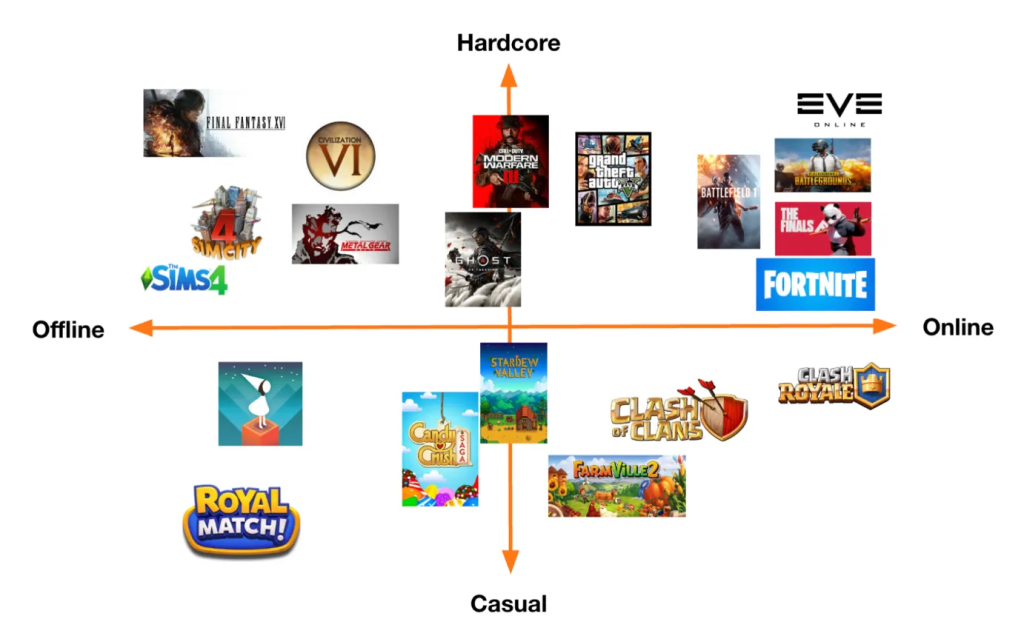
The experts seem to agree (but not fully) on the fact that there are just two kind of profitable shooter genres: tactical and battle royale. I am not sure about that, I prefer this Owen Mahoney’s segmentation:

Owen Mahoney’s view of the industry

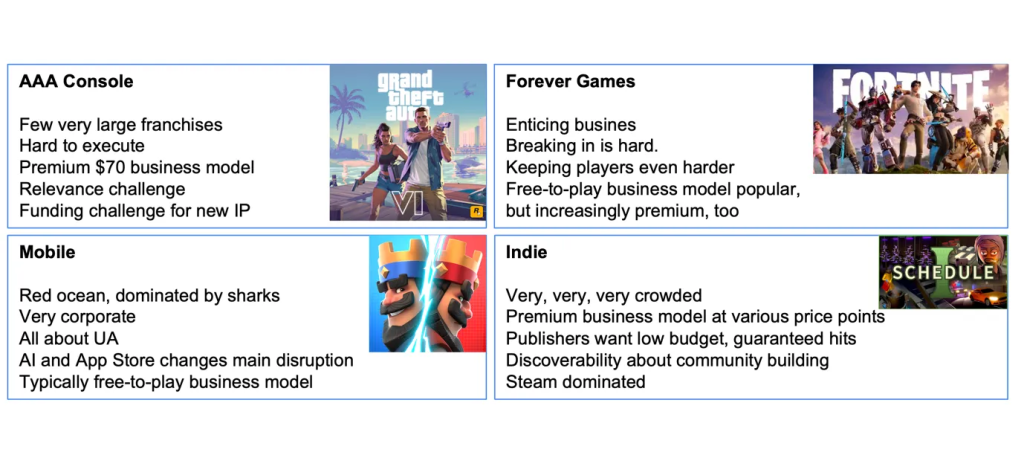
I believe that shooter as a genre fits in at least 2 quadrants: online and offline hardcore. Nicholas Lovell also has his view on the industry in general.

Nicholas Lovell’s view on the industry

And we know there are AAA fps, forever fps like Fortninte, mobile FPS, and also indies who build on top of boomer shooters. Finally, there is Christopher Dring view of the industry:

watch here: https://www.thegamebusiness.com/p/there-is-no-such-thing-as-a-video

Under this lens, I see games like STALKER being fps with stories. Fortnite and so on, are for socializing, but also competition/sport. COD and Battlefield as well. Boomer shooters are for passing the time, especially indies like this one.

I believe that the market is more complex and varied than the one pictured by Phillip Black in the DoF shooter monthly podcast.

What I do believe about the game modes

In the podcast, they insisted that the right number of people should be 5vs5 or 3vs3vs3, and I agree with them. But I believe that are also other problems with general game pacing:

  • Mining crystal is not the best during a shooter session, in my humble opinion. I know it’s a basic in Fortnite, but there you can then build things instantly. Here, instead, is to buy stuff from a vendor.
  • The vendor itself is slow and boring, can be put in another place
  • Upgrading/reparing walls is not so exciting, too.

First idea I would try to pitch and eventually design is to buy weapons and repair walls when you die. You die and while you wait, your “soul” can repair stuff. I know, maybe you prefer to watch what is happening, but that can be an extra cam or something while you fix things.

Another thing I noticed is that the most exciting part is when you raid or you need to defend from a raid. Still, I had the feeling that the attackers, the raiders, were stronger than the defenders. Maybe it’s just psychological, but I would like to try something asymmetrical, like 3vs5 (5 defenders).

Running on the horse while shooting is also cool, I remember that from RDR2, which lead designer works for Highguard. Maybe there can be the moment of earning crystals instead of mining.

3 ideas I would pitch:

  1. Buy weapons and manage base on death
  2. Asymmetrical raids
  3. Earn crystals while killing people from the horse

Maybe these would create more exciting/unique moments for Highguard.

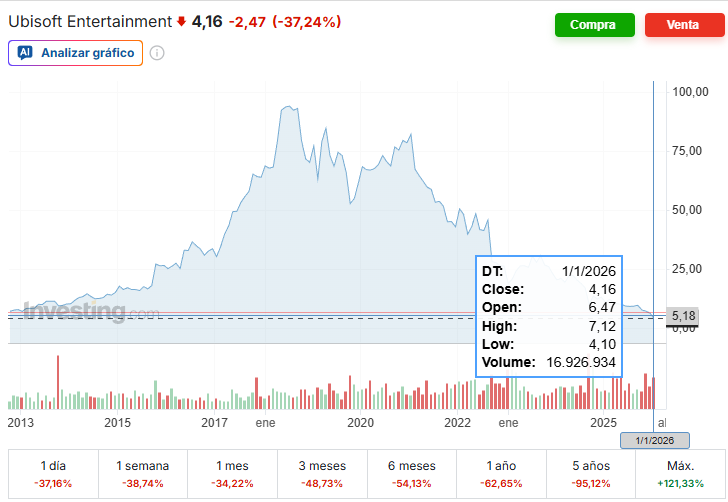
Ubisoft and the “Efficiency Trap”: Why Algorithmic Logic Can’t Save a Lost Vision

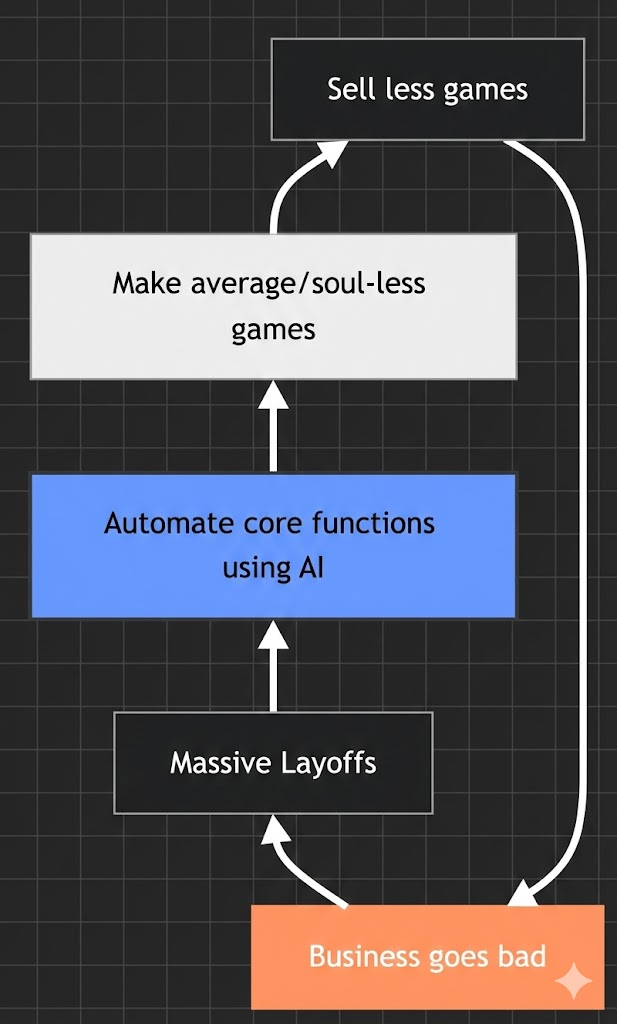
The recent news regarding Ubisoft isn’t just another headline about industry layoffs; it’s a “leading indicator” of a systemic crash. When the numbers don’t add up, the corporate playbook is predictably uninspired: cut the talent, automate the core, and pray the spreadsheet balances itself out.

But creativity isn’t an assembly line, Ubisoft might be the “canary in the coal mine” for an industry chasing its own tail. This isn’t just a trend; it’s a form of “drowning.” When inefficiency (ROI) drops too low, leadership grabs whatever is in reach—AI, NFT initiatives, or massive restructuring—often without even knowing what questions to ask their experts. They are borrowing against a future they don’t understand, hoping that money alone can catch the wind.

The “Glass Ceiling” of the French Elite

A company is only as brave as its leadership, and here we find a significant bottleneck. Ubisoft’s executive team is roughly 90% French, educated at the same elite business schools (ESSEC, ISG), with tenures spanning 30 years.

While these credentials are impressive on paper, they’ve created a cultural monoculture. This “upper-middle-class business elite” is now tasked with innovating for a global, diverse audience they are increasingly disconnected from. When leadership hasn’t seen the inside of another studio in three decades, they stop leading and start rehashing.

The AI Gamble: Partner or “Slop” Generator?

The debate around AI in development is often polarized. Someone argues that AAA gaming is “dead” without AI to reduce the staggering $200m+ budgets. I don’t disagree that budgets are exploding, but I disagree that AI is the silver bullet for quality.

AI isn’t the root of the problem, but it’s a risky “solution”. Relying on a technology that hasn’t yet delivered on its creative promises to save your strategy is a bet, not a plan. If you use AI to generate “slop,” you might save on costs, but you’ll lose the player.

From Rational Design to Brand Decay

Ubisoft once had a superpower: Rational Game Design. It was a method that allowed them to optimize the creation of epic adventures while maintaining a clear vision. But as they chased whales, “Games as a Service,” and unsustainable growth, they lost the creative DNA that made them special.

A software (and AI is just that) cannot solve a brand crisis. AI can’t fix the fact that Ubisoft has distanced itself from player fantasies and instinct—things that aren’t taught in prestigious business schools.

The Opportunity in the Chaos

The failure of long-term vision in these managers is an opening. The collapse of the old guard creates space for those who actually understand imagination and positioning.

Ubisoft’s stock may be back to 1998 levels, but the talent is still out there. The question is: will they be allowed to lead, or will they be replaced by an algorithm until there’s nothing left to automate?