Skip to content

Tag: research

El Tall del Jugador

Aquest article va ser escrit originalment en italià per Paolo Gambardella. Ha estat traduït per un agent d’intel·ligència artificial i pot contenir inexactituds.

Matthew Ball s’ha convertit en el Chief Strategy Officer de XBOX. En una entrevista recent al Summer GameFest 2026, va declarar: sabem què volem fer, però encara no estem preparats per dir-ho al món.

Respecto la transparència. Però el problema que hi veig jo afecta tota la indústria. Els jocs moderns continuen dissenyant-se amb una expectativa implícita: que el jugador tingui ganes, temps i paciència per recórrer una experiència lineal de cap a peus. Una aventura, un RPG, un narrative game. Et planten davant d’una obra que s’ha de viure com una pel·lícula de 60+ hores. Aquest és el pacte.

Ho entenc. Final Fantasy VII, The Legend of Zelda, GTA — eren experiències per habitar. Però qui són els jugadors d’avui? No soc jo amb 13 anys. Són nois i noies que han crescut amb Roblox, Minecraft, TikTok. Cap d’aquestes plataformes et demana que comencis des del principi per tenir sentit. Les experiències són modulars, reiniciables, fragmentades.

Roblox no té un final. Minecraft no té una història principal. TikTok tampoc té un episodi 1. Aquestes són features arquitecturals que reflecteixen com les noves generacions consumeixen l’experiència digital.

El tall del jugador

He tingut una idea senzilla i potser una mica radical. I si dissenyéssim un joc llarg — un RPG, una aventura — no per ser escurçat, sinó per ser tallat pel jugador mateix?

La regla bàsica: no es tracta de treure contingut. Es tracta de donar al jugador les eines per muntar la seva pròpia experiència.

Característiques del sistema

Build paths diferenciats. Un guerrer i un mag en la mateixa aventura haurien de tenir recorreguts diferents. Imagina la mateixa història, però filtrada a través de les competències del personatge. Tries un personatge i jugues una fase segons les seves característiques. Després passes a la següent, o tornes a jugar la mateixa secció amb un altre especialista.

Entry points narratius. Com en una sèrie de TV amb episodis autoconclusius, cada sessió hauria de tenir un inici i un final reconeixibles. El jugador que torna al cap de tres setmanes no ha de tornar a posar-se al dia mentalment des de zero: pot reentrar des d’un punt d’accés dissenyat per a això, amb un breu resum contextualitzat.

Ritme variable, no dificultat variable. Al principi de cada sessió, el joc et pregunta implícitament: tens 20 minuts o tres hores? El flux s’adapta. És respecte pel temps real del jugador.

Skip intel·ligent sense penalització. Si ja has completat una quest similar, o si la fase et fa bola, el sistema et permet resumir i saltar (sense perdre recompenses, a poder ser). La decisió sempre és teva. El joc no et castiga per haver-la presa.

El tall com a agency. La veritat és aquesta: als jocs la llibertat rau en allò que decideixes no fer. Els jocs cinematogràfics corren el risc de quedar-se reduïts a marcadors al mapa, checklists, indicadors de completació, etcètera. Tot dissenyat per assegurar-se que no et saltis res.

Què resoldria aquest sistema?

La por de la indústria és: menys contingut = menys valor percebut = menys vendes. Però mireu Roblox. Cada experiència dura 15–30 minuts, i la plataforma és “infinita”. L’arquitectura modular multiplica el valor. Un RPG de 80 hores que respecta els teus ritmes val més que un de 80 hores que et fa sentir culpable quan el deixes.

Matthew Ball es va negar a respondre moltes preguntes. Però la que el presentador no li va fer és aquesta: esteu repensant el format del producte, o només la plataforma?

Perquè si els jocs continuen esperant un jugador que s’asseu 40 hores seguides, no perdreu les noves generacions a causa de Roblox. Les perdreu perquè no heu canviat el llenguatge. Roblox és simplement la llengua que ells ja parlen.
Ocarina of Time: masterclass sobre com dissenyar una tragèdia

Aquest article va ser escrit originalment en italià per Paolo Gambardella. Ha estat traduït per un agent d’intel·ligència artificial i pot contenir inexactituds.

Hi ha un article de Renan Fontes a Goomba Stomp que analitza The Legend of Zelda: Ocarina of Time com una tragèdia clàssica. En Link perd la infantesa per salvar un món al qual ja no pot tornar, i fins i tot quan la Zelda el retorna enrere en el temps, això és la confirmació definitiva de la pèrdua.

Val la pena llegir-lo. Jo ho vaig fer arran de l’anunci del remake d’aquest gran clàssic.

El mecanisme tràgic

El nucli de la tesi de Fontes és senzill: en Link és un orfe de guerra, ja separat dels Kokiri fins i tot abans que la història comenci. L’Espasa del Coratge el castiga per la seva impaciència amb set anys de son. En despertar-se adult en un Hyrule devastat, s’ha convertit en una altra persona.

Al final, la Zelda retorna en Link al passat, però Navi se’n va exactament en aquell moment. Encara que poguessis tornar a ser nen, tu ja no series el mateix. El temps no es pot desviure.

Aquesta sensació no arriba de la narrativa escrita en si mateixa, sinó de com s’ha construït el joc al voltant d’una identitat emocional coherent, i de com els moments memorables han estat distribuïts amb cura.

Peak-End: els moments que queden

La psicologia del peak-end ens diu que les persones no recorden una experiència com la mitjana de cada segon viscut. Recorden els pics emocionals i el final. La resta hi queda, però no determina el judici.

A OoT, el pic és probablement la marxa de Navi. És el silenci al Temple del Temps quan el món recupera la seva forma. És la Saria que s’acomiada sense saber que és un comiat definitiu.

Un joc mediocre hauria posat el pic emocional a la boss fight. OoT el posa en la pèrdua silenciosa. El final (en Link de nen al pati del castell, la Zelda mirant-lo de lluny) no tanca res. Deixa oberta una ferida. Aquella ferida que els jugadors porten amb ells durant dècades. La mateixa que a mi, personalment, em va canviar per dins.

Lliçó: el pic més poderós sovint no coincideix amb el clímax mecànic. Si vols que una experiència sigui recordada d’una determinada manera, dissenya el record, no l’esdeveniment.

La promesa emocional

OoT té una identitat emocional precisa: melangia heroica. La sensació que créixer et costa alguna cosa irrecuperable, i que el coratge no t’estalvia de pagar-ho.

Cada element del joc està carregat amb aquesta atmosfera. La música (Saria’s Song, el Bolero of Fire, la Cançó del Temps) anticipa l’acció i la comenta. Els temples semblen llocs abandonats per algú a qui encara li agradava ser-hi. Hyrule Field de nit és gran i silenciosa com una promesa que potser no es complirà.

Quan un joc sap quina és la seva promesa emocional, cada decisió es torna coherent. Els colors, el silenci als diàlegs, la distància entre els personatges són vectors de la mateixa sensació.

Lliçó: a banda de dissenyar mecàniques o sistemes, val la pena posar nom de manera precisa a l’emoció que vols deixar enrere. Recomano que sigui alguna cosa específica. Això pot donar peu a converses incòmodes amb l’equip o els superiors. Però és important.

Player Need Satisfaction: per què la pèrdua fa mal

La Self-Determination Theory divideix les necessitats psicològiques fonamentals en tres àrees: autonomia (sento que actuo), competència (sento que milloro), relació (sento que pertanyo a alguna cosa).

OoT és una tragèdia també perquè les satisfà totes tres, per després eliminar-les abans dels crèdits finals.

Tens autonomia: tries on anar, quan tornar, com fer servir les eines. Tens competència: et fas adult, derrotes enemics impossibles, domines màgies. Tens relació: la Saria, Navi, la Malon, els sages; una xarxa de vincles construïda peça a peça.

Després el joc ho desmunta tot.

  • La Saria queda atrapada al bosc per sempre
  • Navi se’n va sense explicacions
  • La Zelda et retorna enrere, però la versió de tu que ha viscut aquells set anys no pot tornar.

Lliçó: la pèrdua en un joc fa mal en proporció al que el jugador havia invertit en construir alguna cosa. Si vols que un final tràgic tingui pes, les necessitats psicològiques han d’haver estat satisfetes abans de ser negades.

Conclusió

Fontes ha escrit una anàlisi narrativa. Però a sota hi ha alguna cosa més interessant: OoT funciona com a tragèdia perquè les decisions de disseny i les decisions narratives apunten en la mateixa direcció. És coherència. I jo estic content que la meva filla pugui reviure en versió actualitzada aquesta gran experiència.

Llegeix l’article original a Goomba Stomp

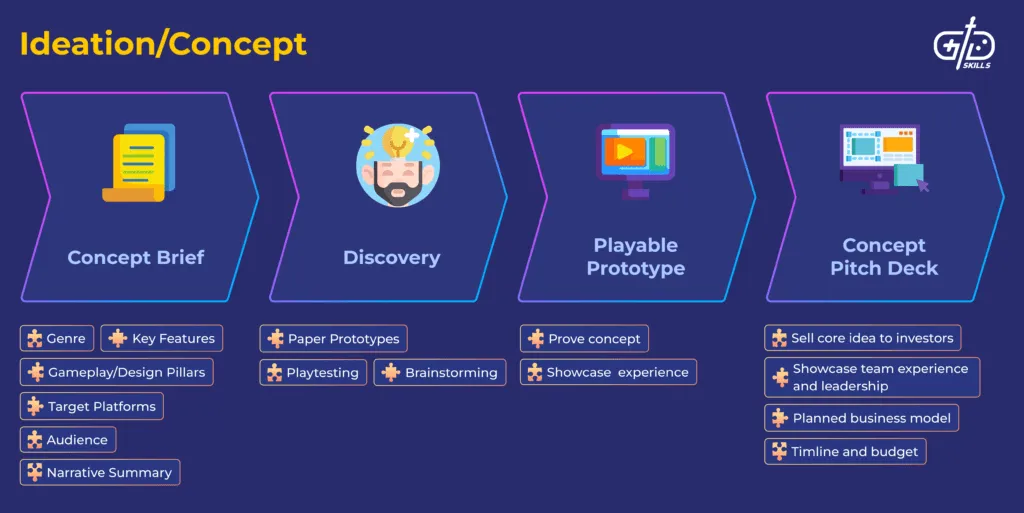
Freshness is safer in ideation stage

When two medics decided to make Baldur’s Gate, they didn’t have experience with CRPGs. When Mr. Myiamoto directed FZero on SNES he wasn’t a veteran in racing games. When a marketing guy from Ubisoft decided to make a realistic-style JRPG together with a programmer, he didn’t have previous experience in the genre.

Still, many companies publish job offers for specific positions requiring previous experience in the specific genre they are developing. It’s because of the belief that higher skill means faster results, and more important, less risks. This happens a lot on high-quality games and mobile F2P, because these business models became managed in a McKinsian way. And that, kids, is why they are in trouble.

Still, games like PRAGMATA are showing that there are audiences eager to new experiences, with unique blends of mechanics. I don’t know their stories, but I am playing the game and I wouldn’t be surprised if among their team there are designers with no previous experience with 3D action-adventure games. Video games like PRAGMATA are only possible when you are open to a completely different perspective, and when you let people work. I believe it’s hard to find this fit if your job offer filters opportunities out.

Experience within a genre is very important, don’t get me wrong. But the more I work, the more I realize I am full of biases. The more experience I get, the more I push for research and playtesting. New audiences are playing in ways often ignored by a big portion of developers, a sort of tunnel vision you have when you make always the same thing over and over.

read more: https://gamedesignskills.com/game-development/stages-of-game-development-process/

This is one of the reasons that led me to be a freelancer, also if it comes with a price as everything good in our life. Probably the worst one is when a client wants me to tell them the hour using their own clock. They close to proposal, because they don’t really understand (and they actively ignore) the opportunities of ideation stage.

A potential use case for Microsoft

I read the last email that the new CEO of XBox sent to her employees. It is honestly an inspiring take on what’s next for XBOX, I am positive about this person. Maybe the fact she is not a games veteran is good for her actual position. Or maybe I am just a dreamer, I don’t know.

There is one use case that I believe they can tackle pretty “easily”, and position themselves like the platform for everyone they want to become. There are successful f2p midcore titles that occupy too much space on the smartphone. Often they require the latest models to run at the higher quality. I believe that the f2p player doesn’t care of having a copy of what he is playing.

If XBOX manages to become the platform from which you can play the “Genshin Impacts” of the future in cloud on streaming, and maybe engage with mods and UGC for your fav games, there is the chance from them to become THE platform of the future. A sort of Roblox for Mobile f2p games. Of course, there are lots of limitation that may come from Apple and Google. Still, if they manage to do this right, they can really disrupt the market in my opinion.

Three loops of Expedition 33

These days I am playing Clair Obscur: Expedition 33 pretty intensively (when other 40y-old-man-duties permit) these days. And I am also completing my bootcamp on videogames design and conceptualization. A class I gave was based on the 3 main loops of a game, and today I want to apply this knowledge to the 2025 GOTY.

Moment-to-moment (second-to-second)

This first loop is the central one, and it describes what the player does the most. You can say it describes the core dynamic, somehow. In case of Expedition33:

  • Action: Reactive turn-base combat
  • Challenge: groups of nevrons (enemies)
  • Reward: skill points, loot

WHY to repeat this loot: the game is divided in zones within an open world, the Player wants to complete the zone to unlock the next.

Core loop

The core loop is what the Player does the most during the game and gives meaning to the moment-to-moment loop. We can say that it considers the game session as a whole.

  • Action: Improve team stats
  • Challenge: complete zone sections
  • Reward: Advance with the story

WHY to repeat this loot: as any good JRPG it’s about the map! You want to play to unlock new venues and discover new places into the map.

Metagame loop

This loop describes what keeps the Players engaged, what makes them think “I need to return back into the game because I want to…”. Describes the features and mechanics that make me think into the game when I am not playing it. In the case of Expedition33:

  • Action: defeat bosses
  • Challenge: what will happen in the story?
  • Reward: plot twists and secrets discoveries

WHY to repeat this loot: the game is one great adventure story!

A simple idea for AI in games

Of the many applications of AI in games, I am more interested in those that can unlock new form of experiences. First thing that comes to mind is narrative, of course, but since as a developer you are paying for hosting a server with an LLM I think you need to focus more on the return of the investment on that infrastructure.

One idea is to have new forms of special offers related with the fact that you can or cannot engage with certain systems within a game. Maybe you played heavily during the last event, but you have no time this week. You can say it, and the system can find special solutions for you. Just one example.

In the blacksmith’s house, a wooden skewer

The recent stock market fluctuations following the arrival of AI tech that promises to generate interactive worlds from simple prompts speak volumes about the current lack of video game literacy.

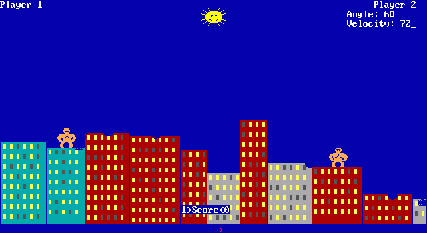
Almost every veteran I know—myself included—started by modding, not just “creating.” My journey began with Q-Basic to tweak Gorillas, then modifying voices in Worms, creating custom avatars for Baldur’s Gate, and hacking Diablo hash codes.

https://en.wikipedia.org/wiki/Gorillas_(video_game)

The best designers were often protagonists of the modding scene, diving into forums to figure out how to add value to the games they loved.

We’ve seen this cycle before. Tech giants often launch “revolutionary” gaming projects to fuel corporate career leaps, only to abandon them when the next trend arrives. But the real issue is the demand for shortcuts. Some entrepreneurs will try to use Genie3 to chase quick profits with flashy trailers, and some might even succeed in the short term.

Long-term success belongs to those who actually expand the horizons of gaming.

Reaching new audiences and solving the distribution puzzle requires more than a “genie.” It requires deep knowledge. While technocrats push “prompting and scrolling,” the smartest players are busy mastering history, philosophy, and art.

My advice? If you want to break into the market, stop looking for shortcuts. Work hard to engage your audience and start by modding what already exists. Read history books, and myths. Rack your brains, expose your work, and take risks.

You are far more likely to find success through craftsmanship than by playing a “word slot machine” and hoping for a believable game.

My take on Highguard

I was watching the last Deconstructor of Fun podcast, shooter monthly, on Highguard.

I downloaded the game days ago, completed the tutorial and played three matches. I am not really into hero shooters, but I have to admit that I also had the sensation, as these expert say, that the game was not properly play tested. Which is a common issue in the industry that leads to many games to fail miserably. You need to engage with your future clients, especially with service games. You cannot simply launch early access anymore, early access in current market is perceived as a full launch, especially if you game has been announced in “pompa magna” at The Game Awards by Jeff Keighley in person.

Regarding the market segmentation

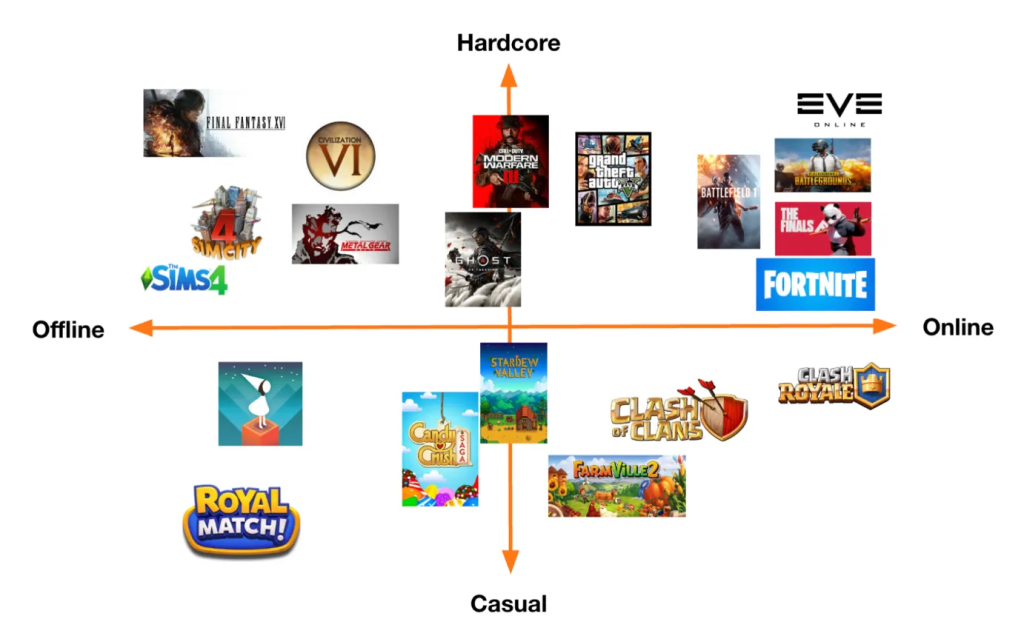
The experts seem to agree (but not fully) on the fact that there are just two kind of profitable shooter genres: tactical and battle royale. I am not sure about that, I prefer this Owen Mahoney’s segmentation:

Owen Mahoney’s view of the industry

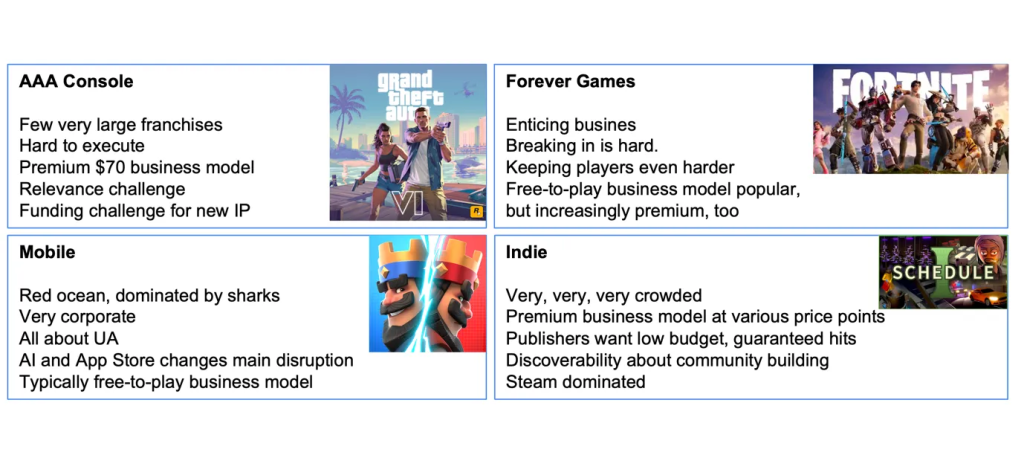
I believe that shooter as a genre fits in at least 2 quadrants: online and offline hardcore. Nicholas Lovell also has his view on the industry in general.

Nicholas Lovell’s view on the industry

And we know there are AAA fps, forever fps like Fortninte, mobile FPS, and also indies who build on top of boomer shooters. Finally, there is Christopher Dring view of the industry:

watch here: https://www.thegamebusiness.com/p/there-is-no-such-thing-as-a-video

Under this lens, I see games like STALKER being fps with stories. Fortnite and so on, are for socializing, but also competition/sport. COD and Battlefield as well. Boomer shooters are for passing the time, especially indies like this one.

I believe that the market is more complex and varied than the one pictured by Phillip Black in the DoF shooter monthly podcast.

What I do believe about the game modes

In the podcast, they insisted that the right number of people should be 5vs5 or 3vs3vs3, and I agree with them. But I believe that are also other problems with general game pacing:

  • Mining crystal is not the best during a shooter session, in my humble opinion. I know it’s a basic in Fortnite, but there you can then build things instantly. Here, instead, is to buy stuff from a vendor.
  • The vendor itself is slow and boring, can be put in another place
  • Upgrading/reparing walls is not so exciting, too.

First idea I would try to pitch and eventually design is to buy weapons and repair walls when you die. You die and while you wait, your “soul” can repair stuff. I know, maybe you prefer to watch what is happening, but that can be an extra cam or something while you fix things.

Another thing I noticed is that the most exciting part is when you raid or you need to defend from a raid. Still, I had the feeling that the attackers, the raiders, were stronger than the defenders. Maybe it’s just psychological, but I would like to try something asymmetrical, like 3vs5 (5 defenders).

Running on the horse while shooting is also cool, I remember that from RDR2, which lead designer works for Highguard. Maybe there can be the moment of earning crystals instead of mining.

3 ideas I would pitch:

  1. Buy weapons and manage base on death
  2. Asymmetrical raids
  3. Earn crystals while killing people from the horse

Maybe these would create more exciting/unique moments for Highguard.

Ubisoft and the “Efficiency Trap”: Why Algorithmic Logic Can’t Save a Lost Vision

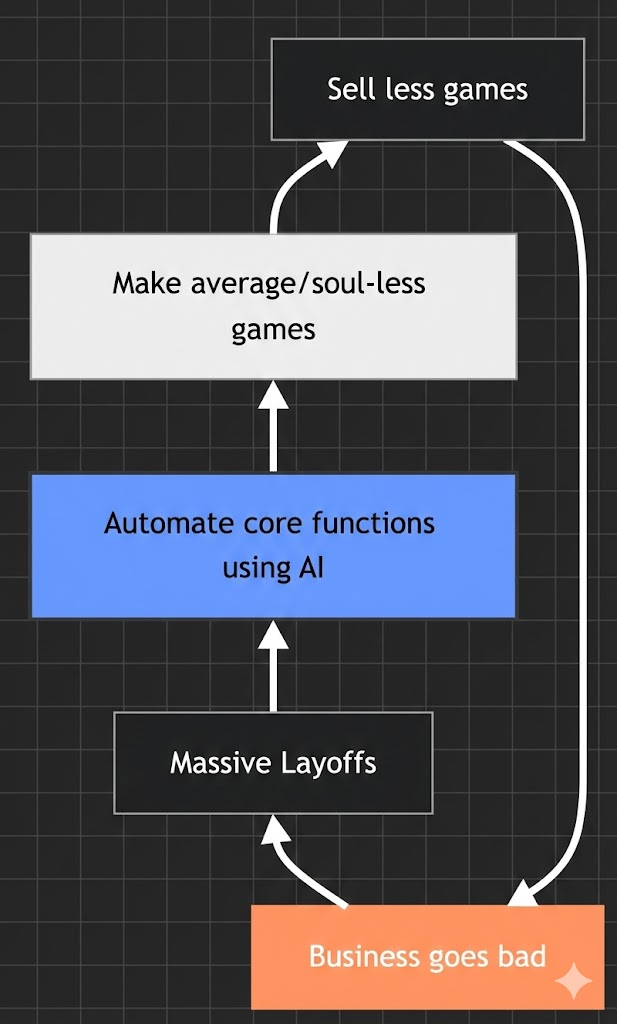
The recent news regarding Ubisoft isn’t just another headline about industry layoffs; it’s a “leading indicator” of a systemic crash. When the numbers don’t add up, the corporate playbook is predictably uninspired: cut the talent, automate the core, and pray the spreadsheet balances itself out.

But creativity isn’t an assembly line, Ubisoft might be the “canary in the coal mine” for an industry chasing its own tail. This isn’t just a trend; it’s a form of “drowning.” When inefficiency (ROI) drops too low, leadership grabs whatever is in reach—AI, NFT initiatives, or massive restructuring—often without even knowing what questions to ask their experts. They are borrowing against a future they don’t understand, hoping that money alone can catch the wind.

The “Glass Ceiling” of the French Elite

A company is only as brave as its leadership, and here we find a significant bottleneck. Ubisoft’s executive team is roughly 90% French, educated at the same elite business schools (ESSEC, ISG), with tenures spanning 30 years.

While these credentials are impressive on paper, they’ve created a cultural monoculture. This “upper-middle-class business elite” is now tasked with innovating for a global, diverse audience they are increasingly disconnected from. When leadership hasn’t seen the inside of another studio in three decades, they stop leading and start rehashing.

The AI Gamble: Partner or “Slop” Generator?

The debate around AI in development is often polarized. Someone argues that AAA gaming is “dead” without AI to reduce the staggering $200m+ budgets. I don’t disagree that budgets are exploding, but I disagree that AI is the silver bullet for quality.

AI isn’t the root of the problem, but it’s a risky “solution”. Relying on a technology that hasn’t yet delivered on its creative promises to save your strategy is a bet, not a plan. If you use AI to generate “slop,” you might save on costs, but you’ll lose the player.

From Rational Design to Brand Decay

Ubisoft once had a superpower: Rational Game Design. It was a method that allowed them to optimize the creation of epic adventures while maintaining a clear vision. But as they chased whales, “Games as a Service,” and unsustainable growth, they lost the creative DNA that made them special.

A software (and AI is just that) cannot solve a brand crisis. AI can’t fix the fact that Ubisoft has distanced itself from player fantasies and instinct—things that aren’t taught in prestigious business schools.

The Opportunity in the Chaos

The failure of long-term vision in these managers is an opening. The collapse of the old guard creates space for those who actually understand imagination and positioning.

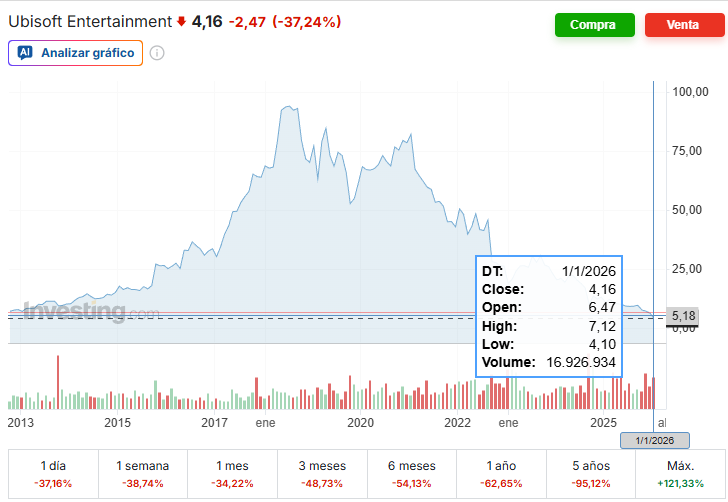
Ubisoft’s stock may be back to 1998 levels, but the talent is still out there. The question is: will they be allowed to lead, or will they be replaced by an algorithm until there’s nothing left to automate?

Put your game on top

I believe that games should speak from themselves and not for the technology that lies behind them.

Example: you make a great game, very successful, then you reveal how you did it. You can say everybody the technological advancements you did.

The other way around bothers me, it’s pure hype and generally speaking BS. Lately, with recent technologies such as AI, many founders are pushing out BS narratives because many investors are looking at the wrong side of things: how to make the development cheaper.

Game development is already very cheap, compared to the distribution and positioning. It’s a matter of selling and make money, more than spend less to produce. If you find the best tech in the World to replace people, many other teams will find it. That will not be a differentiator, in my humble opinion.

That’s why promoting like “we are a new AI-based studio” has the same importance as “we are a new C++-based studio”, and things like that. It’s not interesting at all. And this without considering the blatant fact that players, generally speaking, hate slop.