This post was originally written in Italian by Paolo Gambardella. It has been translated by an AI agent and may contain inaccuracies.
Last week a colleague showed me an interesting video: a game dev getting ChatGPT’s Astra and Claude’s Fable 5.1 to work together inside Unreal Engine, to build a Souls-like boss fight.
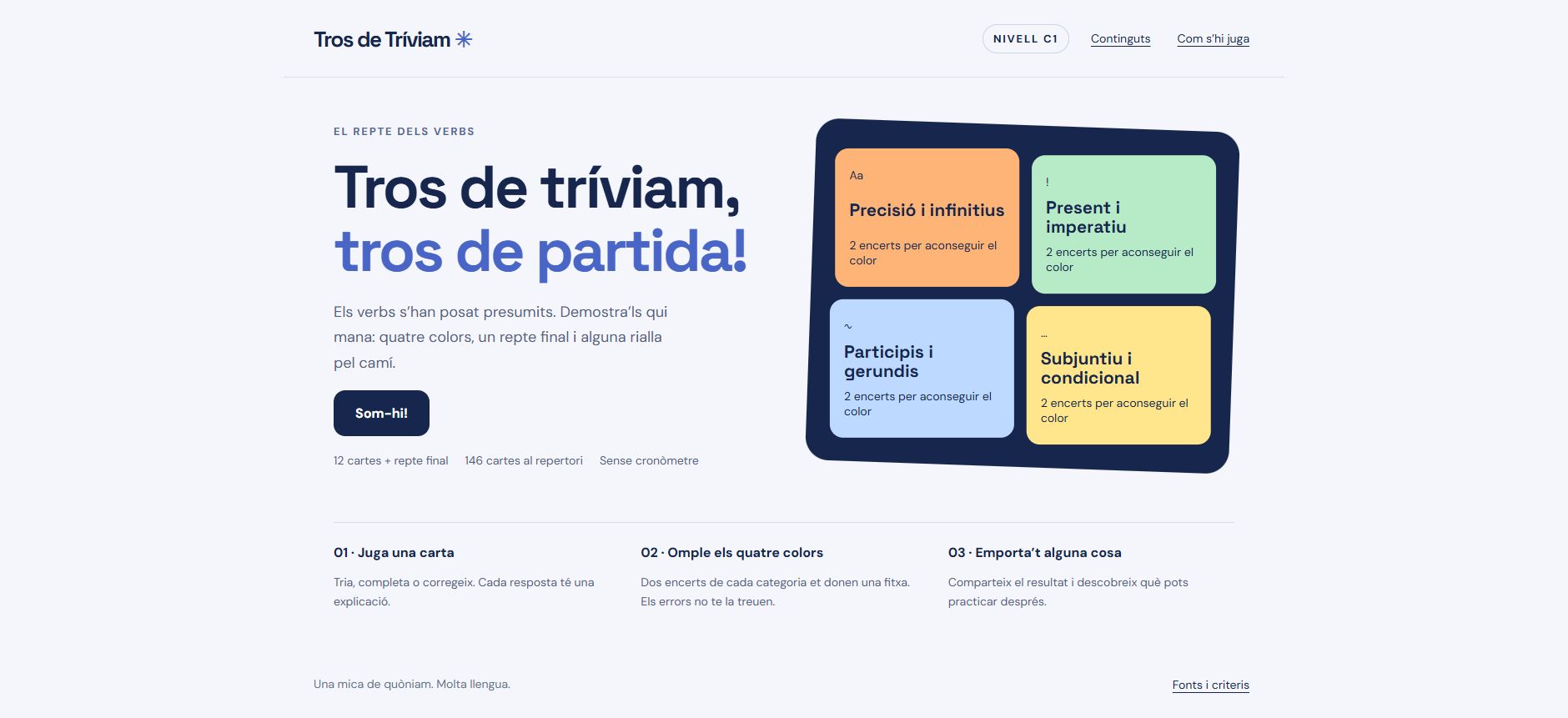
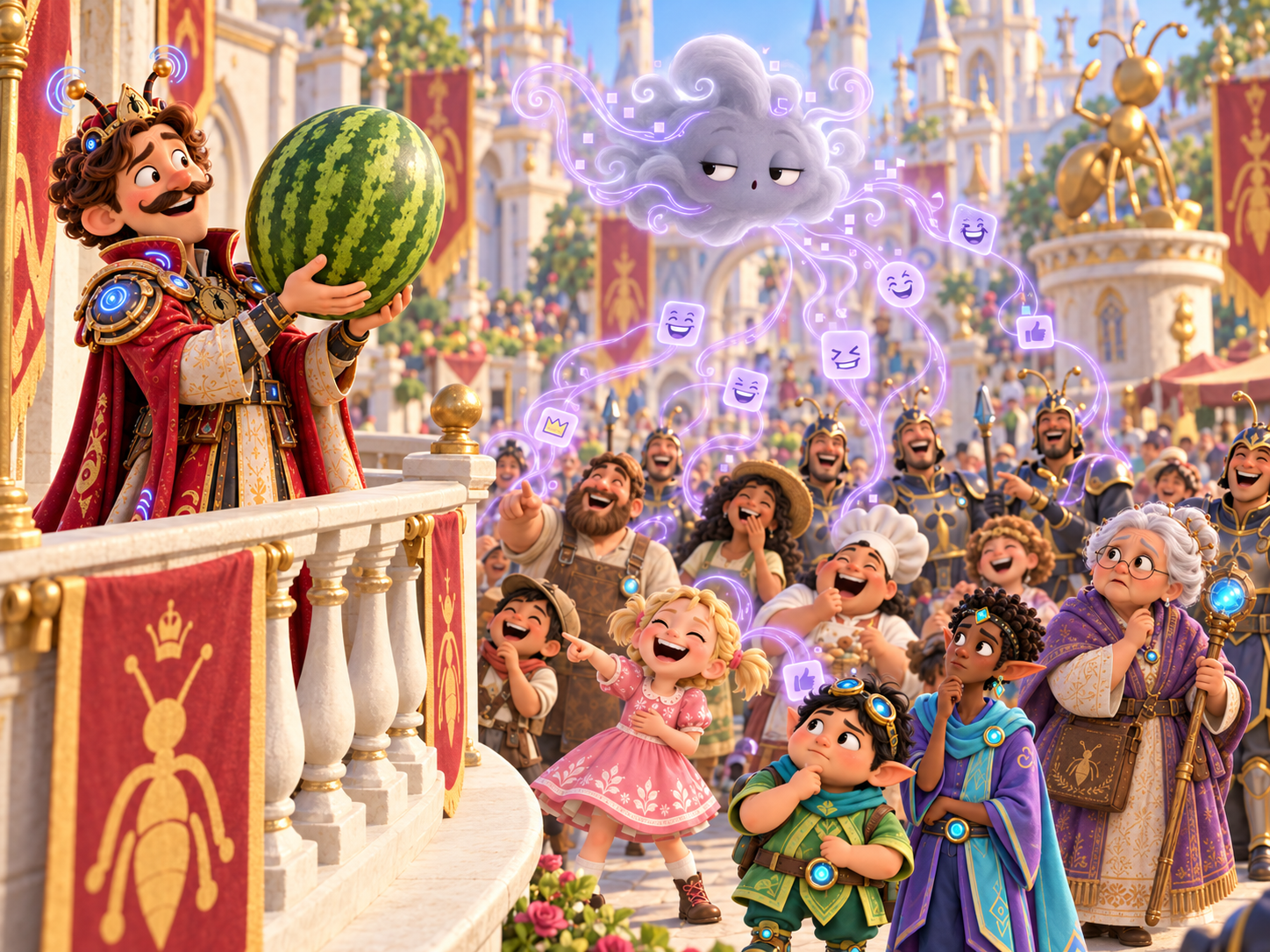
The video itself is about game development, but what struck me was seeing two different AIs working on the same material rather than just one. It reminded me of a story I’d had in my head for a while — “Princess Melon”: I’ve been telling it to my daughter Maria Laura at bedtime since she was born, and over the past month I’ve actually sat down and written it up properly in my spare time. So I thought: why not try the same thing myself, with Claude and ChatGPT, but to finally put a face to its characters?
I spent two days getting the two services to talk to each other: one would propose a character, the other would refine or build on it, until we landed on a consistent cast across all the illustrations — from King Ant to the Little Mist, who feeds on the gossip of people who judge without looking. The process helped me understand who these characters really are, and gave me a much clearer picture of the story itself. When I showed Maria Laura the princess and the friends I tell her about every night, her jaw dropped: for the first time she could see them, not just hear about them.
This morning at the gym I was already thinking about the next step: getting in touch with a professional illustrator to give the book a proper, original look — and maybe, who knows, self-publishing my first fairy tale.
There’s a small irony in all of this. “Princess Melon” is about a Little Mist who thrives on “apparently…” and people who laugh before they’ve even bothered to look for themselves. When I read the comments from the usual modern-day luddites, quick to pass judgement on AI instead of actually trying it, I feel like I’ve somehow wandered into my own fairy tale.
This post was originally written in Italian by Paolo Gambardella. It has been translated by an AI agent and may contain inaccuracies.
There’s a worrying trend that has quite literally exploded over the past few months, at least in my social feeds: posting drafts and half-finished work.
I see established professionals posting rough gameplay examples, presumably to catch the eye of a potential client or employer. I see junior people posting screenshots from 3D authoring tools or game engines, probably to demonstrate their skills.
Noise. Nothing but noise.
I understand the anxiety around wanting to carve out a place in the industry, and I’m all for the drive to get things done — but the problem is what we’re actually showing.
If your goal is to develop your indie game, think about serving an audience rather than collecting reactions on LinkedIn
If you’re looking for a job, nobody’s going to hire you just because you can open a piece of software.
The reality of the industry
I was reading yesterday this very interesting post by an industry leader — one of the most clear-eyed takes I’ve seen in months. The reality is that we’re in a moment of consolidation (not a crash, as some people like to say), where the investor narrative can’t promise growth anymore. There’s an enormous amount of talent out there looking for work right now, which makes it genuinely hard to stand out.
This naturally leads people to think that standing out and differentiating yourself is what matters. And in a way, that’s true — but I don’t think speed is the key factor here. Posting half-finished work does get your voice out there sooner, yes. But it also shows your scrappy, unpolished side.
So how do you actually stand out?
I don’t have a magic formula, but I’ve been in the industry for years and built my own position from scratch, so I do know a thing or two. The most important thing is the relationships you build with other people — anything you can do to build them better is worth doing.
If you’re an indie developer looking to get visibility for your project, you need to do everything you can to connect with your early adopters as soon as possible. Find out where they are, talk to them, genuinely try to understand how they play, what they buy and why. If you’re putting together a video to grab attention, do it with the right level of polish.
If you’re a professional without much experience, rather than showing things that frankly anyone can do (look, here’s my axe on ArtStation!), put in the work to figure out what makes you unique, and show that in the best way you can. Nobody cares about the how — they care about the end result and why you believe it’s strong.
If you’re an experienced professional, there’s no point showing off that you built a new prototype in a few minutes. Instead, focus on helping people understand why working with you is a good idea. Nurture the relationships you already have, teach what you genuinely know — videos work well for this. Help people see that you’ve learned to think deeply about certain things.
Less slop, less spam, and more real connections and genuine knowledge-sharing!
This post was originally written in Italian by Paolo Gambardella. It has been translated by an AI agent and may contain inaccuracies.
The big moment has finally arrived: my all-time favourite game has been announced as a remake.
This game belongs to a different era — one where we all looked to the future with curiosity. The opposite of today, when the future feels more like a threat. After Super Mario 64 wrote the grammar of 3D, the new Zelda arrived: an epic novel written in that same language.
The innovations were countless, from the enemy lock-on system to an inventory you could browse and use directly from the gamepad. But the most important one was that it was no longer simply a game built around the fantasy of fighting with a sword: it had become a story with a deeper meaning about childhood and growing up.
The design choice to add jumping as an action available to the player at any time does shake things up a little, and perhaps opens the door to new secrets built around ledges and elevation — something that was simply off the table before. In return, though, it adds complexity to the controls.
On that note, I wonder how this game will land with the new generations — those who never played the originals on either the N64 or the DS. I’m optimistic. On top of that, within a couple of years Nintendo will have an iron grip on the market, if Sony and Microsoft keep ignoring the needs of their core customers.
I believe in these remakes as a powerful form of cultural preservation, and I’m glad both that I get to replay this title, and that new generations will get to experience it too!
This post was originally written in Italian by Paolo Gambardella. It has been translated by an AI agent and may contain inaccuracies.
A few weeks ago I took part in a contest inside a fitness game. A acquaintance had told me about it — a friend of a friend. The prize was a trip to the Maldives for two, for whoever topped the leaderboard. To earn points you had to work out every day in front of your phone camera. Each session gave you the right to open a gacha, and the gacha decided how many points you received. With a bit of luck you could shoot straight to the top of the rankings in one go.
There were over a hundred of us. Then the problems started. The system rewarded people who brought in new sign-ups, and fake accounts started sprouting up in clusters, which the developers had to delete by hand. More than anything else, new rules began appearing — rules that hadn’t been announced at the start. One of them said something like: post a video on Instagram and you instantly get a hundred points. I’m not on Instagram. I read that and thought it was rubbish, that my goal had just moved a long way further away through no fault of my own. I quit.
The original idea behind that game wasn’t bad. You work out (which is good for you), you film yourself, you earn something. The way the contest was handled killed it within days.
The contract with players
Yesterday I was reading a piece by a video game economist. He made one simple, sound point: the way a game asks you for money is a kind of contract. You sign it when you start playing. If the other party rewrites the terms halfway through, the contract is broken — and so is the trust. My contest had a different kind of contract, about acquisition rather than monetisation. But the principle is the same.
The rest of that article, in all honesty, convinced me far less. The author described secret experiments run on millions of players, jaw-dropping figures that nobody had ever verified, a theory that supposedly explains everything. The further I read, the more it felt like the convoluted language was there to paper over the cracks in the writer’s argument. I’ll take the contract idea and leave the rest where it is.
A feeling about new models
The industry needs new ways to get noticed and get paid. The models that dominate free-to-play today — especially the 4X games coming out of Asia like Whiteout Survival — work extremely well on the numbers. The engine is social pressure: you join an alliance, others are counting on you, and to avoid letting the team down you keep spending. The problem is who’s actually footing the bill. Very often it’s people with serious dependency issues, and a model built around them isn’t something I’m proud of.
A few years back, during a rough patch at work, I got hooked on Heroes of the Storm. I used to play it with an acquaintance and we had a great time. It worked because it was skill-based: a team that was losing could turn the game around through ability, by capitalising on the other side’s mistakes. That unexpected epic win did me good, at a time when not much else was going right. In 4X games that feeling simply doesn’t exist. What counts there is time and money, and pressing the same button for weeks on end.
A healthier model is possible. In the short term it brings in less, because it deliberately lets go of the players who spend compulsively. Over the long term it’s a different story: player trust, word of mouth, the desire to come back the following year. I don’t have hard evidence for this, and I’m wary of anyone who claims they do. I have a gut feeling, and that’s a different thing.
Choose a model you can actually sustain
There’s one last piece, and it concerns those of us who make games. A sophisticated monetisation model requires people who know how to run it: balancing economies, moderating communities, keeping servers up, producing content without let-up. If those people aren’t on the team, the ambitious model won’t deliver more revenue. It’ll just deliver more ways to get things wrong.
Better to choose something simple and do it well. And to treat the people playing as someone you’ve made a pact with, not as a target to keep hitting until they give in.
This post was originally written in Italian by Paolo Gambardella. It has been translated by an AI agent and may contain inaccuracies.
Every six months a new piece of technology comes out and people start getting excited, declaring on one hand that we’re done for, that we’ll all end up washing dishes; and on the other that we’ll never have to work again and life will be wonderful for everyone. All of it accompanied by the same case studies every time, heavily inspired by the worlds of video games and science fiction.
I don’t fall for it anymore, thank God.
There is nothing that can replace the human ability to communicate with other people. This includes:
playing music for other people
telling stories to other people
informing other people
listening to other people
Imagine for a moment that we had a programme capable of creating a complete game. Production, programming, art direction, design, quality assurance, sound design — the lot. You’d still need people who could walk into a room and make others feel something. A conductor, capable of telling compelling stories, creating memorable experiences, entertaining. No programme can do that, because the moment something like that becomes automated, it loses its novelty.
I therefore think this is the time to be more serious about things, not to give up. Your mind, your physical abilities, and the way you read a context will carry more and more weight — precisely because they are human and unique.
This is also the area I’ve invested nearly 10 years in through teaching, and the reason this blog is still going.
This post was originally written in Italian by Paolo Gambardella. It has been translated by an AI agent and may contain inaccuracies.
A few weeks ago, a LinkedIn contact proudly showed off their vinyl shelf. They mentioned they also have Spotify Premium. But the records they truly love — they want to hold them, not just stream them.
For years the narrative in entertainment has been straightforward: physical is dead, streaming and digital are the future. But recent data tells a different story.
The American vinyl market has crossed the billion-dollar mark for the first time, marking its nineteenth consecutive year of growth (RIAA, 2025 Year-End Music Industry Revenue Report). Something similar is happening in film: while standard DVDs continue to decline, 4K UHD Blu-ray sales have risen 12%, a sign that the most passionate audiences want to own their content in uncompressed quality, without depending on a platform-tied licence (Digital Entertainment Group data, as reported by FlatpanelsHD).
What about video games?
Here, platform holders are moving in the opposite direction. Disc drives sold as optional accessories, a constant push towards GaaS, ecosystems designed to go ever more digital. I understand the short-term logic: digital margins are higher, distribution costs less, player data is easier to collect. But optimising for short-term margin risks alienating the most loyal core audience — the very same people who, in music and film, are today driving the physical revival.
It’s true that in volume, digital still leads aggregate sales, especially when you lump together mass-market multiplayer titles and premium single-player experiences. But high-end single-player games are emotional investments. Players don’t just consume them — they collect them. I know people who keep the cases of the games that shaped them on their living room shelf, just like my friend keeps his records on his.
On that note, have a listen to this gorgeous Ukrainian lullaby from the new Stalker 2: Cost of Hope DLC:
Why digital is still winning, for now
Geopolitical pressures on supply chains and component costs currently give digital distribution a real cost advantage, and that’s the main reason platform holders are pushing in that direction. But when supply chains stabilise and fatigue around digital licensing — that feeling of “you don’t actually own what you buy” — keeps growing, I think physical will find its moment of revival in gaming too, perhaps on a smaller scale than before, but still meaningful.
Chasing digital uniformity to chase a trend risks losing sight of a simple principle that vinyl and Blu-ray have been quietly proving for years: premium content creates premium collectors.
My gut feeling is that platform holders are abandoning their most loyal fans too soon, all to run after a passing industry trend.
This post was originally written in Italian by Paolo Gambardella. It has been translated by an AI agent and may contain inaccuracies.
Yesterday I went out for dinner with my family at a restaurant. I asked for details about a dish, the waitress gave them to me, I ordered it. When it arrived, several of the things she’d described were missing. I pointed it out, she went to speak to the chef, who sent back the message: “that’s how the dish comes.”
I’m unlikely to go back. And for a moment I thought about leaving a negative review on Google Maps. I went to look the place up, read through the existing reviews, and found plenty of positive ones and just as many negative — the negative ones almost always about the exact same thing as my experience.
Adding mine would have just been noise on top of noise. And when you think about it, what we’re really doing when we leave a review like that is feeding a platform and potentially damaging someone who, that evening, had simply made a mistake. I let it go. If someone asks me to recommend a restaurant in future, I just won’t mention that one.
What struck me, thinking it over afterwards, was why that dish had bothered me so much. It wasn’t just the missing elements. It was that the explanation I got — “that’s how it comes” — left me with no sense of control: I couldn’t understand what had happened, I couldn’t avoid it next time, the blame sat entirely outside me and was presented as a fixed house rule. If the chef had said “you’re right, we missed that, let me redo it,” I’d probably have left happy anyway. It’s the same mechanism that makes a player get angry — not so much at losing, but at not understanding why they lost and not knowing what to change next time. Negative reviews, whether for restaurants or games, more often come from that kind of frustration than from the difficulty itself.
And players leave reviews on platforms far more often than a customer leaves a review for a local restaurant. That review, on Steam, has a direct impact on a game’s sales. It’s why platforms in my industry have overtaken even personal recommendations: your opinion, if you write it there, carries real weight (unlike with neighbourhood restaurants, thank goodness).
How do you survive in this kind of situation?
I was watching an interview with a designer who says he doesn’t play other games during development, so as not to be influenced. The interviewer points out that Shigeru Miyamoto has said similar things on several occasions — arriving at his own solutions rather than retracing what already exists.
I work in exactly the opposite way, probably because I don’t make my own games but work for third parties (clients and GSC Game World, at the time of writing). When I start a new design I always look for the unique and distinctive elements by starting from what the competition is already doing. Pareto’s rule applies: 80% familiar territory, 20% novelty. To put it into practice I use a few platforms:
I use Gemini and Claude for research
I use Steam to study competitors’ capsules and descriptions, and to read reviews
I use YouTube as a kind of quick playtesting proxy
A concrete example: if I’m working on a progression system, I’ll first go to Steam and read what players love or hate about similar systems that are already out there (that’s my 80% — what the audience already expects and recognises). Then I look at where all the competitors start to look too much alike, because that’s where there’s room for the 20% of novelty that makes a game stand out without scaring off the people who try it.
It also depends on the kind of work I do: I can’t play the “misunderstood genius” when I’m working for a client — I need to meet their requirements as professionally as possible. But I don’t experience that as a creative compromise. Looking first at what already exists and figuring out what I can adapt, recombine or recalibrate is a genuine working method, not an imposed constraint: more often than not, the smartest move isn’t to invent from scratch, but to find the right lever in what already works.
Platforms, in this sense, help me enormously — speeding up tasks and bringing solid data to help me align with the client. The very same platforms that now dominate the games industry are the ones that provide the most valuable tools for improving what I do. On the other side, though, the most skilled creators use them differently, and go out of their way not to let them have a hold over the creative process when it really matters.
Maybe the answer isn’t to pick one approach over the other, but to know when to use each. Platforms as a research tool when I’m working for someone else and need to understand what the market expects. Silence when I’m working on something of my own and want it to come from an idea, not from a comparison. And in both cases, the lesson from the restaurant stays the same: whether you’re reading reviews or designing a system that will generate them, the right question isn’t “how harsh is the verdict” — it’s “does the player understand why it happened, and do they feel like they can do something about it next time.”
This post was originally written in Italian by Paolo Gambardella. It has been translated by an AI agent and may contain inaccuracies.
La crisi che stiamo vivendo nel settore dei videogiochi deriva principalmente dal fatto che il potere si è spostato dai publisher alle piattaforme. Una delle piattaforme contemporanee più rilevanti è Roblox.
Anche se il suo modello di business è discutibile, il 50% dei bambini americani apre Roblox nel corso della settimana. La piattaforma è estremamente accessibile e presente su molteplici dispositivi. Il che mi riporta, a mio avviso, a un momento simile all’inizio degli anni ’90, quando la gente iniziava a chiedersi cosa fosse davvero un videogioco — il momento in cui nacquero Baldur’s Gate e titoli simili, per capirci.
Lo dico sempre ai miei colleghi e clienti: se il tuo gioco esce tra sette anni, il pubblico a cui ti rivolgi in questo momento sta probabilmente giocando su Roblox, Minecraft e Fortnite. Fare previsioni è impossibile, perché i videogiochi toccano corde molto personali e le tendenze vanno e vengono. Un gioco in stile anni ’90 potrebbe tornare di moda nel 2030 — non lo sappiamo.
Eppure noto una tendenza a voler ignorare queste mode, in gran parte perché non corrispondono a quella che consideriamo la nostra idea di come dovrebbe essere un videogioco. Siamo cresciuti con certi valori, quei valori vengono oggi messi seriamente in discussione, e questo porta inevitabilmente a degli attriti. È del tutto umano cercare di evitarli con qualche scusa, perché fare i conti con ostacoli reali fa anche male.
Quindi, per quanto sia vero che Roblox ha permesso la diffusione di un gioco in cui era possibile pagare per derubare bambini dei loro personaggi virtuali e umiliarli, è altrettanto vero che moltissime persone scelgono quella come forma di intrattenimento. La formula del successo, secondo me, sta nel trovare il modo di far convivere i nostri ideali con queste nuove tendenze.
This post was originally written in Italian by Paolo Gambardella. It has been translated by an AI agent and may contain inaccuracies.
In 2022 I decided to try switching careers, from mobile to PC/console games. You know the ones — in crisis, not growing, running on increasingly expensive hardware, built by hundreds of well-paid people over seven years on unsustainable business models? Yeah, those. Well, not exactly those — I’m being ironic… but you get the idea.
I actually managed it this year. In March I joined the ranks of GSC Game World, the creators of the legendary S.T.A.L.K.E.R., thanks to a recommendation. “We need people like you,” my friend Adrian told me in August 2025, and seven months later I was in. After years of a career in mobile and now moving to PC and console games, I’m realising just how much I still have to learn about game design. The shift in mindset is sharp.
Mobile and premium
In mobile, speed and execution efficiency are everything, because the business runs fundamentally on performance marketing. Companies pay to acquire users (when a game is free, your time becomes the currency), so the whole game is about retaining them and nudging them towards small payments to keep them hooked.
Premium titles are a completely different story:
First of all, there’s a direction to discover — somehow — together with your team. It’s about creating a memorable experience, built on a fantasy that taps into something players genuinely desire. You can’t run quick experiments the way you do in mobile; instead, you have to think carefully through all the possibilities a feature opens up.
Games like S.T.A.L.K.E.R. already have their audience, a good chunk of whom are very vocal online. The ability to listen to all those voices and turn feedback into concrete design decisions becomes essential. In mobile, it’s more about making changes and watching behavioural data, since the players who spend the most and keep the business afloat — the so-called whales — tend to be pretty quiet.
Everyone has their passion, their ego, and their experience, so working on premium game design means finding the meeting point between personal creative vision, business sustainability, and technical feasibility with the developers. A decision made today could have ripple effects five to seven months down the line. Very different from mobile, where you can iterate much faster and where personal creative vision only goes so far (see: dark patterns that nobody actually likes, but that we all end up using anyway because there’s no real alternative).
Technology and AI
Lately a lot of players have been emerging promising to speed up content production, and the most popular technology is obviously artificial intelligence. However, the critical judgement, vision, and systemic sensitivity needed to build this kind of product make these tools less useful than you’d think. You need to think very strategically, and you also need leadership skills to navigate the different habits and personalities within a team. No algorithm helps you with that. You’re far better off picking up a hobby, exercising, reading history and philosophy to understand what makes people tick.
I’m happy, and that’s what matters. My little business isn’t in crisis, I’m also building an indie game, and I’m in a very creative phase of my life. Most importantly, I’m getting my hands on things that are real — things that actually matter.
This post was originally written in Italian by Paolo Gambardella. It has been translated by an AI agent and may contain inaccuracies.
Watch this:
Things like this put me in a difficult headspace. On one hand, I feel all those emotions that led me to choose this career path in the first place. On the other, though, there’s this strange sense of sadness. I’m aware that it’s very unlikely I’ll ever put my name on something so memorable that its soundtrack gets played at GDC in that kind of spine-tingling way.
And not for lack of wanting — let’s be clear about that. But there are a number of things I can’t control, which may or may not put me on the right path. I mean, just imagine hearing the music from your game being played, and catching those little yelps of excitement from the audience who loved the experience.
That’s the ultimate goal I’m chasing in everything I do, but it doesn’t depend on me alone. It depends on a huge number of factors, most of which are out of my hands. The most likely outcome, if we’re being honest with ourselves, is that something like that will never happen. My career will never reach those kinds of milestones — if you just look at the numbers.
That’s why I choose to focus on the journey, not the destination. I’m not really the type who goes “I believe in this game, so I’ll develop it on my own if I have to, because it needs to exist.” I’m someone who grew up — in terms of play and culture — in tabletop RPG clubs. In nerd circles, listening to alternative music, never dressing fashionably. Actually having a real disdain for trends. Today I’m different; I’m still that guy, but also a man with his own values, and my goal is to pass those things on to others. I focus more on my relationships with the people I work with, with my team.
Because, sad as it may be, it’s the truth: in all likelihood, I’ll never work on something that becomes truly memorable. But what matters is to keep working with passion on whatever comes my way.
We use cookies on our website to give you the most relevant experience by remembering your preferences and repeat visits. By clicking “Accept”, you consent to the use of ALL the cookies.
This website uses cookies to improve your experience while you navigate through the website. Out of these, the cookies that are categorized as necessary are stored on your browser as they are essential for the working of basic functionalities of the website. We also use third-party cookies that help us analyze and understand how you use this website. These cookies will be stored in your browser only with your consent. You also have the option to opt-out of these cookies. But opting out of some of these cookies may affect your browsing experience.
Necessary cookies are absolutely essential for the website to function properly. These cookies ensure basic functionalities and security features of the website, anonymously.
Cookie
Duration
Description
cookielawinfo-checkbox-analytics
11 months
This cookie is set by GDPR Cookie Consent plugin. The cookie is used to store the user consent for the cookies in the category "Analytics".
cookielawinfo-checkbox-functional
11 months
The cookie is set by GDPR cookie consent to record the user consent for the cookies in the category "Functional".
cookielawinfo-checkbox-necessary
11 months
This cookie is set by GDPR Cookie Consent plugin. The cookies is used to store the user consent for the cookies in the category "Necessary".
cookielawinfo-checkbox-others
11 months
This cookie is set by GDPR Cookie Consent plugin. The cookie is used to store the user consent for the cookies in the category "Other.
cookielawinfo-checkbox-performance
11 months
This cookie is set by GDPR Cookie Consent plugin. The cookie is used to store the user consent for the cookies in the category "Performance".
viewed_cookie_policy
11 months
The cookie is set by the GDPR Cookie Consent plugin and is used to store whether or not user has consented to the use of cookies. It does not store any personal data.
Functional cookies help to perform certain functionalities like sharing the content of the website on social media platforms, collect feedbacks, and other third-party features.
Performance cookies are used to understand and analyze the key performance indexes of the website which helps in delivering a better user experience for the visitors.
Analytical cookies are used to understand how visitors interact with the website. These cookies help provide information on metrics the number of visitors, bounce rate, traffic source, etc.
Advertisement cookies are used to provide visitors with relevant ads and marketing campaigns. These cookies track visitors across websites and collect information to provide customized ads.