Skip to content

Tag: research

Різ Гравця

Цей допис був написаний мовою оригіналу — італійською — Паоло Гамбарделлою. Його перекладено агентом штучного інтелекту, і він може містити неточності.

Метью Болл став Chief Strategy Officer у XBOX. В одному зі свіжих інтерв’ю на Summer GameFest 2026 він заявив: ми знаємо, чого хочемо, але ще не готові говорити про це публічно.

Поважаю відвертість. Але проблема, яку я бачу, стосується всієї індустрії. Сучасні ігри й далі проектуються з негласним розрахунком: що гравець має бажання, час і терпіння пройти лінійний досвід від початку до кінця. Пригода, RPG, наративна гра. Тебе садять перед твором, який треба «прожити» як фільм тривалістю 60+ годин. Такий негласний договір.

Я це розумію. Final Fantasy VII, The Legend of Zelda, GTA — це були світи, в яких можна було оселитися. Але хто такі сучасні гравці? Це не я в 13 років. Це хлопці й дівчата, які виросли на Roblox, Minecraft, TikTok. Жодна з цих платформ не вимагає починати з початку, щоб щось зрозуміти. Досвід там модульний, такий, що можна запускати знову і знову, фрагментований.

Roblox не має фіналу. Minecraft не має основного сюжету. TikTok теж не починається з першого епізоду. Це архітектурні фічі, які відображають те, як нові покоління споживають цифровий досвід.

Монтаж від гравця

У мене є проста, можливо трохи радикальна ідея. А що, якби ми проектували довгу гру — RPG, пригоду — не для того, щоб її скорочували, а щоб її монтував сам гравець?

Базове правило: йдеться не про те, щоб прибрати контент. Йдеться про те, щоб дати гравцеві інструменти для складання власного досвіду.

Характеристики системи

Диференційовані шляхи прокачки. Воїн і маг в одній пригоді мають проходити різні маршрути. Уяви ту саму історію, але відфільтровану через навички персонажа. Обираєш героя — і граєш певний етап відповідно до його характеристик. Потім переходиш до наступного, або перепроходиш той самий відрізок за іншого спеціаліста.

Наративні точки входу. Як у серіалі з самодостатніми епізодами, кожна сесія повинна мати впізнаваний початок і кінець. Гравець, який повертається після трьох тижнів перерви, не має починати все спочатку — він може зайти з продуманої точки входу з коротким контекстним рекапом.

Змінний темп, а не змінна складність. На початку кожної сесії гра неявно запитує: у тебе є 20 хвилин чи три години? Потік підлаштовується. Це і є повага до реального часу гравця.

Розумний скіп без штрафів. Якщо ти вже виконував схожий квест або певний етап просто нудний — система дозволяє переглянути підсумок і пропустити його (бажано без втрати нагород). Вибір завжди за тобою. Гра не карає тебе за нього.

Монтаж як агентність. Правда ось у чому: свобода в іграх — це те, що ти вирішуєш не робити. Кінематографічні ігри ризикують перетворитися на маркери на карті, чеклисти, індикатори прогресу і таке інше. Все проектується так, щоб ти нічого не пропустив.

Що вирішила б ця система?

Страх індустрії такий: менше контенту = менша відчутна цінність = менше покупок. Але подивіться на Roblox. Кожен окремий досвід там триває 15–30 хвилин, а платформа «нескінченна». Модульна архітектура примножує цінність. RPG на 80 годин, яка поважає твій ритм, коштує більше, ніж RPG на 80 годин, після якої почуваєшся винним щоразу, як кидаєш гратися.

Метью Болл відмовився відповідати на багато запитань. Але те, яке ведучий йому так і не поставив, звучить так: ви переосмислюєте формат продукту чи тільки платформу?

Бо якщо ігри й далі розраховані на гравця, який сидить 40 годин поспіль, — ви втратите нові покоління не через Roblox. Ви їх втратите тому, що не змінили мову. Roblox — це просто та мова, яку вони вже розмовляють.
Ocarina of Time: майстер-клас з проектування трагедії

Цей допис був написаний мовою оригіналу — італійською — Паоло Гамбарделлою. Його перекладено агентом штучного інтелекту, і він може містити неточності.

Є стаття Ренана Фонтеса про Goomba Stomp, яка аналізує The Legend of Zelda: Ocarina of Time. як класичну трагедію. Лінк втрачає дитинство, рятуючи світ, до якого вже не може повернутися, і навіть коли Зельда відправляє його назад у часі, це лише остаточне підтвердження тієї втрати.

Варто прочитати. Я й прочитав — якраз коли оголосили про рімейк цієї великої класики.

Трагічний механізм

Ядро тези Фонтеса просте: Лінк — дитина війни, вже відірвана від Кокірі ще до того, як історія починається. Меч Мужності карає його за нетерплячість сімома роками сну. Прокинувшись дорослим у спустошеному Хайрулі, він стає кимось іншим.

У фіналі Зельда відправляє Лінка в минуле, але саме в цей момент Наві іде. Навіть якби можна було знову стати дитиною, ти вже не був би тим самим. Прожитий час не відмотаєш назад.

Це відчуття виникає не з написаного наративу як такого, а з того, як гра побудована навколо цілісної емоційної ідентичності, і з того, як дбайливо розставлені по ній найпам’ятніші моменти.

Peak-End: моменти, які залишаються

Психологія peak-end каже нам, що люди запам’ятовують досвід не як середнє значення кожної прожитої секунди. Вони пам’ятають емоційні піки і фінал. Решта осідає на дні, але не визначає враження.

В OoT піком, мабуть, є відхід Наві. Це тиша в Храмі Часу, коли світ набуває форми знову. Це Сарія, що прощається, не знаючи, що це прощання назавжди.

Посередня гра поставила б емоційний пік у фінальний бос-файт. OoT поміщає його в тиху втрату. Фінал (маленький Лінк у дворі замку, Зельда дивиться здалеку) нічого не закриває. Він залишає відкриту рану. Ту рану, з якою гравці живуть десятиліттями. Ту саму, що особисто мені колись перевернула щось усередині.

Урок: найпотужніший пік часто не збігається з механічним кульмінаційним моментом. Якщо хочеш, щоб досвід запам’ятався певним чином, — проєктуй пам’ять, а не подію.

Емоційна обіцянка

OoT має чітку емоційну ідентичність: героїчна меланхолія. Відчуття, що дорослішання завжди коштує чогось безповоротного, і що навіть мужність не рятує тебе від цієї ціни.

Кожен елемент гри просякнутий цією атмосферою. Музика (Saria’s Song, Bolero of Fire, Пісня Часу) передує дії та коментує її. Храми схожі на місця, покинуті кимось, хто ще любив там бути. Хайрул Філд вночі — велика і тиха, як обіцянка, яку можуть і не стримати.

Коли гра знає, яку емоційну обіцянку вона дає, кожне рішення стає узгодженим. Кольори, тиша в діалогах, дистанція між персонажами — все це провідники одного й того самого відчуття.

Урок: поряд із проєктуванням механік і систем варто точно сформулювати, яку емоцію ти хочеш залишити після себе. Раджу щось конкретне. Це може породити незручні розмови з командою або керівництвом. Але це важливо.

Player Need Satisfaction: чому втрата болить

Теорія самодетермінації виділяє три фундаментальні психологічні потреби: автономія (відчуваю, що діяю сам), компетентність (відчуваю, що розвиваюся), належність (відчуваю, що я частина чогось).

OoT є трагедією ще й тому, що задовольняє всі три — а потім відбирає їх перед титрами.

Є автономія: вибираєш, куди йти, коли повертатися, як використовувати інструменти. Є компетентність: стаєш дорослим, перемагаєш неможливих ворогів, опановуєш магію. Є належність: Сарія, Наві, Малон, мудреці — мережа зв’язків, зіткана шматок за шматком.

А потім гра все це розбирає.

  • Сарія назавжди замурована в лісі
  • Наві іде без жодних пояснень
  • Зельда відправляє тебе назад, але та версія тебе, яка прожила ці сім років, повернутися не може.

Урок: втрата в грі болить рівно настільки, наскільки гравець вклався у побудову чогось. Якщо хочеш, щоб трагічний фінал мав вагу, психологічні потреби мають бути задоволені перш, ніж їх відберуть.

Висновок

Фонтес написав наративний аналіз. Але за ним ховається щось цікавіше: OoT працює як трагедія, бо дизайнерські рішення і наративні рішення спрямовані в один бік. Це і є узгодженість. І я радий, що моя донька зможе пережити цей великий досвід в оновленій версії.

Читати оригінальну статтю на Goomba Stomp

Не давайте себе відволікатися

Цей допис був написаний мовою оригіналу — італійською — Паоло Гамбарделлою. Його перекладено агентом штучного інтелекту, і він може містити неточності.

Цього тижня відбувся Sony State of Play, де показали нового God of War. Головною героїнею гри стала дружина Кратоса, а компаньйоном — куб, зовсім не той, якого можна було б очікувати. Після події я гортав LinkedIn, і «експерти» один за одним висловлювалися. Персонаж неправильний. Куб не має сенсу. Зміна статі протагоніста ніколи не спрацьовувала в інших франшизах.

Реакція людини, яка реально працювала над грою, коштує більше, ніж сотня LinkedIn-постів разом узятих. Чесно кажучи, мені вже трохи набридло, як люди використовують цю здатність алгоритмів просувати скандальні пости. Особливо коли ці люди не роблять відеоігри, не варяться в цьому котлі. Краще послухати пристрасть тих, хто справді працює над іграми.

Ще одне, що хочу відзначити: Santa Monica Studios давно довела, що вміє робити успішні ігри. Ми всі маємо поважати чужий досвід і визнавати, що ті, хто знають більше за нас, швидше за все мають рацію. Я перестаю стежити за подкастами й каналами, які живуть лише на скандалах, бо вони відволікають від того, що насправді важливо.

Freshness is safer in ideation stage

When two medics decided to make Baldur’s Gate, they didn’t have experience with CRPGs. When Mr. Myiamoto directed FZero on SNES he wasn’t a veteran in racing games. When a marketing guy from Ubisoft decided to make a realistic-style JRPG together with a programmer, he didn’t have previous experience in the genre.

Still, many companies publish job offers for specific positions requiring previous experience in the specific genre they are developing. It’s because of the belief that higher skill means faster results, and more important, less risks. This happens a lot on high-quality games and mobile F2P, because these business models became managed in a McKinsian way. And that, kids, is why they are in trouble.

Still, games like PRAGMATA are showing that there are audiences eager to new experiences, with unique blends of mechanics. I don’t know their stories, but I am playing the game and I wouldn’t be surprised if among their team there are designers with no previous experience with 3D action-adventure games. Video games like PRAGMATA are only possible when you are open to a completely different perspective, and when you let people work. I believe it’s hard to find this fit if your job offer filters opportunities out.

Experience within a genre is very important, don’t get me wrong. But the more I work, the more I realize I am full of biases. The more experience I get, the more I push for research and playtesting. New audiences are playing in ways often ignored by a big portion of developers, a sort of tunnel vision you have when you make always the same thing over and over.

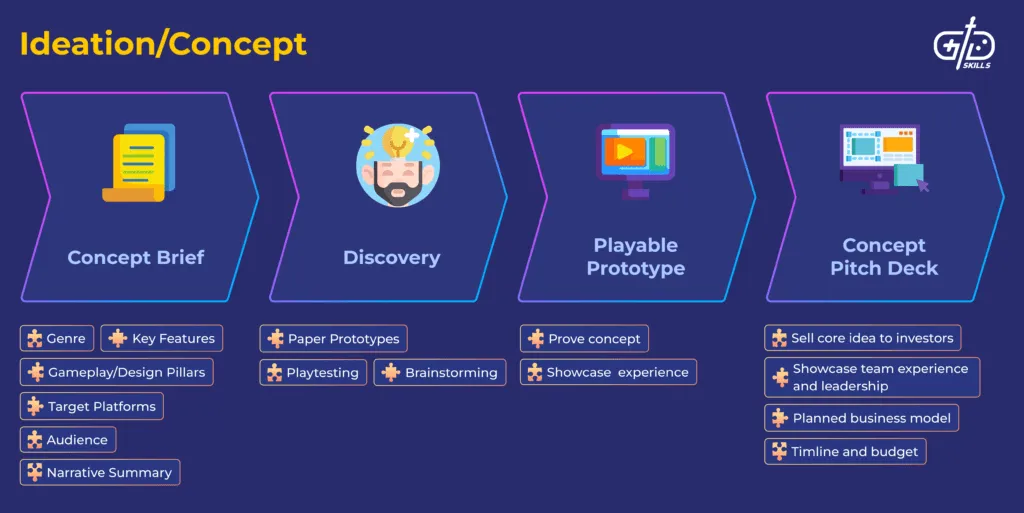
read more: https://gamedesignskills.com/game-development/stages-of-game-development-process/

This is one of the reasons that led me to be a freelancer, also if it comes with a price as everything good in our life. Probably the worst one is when a client wants me to tell them the hour using their own clock. They close to proposal, because they don’t really understand (and they actively ignore) the opportunities of ideation stage.

A potential use case for Microsoft

I read the last email that the new CEO of XBox sent to her employees. It is honestly an inspiring take on what’s next for XBOX, I am positive about this person. Maybe the fact she is not a games veteran is good for her actual position. Or maybe I am just a dreamer, I don’t know.

There is one use case that I believe they can tackle pretty “easily”, and position themselves like the platform for everyone they want to become. There are successful f2p midcore titles that occupy too much space on the smartphone. Often they require the latest models to run at the higher quality. I believe that the f2p player doesn’t care of having a copy of what he is playing.

If XBOX manages to become the platform from which you can play the “Genshin Impacts” of the future in cloud on streaming, and maybe engage with mods and UGC for your fav games, there is the chance from them to become THE platform of the future. A sort of Roblox for Mobile f2p games. Of course, there are lots of limitation that may come from Apple and Google. Still, if they manage to do this right, they can really disrupt the market in my opinion.

Three loops of Expedition 33

These days I am playing Clair Obscur: Expedition 33 pretty intensively (when other 40y-old-man-duties permit) these days. And I am also completing my bootcamp on videogames design and conceptualization. A class I gave was based on the 3 main loops of a game, and today I want to apply this knowledge to the 2025 GOTY.

Moment-to-moment (second-to-second)

This first loop is the central one, and it describes what the player does the most. You can say it describes the core dynamic, somehow. In case of Expedition33:

  • Action: Reactive turn-base combat
  • Challenge: groups of nevrons (enemies)
  • Reward: skill points, loot

WHY to repeat this loot: the game is divided in zones within an open world, the Player wants to complete the zone to unlock the next.

Core loop

The core loop is what the Player does the most during the game and gives meaning to the moment-to-moment loop. We can say that it considers the game session as a whole.

  • Action: Improve team stats
  • Challenge: complete zone sections
  • Reward: Advance with the story

WHY to repeat this loot: as any good JRPG it’s about the map! You want to play to unlock new venues and discover new places into the map.

Metagame loop

This loop describes what keeps the Players engaged, what makes them think “I need to return back into the game because I want to…”. Describes the features and mechanics that make me think into the game when I am not playing it. In the case of Expedition33:

  • Action: defeat bosses
  • Challenge: what will happen in the story?
  • Reward: plot twists and secrets discoveries

WHY to repeat this loot: the game is one great adventure story!

A simple idea for AI in games

Of the many applications of AI in games, I am more interested in those that can unlock new form of experiences. First thing that comes to mind is narrative, of course, but since as a developer you are paying for hosting a server with an LLM I think you need to focus more on the return of the investment on that infrastructure.

One idea is to have new forms of special offers related with the fact that you can or cannot engage with certain systems within a game. Maybe you played heavily during the last event, but you have no time this week. You can say it, and the system can find special solutions for you. Just one example.

In the blacksmith’s house, a wooden skewer

The recent stock market fluctuations following the arrival of AI tech that promises to generate interactive worlds from simple prompts speak volumes about the current lack of video game literacy.

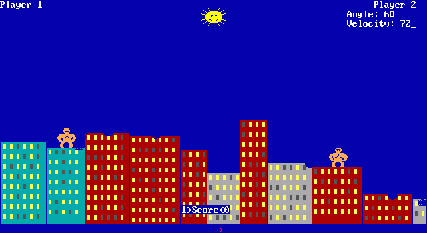
Almost every veteran I know—myself included—started by modding, not just “creating.” My journey began with Q-Basic to tweak Gorillas, then modifying voices in Worms, creating custom avatars for Baldur’s Gate, and hacking Diablo hash codes.

https://en.wikipedia.org/wiki/Gorillas_(video_game)

The best designers were often protagonists of the modding scene, diving into forums to figure out how to add value to the games they loved.

We’ve seen this cycle before. Tech giants often launch “revolutionary” gaming projects to fuel corporate career leaps, only to abandon them when the next trend arrives. But the real issue is the demand for shortcuts. Some entrepreneurs will try to use Genie3 to chase quick profits with flashy trailers, and some might even succeed in the short term.

Long-term success belongs to those who actually expand the horizons of gaming.

Reaching new audiences and solving the distribution puzzle requires more than a “genie.” It requires deep knowledge. While technocrats push “prompting and scrolling,” the smartest players are busy mastering history, philosophy, and art.

My advice? If you want to break into the market, stop looking for shortcuts. Work hard to engage your audience and start by modding what already exists. Read history books, and myths. Rack your brains, expose your work, and take risks.

You are far more likely to find success through craftsmanship than by playing a “word slot machine” and hoping for a believable game.

My take on Highguard

I was watching the last Deconstructor of Fun podcast, shooter monthly, on Highguard.

I downloaded the game days ago, completed the tutorial and played three matches. I am not really into hero shooters, but I have to admit that I also had the sensation, as these expert say, that the game was not properly play tested. Which is a common issue in the industry that leads to many games to fail miserably. You need to engage with your future clients, especially with service games. You cannot simply launch early access anymore, early access in current market is perceived as a full launch, especially if you game has been announced in “pompa magna” at The Game Awards by Jeff Keighley in person.

Regarding the market segmentation

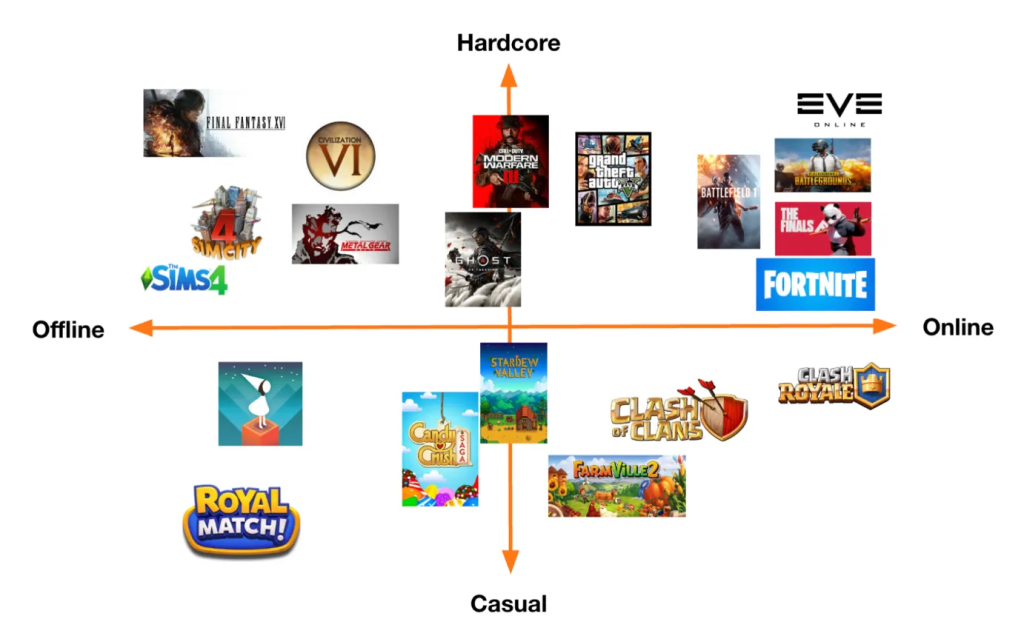
The experts seem to agree (but not fully) on the fact that there are just two kind of profitable shooter genres: tactical and battle royale. I am not sure about that, I prefer this Owen Mahoney’s segmentation:

Owen Mahoney’s view of the industry

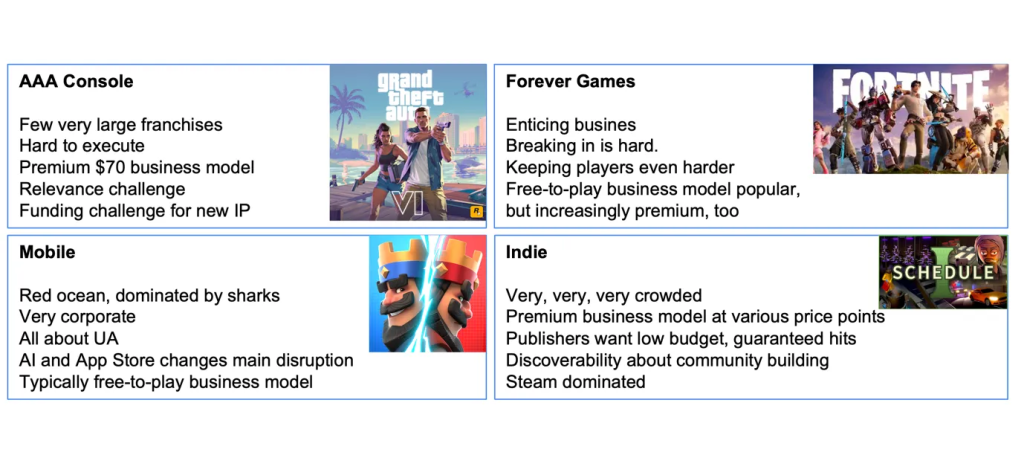
I believe that shooter as a genre fits in at least 2 quadrants: online and offline hardcore. Nicholas Lovell also has his view on the industry in general.

Nicholas Lovell’s view on the industry

And we know there are AAA fps, forever fps like Fortninte, mobile FPS, and also indies who build on top of boomer shooters. Finally, there is Christopher Dring view of the industry:

watch here: https://www.thegamebusiness.com/p/there-is-no-such-thing-as-a-video

Under this lens, I see games like STALKER being fps with stories. Fortnite and so on, are for socializing, but also competition/sport. COD and Battlefield as well. Boomer shooters are for passing the time, especially indies like this one.

I believe that the market is more complex and varied than the one pictured by Phillip Black in the DoF shooter monthly podcast.

What I do believe about the game modes

In the podcast, they insisted that the right number of people should be 5vs5 or 3vs3vs3, and I agree with them. But I believe that are also other problems with general game pacing:

  • Mining crystal is not the best during a shooter session, in my humble opinion. I know it’s a basic in Fortnite, but there you can then build things instantly. Here, instead, is to buy stuff from a vendor.
  • The vendor itself is slow and boring, can be put in another place
  • Upgrading/reparing walls is not so exciting, too.

First idea I would try to pitch and eventually design is to buy weapons and repair walls when you die. You die and while you wait, your “soul” can repair stuff. I know, maybe you prefer to watch what is happening, but that can be an extra cam or something while you fix things.

Another thing I noticed is that the most exciting part is when you raid or you need to defend from a raid. Still, I had the feeling that the attackers, the raiders, were stronger than the defenders. Maybe it’s just psychological, but I would like to try something asymmetrical, like 3vs5 (5 defenders).

Running on the horse while shooting is also cool, I remember that from RDR2, which lead designer works for Highguard. Maybe there can be the moment of earning crystals instead of mining.

3 ideas I would pitch:

  1. Buy weapons and manage base on death
  2. Asymmetrical raids
  3. Earn crystals while killing people from the horse

Maybe these would create more exciting/unique moments for Highguard.

Ubisoft and the “Efficiency Trap”: Why Algorithmic Logic Can’t Save a Lost Vision

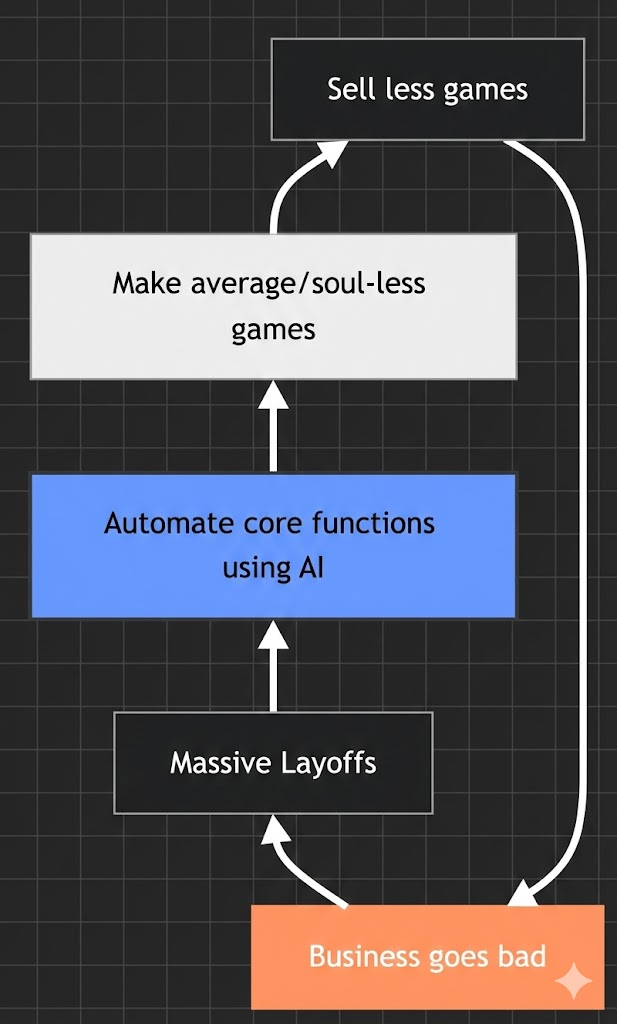
The recent news regarding Ubisoft isn’t just another headline about industry layoffs; it’s a “leading indicator” of a systemic crash. When the numbers don’t add up, the corporate playbook is predictably uninspired: cut the talent, automate the core, and pray the spreadsheet balances itself out.

But creativity isn’t an assembly line, Ubisoft might be the “canary in the coal mine” for an industry chasing its own tail. This isn’t just a trend; it’s a form of “drowning.” When inefficiency (ROI) drops too low, leadership grabs whatever is in reach—AI, NFT initiatives, or massive restructuring—often without even knowing what questions to ask their experts. They are borrowing against a future they don’t understand, hoping that money alone can catch the wind.

The “Glass Ceiling” of the French Elite

A company is only as brave as its leadership, and here we find a significant bottleneck. Ubisoft’s executive team is roughly 90% French, educated at the same elite business schools (ESSEC, ISG), with tenures spanning 30 years.

While these credentials are impressive on paper, they’ve created a cultural monoculture. This “upper-middle-class business elite” is now tasked with innovating for a global, diverse audience they are increasingly disconnected from. When leadership hasn’t seen the inside of another studio in three decades, they stop leading and start rehashing.

The AI Gamble: Partner or “Slop” Generator?

The debate around AI in development is often polarized. Someone argues that AAA gaming is “dead” without AI to reduce the staggering $200m+ budgets. I don’t disagree that budgets are exploding, but I disagree that AI is the silver bullet for quality.

AI isn’t the root of the problem, but it’s a risky “solution”. Relying on a technology that hasn’t yet delivered on its creative promises to save your strategy is a bet, not a plan. If you use AI to generate “slop,” you might save on costs, but you’ll lose the player.

From Rational Design to Brand Decay

Ubisoft once had a superpower: Rational Game Design. It was a method that allowed them to optimize the creation of epic adventures while maintaining a clear vision. But as they chased whales, “Games as a Service,” and unsustainable growth, they lost the creative DNA that made them special.

A software (and AI is just that) cannot solve a brand crisis. AI can’t fix the fact that Ubisoft has distanced itself from player fantasies and instinct—things that aren’t taught in prestigious business schools.

The Opportunity in the Chaos

The failure of long-term vision in these managers is an opening. The collapse of the old guard creates space for those who actually understand imagination and positioning.

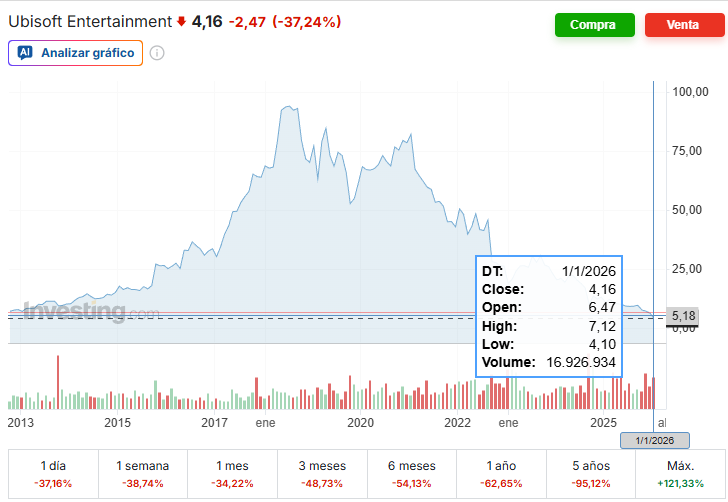
Ubisoft’s stock may be back to 1998 levels, but the talent is still out there. The question is: will they be allowed to lead, or will they be replaced by an algorithm until there’s nothing left to automate?