This post was originally written in Italian by Paolo Gambardella. It has been translated by an AI agent and may contain inaccuracies.
La Sagrada Família has been under construction for 144 years. Antoni Gaudí died in 1926, yet we still call it “his cathedral”. He didn’t lay even a tenth of the stones that make it up. He designed it, his whole life — that much is true.
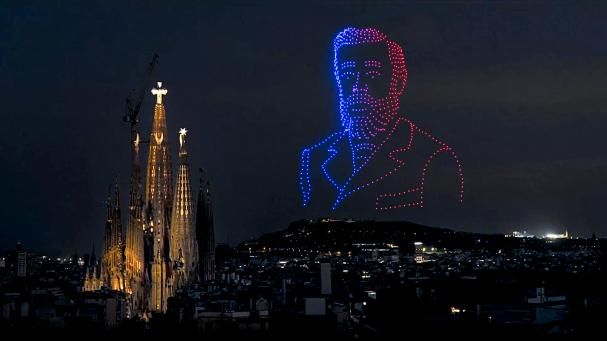
The same thing happens with video games. Audiences love attaching a single name to a work. It’s a cognitive shortcut: it’s easier to remember a face than an org chart. Miyamoto is Mario. Kojima is Metal Gear. Molyneux is Fable.
The name on the cover represents the original vision, but the game is the result of a building site.
The new Fable
Peter Molyneux is the perfect example. For twenty years he was the face of Fable: its promise, its vision, its name. Then Lionhead closed. Microsoft handed the franchise to Playground Games. Molyneux is gone.
Yesterday the gameplay demo for the new Fable dropped. Have a look:

The game seems to carry forward the fantasy — the storybook England, the dark humour, the flawed hero — that Molyneux lit the spark for decades ago. But it’s being built by different people, at a different studio, with a different budget.
I’m a little worried, actually, given that Molyneux’s target audience was kids like me. And the freedom on show in the gameplay video assumes a type of player quite different from whoever buys Fable on the big consoles. Those people are on Roblox and Switch, not PS5 and Xbox.
What the visionary actually leaves behind
If the game isn’t “made by the director”, then what exactly is an auteur’s contribution?
Two things, mainly.
The first is the fantasy: the emotional promise that the player is chasing. What the player becomes while playing. In Fable, you become a morally ambiguous hero in a world that doesn’t take itself too seriously. That feeling is Molyneux’s signature. Whether he’s there or not, the new team is going after it — even if they’re steering away from black-and-white (good versus evil) and leaning into grey. Moving with the times, I suppose.
The second is the design pillars: the principles that guide every single design decision, even when the original author isn’t in the room. Gaudí didn’t need to be alive for his vision to be followed. What mattered was that he had set it down with constraints clear enough to hold up across decades of subsequent interpretation.
Directors direct the vision. Game designers don’t execute it — they facilitate it within the team. Game design is a constant negotiation:
- between the original vision and what the technology makes possible (any game worth its salt always has some kind of technological leap baked in)
- between the designer’s intent and how it’s read by the player and the rest of the team
- between what you want to do and what you can actually ship in time.
Every programmer who decides how to implement a mechanic is doing design. Every artist who figures out how to make a space readable is doing design. Every level designer who places an enemy is doing design. The game designer isn’t the one holding the whole thing together.
Gaudí started the building site. The architects who came after him interpreted it, completed it, sometimes corrected it. The Sagrada Família is great because of that collective effort.
Video games work exactly the same way. The genius lights the vision. The building site — made up of hundreds of people with different trades, different skills, different perspectives — makes it real.
The next time you say “Miyamoto’s game” or “Kojima’s game”, it’s not wrong. It’s just incomplete.
Like saying “Gaudí’s cathedral”.