Skip to content

Category: Business

PlayStation detiene los discos: palo sin zanahoria

Esta entrada fue escrita originalmente en italiano por Paolo Gambardella. Ha sido traducida por un agente de inteligencia artificial y puede contener imprecisiones.

El post de hoy arranca con esta noticia: Sony detiene la producción de discos físicos para los nuevos juegos de PlayStation a partir de enero de 2028.

Para mí, cuando haces marketing siempre hay tres relaciones que hay que vigilar: la que tienes con los clientes (obvio), la que tienes con los partners y la que tienes con los pares del sector. En las tres, este movimiento me parece mal gestionado.

Con los jugadores

Sony ha decidido cabrear a una parte importante de sus usuarios. Sobre el dato que circula, ese “20%”, hay bastante confusión sobre lo que representa realmente. Sony declara aproximadamente un 80% de ventas digitales frente a un 20% físicas en el último año fiscal: esa cifra describe ventas, no personas. Basta con unos pocos coleccionistas que compran casi exclusivamente en formato físico para generar ese 20% de ventas, sin que eso represente a un quinto de la fanbase. Dicho esto, el punto sigue siendo válido: hay un público real, en absoluto despreciable, al que esta noticia le dice que su colección se acaba aquí.

Entiendo que el movimiento se justifica por el deseo de controlar toda la cadena y aumentar los márgenes, pero no entiendo esta frialdad en la ejecución. Podrían ofrecer un plan alternativo en lugar de cerrar el capítulo sin más. El modelo del objeto físico como llave de acceso permanente ya existe y está más que probado: los amiibo de Nintendo desbloquean contenidos a través de un juguete que es tuyo y que puedes revender, Limited Run Games construye todo un negocio vendiendo ediciones físicas con código para juegos que de otro modo serían solo digitales y la gente los compra como churros, las collector’s editions con steelbook y código son ya un estándar que los publishers usan para monetizar el apego al objeto.

Sony podría hacer lo mismo a lo grande, con una figurita, un libro, un artefacto de coleccionista que garantice acceso de por vida al juego: un motivo para seguir comprando en físico incluso en un mundo digital first.

Con los partners comerciales

Sony ha conseguido cabrear a los principales canales de distribución de sus juegos. La respuesta de Meridiem llegó dura y directa: hay cosas que no se descargan, se sienten, con la promesa de plantar cara. Y no es la única: GAME respondió con “es el momento de defender lo que nos importa”, Tesura Games pidió abiertamente que la decisión se detenga.

No sé quién toma estas decisiones en Sony, pero con los partners se actúa antes de publicar un post en el blog, no después. Ahora Sony tendrá que buscar la zanahoria que ofrecer después de haber repartido ya el palo.

Con los competidores

Parece que las grandes compañías, salvo Nintendo, están compitiendo a ver quién consigue enfadar más a su propio público. Yo no compro siempre en físico, compro mucho en digital, pero saber que ahora ya no podría elegir me duele y quizás me hace sentir un poco más lejos de esta industria que digo amar.

Podemos salir de esto

Esta entrada fue escrita originalmente en italiano por Paolo Gambardella. Ha sido traducida por un agente de inteligencia artificial y puede contener imprecisiones.

El sector de los videojuegos lleva unos años en crisis, como el resto del mundo. Despidos masivos, estudios que cierran, inversiones que se agotan.

La crisis no es ninguna sorpresa. Las cosas no crecen indefinidamente, es una ley natural. Y sin embargo, quienes salen de los MBAs y los programas de finanzas parecen olvidar esta cosa tan básica, o quizás los entrenan para ignorarla. El resultado es que se generan expectativas de crecimiento continuo para quienes ponen el dinero, expectativas que el sector no puede mantener mucho tiempo. Eso, sumado a la situación geopolítica mundial, crea la fórmula perfecta para el desastre.

Lo que más me llamó la atención, sin embargo, es el comportamiento de los desarrolladores.

Este año en Madeira se celebró un workshop interesante. A los participantes se les pidió primero que propusieran un juego original, y después que construyeran un fondo de inversión hipotético con un millón de dólares. El resultado: la mayor parte del dinero fue a parar a herramientas, infraestructura tecnológica y ecosistemas tipo Roblox. Los mismos desarrolladores que acababan de pitchar con pasión un proyecto original, no lo habrían financiado.

Como dijo uno de los participantes: “Literalmente construí una sociedad de inversión que no habría financiado mi propio pitch.”

Es un sistema que premia el retorno a corto plazo y penaliza la visión a largo plazo. Cuando el dinero se convierte en el fin en lugar del medio, todo el mundo se adapta.

Esto no es un sitio para quien no tiene colchón

Tengo que ser honesto sobre dónde me sitúo yo en todo esto. Soy consultor externo, y una de las razones por las que elegí este camino es precisamente que conozco este mecanismo y prefiero no depender de él. Pero hay otra razón: mis padres tienen una posición acomodada. He tenido una red de seguridad que me ha permitido seguir en este sector en los momentos difíciles. No todo el mundo la tiene.

El sector de los videojuegos, hoy, es cada vez más un sector para quien puede permitirse esperar. Para quien ya tiene un patrimonio familiar, para quien no necesita la nómina de este mes para pagar el alquiler. Esto es un problema no solo de equidad, sino de calidad. Estás dejando fuera talentos que sencillamente no pueden asumir los riesgos estructurales de una industria tan inestable.

Entonces, ¿qué se hace?

Miro a Hollywood con interés porque ha encontrado algunas respuestas prácticas a problemas similares.

  1. Modelo slate: distribuir el riesgo entre varios proyectos en lugar de apostarlo todo a un único blockbuster. Implica aceptar que algunos fallen, pero que el portfolio global aguante.
  2. Protección estructural de los creativos: Los sindicatos de Hollywood existen porque sin ellos el equilibrio de fuerzas entre quien tiene el capital y quien tiene el talento está demasiado descompensado. El sector de los videojuegos necesita estructuras similares.
  3. Modelo A24: pequeño, curatorial, con una identidad editorial clara. Elige los proyectos en los que cree, los produce con cuidado y genera beneficios sostenibles. Tamaño reducido y visión clara pueden convivir perfectamente con la salud económica.

Un problema con solución

Hacen falta estructuras financieras construidas sobre los tiempos reales del desarrollo, no sobre los ciclos del capital riesgo. Hacen falta más foros donde los desarrolladores puedan practicar a pensar como inversores antes de estar en una sala de reuniones de verdad. Hacen falta modelos que den a un estudio suficiente runway para construir algo duradero.

Es el momento en que quienes tienen la responsabilidad de tomar decisiones —inversores, publishers, leads— pueden elegir construir algo más sólido que lo que había antes.

No os dejéis distraer

Esta entrada fue escrita originalmente en italiano por Paolo Gambardella. Ha sido traducida por un agente de inteligencia artificial y puede contener imprecisiones.

Questa semana se celebró el Sony State of Play, y se presentó el nuevo God of War. El juego tiene como protagonista a la mujer de Kratos, y como compañero un cubo, bastante diferente de lo que uno esperaría. Después del evento estaba scrolleando por LinkedIn, y los “expertos” tenían todos algo que decir. El personaje está mal. El cubo no tiene sentido. Cambiar el sexo del protagonista nunca ha funcionado en otras franquicias.

Ver la reacción de alguien que ha trabajado de verdad en el juego vale más que cien posts de LinkedIn juntos. Sinceramente, estoy un poco harto de la gente que aprovecha esta capacidad de los algoritmos para darle visibilidad a los posts polémicos. Sobre todo cuando esas personas no hacen videojuegos, no están en las trincheras. Prefiero escuchar la pasión de quienes trabajan de verdad en los juegos.

Otra cosa que quiero señalar es que Santa Monica Studios ha demostrado de sobra que sabe hacer juegos de éxito. Todos deberíamos respetar la experiencia y reconocer que quien sabe más que nosotros probablemente tiene razón. Estoy dejando de seguir podcasts y canales que solo viven de la polémica, porque distraen de lo que realmente importa.

El presente es cross-functional, el futuro high-quality

Esta entrada fue escrita originalmente en italiano por Paolo Gambardella. Ha sido traducida por un agente de inteligencia artificial y puede contener imprecisiones.

Le tiendas están inundadas de juegos. Lo vemos todos, y es una consecuencia directa de algo obvio: hacer un juego sencillo se ha vuelto rápidamente accesible. Godot, Unity, asset stores, IA para el código, tutoriales en YouTube para cualquier cosa. El tiempo de desarrollo se ha comprimido de forma brutal. Y entonces lo hace todo el mundo.

El resultado es un diluvio. Clones, juegos generados con pipelines semi-automatizadas, productos ensamblados más que diseñados. Cada uno de estos juegos tiene la misma característica: está hecho con prisas, con un equipo pequeño o en solitario, con poca inversión por unidad.

Cuando todo el mundo hace lo fácil, lo difícil gana valor. Lo está demostrando incluso Roblox, con su nueva estrategia de apostar por los juegos HD. Si los juegos sencillos se convierten en commodity, entonces los juegos que requieren algo que no se genera automáticamente se vuelven escasos.

El asunto que no me deja en paz

Los equipos del futuro próximo tienen una característica nueva: pueden ser realmente cross-functional. No en el sentido de palabra de moda que llevamos años escuchando en las empresas. De forma concreta, práctica, radical.

Pongamos ejemplos.

  • Un diseñador ya no tiene que esperar a un programador para construir un prototipo. Con las herramientas de hoy, puede construir algo funcional en horas. Puede testear su loop de juego antes de que la reunión con el equipo técnico esté siquiera en el calendario.

  • Un artista puede implementar directamente en el engine sin esperar el apoyo de los tech artists. El artista que entiende un poco cómo funciona el motor ya no es una rareza exótica, es un recurso normal.

  • Un writer puede testear su narrativa en una build funcional sin abrir un ticket y esperar a que el equipo de gameplay “le busque un hueco en el próximo sprint”.

Los roles no desaparecen. Desaparece la excusa.

Ojo: no estoy diciendo que los roles especializados vayan a volverse inútiles. Un tech artist con experiencia hace cosas que un artista con shader graph nunca hará. Un programador senior resuelve problemas que un diseñador con un asistente de IA ni siquiera sabe cómo plantear.

La cuestión es otra. La barrera de transferencia entre roles baja. Y con esa barrera desaparece también la excusa más cómoda de la industria: eso no es cosa mía.

Si antes podías quedarte en tu nicho tranquilo y esperar a que otro hiciera su parte, hoy el contexto está cambiando. El equipo que se sienta a esperar el “bloqueo del programador” cuando el diseñador podría prototipar, o el “bloqueo del tech artist” cuando el artista podría implementar, es un equipo que está desperdiciando el tiempo de forma artificial.

La agilidad no es un valor abstracto. Es la capacidad concreta de llevar una idea desde la cabeza a una pantalla funcional en el menor tiempo posible, con los recursos disponibles. Hoy esos recursos han cambiado.

Lo que es difícil de copiar

Hay una pregunta que subyace a todo esto: ¿qué es lo que no se puede automatizar ni clonar?

La respuesta que me he dado es: un equipo que funciona realmente bien junto, con una visión que de verdad merece la pena desarrollar, y con suficientes competencias solapadas como para no depender de ningún cuello de botella concreto.

Esa combinación no se puede copiar. Imposible de generar con un prompt.

Y es exactamente esa combinación la que hace falta para crear los juegos que, en los próximos años, tendrán más posibilidades. ¿Qué significa eso? Que las empresas más listas serán capaces de retener talento, en lugar de tratarlo como carne de cañón para luego despedir a todo el mundo con el título publicado.

A potential use case for Microsoft

I read the last email that the new CEO of XBox sent to her employees. It is honestly an inspiring take on what’s next for XBOX, I am positive about this person. Maybe the fact she is not a games veteran is good for her actual position. Or maybe I am just a dreamer, I don’t know.

There is one use case that I believe they can tackle pretty “easily”, and position themselves like the platform for everyone they want to become. There are successful f2p midcore titles that occupy too much space on the smartphone. Often they require the latest models to run at the higher quality. I believe that the f2p player doesn’t care of having a copy of what he is playing.

If XBOX manages to become the platform from which you can play the “Genshin Impacts” of the future in cloud on streaming, and maybe engage with mods and UGC for your fav games, there is the chance from them to become THE platform of the future. A sort of Roblox for Mobile f2p games. Of course, there are lots of limitation that may come from Apple and Google. Still, if they manage to do this right, they can really disrupt the market in my opinion.

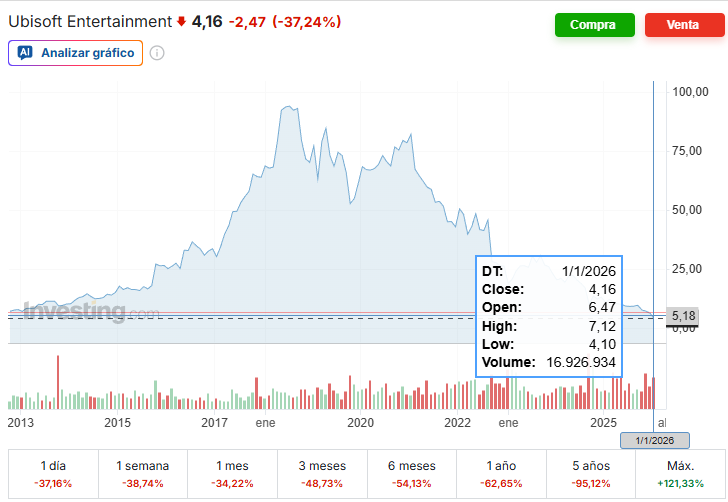
Ubisoft and the “Efficiency Trap”: Why Algorithmic Logic Can’t Save a Lost Vision

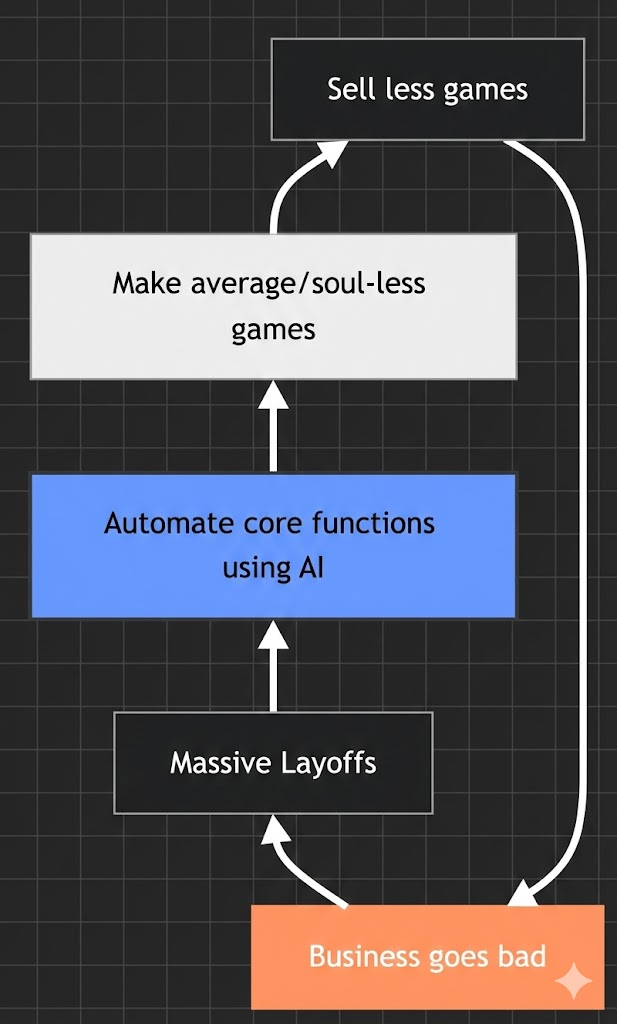
The recent news regarding Ubisoft isn’t just another headline about industry layoffs; it’s a “leading indicator” of a systemic crash. When the numbers don’t add up, the corporate playbook is predictably uninspired: cut the talent, automate the core, and pray the spreadsheet balances itself out.

But creativity isn’t an assembly line, Ubisoft might be the “canary in the coal mine” for an industry chasing its own tail. This isn’t just a trend; it’s a form of “drowning.” When inefficiency (ROI) drops too low, leadership grabs whatever is in reach—AI, NFT initiatives, or massive restructuring—often without even knowing what questions to ask their experts. They are borrowing against a future they don’t understand, hoping that money alone can catch the wind.

The “Glass Ceiling” of the French Elite

A company is only as brave as its leadership, and here we find a significant bottleneck. Ubisoft’s executive team is roughly 90% French, educated at the same elite business schools (ESSEC, ISG), with tenures spanning 30 years.

While these credentials are impressive on paper, they’ve created a cultural monoculture. This “upper-middle-class business elite” is now tasked with innovating for a global, diverse audience they are increasingly disconnected from. When leadership hasn’t seen the inside of another studio in three decades, they stop leading and start rehashing.

The AI Gamble: Partner or “Slop” Generator?

The debate around AI in development is often polarized. Someone argues that AAA gaming is “dead” without AI to reduce the staggering $200m+ budgets. I don’t disagree that budgets are exploding, but I disagree that AI is the silver bullet for quality.

AI isn’t the root of the problem, but it’s a risky “solution”. Relying on a technology that hasn’t yet delivered on its creative promises to save your strategy is a bet, not a plan. If you use AI to generate “slop,” you might save on costs, but you’ll lose the player.

From Rational Design to Brand Decay

Ubisoft once had a superpower: Rational Game Design. It was a method that allowed them to optimize the creation of epic adventures while maintaining a clear vision. But as they chased whales, “Games as a Service,” and unsustainable growth, they lost the creative DNA that made them special.

A software (and AI is just that) cannot solve a brand crisis. AI can’t fix the fact that Ubisoft has distanced itself from player fantasies and instinct—things that aren’t taught in prestigious business schools.

The Opportunity in the Chaos

The failure of long-term vision in these managers is an opening. The collapse of the old guard creates space for those who actually understand imagination and positioning.

Ubisoft’s stock may be back to 1998 levels, but the talent is still out there. The question is: will they be allowed to lead, or will they be replaced by an algorithm until there’s nothing left to automate?

Put your game on top

I believe that games should speak from themselves and not for the technology that lies behind them.

Example: you make a great game, very successful, then you reveal how you did it. You can say everybody the technological advancements you did.

The other way around bothers me, it’s pure hype and generally speaking BS. Lately, with recent technologies such as AI, many founders are pushing out BS narratives because many investors are looking at the wrong side of things: how to make the development cheaper.

Game development is already very cheap, compared to the distribution and positioning. It’s a matter of selling and make money, more than spend less to produce. If you find the best tech in the World to replace people, many other teams will find it. That will not be a differentiator, in my humble opinion.

That’s why promoting like “we are a new AI-based studio” has the same importance as “we are a new C++-based studio”, and things like that. It’s not interesting at all. And this without considering the blatant fact that players, generally speaking, hate slop.

4 indie advices

I just read the latest blog post from Tom Francis, a clever piece on indie game business and development. There is a clear difference when you read/hear from people who actually make games compared with “opinionists” and influencers you see out there who only criticize others.

Things I liked the most:

  • If you double your people, so your burn rate, you should earn at least the double. Which puts your game in a harder spot. Good to take that into account.
  • If your idea is not prototypable, probably it’s not a good one for an indie studio.
  • Playtesting is good also to check the position of your game. If you cannot manage to find 100 people to test your game for free, that means that your game has probably no chances in the market of today.

2026 Game Design Manifesto

My hope for 2026 is that people begin to wake up from the algorithmic torpor that has rendered so many things utterly mediocre. This year I want to work with organizations who believe that we can change this. We’re designing for ranking algorithms and User Acquisition funnels, that’s not how we continue to build a culture.

Sometimes, Players are being treated like tourists in big cities. They walk where it has been decided they should walk, consuming content. I’ve seen this especially in mobile free-to-play, where games are being used as advertising platforms for other games. Consequently, people drift from one insignificant, compromised experience to the next without much thought. Sometimes these games make lots of money in a short time, out of compulsive behaviors. Who will remember them in 5 years?

In a heavily “product-managerized” sector, KPIs become goals for projects to be greenlighted and continue: indicators are more important than meaning. We look at numbers and “kill” projects more than work properly on visions. Optimization takes priority on live operation, we either get that numbers or we just stop believing in what we worked heavily on. We treat our games like McKinsey consultants would, and that’s why every new game feels exactly the same.

Digital storefronts do not curate content, leaving everything to algorithms that make decisions based on the common denominator. 90%+ of mobile game ads today are freaking AI slop, because that works within this system. Because misleading ads are not just allowed, they are “best practices”. Marketing for mobile has become finding players for your game, and not finding games for your players as it should be.

This inevitably leads to workplace exploitation. Because if the end customer cannot appreciate the work behind the scenes nor see any entertaining vision, our touch can never be properly recognized. If we are led by data reports and benchmarks instead of creativity, how can we really do our job?

Anyone capable of spinning a narrative can come along and promise to make games using procedural content generation algorithms and other technologies that mimic human creativity. Because, in the end, when creators are hired to repeat formulas, who cares if it’s a machine doing that? What’s the problem in using cheap performance marketing pipelines, stealing concepts from others? That’s how we stop producing value, losing credibility as artists and makers.

I wish to see the end of this in 2026, or at least the first steps towards it. I wish to work more with people who see mobile games as live entertainment, accessible to everyone where the clients (people who spend) can find real added value in making their purchases because they can find on the other end people who trust in their visions. Liveop game design is a lot about this and game design has many tools under its belt.

Also the AAA crisis has to do with this, in my opinion: quality is treated merely as “content”, something to be consumed, rather than a means to push the industry forward. We are witnessing to the inevitable disease of exploding budgets and the “Mongol Horde” concept: throw more people at it, to put out more and more, but not better. When a game costs $200M+ to make, stakeholders become terrified of “different”, they want “proven”. It’s only exploitation of “established” concepts, without exploration.

AAA games make sense, instead, where they push tech forward, and there’s still lots of innovation to make, not merely new devices, or engines, or whatever. New goals for the players, new progression vectors, new multiplayer interactions. Clair Obscur: Expedition 33, game of the year, is a great example of this. That’s not an indie game: 500 people working on it, professional actors dubbing… that’s a smart way of doing high quality games. AAA should take example from that, not indies. AAA companies should keep an indie-like discovery, exploration for new games before of giving production power. Which is something common in mobile space, as well.

I wish to employ my game design skills with people who understand deeply this, in 2026.

How can we improve this together? Here’s some of my action points, ideas to start from:

1. Reinvent the credits: We must showcase the labor we do, even within the game itself or collaborating truly with content creators. Explain the cost in terms of people and time, even for things that seem simple from the outside. Educate. People have no idea what our work entails; it must be made more visible, and that starts from us. Imagine a “Behind the Scenes” menu tab integrated into the UI that shows the iterations a character’s main actions went through.

* References: Detroid: Become Human has a cool feature where you unlock character models and artwork by using points earned during your choice. On mobile, we have the drawer widget with comments as a proven signifier for comments, why don’t we use that more to engage with our players? Why should we wait for reviews, surveys and comments on social networks? In 2026, I wish to work with games that are always more live.

* Industry Reality: Players currently view games as “magic software” that appears on a screen. Showing the labor could help bridge the empathy gap that currently leads to toxic discourse and crunch culture.

2. Hire fresh talent: we need to bet on people who can understand new audiences because they are part of them, to avoid repeating formulas. We need junior professionals and also seniors from other disciplines: the best games in the history have been made by people with zero experience in games, that’s a fact. They are making great things in indie and AA, we need courage and patience. Some of the most influential designers came from architecture, film, or board games. We need experts to guide and avoid pitfalls, but also space for new energies to create the playgrounds of tomorrow.

* The Statistic: In recent years, the industry has skewed heavily toward specialization. According to some industry reports, nearly 60% of job openings in mid-to-large studios now require 5+ years of direct game industry experience. By locking out “outsiders” and juniors, we are effectively inbreeding our ideas. We need a new perspective to break the loops.

3. Develop European tech: the recent success of Nex Playground in the US (third most sold console, beating Xbox in November) is a clear message that there’s room of innovation on simple and cheaper consoles. A console with the computational power of a PS3 beating the last gen, could you imagine that?

We need to invest in our own structures, and games are the perfect excuse to push technologies forward. We need our platforms, and infrastructure. I dream of a European Nintendo, with the clear mission to onboard new generations in high quality but more accessible consoles. New gen consoles are too complicated for new audiences (11-13, pre-teens in the “age of obsession”, as game designer and author Jesse Schell used to say).

* The Data: While PS5 and Xbox Series X/S battle for the “hardcore” 18-35 demographic, there is a massive vacuum in the “Tween” (11-13) and family market.

* The Opportunity: Nintendo currently owns that space almost exclusively. If Europe, which has incredible hardware engineering talent in Germany, France, and the Nordics, could create a hardware-software ecosystem that prioritizes accessibility over teraflops, it could disrupt the “arms race” that is currently bankrupting studios.

Much more can be done, also in the field of working rights and more fair bonus structures. This year I want to use this platform to connect with like-minded people, with a real desire of changing things.

These are my wishes for 2026. Have a great year everybody!
A tale of hope

The story of Clair Obscur: Expedition 33 is my favorite tale of 2025. Every successful game is a little miracle, but this one has been very well documented also by the mainstream journalism. As they say, the luck arrives while you’re working hard and that’s the case for this game.

The initial spark comes from a single guy working afterwork on Unreal Engine just because the program was fun to use. Then he contacted with a colleague to get extra guidance, he looks for connection and thanks to that he manages to stay 1-2 years working extra hours to find a possible formula for his game. Effort and connection, these things are both very important to me. In fact, it’s extremely hard to work solo on a project over a long period of time after your normal day job.

The third person is a business guy, ex university colleague, to focus on investments. Again, the founder of Sandfall Interactive looks to make business from the start, and that’s something very few people do.

And then there is the luck: they post on Reddit and other platforms to manage to find artists and voice over actors to sell better the idea (again, sell sell sell). And they have the luck to find the right people at the right time. After many pitches that went wrong, they found their way. And then everybody knows how the story ended, big success.

To conclude today’s post, let’s talk about hope, which is the true fun part of making games (or better, making everything in general). Everybody dreams of getting prizes, but the real fun is in MAKING games, especially for us designers and developers. It’s a struggle, includes lots of highs and lows, and also financial difficulties often. But we still do it because of our passion and talent. That’s exactly the important part, not the outcome. The fact of being together with other people and creating something we believe will be awesome, that’s what we truly strive for. The outcome is a little miracle, and great to have it, but it’s not the important part.