Skip to content

Category: Business

Не давайте себе відволікатися

Цей допис був написаний мовою оригіналу — італійською — Паоло Гамбарделлою. Його перекладено агентом штучного інтелекту, і він може містити неточності.

Цього тижня відбувся Sony State of Play, де показали нового God of War. Головною героїнею гри стала дружина Кратоса, а компаньйоном — куб, зовсім не той, якого можна було б очікувати. Після події я гортав LinkedIn, і «експерти» один за одним висловлювалися. Персонаж неправильний. Куб не має сенсу. Зміна статі протагоніста ніколи не спрацьовувала в інших франшизах.

Реакція людини, яка реально працювала над грою, коштує більше, ніж сотня LinkedIn-постів разом узятих. Чесно кажучи, мені вже трохи набридло, як люди використовують цю здатність алгоритмів просувати скандальні пости. Особливо коли ці люди не роблять відеоігри, не варяться в цьому котлі. Краще послухати пристрасть тих, хто справді працює над іграми.

Ще одне, що хочу відзначити: Santa Monica Studios давно довела, що вміє робити успішні ігри. Ми всі маємо поважати чужий досвід і визнавати, що ті, хто знають більше за нас, швидше за все мають рацію. Я перестаю стежити за подкастами й каналами, які живуть лише на скандалах, бо вони відволікають від того, що насправді важливо.

Presente — крос-функціональне, майбутнє — високої якості

Цей допис був написаний мовою оригіналу — італійською — Паоло Гамбарделлою. Його перекладено агентом штучного інтелекту, і він може містити неточності.

Le store sono sommerse da giochi. Lo vediamo tutti, ed è una conseguenza diretta di qualcosa di ovvio: fare un gioco semplice è diventato rapidamente accessibile. Godot, Unity, asset store, AI per il codice, tutorial su YouTube per qualsiasi cosa. Il tempo di sviluppo si è compresso in modo brutale. E allora lo fanno tutti.

Магазини завалені іграми. Ми всі це бачимо, і це пряме наслідування очевидного: зробити просту гру стало доступним дуже швидко. Godot, Unity, asset store, AI для коду, туторіали на YouTube на будь-яку тему. Час розробки скоротився до неприличия. І тепер це робить кожен.

Результат — справжній потоп. Клони, ігри, згенеровані напівавтоматизованими пайплайнами, продукти, зібрані на швидку руку, а не спроєктовані. У кожної такої гри одна спільна риса: зроблена похапцем, маленькою командою або взагалі на самоті, з мінімальними вкладеннями на одиницю продукту.

Коли всі йдуть легким шляхом, важкий шлях набуває цінності. Це демонструє навіть Roblox своєю новою стратегією зосередитися на HD-іграх. Якщо прості ігри перетворюються на ширвжиток, то ігри, що вимагають чогось, що не генерується автоматично, стають рідкістю.

Думка, яка не дає мені спокою

Команди найближчого майбутнього мають одну нову рису: вони можуть бути справді крос-функціональними. Не в тому заяложеному сенсі, який ми чуємо від компаній уже роками. А конкретно, практично, радикально.

Ось кілька прикладів.

  • Дизайнер більше не мусить чекати на програміста, щоб зібрати прототип. З сучасними інструментами він може побудувати щось робоче за лічені години. Може протестувати свій геймплейний луп ще до того, як зустріч із tech-командою взагалі потрапить у календар.

  • Художник може імплементувати безпосередньо в рушії, не чекаючи допомоги від tech artist’ів. Художник, який трохи розуміється на тому, як працює движок, — це вже не екзотика, а нормальний ресурс команди.

  • Райтер може перевірити свій наратив у робочому білді, не відкриваючи тікет і не чекаючи, поки геймплейна команда «знайде вікно в наступному спринті».

Ролі нікуди не діваються. Зникають відмовки.

Увага: я не кажу, що вузькі спеціалісти стануть непотрібними. Досвідчений tech artist робить речі, які художник із shader graph ніколи не зробить. Senior-програміст вирішує проблеми, які дизайнер із AI-асистентом навіть сформулювати не зможе.

Справа в іншому. Бар’єр передачі між ролями знижується. А разом із ним зникає й найзручніша відмовка в індустрії: це не моя зона відповідальності.

Якщо раніше можна було затишно сидіти у своїй ніші й чекати, поки інший зробить свою частину, то сьогодні контекст змінюється. Команда, яка сидить і чекає на «блокер від програміста», коли дизайнер міг би запрототипувати, або на «блокер від tech artist’а», коли художник міг би сам заімплементувати, — це команда, яка штучно витрачає час.

Гнучкість — це не абстрактна цінність. Це конкретна здатність донести ідею від голови до робочого екрана за мінімальний час, наявними ресурсами. А ресурси сьогодні вже інші.

Те, що важко скопіювати

За всім цим стоїть одне запитання: що неможливо автоматизувати або клонувати?

Моя відповідь: команда, яка справді добре працює разом, над баченням, яке справді варто розробляти, із достатньо перехресними компетенціями, щоб не залежати від жодного окремого вузького місця.

Таке поєднання не скопіювати. Його не згенерувати промптом.

І саме таке поєднання потрібне для того, щоб робити ігри, які найближчими роками матимуть найбільше шансів на успіх. Що це означає на практиці? Що розумніші компанії вмітимуть утримувати таланти, а не використовувати людей як робочу худобу, щоб потім звільнити всіх одразу після релізу.

A potential use case for Microsoft

I read the last email that the new CEO of XBox sent to her employees. It is honestly an inspiring take on what’s next for XBOX, I am positive about this person. Maybe the fact she is not a games veteran is good for her actual position. Or maybe I am just a dreamer, I don’t know.

There is one use case that I believe they can tackle pretty “easily”, and position themselves like the platform for everyone they want to become. There are successful f2p midcore titles that occupy too much space on the smartphone. Often they require the latest models to run at the higher quality. I believe that the f2p player doesn’t care of having a copy of what he is playing.

If XBOX manages to become the platform from which you can play the “Genshin Impacts” of the future in cloud on streaming, and maybe engage with mods and UGC for your fav games, there is the chance from them to become THE platform of the future. A sort of Roblox for Mobile f2p games. Of course, there are lots of limitation that may come from Apple and Google. Still, if they manage to do this right, they can really disrupt the market in my opinion.

Ubisoft and the “Efficiency Trap”: Why Algorithmic Logic Can’t Save a Lost Vision

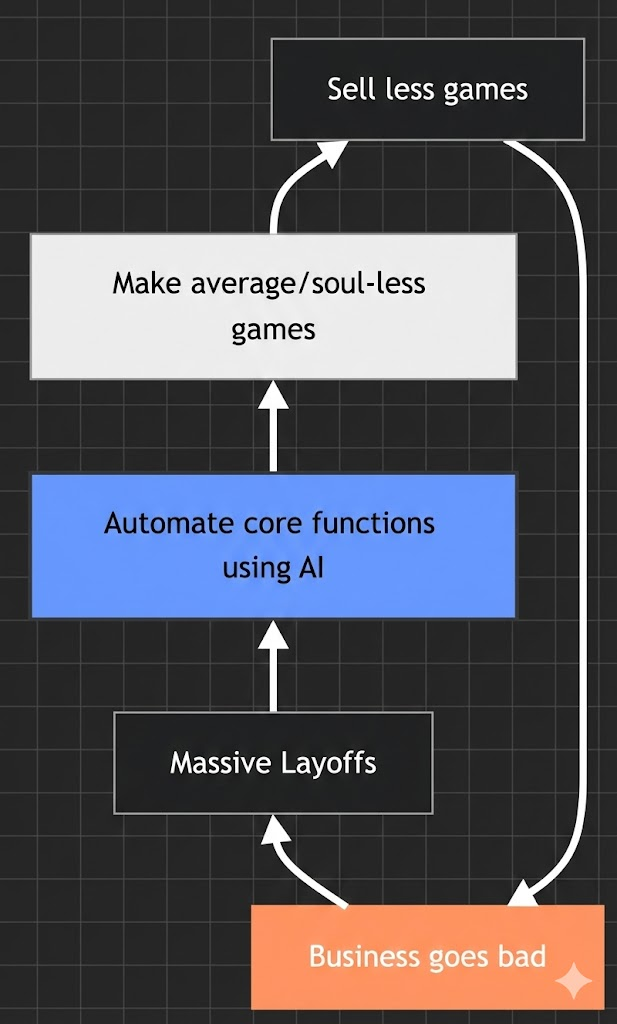
The recent news regarding Ubisoft isn’t just another headline about industry layoffs; it’s a “leading indicator” of a systemic crash. When the numbers don’t add up, the corporate playbook is predictably uninspired: cut the talent, automate the core, and pray the spreadsheet balances itself out.

But creativity isn’t an assembly line, Ubisoft might be the “canary in the coal mine” for an industry chasing its own tail. This isn’t just a trend; it’s a form of “drowning.” When inefficiency (ROI) drops too low, leadership grabs whatever is in reach—AI, NFT initiatives, or massive restructuring—often without even knowing what questions to ask their experts. They are borrowing against a future they don’t understand, hoping that money alone can catch the wind.

The “Glass Ceiling” of the French Elite

A company is only as brave as its leadership, and here we find a significant bottleneck. Ubisoft’s executive team is roughly 90% French, educated at the same elite business schools (ESSEC, ISG), with tenures spanning 30 years.

While these credentials are impressive on paper, they’ve created a cultural monoculture. This “upper-middle-class business elite” is now tasked with innovating for a global, diverse audience they are increasingly disconnected from. When leadership hasn’t seen the inside of another studio in three decades, they stop leading and start rehashing.

The AI Gamble: Partner or “Slop” Generator?

The debate around AI in development is often polarized. Someone argues that AAA gaming is “dead” without AI to reduce the staggering $200m+ budgets. I don’t disagree that budgets are exploding, but I disagree that AI is the silver bullet for quality.

AI isn’t the root of the problem, but it’s a risky “solution”. Relying on a technology that hasn’t yet delivered on its creative promises to save your strategy is a bet, not a plan. If you use AI to generate “slop,” you might save on costs, but you’ll lose the player.

From Rational Design to Brand Decay

Ubisoft once had a superpower: Rational Game Design. It was a method that allowed them to optimize the creation of epic adventures while maintaining a clear vision. But as they chased whales, “Games as a Service,” and unsustainable growth, they lost the creative DNA that made them special.

A software (and AI is just that) cannot solve a brand crisis. AI can’t fix the fact that Ubisoft has distanced itself from player fantasies and instinct—things that aren’t taught in prestigious business schools.

The Opportunity in the Chaos

The failure of long-term vision in these managers is an opening. The collapse of the old guard creates space for those who actually understand imagination and positioning.

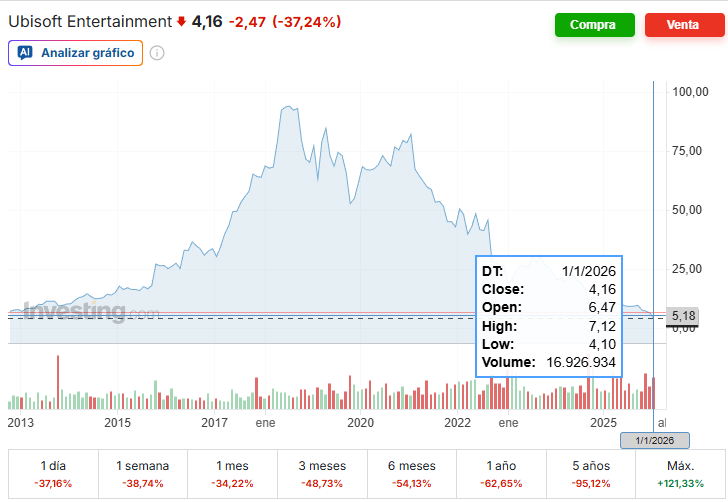
Ubisoft’s stock may be back to 1998 levels, but the talent is still out there. The question is: will they be allowed to lead, or will they be replaced by an algorithm until there’s nothing left to automate?

Put your game on top

I believe that games should speak from themselves and not for the technology that lies behind them.

Example: you make a great game, very successful, then you reveal how you did it. You can say everybody the technological advancements you did.

The other way around bothers me, it’s pure hype and generally speaking BS. Lately, with recent technologies such as AI, many founders are pushing out BS narratives because many investors are looking at the wrong side of things: how to make the development cheaper.

Game development is already very cheap, compared to the distribution and positioning. It’s a matter of selling and make money, more than spend less to produce. If you find the best tech in the World to replace people, many other teams will find it. That will not be a differentiator, in my humble opinion.

That’s why promoting like “we are a new AI-based studio” has the same importance as “we are a new C++-based studio”, and things like that. It’s not interesting at all. And this without considering the blatant fact that players, generally speaking, hate slop.

4 indie advices

I just read the latest blog post from Tom Francis, a clever piece on indie game business and development. There is a clear difference when you read/hear from people who actually make games compared with “opinionists” and influencers you see out there who only criticize others.

Things I liked the most:

  • If you double your people, so your burn rate, you should earn at least the double. Which puts your game in a harder spot. Good to take that into account.
  • If your idea is not prototypable, probably it’s not a good one for an indie studio.
  • Playtesting is good also to check the position of your game. If you cannot manage to find 100 people to test your game for free, that means that your game has probably no chances in the market of today.

2026 Game Design Manifesto

My hope for 2026 is that people begin to wake up from the algorithmic torpor that has rendered so many things utterly mediocre. This year I want to work with organizations who believe that we can change this. We’re designing for ranking algorithms and User Acquisition funnels, that’s not how we continue to build a culture.

Sometimes, Players are being treated like tourists in big cities. They walk where it has been decided they should walk, consuming content. I’ve seen this especially in mobile free-to-play, where games are being used as advertising platforms for other games. Consequently, people drift from one insignificant, compromised experience to the next without much thought. Sometimes these games make lots of money in a short time, out of compulsive behaviors. Who will remember them in 5 years?

In a heavily “product-managerized” sector, KPIs become goals for projects to be greenlighted and continue: indicators are more important than meaning. We look at numbers and “kill” projects more than work properly on visions. Optimization takes priority on live operation, we either get that numbers or we just stop believing in what we worked heavily on. We treat our games like McKinsey consultants would, and that’s why every new game feels exactly the same.

Digital storefronts do not curate content, leaving everything to algorithms that make decisions based on the common denominator. 90%+ of mobile game ads today are freaking AI slop, because that works within this system. Because misleading ads are not just allowed, they are “best practices”. Marketing for mobile has become finding players for your game, and not finding games for your players as it should be.

This inevitably leads to workplace exploitation. Because if the end customer cannot appreciate the work behind the scenes nor see any entertaining vision, our touch can never be properly recognized. If we are led by data reports and benchmarks instead of creativity, how can we really do our job?

Anyone capable of spinning a narrative can come along and promise to make games using procedural content generation algorithms and other technologies that mimic human creativity. Because, in the end, when creators are hired to repeat formulas, who cares if it’s a machine doing that? What’s the problem in using cheap performance marketing pipelines, stealing concepts from others? That’s how we stop producing value, losing credibility as artists and makers.

I wish to see the end of this in 2026, or at least the first steps towards it. I wish to work more with people who see mobile games as live entertainment, accessible to everyone where the clients (people who spend) can find real added value in making their purchases because they can find on the other end people who trust in their visions. Liveop game design is a lot about this and game design has many tools under its belt.

Also the AAA crisis has to do with this, in my opinion: quality is treated merely as “content”, something to be consumed, rather than a means to push the industry forward. We are witnessing to the inevitable disease of exploding budgets and the “Mongol Horde” concept: throw more people at it, to put out more and more, but not better. When a game costs $200M+ to make, stakeholders become terrified of “different”, they want “proven”. It’s only exploitation of “established” concepts, without exploration.

AAA games make sense, instead, where they push tech forward, and there’s still lots of innovation to make, not merely new devices, or engines, or whatever. New goals for the players, new progression vectors, new multiplayer interactions. Clair Obscur: Expedition 33, game of the year, is a great example of this. That’s not an indie game: 500 people working on it, professional actors dubbing… that’s a smart way of doing high quality games. AAA should take example from that, not indies. AAA companies should keep an indie-like discovery, exploration for new games before of giving production power. Which is something common in mobile space, as well.

I wish to employ my game design skills with people who understand deeply this, in 2026.

How can we improve this together? Here’s some of my action points, ideas to start from:

1. Reinvent the credits: We must showcase the labor we do, even within the game itself or collaborating truly with content creators. Explain the cost in terms of people and time, even for things that seem simple from the outside. Educate. People have no idea what our work entails; it must be made more visible, and that starts from us. Imagine a “Behind the Scenes” menu tab integrated into the UI that shows the iterations a character’s main actions went through.

* References: Detroid: Become Human has a cool feature where you unlock character models and artwork by using points earned during your choice. On mobile, we have the drawer widget with comments as a proven signifier for comments, why don’t we use that more to engage with our players? Why should we wait for reviews, surveys and comments on social networks? In 2026, I wish to work with games that are always more live.

* Industry Reality: Players currently view games as “magic software” that appears on a screen. Showing the labor could help bridge the empathy gap that currently leads to toxic discourse and crunch culture.

2. Hire fresh talent: we need to bet on people who can understand new audiences because they are part of them, to avoid repeating formulas. We need junior professionals and also seniors from other disciplines: the best games in the history have been made by people with zero experience in games, that’s a fact. They are making great things in indie and AA, we need courage and patience. Some of the most influential designers came from architecture, film, or board games. We need experts to guide and avoid pitfalls, but also space for new energies to create the playgrounds of tomorrow.

* The Statistic: In recent years, the industry has skewed heavily toward specialization. According to some industry reports, nearly 60% of job openings in mid-to-large studios now require 5+ years of direct game industry experience. By locking out “outsiders” and juniors, we are effectively inbreeding our ideas. We need a new perspective to break the loops.

3. Develop European tech: the recent success of Nex Playground in the US (third most sold console, beating Xbox in November) is a clear message that there’s room of innovation on simple and cheaper consoles. A console with the computational power of a PS3 beating the last gen, could you imagine that?

We need to invest in our own structures, and games are the perfect excuse to push technologies forward. We need our platforms, and infrastructure. I dream of a European Nintendo, with the clear mission to onboard new generations in high quality but more accessible consoles. New gen consoles are too complicated for new audiences (11-13, pre-teens in the “age of obsession”, as game designer and author Jesse Schell used to say).

* The Data: While PS5 and Xbox Series X/S battle for the “hardcore” 18-35 demographic, there is a massive vacuum in the “Tween” (11-13) and family market.

* The Opportunity: Nintendo currently owns that space almost exclusively. If Europe, which has incredible hardware engineering talent in Germany, France, and the Nordics, could create a hardware-software ecosystem that prioritizes accessibility over teraflops, it could disrupt the “arms race” that is currently bankrupting studios.

Much more can be done, also in the field of working rights and more fair bonus structures. This year I want to use this platform to connect with like-minded people, with a real desire of changing things.

These are my wishes for 2026. Have a great year everybody!
A tale of hope

The story of Clair Obscur: Expedition 33 is my favorite tale of 2025. Every successful game is a little miracle, but this one has been very well documented also by the mainstream journalism. As they say, the luck arrives while you’re working hard and that’s the case for this game.

The initial spark comes from a single guy working afterwork on Unreal Engine just because the program was fun to use. Then he contacted with a colleague to get extra guidance, he looks for connection and thanks to that he manages to stay 1-2 years working extra hours to find a possible formula for his game. Effort and connection, these things are both very important to me. In fact, it’s extremely hard to work solo on a project over a long period of time after your normal day job.

The third person is a business guy, ex university colleague, to focus on investments. Again, the founder of Sandfall Interactive looks to make business from the start, and that’s something very few people do.

And then there is the luck: they post on Reddit and other platforms to manage to find artists and voice over actors to sell better the idea (again, sell sell sell). And they have the luck to find the right people at the right time. After many pitches that went wrong, they found their way. And then everybody knows how the story ended, big success.

To conclude today’s post, let’s talk about hope, which is the true fun part of making games (or better, making everything in general). Everybody dreams of getting prizes, but the real fun is in MAKING games, especially for us designers and developers. It’s a struggle, includes lots of highs and lows, and also financial difficulties often. But we still do it because of our passion and talent. That’s exactly the important part, not the outcome. The fact of being together with other people and creating something we believe will be awesome, that’s what we truly strive for. The outcome is a little miracle, and great to have it, but it’s not the important part.

I like to share success stories

One of the things I like the most about the games industry are the success stories. I like when people, for a reason or another, join together and achieve great success, higher than they expected. This possibility is one of the elements that keeps me within the games industry.

I am aware of the “survivorship bias” here, and I know that I cannot reproduce the success of others. I have been in enough projects to understand that every successful game is a little miracle. A combination of multiple factors. You cannot just follow guides and tips and be successful. And that’s exactly what I find attractive of this business.

When I celebrate concrete case studies over here is not to give false hopes to people. It’s not a “hey, look at them! they did that with few resources, you should do the same, it’s easy!”. Not at all.

It’s just that my LinkedIn feed in the last 2 years is filled with empty messages, sexy selfies, and bad news. And I just genuinely like to spread good news, and say “hey, everything is freaking hard, but I am a gamer and believe me: an epic win is always possible.”

Consoles aren’t dead

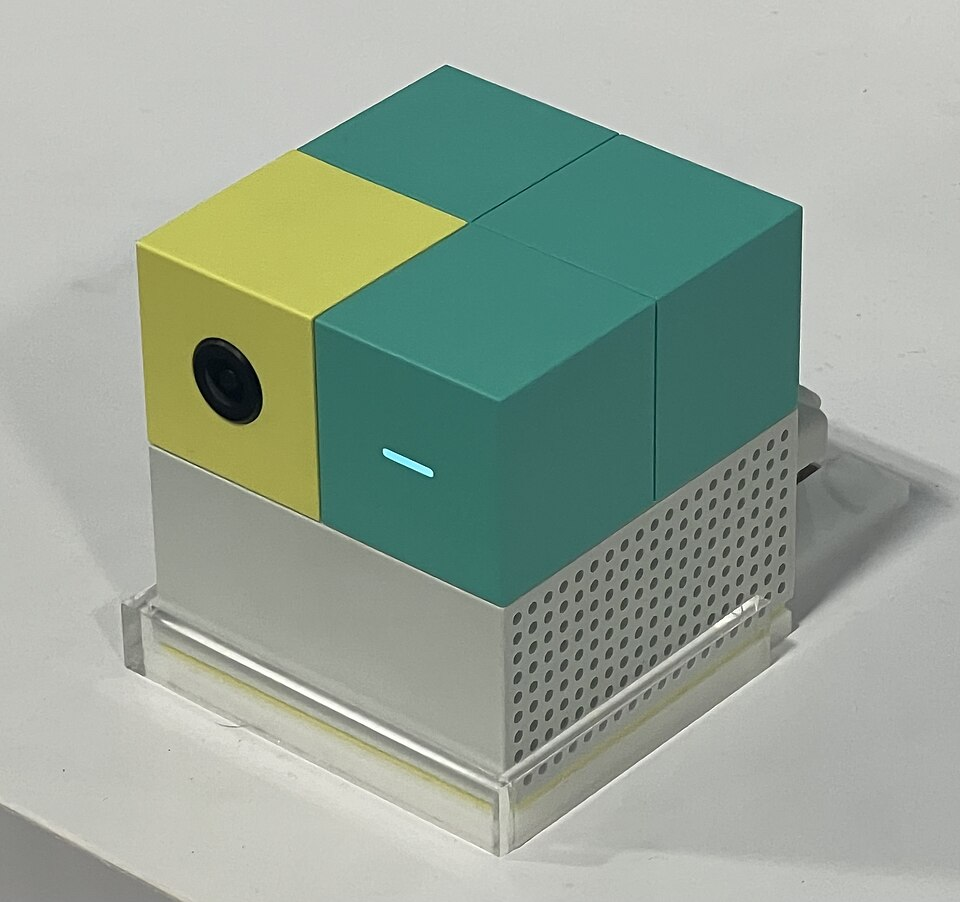
According to the popular marketing insight service Circana, on November this year the 3rd most sold console has been NEX Playground. In case you don’t know what it is, here’s the console.

The console is small and cubic, and has no controller. You play videogames like you did on XBOX Kinect years ago. The target audience is clear, the same as WII, families. The business model is subscription. You buy the console for around $250 and then you pay a monthly fee to get access to all games. The power, according to a recent interview of its company founder, is similar to a PS3. No next gen, no controller, simplicity at its best.

Will this console beat next gen consoles like PS6? No, of course not. But to me, the fact that has oversold XBOX for instance is a sign that:

  1. Console market is not dead at all, as someone says
  2. The market needs something simpler

Europe needs something like this, for me. Especially now that we are researching more on making our own chips to not be dependent on China, it would be great making our own console, as an excuse and for the chance of building our own Nintendo. I would probably target 10-13 preteens in full “obsession age” and make cool games. I would probably also add a simple 2 buttons controller for having better kinesthetics for whoever who doesn’t want to move.

The main feature, to me, should be that the console should work like old consoles: you turn ON and the game appears. No connections, no loadings, no system checks before it’s truly needed. It would be so cool to participate in a project like that!