Skip to content

Tag: research

Trees and leaves

When we talk about free-to-play casual puzzles, we generally hear about a predominantly female and adult audience.

However, we have no idea how many kids play the most popular match-3 games. If you notice, the narrative theme is very childish in most of them. There is a reason for that: a connection between adults and children. Adults also download games for their children, and children influence the choices of adults. It’s fun to play a game that your kid also plays, right?

There are successful puzzle games with adult themes (see Gardenscapes, Lily’s Garden, Project Makeover). But pay attention: the most popular (Candy Crush Saga, Royal Match) offer childish fantasies. The concept of reign, candies, smiles, and so on.

When you think about your audience, also think about their child version. It works like a tree: on the trunk, there are the children, and the branches are all the directions they can take in life. The leaves are the adults.

You may want to think in the whole tree if you are aiming to build the next free-to-play hit. Every adult was a child in the past, there are fantasies that still resonate with us when we grow.

It’s always good to start from the trunk if you want to have a massive audience!
Rules and worldbuilding

The success of Baldur’s Gate represents for many the triumph of things done right. It’s always nice to see that creations made with a love for art can go far.

As a game designer, I also want to join the discussion by contributing my grain of sand. Baldur’s Gate 3 has the advantage of a system of rules that is well-known in a niche of players. When we say “Advanced Dungeons & Dragons” we refer to the license and intellectual property. But from a game design standpoint, it’s much more. Holding a license is not simply holding the right to use characters. It means having a significant part of the design work already done.

When you create any game, you create a magic circle that players voluntarily choose to enter. In the magic circle, they will find rules and a world that they can like or dislike. Creating rules and the world is a very important part of a game.

  • Dungeons & Dragons rules are based on the roll of the dice.
  • There are numerical factors to add and subtract from each roll. Those factors depend on the characters and the context. There is an interesting connection with the narrative.
  • The system also allows for surprises. In jargon, critical failure and critical success. In practice, things can get surprisingly good or bad. And that is how unexpected moments can twist your story completely.

Baldur’s Gate 3 also uses the Forgotten Realms setting. Imagine 2 decades ago. Some Dungeons & Dragons players create a campaign. They draw maps and create legendary characters. They decide to publish this setting so that other groups can create stories and enrich them. That is how Forgotten Realms and many other settings are born.

In game design, we call this worldbuilding. Another expensive part of our trade. Do you think it’s easy to create a world with dragons and magic that is consistent and players accept as decent? Well, it’s not. It’s very easy to get it wrong. Players of tabletop RPGs are extremely knowledgeable in fantasy fiction. They read a lot, they study a lot and it’s not easy to please them. If you meet that niche, chances are that you can also reach a massive audience.

Someone says that if 10 people are true fans of your product, your product has a chance to become a massive hit. Having a system of rules and worldbuilding already available is a tremendous advantage.

The past to get a vision

There are people who are able to read the situation in the video game industry and create a vision. This isn’t enough to create a successful game, but it’s definitely a start.

Rather than pretending to forecast numbers, they are capable of looking back.

That makes a lot of sense, actually. Whatever kind of game you want to create, study the market for 10 years now. By studying its evolution, in fact, it is possible to understand trends, errors, and choices.

This helps to trace a backward path and identify possible forks that could arise in the future!

A large part of the future audience of a certain genre will be the people who are playing that type of game today. With a few more years, but above all with a lot of knowledge that will come from the past. That will lead to their gaming choices for the future.

New Apple Vision PRO

Apple has shown that they understand that MR devices compete with traditional screens in the physical space.

They haven’t made the same mistake as Meta, of promising virtual worlds where we can meet our friends. The promise is easy to make, very difficult to execute. Also because reality always has more weight than virtual worlds, who cares? They didn’t speak about the metaverse or anything like that. They forged the new term “spatial computing”.

Apple in its typical way of communicating things offers us a simple message. Buy Apple Vision PRO and you will have how, where, and when you want all the screens you want. No more arguing with your wife about where to put the television. You can wash the dishes and have the news of the day ahead of you. You can join a business meeting without having to switch tabs to check your social media.

  • The current price is for early adopters and companies that want to explore the potential of this device, not for the mainstream.
  • I’m not sure if this device can overcome the natural instinct of the human being not to want his face covered.
  • The battery promises a duration of two hours, which seems few to me for use cases.
  • I expect a change of direction in Meta communication for the new Quest 3, now.
  • “Spatial Computing” is still a hard wording for the mass market.

Games with soul

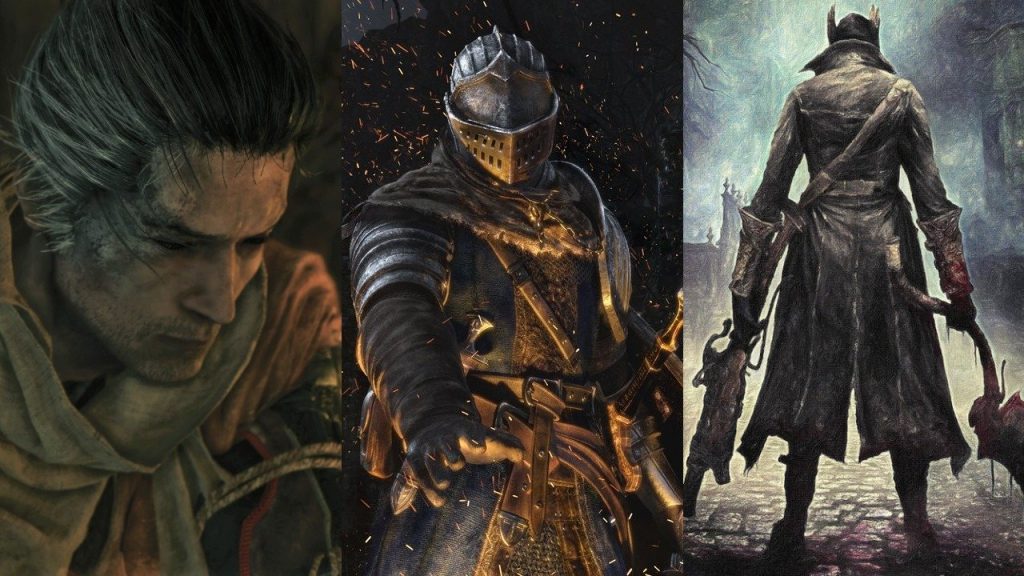
I’ve been giving From Software games a quick spin lately. Dark Souls, Bloodborne, Sekiro. Late to the party, I know.

In this age of big announcements of new tools that save time and money, these games are a breath of fresh air for me. The genius of these titles lies in the fact that they have found a system. That design is for a very specific type of audience that buys and plays good games.

I don’t see huge technological feats, they have found a way to reuse graphic assets meaningfully. The studio owns in-house level design patterns that they reuse and adapt to every game. In this way, the development is dramatically simplified.

These games exude pure passion and great design techniques. Good design is not creating super innovative mechanics. It is understanding the players and designing also with costs and time optimization in mind. Is doing that without having to give up human creativity.

I don’t think it’s possible to create games of this type working with a clock in hand to check the time of going home. Inquiring on the net, I found information about the team. Passionate people who work a lot more than normal without bothering to define this as “crunch”.

This type of development is not for everyone, but we can all learn from this. Don’t trust technologies that promise to replace human creativity. With the right process, we ourselves are able to find the best ways to optimize time and costs.

The unpolished trend

In the last couple of years, my LinkedIn is filled with claims regarding community-driven / community-led games. The search for new business models to give more fresh air to one of the most fresh businesses in the World and attract investments often leads to something unusual.

It seems at first sight like an interesting path to take, because everything is fast. If you are lucky, you may get millions of downloads. This without having to face all the challenges that people that make real games struggle to deal with every day.

Yesterday I was watching a video with the new Supercell game, Floodrush.

I believe that Supercell is trying out the new features from Google. Their new beta program provides lots of tools for building up a community early. Please, look at the game.

Floodrush is an unpolished game, it’s too early to launch it. The goals aren’t exciting, the camera has issues, the controls aren’t intuitive and the portrait doesn’t feel like the right layout for a game based on curiosity and discovery. Supercell has probably fallen into the trap of launching something too early and seeing how it goes. To me, it is not the right strategy.

If something goes more or less well, your competitors will surely catch up with better solutions early. You are revealing the result of your research. If I look at the last Supercell releases it is clear that discovery and exploration are the next thing for them.

Game design is also a form of art

And as artists, we cannot put the audience first. The audience is the most important part of our job, and for that, they deserve something great, something final, something polished. If you try to do what they want you end up doing something average and mediocre.

As game designers, we have lots of tools to spot the weakest parts of our craft and improve them. But we need a clear vision and we need to deliver it in the best quality in order to find success.

Is the next trend just throwing things at people? I have seen this in hyper-casual gaming, I see this in hybrid-casual. I didn’t expect to see this from the masters of free-to-play.

Escape from vanity metrics

I was in a conversation, one of these groups where tons of people are discussing game development. The founder of a local company says he opened his game as a beta. He invited some streamers to let them try the title. These streamers then left a vote. He stated that it was a success, the game had a high rating.

To me, it all led back to a single characteristic of the speaker: vanity. When you have a product in development, you have to challenge your assumptions. Especially if you want this product to be a real success. There’s no point in inviting people, putting them at ease, and asking them if they liked it. Probably some bias you have will be confirmed, some others will not. The more inexperienced part of the team will feel satisfied, the team will be treated well in the next few days. The boss is happy, everyone is happy.

Then comes the weight of reality, law of gravity. They don’t play your game, even for free. You can not recover the investment. You may need to make some staff cuts. You will still declare “yet we tested the game a thousand times and they said it was a good game”.

How to avoid falling into the ego trap?

By asking the right questions. Believing in a product and betting on its success is very positive. However, it must be done with caution.

  • You have to ask specific questions
  • You have to make hypothesis beforehand. These must be quantifiable and real: “Login time to a game is less than 30 seconds,” is a guess. “Love the game” is not a guess.
  • You need to put your designers to observe people playing without interruptions. They must develop the intellectual honesty necessary to create objective reports.
  • Then you have to work first to improve the strong points, then to solve the critical issues.

This is my advice. Escape from vanity metrics.

Three and four stars reviews

When studying a game it is also good to do it by reading people’s reviews.

In the case of mobile games, reviews are very often driven by two factors:

  • an in-game prompt asking you to leave a review. It is usually shown after a success, or at the end of the tutorial.
  • a moment of anger and frustration of a player. The lowest grade is usually given. For example, one star.
  • a moment of wonder and joy for a player. Normally the highest grade is given. For example, five stars.

When analyzing the reviews of a game (but also of a product on an e-store in general), I always filter for the average rating and above the average. For example, three and four-star reviews.

In fact, people who leave intermediate values usually leave more detailed comments. They belong to that part of Internet users that are a little less superficial. People who think things through a little more. The best candidates to give quality feedback!

Students, prepare the basis of your work

There is a substantial difference in game design between what you study and what you then work on.

When you study you learn the basic language and how to get from an idea to a game. Most often it is a reduced version of the game itself. When you study you have the largest freedom to create without thinking too much about who sells the game. The ability to create will be one of the fundamental ones.

When you’re working, your primary focus is the team in charge of selling the game to the people out there. You will need a very different set of skills. You will need to support your work with ideas that have worked in other games. The ability to analyze becomes one of the fundamental skills.

If you are a student, take advantage of the beautiful moments of creative freedom. But never forget to play many games. Because playing will build you a library of ideas and mechanics and will be your basis for real work.

PRO TIP: play more games from the companies in your geographical areas. Those will be the first you will apply to.

In love with SSSnaker

This game is trending in recent weeks.

As a game designer, I always prefer to start with the basics.

The real strength of the core of this game in my opinion is that narratively it is very weird.

I know that everything comes from Archero and games of this style. But, gamers very often do not know the history of video games.

Many people who will engage with this game, in short, will not know other previous successes of the same kind.

What the heck is a constantly firing mechanical snake doing in a maze? At first glance, it doesn’t make sense.

However, the numbers speak for themselves, which is why I wonder what fantasy it awakens in the players.

The MDA framework comes to help:
– Sensation: the game as sense-pleasure
– Challenge: game as an obstacle course
– Submission: game as a pastime

Those are the three essential keys to the beauty of this game for me. Everything else, therefore, may not even make sense! Plus, it may become a strength. Because it leaves the Players with the fantastic autonomy of imagination.

Think of the first Super Mario: it didn’t make any sense at all, because the goal at the time was not that. Nintendo was building on the pleasure of handling a gamepad and owning a console set for your home TV.

The rest was left to the player’s imagination. To some of us that shaped us, forever.

I like Sssnaker too much! The metagame is average and mediocre, though. Always the same. I know that works but how long will it last?