Skip to content

Tag: inspiration

We Can Get Through This

This post was originally written in Italian by Paolo Gambardella. It has been translated by an AI agent and may contain inaccuracies.

The games industry has been in crisis for a few years now, like the rest of the world. Mass layoffs, studios closing, investment drying up.

The crisis isn’t a surprise. Things don’t grow forever — that’s a natural law. And yet people coming out of MBA programmes and finance courses seem to forget this basic fact, or perhaps they’re trained to ignore it. The result is that unrealistic expectations of continuous growth are created for investors, expectations the industry simply can’t sustain for long. Add the global geopolitical situation to that, and you’ve got a recipe for disaster.

What struck me most, though, was the behaviour of developers themselves.

This year in Madeira an interesting workshop took place. Participants were first asked to pitch an original game, then to build a hypothetical investment fund with a million dollars. The result: most of the money ended up going to tools, tech infrastructure, and ecosystems like Roblox. The very same developers who had just passionately pitched an original project wouldn’t have funded it themselves.

As one participant put it: “I literally built an investment firm that wouldn’t have funded my own pitch.”

It’s a system that rewards short-term returns and penalises long-term vision. When money becomes the goal rather than the means, everyone falls into line.

This isn’t a game for people without a safety net

I should be honest about where I stand in all of this. I’m an independent consultant, and one of the reasons I chose that path is precisely that I understand this mechanism and I’d rather not be dependent on it. But there’s another reason too: my parents are well-off. I’ve had a safety net that allowed me to stay in this industry through the rough patches. Not everyone has that.

The games industry today is increasingly an industry for people who can afford to wait. For people who already have family money behind them, who don’t need this month’s salary to cover the rent. This is a problem not just of fairness, but of quality. You’re shutting out talent that simply can’t afford the structural risks of such an unstable industry.

So what do you do?

I look to Hollywood with genuine interest, because it’s found some practical answers to similar problems.

  1. The slate model: spread risk across multiple projects instead of betting everything on a single blockbuster. It means accepting that some will fail, but that the overall portfolio holds up.
  2. Structural protections for creatives: Hollywood’s unions exist because without them the balance of power between capital and talent is too heavily skewed. The games industry needs similar structures.
  3. The A24 model: small, curatorial, with a clear editorial identity. It picks the projects it believes in, makes them with care, and generates sustainable profits. Modest scale and a sharp vision can coexist with financial health.

A solvable problem

What’s needed are financial structures built around the actual timelines of game development, not venture capital cycles. More forums where developers can practise thinking like investors before they’re ever in a real boardroom. Models that give a studio enough runway to build something that lasts.

This is the moment when the people with decision-making power — investors, publishers, leads — can choose to build something more solid than what came before.
Gender Is Not the Answer

This post was originally written in Italian by Paolo Gambardella. It has been translated by an AI agent and may contain inaccuracies.

Many analysts and consultants give software houses the same advice: “look at the genres that sell, and make one of those.” If roguelites are exploding on Steam, ride the wave. If survival games are dominating the charts, build one.

What players actually evaluate

When I jump into a new game, I’m looking for something visceral: a feeling, a sense of stakes, a specific pleasure. I’m trying to live out a fantasy: that of the lone survivor, the strategist who bends chaos to their will, the hero who beats the impossible.

Genre is the container. What the player is buying is the experience inside it.

It’s not a new idea — the MDA framework (Mechanics, Dynamics, Aesthetics) by Hunicke, LeBlanc, and Zubek has been articulating this since 2004. But the convenience of taxonomic classification keeps winning out over actually studying player experiences. It’s much easier to put a genre label on a spreadsheet, after all.

Fantasies have a historical context

Fantasies don’t work in a vacuum. They’re rooted in the cultural moment they emerge from.

The survival game boom (DayZ, The Forest, Rust) grew out of a decade of economic crisis, political instability, and distrust of institutions. The fantasy of “starting over from scratch with your own two hands” resonated because it spoke to something millions of people were feeling in the real world.

The same goes for city builders and management games: they sell the fantasy of control and order in a world that feels chaotic. And when that collective feeling shifts, the fantasy that sells shifts with it — regardless of genre.

Identifying which fantasy is culturally ripe at any given moment is a completely different job from watching which genres are performing well on Steam. And it’s far more useful.

Where enormous budgets aren’t enough

Concord (Sony, 2024) is the textbook case. Estimated budget: over $400 million. Genre: hero shooter, going after the Overwatch and Valorant market. Everything looked right on paper — popular genre, quality studio, near-unlimited resources.

But players had no real reason to choose it over what they already had. It was pulled in under two weeks.

Skull & Bones (Ubisoft, 2024) followed a similar trajectory: eleven years in development, estimated budget around $650 million. Genre: naval combat with live service elements. The pirate fantasy — being a free-roaming corsair, master of the seas — was barely present in the actual gameplay, replaced by a hollow grind loop.

In both cases, the genre was “right.” The fantasy was empty.

The right question

Before asking “which genre is doing well?”, the productive question is:

What dream do players want to live out, right now, in this cultural moment, that nobody else has yet figured out how to deliver?

Answering that question takes empathy, a feel for the times, and the ability to connect culture with design.

Genre, for its part, is a handy map — but it’s not worth navigating by, because it was never built for that.

The Focus is Saying No

This post was originally written in Italian by Paolo Gambardella. It has been translated by an AI agent and may contain inaccuracies.

The most common problem I see with my clients is that they often know too much. They listen to podcasts and take online courses, study competitors, gather feedback, analyse trends… and then they freeze.

Steve Jobs, in a famous 1997 interview, said that focus doesn’t mean saying yes to the most important things. It means saying no to hundreds of good ideas. Too much information can push you towards choices that are right, but not yours.

How I analyse the competition

When I analyse competitors for a client, I work in two columns:

  1. What interests me about this competitor? What are they doing that points in an interesting direction: vision, audience, priorities — in that order.
  2. What doesn’t interest me, and why? What are they doing that works, that the market accepts, that isn’t a mistake — but that simply isn’t right for me. Not for the audience I’m serving, not for the identity of the product I’m building.

It’s important to tell the difference between things that are too vague and things you can actually act on:

  • “We want to make something accessible” is vague.
  • “We will never build a system that requires an external guide to understand” is concrete, operational, and defensible.

The one thing to cut

In game design I often use a simple mental tool: find the one thing to cut. Almost always, it’s a good idea that someone has grown attached to. It’s not wrong in itself — it’s just wrong for this product, or at this moment.

The same logic applies to a strategy, a piece of communication, a roadmap.

Saying no to a good idea is the hardest part of the job. It requires knowing precisely what you’re trying to be, not just what you’d like to do.

And that clarity comes from deciding what to leave out.

Design from Below

This post was originally written in Italian by Paolo Gambardella. It has been translated by an AI agent and may contain inaccuracies.

Years go by, tools come and go, but the spreadsheet remains the most useful and irreplaceable tool in any good game designer’s kit. When I start working on a new project, I open a spreadsheet.

In practice, I put into a table what’s already there: the mechanics that exist, the numbers in play, the things the team has already built.

There’s always a moment in a project — especially on the big ones — when nobody really knows which direction things are heading. Putting everything into a table is the best way to find out.

The designer as ethnographer, not as lawmaker — that’s sometimes the most useful version of a game designer there is.

The Player’s Cut

This post was originally written in Italian by Paolo Gambardella. It has been translated by an AI agent and may contain inaccuracies.

Matthew Ball has become Chief Strategy Officer at Xbox. In a recent interview at Summer Game Fest 2026, he said: we know what we want to do, but we’re not ready to tell the world yet.

I respect the transparency. But the problem I see goes beyond Xbox — it’s the whole industry. Modern games keep being designed around an implicit assumption: that the player has the desire, the time, and the patience to move through a linear experience from beginning to end. An adventure game, an RPG, a narrative game. You sit down in front of a work that’s meant to be experienced like a 60+ hour film. That’s the unspoken contract.

I get it. Final Fantasy VII, The Legend of Zelda, GTA — these were experiences you lived inside. But who are today’s players? Not me at 13. They’re people who grew up on Roblox, Minecraft, TikTok. None of those platforms require you to start from the beginning to make sense of them. The experiences are modular, replayable, fragmented.

Roblox has no ending. Minecraft has no main storyline. TikTok doesn’t have an episode one. These are architectural features that reflect how new generations consume digital experiences.

The player cut

I had a simple idea — maybe a slightly radical one. What if we designed a long game — an RPG, an adventure — not to be shortened, but to be edited by the player themselves?

The basic principle: it’s not about removing content. It’s about giving the player the tools to cut their own version of the experience.

System features

Differentiated build paths. A warrior and a mage in the same adventure should have different routes through it. Imagine the same story, but filtered through your character’s abilities. Pick a character and play a phase based on their particular strengths. Then move on to the next, or replay the same section with a different specialist.

Narrative entry points. Like a TV series with self-contained episodes, each session should have a recognisable beginning and end. A player coming back after three weeks shouldn’t have to piece everything back together mentally — they can re-enter from a designed access point, with a short, contextualised recap.

Variable pacing, not variable difficulty. At the start of each session, the game implicitly asks: do you have 20 minutes or three hours? The flow adapts accordingly. It’s about respecting the player’s real time.

Smart skipping with no penalties. If you’ve already completed a similar quest, or if a section is just dragging, the system lets you summarise and skip it — without losing rewards, ideally. The choice is always yours. The game doesn’t punish you for making it.

The cut as agency. Here’s the truth: in games, freedom lives in what you choose not to do. Cinematic games risk collapsing into map markers, checklists, completion trackers, and so on. All designed to make sure you don’t miss anything.

What would this system actually solve?

The industry’s fear is: less content = less perceived value = fewer sales. But look at Roblox. Every single experience lasts 15–30 minutes, and the platform feels “infinite”. Modular architecture multiplies value. An 80-hour RPG that respects your rhythms is worth more than an 80-hour RPG that makes you feel guilty every time you stop playing.

Matthew Ball declined to answer a lot of questions. But the one the host never asked him is this: are you rethinking the product format, or just the platform?

Because if games keep assuming a player who’ll sit down for 40 hours straight, you won’t lose the next generation to Roblox. You’ll lose them because you didn’t change the language. Roblox is just the language they already speak.

Gaudí Didn’t Build the Cathedral

This post was originally written in Italian by Paolo Gambardella. It has been translated by an AI agent and may contain inaccuracies.

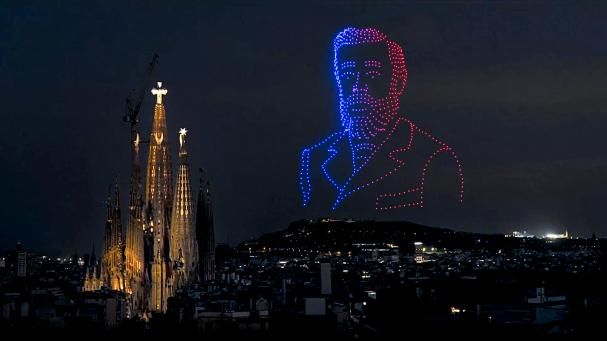
La Sagrada Família has been under construction for 144 years. Antoni Gaudí died in 1926, yet we still call it “his cathedral”. He didn’t lay even a tenth of the stones that make it up. He designed it, his whole life — that much is true.

La Sagrada Família nearly complete, June 2026

The same thing happens with video games. Audiences love attaching a single name to a work. It’s a cognitive shortcut: it’s easier to remember a face than an org chart. Miyamoto is Mario. Kojima is Metal Gear. Molyneux is Fable.

The name on the cover represents the original vision, but the game is the result of a building site.

The new Fable

Peter Molyneux is the perfect example. For twenty years he was the face of Fable: its promise, its vision, its name. Then Lionhead closed. Microsoft handed the franchise to Playground Games. Molyneux is gone.

Yesterday the gameplay demo for the new Fable dropped. Have a look:

Fable – Gameplay Demo (2025)

The game seems to carry forward the fantasy — the storybook England, the dark humour, the flawed hero — that Molyneux lit the spark for decades ago. But it’s being built by different people, at a different studio, with a different budget.

I’m a little worried, actually, given that Molyneux’s target audience was kids like me. And the freedom on show in the gameplay video assumes a type of player quite different from whoever buys Fable on the big consoles. Those people are on Roblox and Switch, not PS5 and Xbox.

What the visionary actually leaves behind

If the game isn’t “made by the director”, then what exactly is an auteur’s contribution?

Two things, mainly.

The first is the fantasy: the emotional promise that the player is chasing. What the player becomes while playing. In Fable, you become a morally ambiguous hero in a world that doesn’t take itself too seriously. That feeling is Molyneux’s signature. Whether he’s there or not, the new team is going after it — even if they’re steering away from black-and-white (good versus evil) and leaning into grey. Moving with the times, I suppose.

The second is the design pillars: the principles that guide every single design decision, even when the original author isn’t in the room. Gaudí didn’t need to be alive for his vision to be followed. What mattered was that he had set it down with constraints clear enough to hold up across decades of subsequent interpretation.

Directors direct the vision. Game designers don’t execute it — they facilitate it within the team. Game design is a constant negotiation:

  • between the original vision and what the technology makes possible (any game worth its salt always has some kind of technological leap baked in)
  • between the designer’s intent and how it’s read by the player and the rest of the team
  • between what you want to do and what you can actually ship in time.

Every programmer who decides how to implement a mechanic is doing design. Every artist who figures out how to make a space readable is doing design. Every level designer who places an enemy is doing design. The game designer isn’t the one holding the whole thing together.

Gaudí started the building site. The architects who came after him interpreted it, completed it, sometimes corrected it. The Sagrada Família is great because of that collective effort.

Video games work exactly the same way. The genius lights the vision. The building site — made up of hundreds of people with different trades, different skills, different perspectives — makes it real.

The next time you say “Miyamoto’s game” or “Kojima’s game”, it’s not wrong. It’s just incomplete.

Like saying “Gaudí’s cathedral”.

Ocarina of Time: A Masterclass in Designing a Tragedy

This post was originally written in Italian by Paolo Gambardella. It has been translated by an AI agent and may contain inaccuracies.

There’s an article by Renan Fontes on Goomba Stomp that analyses The Legend of Zelda: Ocarina of Time as a classical tragedy. Link loses his childhood to save a world he can never return to, and even when Zelda sends him back in time, that act is the final confirmation of the loss.

It’s worth a read. I came back to it when the remake of this all-time classic was announced.

The tragic mechanism

The core of Fontes’s argument is straightforward: Link is a war orphan, already separated from the Kokiri before the story even begins. The Sword of Courage punishes his impatience with seven years of sleep. Waking up as an adult in a ravaged Hyrule, he has become someone else.

At the end, Zelda sends Link back to the past — but Navi leaves at exactly that moment. Even if you could go back to being a child, you would no longer be the same. You can’t unlive time.

That feeling doesn’t come from the writing itself, but from how the game was built around a coherent emotional identity, and from how the memorable peaks were distributed with care.

Peak-End: the moments that stay with you

Peak-end psychology tells us that people don’t remember an experience as the average of every moment they lived through. They remember the emotional peaks and the ending. Everything else settles into the background, but doesn’t shape the overall judgement.

In OoT, the peak is probably Navi’s departure. It’s the silence in the Temple of Time as the world takes shape again. It’s Saria saying goodbye without knowing it’s a final goodbye.

A mediocre game would have put the emotional peak in the boss fight. OoT puts it in a quiet loss. The ending — young Link in the castle courtyard, Zelda watching from a distance — resolves nothing. It leaves a wound open. A wound players carry with them for decades. The same one that, for me personally, changed something fundamental inside.

Lesson: the most powerful peak often doesn’t coincide with the mechanical climax. If you want an experience to be remembered in a particular way, design the memory, not just the event.

The emotional promise

OoT has a precise emotional identity: heroic melancholy. The feeling that growing up costs you something you can never get back, and that courage won’t save you from paying that price.

Every element of the game is charged with that atmosphere. The music (Saria’s Song, the Bolero of Fire, the Song of Time) anticipates the action and then comments on it. The temples feel like places abandoned by someone who once loved being there. Hyrule Field at night is as vast and silent as a promise that might not hold.

When a game knows what its emotional promise is, every decision becomes coherent. The colours, the silences in the dialogue, the distance between characters — all of them are carrying the same feeling.

Lesson: alongside designing mechanics or systems, it’s worth naming precisely the emotion you want to leave behind. Something specific. This can lead to uncomfortable conversations with the team or with management. But it matters.

Player Need Satisfaction: why the loss hurts

Self-Determination Theory breaks down fundamental psychological needs into three areas: autonomy (I feel like I’m acting), competence (I feel like I’m improving), relatedness (I feel like I belong).

OoT is a tragedy in part because it satisfies all three — and then takes them away before the credits roll.

You have autonomy: you choose where to go, when to return, how to use your tools. You have competence: you grow up, defeat impossible enemies, master magic. You have relatedness: Saria, Navi, Malon, the sages — a web of connections built piece by piece.

Then the game pulls it all apart.

  • Saria is trapped in the forest forever
  • Navi leaves without explanation
  • Zelda sends you back, but the version of you who lived through those seven years can’t come with you.

Lesson: loss in a game hurts in proportion to how much the player has invested in building something. If you want a tragic ending to land with real weight, the psychological needs have to be fulfilled before they’re taken away.

Conclusion

Fontes wrote a narrative analysis. But underneath it there’s something more interesting: OoT works as a tragedy because the design choices and the narrative choices are pointing in the same direction. That’s coherence. And I’m glad my daughter will get to experience this remarkable game in its updated form.

Read the original article on Goomba Stomp

Action, Response, Reaction, Consequence, Implications

This post was originally written in Italian by Paolo Gambardella. It has been translated by an AI agent and may contain inaccuracies.

When we’re designing a new game, we very often look for verbs that describe what players can do. One way to stress-test those actions is to use a framework that forces us to think through every possible consequence.

  • Action: describe an action in three words or fewer
  • Response: the immediate feedback the system gives the player to confirm their action has been registered
  • Reaction: other entities in the system need to react to the action in order to give it meaning
  • Consequence: the game’s economy must be affected by the action, even if only slightly
  • Implication: wherever possible, the game’s narrative should also be something the action can influence

Players are the ones who make the story — we simply give them the tools to do it. That’s the best way to think about narrative, in my opinion.

Let’s look at a concrete example:

  • Action: throw a rock
  • Response: sounds, particles, objects hit and broken
  • Reaction: one NPC runs away in fear, another starts attacking us…
  • Consequence: there’s now a rock on the ground, plus scattered debris that could be picked up and used by the player or by NPCs
  • Implication: if you break something that belongs to someone, your reputation might take a hit until you’ve paid for the damage

Not every action needs to be put through this lens, but I do think games today should be thinking about these things — it’s what allows a system to respond meaningfully to whatever a player decides to do.

A useful cut rule: when you can’t afford to implement all five layers for an action, ask which layer is load-bearing for that specific action. Response and Reaction are almost always required — without them the action feels dead. Consequence is required if the action involves a resource. Implication is a bonus unless narrative is your core loop. Stripping a layer intentionally is fine; stripping it because you forgot to design it is where games start feeling hollow.

Don’t Get Distracted

This post was originally written in Italian by Paolo Gambardella. It has been translated by an AI agent and may contain inaccuracies.

This week there was the Sony State of Play, and the new God of War was announced. The game features Kratos’s wife as the protagonist, with a cube as her companion — not quite what you’d expect. After the event I was scrolling through LinkedIn, and all the “experts” had their take. The character is wrong. The cube makes no sense. Swapping the protagonist’s gender has never worked for other franchises.

Watching the reaction of someone who actually worked on the game is worth more than a hundred LinkedIn posts put together. Honestly, I’m a bit tired of people exploiting the algorithm’s tendency to push outrage content. Especially when those people don’t make video games — they’re not in the trenches. I’d rather hear the passion of someone who actually works on games for a living.

The other thing I want to point out is that Santa Monica Studio has a more than proven track record of making successful games. We should all respect expertise and acknowledge that people who know more than us are probably right. I’m in the process of unfollowing podcasts and channels that thrive on controversy, because they distract from what actually matters.

Video Game: A Complicated Reality

This post was originally written in Italian by Paolo Gambardella. It has been translated by an AI agent and may contain inaccuracies.

The issue of creating and distributing video games is a complex reality. Talk to anyone working in the industry and you’ll always hear the same thing: “making games is hard.”

During the years when video games received massive investments (especially during COVID), an illogical mindset crept into the industry: treating this delicate reality as if it were a complicated problem.

Complicated problems are solved with the left side of the brain. Building a rocket to go to Mars is a complicated problem. You need experts who, with the right knowledge and reasoning, will get you there. Once the process is found, the problem is solved — barring human error, of course.

A complex reality, on the other hand, requires entirely different skills. Skills for which the right side of the brain is better suited. It requires building certain relationships — both with people and with creative work. There is no single method, no formula. Companies that succeed and rely solely on formulas eventually pay the price.

Game creation and distribution cannot be treated as a complicated problem: it must be respected as a complex reality. Otherwise, it boils down to a game of stolen ideas and performance marketing tricks that only bring in money in the short term. Then, inevitably, someone comes along who is willing to work with fewer protections and longer hours, and overtakes us.

Sometimes I get the feeling that we need more humanists and artists, and fewer mathematical minds and business people, among our executive ranks.