Skip to content

Paolo's Blog Posts

Combat: the center of gravity of game design?

Lately, I am seeing a lot of high-level solo projects popping around. I don’t know you, but sometimes I am so amazed that I think “What am I doing instead? Am I really a game designer? I mean, look at that!”. I guess it’s completely normal when you have passion for what you do.

One thing in common that I see very much is that the videos shared always show combat. So one may ask:

  • why combat?
  • Are we just violent monkeys always thinking and dreaming about fights and shots?
  • Why does combat have this sort of gravity that always sucks in the best designers?

To me, it’s not that we are doomed, to me it’s because combat fits perfectly in the true meaning of games. Let me explain.

Good reasons to put combat everywhere

We play games for a lot of reasons, but most of them are directly linked to our survival skills. To have fun is, to speak synthetically, to learn. And to learn is to improve our survival skills. Having to beat something or someone is part of the metaphor of survival.

Another good reason to me is that combat is a great way to realize game mechanics into a meaningful feedback loop. If you throw a ball for nothing, that physical mechanic in the long term can be very boring. If you have to hit cans you have a more interesting goal. If the objective is not a can but something that can hurt you, that gives you more motivation. The fun closure happens when you can throw the ball -> the ball hits and you see the feedback -> your score improves after that feedback! So that you can do the same over and over again and improve your score.

Combat has become in recent years also a design specialization. You can see a lot of offers out there for “combat designers”. Combat is for Players accessible and compelling. Many mechanics are easy to model and mix thanks to combat.

So, friends, we can rest assured. We are not awful beings, as humans we intuitively spot and take all possible shortcuts. As Players, we love to aim and kill, because we can train without getting hurt. As Designers, we can show off our craft and present our ideas in a fun context.
Rules and worldbuilding

The success of Baldur’s Gate represents for many the triumph of things done right. It’s always nice to see that creations made with a love for art can go far.

As a game designer, I also want to join the discussion by contributing my grain of sand. Baldur’s Gate 3 has the advantage of a system of rules that is well-known in a niche of players. When we say “Advanced Dungeons & Dragons” we refer to the license and intellectual property. But from a game design standpoint, it’s much more. Holding a license is not simply holding the right to use characters. It means having a significant part of the design work already done.

When you create any game, you create a magic circle that players voluntarily choose to enter. In the magic circle, they will find rules and a world that they can like or dislike. Creating rules and the world is a very important part of a game.

  • Dungeons & Dragons rules are based on the roll of the dice.
  • There are numerical factors to add and subtract from each roll. Those factors depend on the characters and the context. There is an interesting connection with the narrative.
  • The system also allows for surprises. In jargon, critical failure and critical success. In practice, things can get surprisingly good or bad. And that is how unexpected moments can twist your story completely.

Baldur’s Gate 3 also uses the Forgotten Realms setting. Imagine 2 decades ago. Some Dungeons & Dragons players create a campaign. They draw maps and create legendary characters. They decide to publish this setting so that other groups can create stories and enrich them. That is how Forgotten Realms and many other settings are born.

In game design, we call this worldbuilding. Another expensive part of our trade. Do you think it’s easy to create a world with dragons and magic that is consistent and players accept as decent? Well, it’s not. It’s very easy to get it wrong. Players of tabletop RPGs are extremely knowledgeable in fantasy fiction. They read a lot, they study a lot and it’s not easy to please them. If you meet that niche, chances are that you can also reach a massive audience.

Someone says that if 10 people are true fans of your product, your product has a chance to become a massive hit. Having a system of rules and worldbuilding already available is a tremendous advantage.

Questions to ask on culture

It happens to many of us to join a company and realize that it is not the place for us. Not for the product, not for the people, but for the type of culture there.

During some selection processes, we have the opportunity to speak with the founders. There is always a moment when they ask us if we have any questions. I recommend these 3 questions to understand where you are going to end up.

Are you running a race or a ride?

There is no right or wrong answer to this question. There are professionals who prefer racing. They want to feel the adrenaline rush and get some results first. Train hard and work hard. They don’t like to lose the race. They want to be at least on the podium and bet everything in their lives on that.

There are other professionals who, like me, want to last 100 years. If some competitor does better, who cares? There’s room for everyone. Take it easy. Do your job with patience, and dedicate yourself to those hours with all of yourself. But remember that life has many facets, not just work.

Fun fact: I worked for a beautiful company that ran a ride. The company was bought by a multinational whose vision was: “to become the best f2p company in the world“. From ride, work turned to race. In a race, people are left behind. I jumped ship immediately. Many of my former colleagues were fired in 1 year, probably for some number on a spreadsheet. Do you read the company vision? Do you meditate on that? That is very important, believe me.

I’m working for you. What are the elements that will lead you to say “nice job” in 6 months?

This question is essential to understand what are the things that the company is looking for. All businesses want to make big profits, big and small. This is obvious, otherwise, a sane person would never get into entrepreneurial ventures.

There are many different types of leaders. Ask this question and listen carefully to the answer.

Fun fact: I was in a bar having an informal interview with a company that wanted to land in Barcelona. I asked this question to the person who was supposed to be my future boss. This person replies “I’ll tell you that you’re doing a good job if I’m drinking champagne from PRADA shoes! Hahaha!“. I finished my coffee, said goodbye politely, and left. The company has never been able to create anything here.

If you fired in the last year, could you tell me why?

This is a question that will make us understand the intentions of the companies. It’s a question I’ve never asked anyone. Today I only interview for companies that really interest me. With solid projects.

But given the recent times, where the job market treat people like commodities. This question is fundamental.

In fact, we need to understand what kind of monster we are entering through the jaws. If this monster will spit us out, shit us out.

Or if we will become part of his organism contributing to its functioning.

Conclusion

People who don’t know how to manage often manipulate the topic of cultural fit to serve their ego. Other times, it professionals who don’t know how to ask questions view this topic not so important.

Remember: you should become the member of a company to improve its culture. No one should never force you in their schema.

The past to get a vision

There are people who are able to read the situation in the video game industry and create a vision. This isn’t enough to create a successful game, but it’s definitely a start.

Rather than pretending to forecast numbers, they are capable of looking back.

That makes a lot of sense, actually. Whatever kind of game you want to create, study the market for 10 years now. By studying its evolution, in fact, it is possible to understand trends, errors, and choices.

This helps to trace a backward path and identify possible forks that could arise in the future!

A large part of the future audience of a certain genre will be the people who are playing that type of game today. With a few more years, but above all with a lot of knowledge that will come from the past. That will lead to their gaming choices for the future.

Remote presentations

When I started my career as a junior, I remember spending a lot of time preparing pitches for my ideas. I arrived at the moment of the presentation, I felt all those vibrations. Most of my proposals were debunked.

I learned a key concept: people coming to a presentation must know pretty much all its content. The presentation is useful for confirming consent, but these must be created first. Part of the wok is political: it is a question of building consensus before the presentation.

In the remote world, all this has changed a lot. Now everything is asynchronous, communicating on Slack/Discord and making decisions faster. It’s also more participatory, it’s not about creating a presentation. It’s about writing and sharing documents that will be read and commented on by the team. This will happen asynchronously, everyone reads when, how much, and how they can.

Whoever raises his voice no longer wins, and you have to be very synthetic. I’d say it’s a big step forward, but it comes with a clear cost. It is necessary to establish processes, otherwise, many ideas will fall into the void.

Exciting goals

The structure of the objectives of a game must be clear, but also and above all exciting.

At the time of classic arcade games, players had to pass the level and get the highest score. This was exciting in that context, where one could brag to friends or show off one’s prowess.

The console age built on that, adding storytelling over the years. Also in other contexts, the players could comment on their achievements. I remember phone calls with friends to explain how to beat a Weapon in Final Fantasy VII. Strategy guides and magazines with reviews were popular. And it was like this thanks to this desire to understand and discover new exciting goals to achieve.

Social games have summed up all this past, allowing us to collaborate to achieve goals. The metagame concept has developed, you can reach certain objectives even without playing. The experience allows even casual players to take part in something fun. There was also a cleaning up of objectives that were getting too complex. This is thanks to understanding and profiling players.

As game designers, we must always ask ourselves where they will play and how much time they will want to invest.

Fun fact: the most engaged casual players and those who will spend the most will

  1. come back every day (regulars)
  2. come for a minute, but stay for an hour.

How to find a new job

I’ve been reading about a lot of layoffs in the industry lately. Many people give advice on finding a job and share their experiences. It’s great to see everyone working together.

Someone is capable of arming a portfolio to make the leads of the most renowned companies envious. Someone else manages to work in a bar gradually creating his game in his spare time. There are people who are very good at making new contacts and making themselves known. Others prefer to write or record videos. There are many ways and there is no need to get anxious and try to cover everything.

  • Do you have anything to say?
  • do you have something to show?
  • Do you have the opportunity to meet someone?
  • do you want to earn money doing another job at least for a while?
  • do you have the possibility to keep yourself without entrances for a while?
  • have an idea for a game?
  • Do you know which companies you would like to work for?
  • Do you have any idea of the specialty you want to acquire?

As far as I’m concerned, it’s hard to find universal advice to give to everyone. Each person is a world, everyone lives in a different context. Make contacts, have a portfolio, be kind, learn something every day, and dedicate yourself to a small project every month. They are all valid advice, but also very general. The human being is not a machine that receives instructions and executes, there are many factors at play.

Here’s what worked for me:

  1. think about making contacts rather than making a portfolio.
  2. be omnipresent at local events and always try to help before asking for help.
  3. ask for help.
  4. immediately move away from realities or people who don’t want me.

I don’t have an online portfolio, except an old link. I prefer to have a blog where I show my thoughts. And I do it because I don’t care to be evaluated for my technical skills. I don’t have to prove anything to anyone, least of all skills that can be acquired in 10 minutes of a YouTube tutorial.

The right context for the right ideas

A short while ago I met a friend who holds a manager position in one of the companies in my city. He told me that new ideas are one of the hardest things to come by.

Starting from that sentence I began reflecting on innovative ideas’ meaning. And I have to say that if I meet this person again, I would have my answer instead of listening as I did.

Every day on the various channels I frequent online and offline I am exposed to so many ideas. Some seem brilliant to me. Others, at least at first sight, do not surprise me. But then I didn’t read well or that person didn’t express well what he had in mind.

Ideas are not lacking. So what is missing from many companies that want to innovate? More ability to discern is lacking.

Discerning which ideas are the best is what is missing. To do that, you need to establish a process. Most games fail because they have no audience. But how come they have no audience?

Very often it’s because we put the workforce on things they either don’t care about or don’t have the skills to do.

We all know that match-3 puzzles are a bottomless pit. These are games that can earn a lot of money. But do we have the ability to create and operate such a game? Does our clique like to do this? Or would they rather make a graphic adventure but are forced to make candies that explode?

  • Discernment means the ability to make decisions in n informed and aware way.
  • Awareness means not neglecting the intentions and abilities of our team.
  • Good marketing and game design is not enough, you need everything in the right context.

Weird recruitment practices

There’s a weird trend lately.

I receive messages from companies looking for talent. They find my profile very interesting and that they have a great opportunity to show me.

I say that I work as a freelancer but listen to everything. If an interesting project comes out why not? Every game designer wants to do something great.

We organize a call and they start questioning absolutely everything. Some don’t even read my resume well. The other day: “So you started working as a game designer last year?”

Someone asks me for absurd specializations. “Are you a JIRA specialist?”.

JIRA? JIRA is a tool, not a technique! What the heck does it mean to be a JIRA specialist?

I describe my experience in detail, I am 40 years old and also have some white hair. And some companies give me homework to do as if I were a kid! Unpaid work. 10 days assessments with pitches, feature briefs, configurations, flowcharts, wireframes, asset lists… what? Are you looking for talent or for free work?

And then you see that job offers there forever. They cannot find the right fit. If we start treating people like professionals, not kids, talent will emerge.

Try this instead:

  1. look for interesting profiles and treat them like true experts, not someone to filter out. Start your relationships by giving people an A, the world will change.
  2. make meaningful questions with the purpose to start a professional conversation. In the real work environment, there is interaction, not solutions coming from one single person.
  3. if you find the person convincing, hire the person for a trial period. Only by working together, you will find the right fit.

I am sure you will also save a lot of time and money.

Expanding the intellectual property

Years ago the free-to-play game Fallout Shelter was released. It is still one of the most appreciated mobile games nowadays.

The game is based on one of the fantasies from the Fallout series, but, and this is very important, not the central one. The fantasy of the shelters where people take refuge after the atomic apocalypse. A great idea!

In my humble opinion, the best way to use an AAA game’s IP to create a mobile game is not to transfer the original experience to the closest genre there. That’s the way to infuriate the fanbase, actually.

The best way is to find a marginal but recognizable fantasy. A few examples that come to mind:

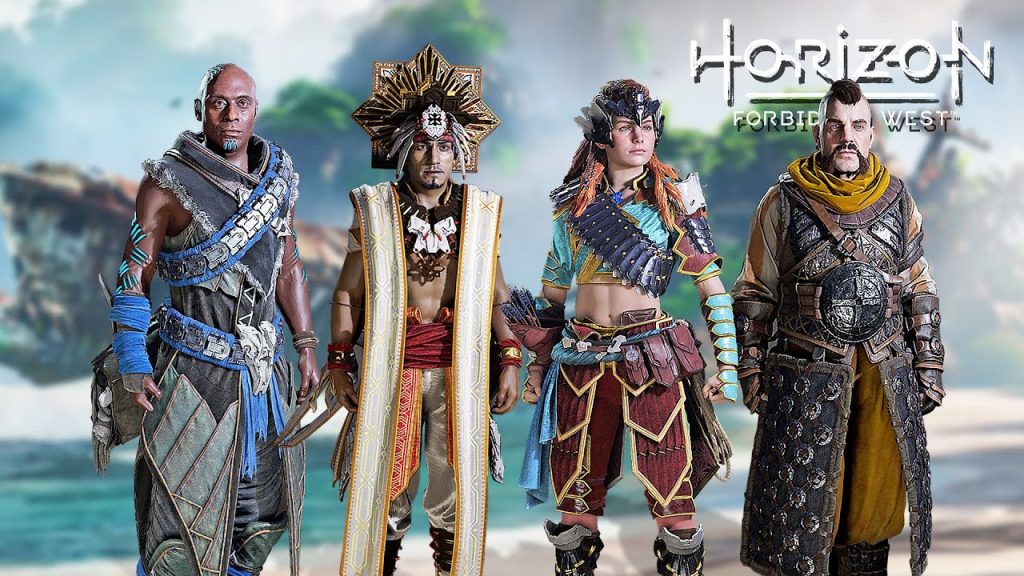
Horizon: the fantasy of the tribes with their clothes and their colors. A doll dressing game?

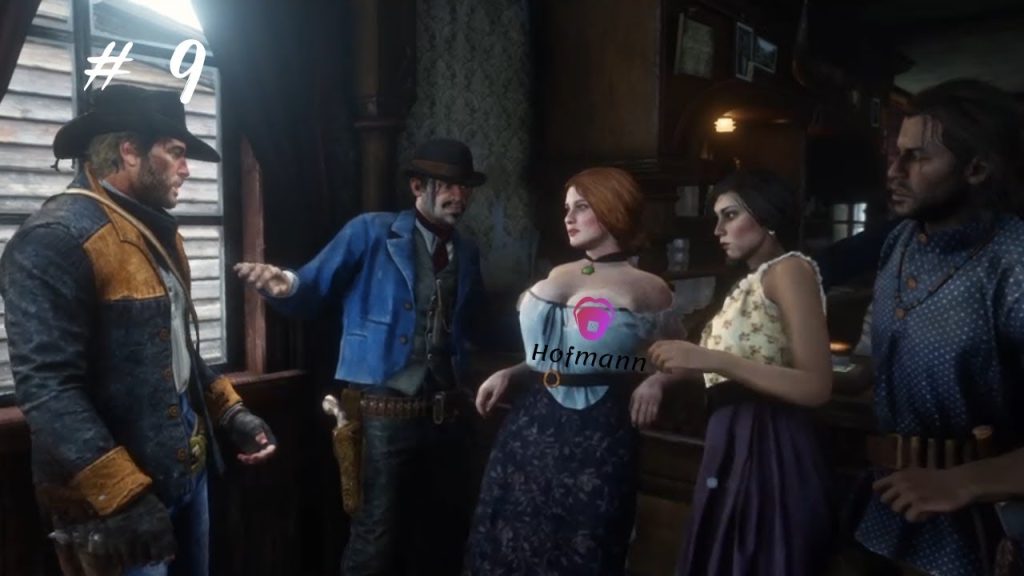
Red Dead Redemption: the fantasy of poor towns with their vices. Maybe a dating sim?

I could go on for hours.

Keep always in mind that free-to-play mobile is essentially entertainment. Don’t think about using IP to make more money, think about expanding it.

(I admit this is hard to accept)