Skip to content

Tag: research

Roblox: unprofitably unsafe

The CEO of Roblox gave an interview to one of the most popular NYTimes podcasts and the industry didn’t reacted well. I found it insightful and I tend not to judge people, especially salesmen, when they are selling something.

The issue with Roblox stands in its business model. Everybody knows that when a service is for free, the product is you. And in Roblox, the product are the kids. If they would really fix the issue with kids safety, they should start from there. They should put on a subscription model, where 100% of kids (or better, their parents) will pay a fixed amount just to play. In that way, things would change a lot.

And maybe, who knows, Roblox would also become a profitable business. Because since day 1, it has never been profitable. Roblox relies on investors who believe that, at some point, all those users will eventually generate profits. But for now, it’s a leaking bucket.

A clockmaker’s craft

Many confuse casual games with simple games. Casual games permit the satisfaction of instinctual needs in small (2–5 minute) play sessions. However, many hardcore players of these casual games can play them for hours. In fact, they are the players who actually maintain the business.

I’ve worked on a bunch of them, and I feel like a clockmaker. They may feel simple, but they are deep: you move one gear and you must check all the others connected to it. You need patience to achieve the sweet spot (the perfect balance).

To properly study your competitors, you need to analyze them in immense detail. You may even need to record a session and review it frame-by-frame to fully understand the game’s circuit and how it works.

Be honest, be indie

I believe the single most important quality for indie developers is honesty. This is their secret weapon. It is nearly impossible for a Top 10 company to achieve full honesty because of their size and stakeholder structure. Honesty, however, allows you to consistently put out your authentic voice.

Recently, while consuming content in the indie space (podcasts and video), I’ve noticed a significant increase in marketing awareness. This often translates into the typical marketing discourse: “how to make trending things faster and avoid struggling too much.”

But that, in my humble opinion, misses the entire point of being an indie. Independence requires you to embrace the struggle and invest genuine effort—not just hours, but intense thought and creative energy. If you end up simply chasing trends, you risk falling into the trap of industrialization, product managerization, and creating derivative work.

I am not arguing against trend awareness or chasing money; of course, we work for money. But I am asserting that if you want to truly succeed in the indie space, you must prioritize honest self-expression. Put your authentic voice out there for real—even if your true call is to make a niche friends-to-lovers sim or a niche horror game.

The Strategy Fork

Performance Marketing expert Matej Lancaric issued a strong “WAKE UP call” to Supercell, critiquing their slow pace, their seemingly “random” new projects (like the “BOAT game”), and their failure to launch a hit in years.

Matej’s point: Why isn’t Supercell making a strategy game? Look at Century Games and Rivergame—they are launching hits, leveraging years of development and templatization.

Matej and his colleague Jakub Remiar are fundamentally right about the market reality: Supercell is competing in the same giant mass market as these Chinese juggernauts. However, the strategy Supercell needs to adopt is a matter of competitive advantage, not market segment.

Competing on the Wrong Metric

Jakub points out that the Chinese giants are masters of scaling and aggressive UA. They specialize in perfecting proven formulas, backed by efficient labor and rapid execution.

The mistake for Supercell would be to adopt this same strategy. Why? Because on the field of quantity, templatization, and low-cost labor, it is a lost battle; a race to the bottom that Supercell cannot win without sacrificing its corporate culture and cost structure.

Quality as Novelty

The argument that “quality will save them” is often seen as a defense mechanism, but quality here does not mean polish on a clone. Quality, in the Supercell context, may mean novelty and emergent gameplay.

Supercell’s strength has always been finding new formulas within a strong social/multiplayer framework. If they discover the right key, a system that generates unpredictable, repeatable fun, they create a lasting intellectual property that is inherently difficult to copy. This is true innovation, and it’s their only path to sustainable, high-margin success.

They must either focus on their core IPs (more Clash Royale and Clash of Clans) or they must find a way to put out content faster while still prioritizing the discovery and novelty that defines their brand.

Choose Your Competitive Strategy

The great divide in mass-market mobile design is no longer just between Indie and AAA; it’s between The Template Master and The Emergence Hunter.

  1. If You Choose Templatization (The Century Games Path): Your primary focus must be UA efficiency and Monetization Optimization. Rigorously deconstruct the core loop of existing hits (Last War) and focus your design energy on maximizing retention and revenue curves within that proven framework.
  2. If You Choose Emergence: Focus 90% of your time on building a ruleset that generates an unexpected and delightful player experience. If you can’t discover the fun cheaply, put the project on pause.
  3. Know Your Runway: Innovation is expensive; execution is faster. Your choice of strategy must align with your budget reality.

From The Finals to the front lines

Here is the weekly rundown of industry news and my thoughts:

1. Steam’s Home Console Play

The news about new hardware devices from Steam makes one thing clear: they are aggressively attempting to erode the distinction between PC and Console to win the battle for the home living room.

I can’t predict if their strategy will ultimately work, but if I were Sony, I would focus my energy elsewhere. Sony is proven to be exceptionally good at narrative-driven, high-fidelity single-player experiences. You only need to look at the sales figures for games like Ghost of Tsushima (or Ghost of Yotei, if that is the internal name you meant)—that caliber of experience is Sony’s real golden goose. They should double down on what they master.

2. Embark Studios: Practical AI Integration

Another interesting news item this week comes from Embark Studios (developers of Arc Raiders and The Finals). They appear to have found a cool, practical way to integrate AI into their development process.

This is exactly what I like to see: No hype, just pure gameplay utility. They released a world-class game, and they’ve released useful tools for the community. Embark is positioning itself as one of the most promising development realities here in Europe.

3. The AI & War Reflection

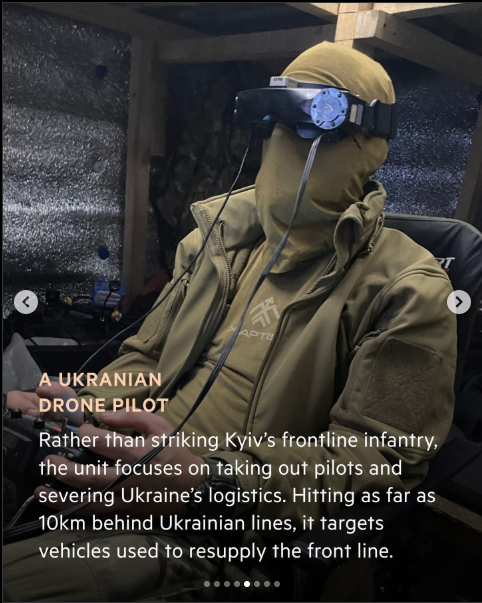
On a more sobering note, a friend recently sent me an Instagram post detailing new tactics adopted by the Russian invaders in Ukraine. This led me to a chilling thought:

Perhaps we are seeing so much investment in AI for games because games are essentially a free and unregulated territory to train models made for war. The complex environment, the decision-making under pressure, and the dynamic systems found in games provide perfect training grounds for military AI development. It’s a sobering perspective on the intersection of our entertainment and global conflict.

Kondō and Synesthesia

I recently read a fascinating article on Enhance, the Japanese developer behind Tetris Effect and Lumines: Arise. Their company vision is, simply put, a breath of fresh air:

“Experience is king, synesthesia is queen.”

Synesthesia—the involuntary experience generated by stimulating one sensory pathway—and the concept of Kondō (to move emotionally) are the core of their design process.

I have a huge weak spot for companies with this kind of vision. They are hard to execute, but they make so much sense to me.

We are currently living in the era of the product managerization of game design, where every creative decision is filtered through short-term metrics. These experience-first points of view come like a breath of fresh air, reminding us of the original purpose of our craft.

We are humans making entertainment. Focusing solely on automation and metric-driven tuning can make us forget the human spark that creates great things.

Intense design discussions, deep conceptualization, and messy prototyping—that’s what I strive for.

Enhance starts by making music and then breaking that music down into pieces to design the right stages (levels). It is an inverted process that prioritizes the sensory and emotional outcome. It’s so interesting; I wish I could be in that room to see it.

Strategy as a creative act

Martin Walfisz, founder of Massive Entertainment and writer of the Connecting Pixels newsletter, recently hit a crucial nerve: Most game companies have ambition, but no clear strategy.

He talks about how, when he started out, his ambition was just “Explosions must look amazing!“. I see this same pattern everywhere. Most teams are building a feature-collage that relies on luck rather than design. The core problem is exactly what Walfisz identifies: we confuse motion with direction.

Ambition is Easy; Strategy is Courage

Ambition is a resume: “This game will be the best in the world, it will hit X million MAU, and it will have blockchain integration.” Ambition is free. Everyone has it.

Strategy, by contrast, is courage. Strategy is saying NO to the 99 good ideas so you can focus on the one great thing that your game, and only your game, is built to master.

Walfisz nails the essence: “Strategy is about deciding where to become great.”

  • Ambition asks: “What else can we add to appeal to everyone so we can make lots of money?”
  • Strategy asks: “What will we say no to, so we can double down on this one, unique feeling that respects the player’s time?”

Companies fear that choosing a lane will limit their creative freedom. But as Walfisz notes, it’s the opposite: boundaries don’t stifle creativity, they sharpen it.

Success Should Compound, Not Reset

When you build a game purely on ambition, its success is a lottery win. Walfisz points out the high cost of this: “Without a clear strategy, success doesn’t compound. It resets.”

If your strategy changes with every new project you are throwing away the expertise, the audience loyalty, and the pattern recognition you earned on the last project.

Success must become a pyramid built on the cumulative expertise of your team, not a single, isolated pillar of luck.

Look at the example of Landfall, which Walfisz cites: they were self-aware enough to realize their strength was “creating inventive, funny, highly shareable multiplayer experiences.” They focused on that one thing and restructured their studio around it. That is the definition of turning your culture into your strategy.

Designing for the Great Conjunction

Chris Zukowski, the industry analyst behind How To Market A Game, recently published an optimistic take: indie development is in a “Great Conjunction.”

He argues that a perfect storm is brewing: genres that are “easier to make” are also the genres that Steam players are desperately hungry for. This creates a low-risk, high-upside scenario for small teams to release rapid, viral hits like Friend-slop co-op games or Horror-Casino hybrids.

But simply chasing the “Friend-slop” or “Idle Game” trend is the lazy route. A true designer knows that success is not just about the genre, but the transferability of insight, meaning the system behind the mechanics.

If you are going to take advantage of this “Great Conjunction,” you need to know why these genres are working. You need to identify the core human instincts they are satisfying.

The Designer’s Roadmap: Mapping the Great Conjunction

In my experience, the foundation of every successful game is not the graphic style or the business model, but its ability to satisfy a primal human need.

Here is a practical framework, using Instinct Mapping (the concept of identifying the core Survival and Social instincts a game satisfies) to deconstruct the “Great Conjunction” genres. I am writing a book on this topic, so stay tuned:

Great Conjunction Genre (Zukowski)My Instinct Mapping ProxyPrimary Instincts (The “Why”)The Design Hook (The “How”)
Idle / Incremental GamesIdle GameAcquisition, Rest, BuildingThe player gets a continuous drip-feed of Acquisition (loot/progress) with minimal effort, justifying the Rest (downtime) and satisfying the need to passively Build a growing system.
Friend-slop Co-op (e.g., Lethal Company)Party GameGregariousness, Play, LaughterThe core loop is dedicated entirely to Gregariousness (social connection) and unconstrained Play, with the physics or design chaos used to trigger Laughter. Human interaction is the feature, not the polish.
Horror Meta-GenreHorrorEscape, Curiosity, RestThe challenge (Horror) is driven by the thrill of Escape and the pull of Curiosity (what’s around the next corner?). The ‘Rest’ is the temporary moment of safety (e.g., hiding, a brief safe zone). The Horror-Casino genre simply layers this instinct over Acquisition.
Autobattler / StrategyAutobattlerAssertiveness, Combat, PlayThe player’s success relies on Assertiveness (making the strategic decision) and Combat (the resulting conflict), packaged as a simple, repeatable loop of Play that allows for quick experimentation.

The Formula: Market + Instinct

The success of these rapidly developed indie games proves that players will overlook polish and graphics if the core design loop is tight, fun, and deep.

Your task as a designer is two-fold:

  1. Analyze the Market (The ‘What’): Identify the “hot quadrant” in the Game Business Matrix (Session Time $\times$ Player Interaction) where there’s a confluence of hunger and low cost (like those mentioned by Zukowski).
  2. Design the Instinct (The ‘Why’): Deconstruct what primal need that market is tapping into, and use the instincts (like Acquisition or Gregariousness) to structure your Opening (hook), Core loop, and Closing (satisfaction).

Don’t be a martyr for a years-long art project when the market is begging for focused, fun systems built quickly. Use the Great Conjunction, but design with a framework. That’s how you turn a trend into a sustainable victory.

New social-gambling game idea

Watch this video and, if you like it as much as I do, listen to this idea.

Here are the rules:

  • The board is a circle.
  • There are 4 balls of different colors: green, blue, red, and yellow.
  • Balls start with a random speed in a random direction.
  • Every time they hit the circular border, they create a connection.
  • Every time they hit the connection of another ball, they take possession of that connection.
  • When a ball has no connections, it disappears from the board.

Let’s talk about the real game:

The Player Input (The Bet)

Imagine being able to bet on a color. Each bet directly contributes to the strength of the ball. The more you bet on a color, the more you influence its force or mass, the more likely it is to smash an opponent’s connection.

The Reward (The Jackpot)

The final prize will be proportional to the number of links the final remaining ball possesses. This proportion can be explored because there are clear opportunities for jackpots: imagine a scenario where a single color quickly dominates and consumes the entire board’s connection count.

What do we have here?

We just designed a new kind of gambling game. It combines:

  1. Observable Physics: It feels “fair” because you can see the action.
  2. Social Conviction: You are betting on belief, not just chance.
  3. Variable Reward: The proportional reward and jackpots drive engagement.
  4. Minimum Interaction: And players can continue betting as long as the game goes.

We used colors, movement, and the irresistible draw of a collective bet.

Game design for modern pyramids

“The hardest part of making games used to be getting them to work. Now it’s getting anyone to notice.”

I read this interesting post on the current state of the games industry. I spoke about the rock philosophy a while ago, so the post resonated with me. It’s right, the current problem also of game design is getting attention. The technical side of games is easier today thanks to the many tools we have to choose from.

How can you help as a game designer with the attention? The important here is the “invitation to play”. Your art style, the genre (or genres) you are willing to tackle, how do you show them that your game is different (make a trailer before of the game, said Derek Liu years ago), the memorable moments, the goals evidence, the feedback impact… you have lots of tools to use! It’s not just a marketing thing, modern rock teams should avoid silos and think horizontally: a game design choice is a marketing opportunity. Market research drives game design. And so on.