Skip to content

Tag: professional

New narrative system ideas

This week just for the sake of ikigai I am prototyping a new narrative system for Lily’s Garden. Today I focused my efforts to the idea generation. I wrote down hundreds of ideas and preselected just some of them, which will be shown here.

The narrative of Lily’s Garden

The story is divided into large day arcs with subplots. Each day involves renovating a specific location. In order to do that, the Player has to beat puzzle levels earning Stars. Stars are useful to start tasks.

In the course of the game’s renovations, Lily collects items like keys and photographs, builds her relationships with other characters, and discovers more about the estate and her family history.

We will use those terms in this post:

  • Day: set of specific tasks that complete a story arc. We can consider a day like a sequence of an episode in TV series.
  • Positive action: use power-up/boosters, lives refill, use extra movement, complete a goal also if not beating the level, and so on.
  • Perks: boosters, power-ups, infinite lives, stars, ingots.

Reviews analysis

In order to better select the ideas, I’ve spent 1 hour reading reviews. Data.ai allows you to filter favorable and critical reviews.
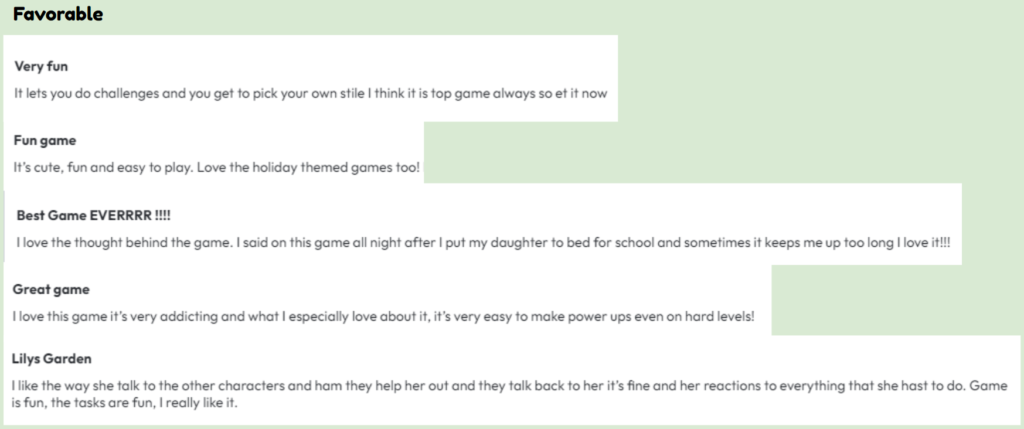
The game let’s you decide the style of your house and decorations. It is fun and easy to play. The perfect experience for when you just want to relax. Engaging and full of power-ups to beat hard levels that you can create on the board or get by using ingots and completing tasks. The main character Lily reacts to everything and completes tasks.

The new system should be built on those strengths. Maybe it is better to have something more specific towards power-ups and tasks completion.
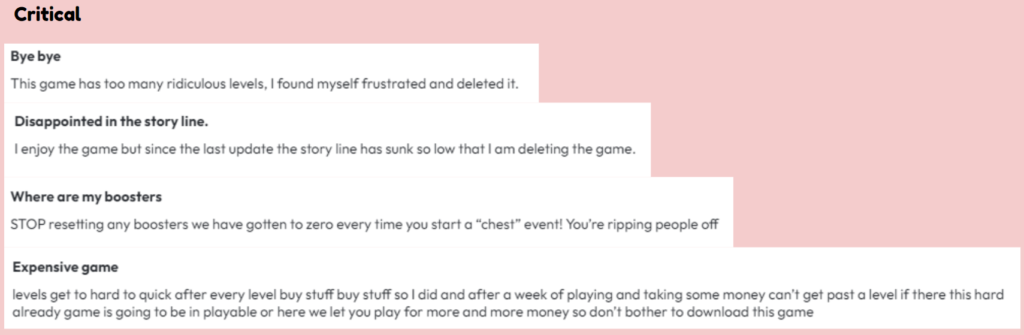
Many levels are hard to beat and some Player feels stuck. The day’s storylines have not always the same quality, probably because of different kind of writers involved in the project. Players lose what they got at the end of some event. Some Player may feel that the game is too greedy in monetizing the puzzle part (extra movements and boosters).

Our system should be able to mitigate the puzzle limitations. The Player should not feel stuck and if they are doing all the efforts to beat a specific level, that should be rewarded somehow.

References

I took some notes on things used in other games with a narrative component. I didn’t looked at top competitors, I just took notes on type of games that I already worked on in the past. This because one of the requirements of this task is agility.
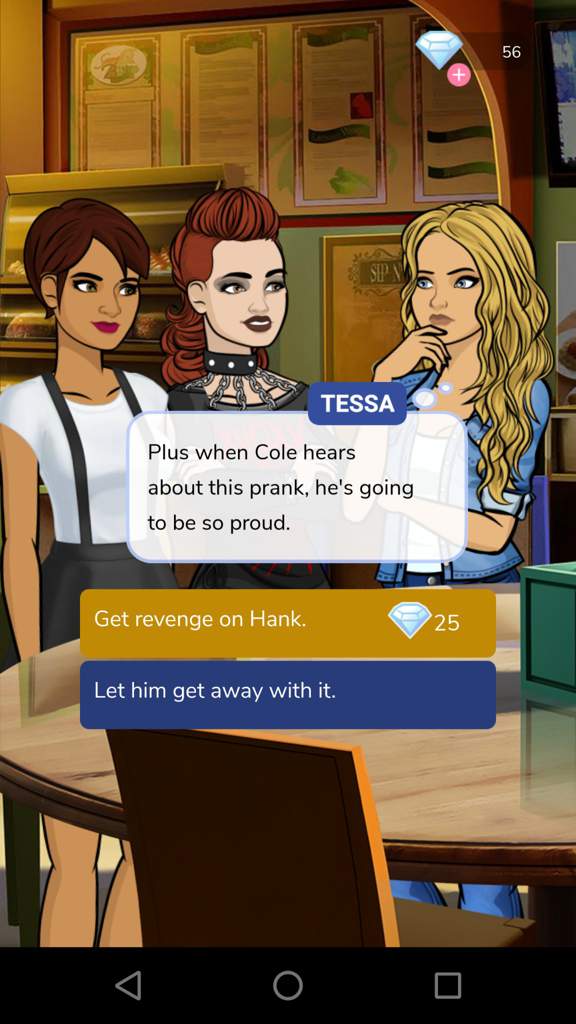
Episode: Choose your Story: Premium choices for premium paths. Great for re-playability, usually something that is not considered in puzzle-renovation games because the days cannot be replayed.

It is interesting to be able to unlock an extra path during a Day, also if some Player may want to get to other outcomes. Branches should always connect again before of the end, to avoid this effect.
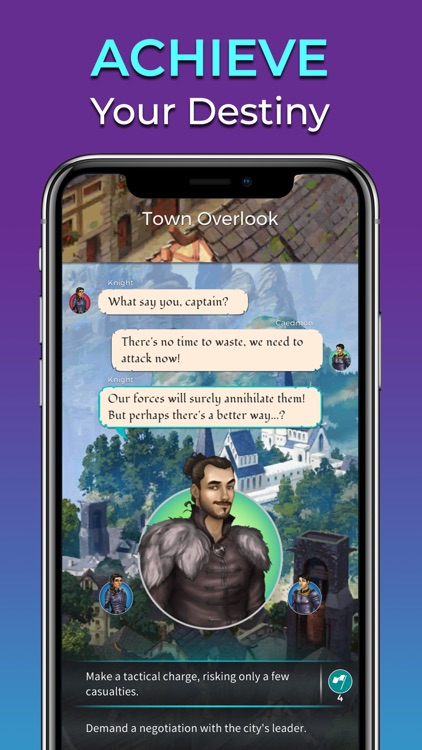
Tales: Choose your own Story: Trials and paths according to stats accumulated during the Story like in a roleplaying game. It would be great to connect the puzzle and the story somehow. Maybe associating each character to every level and let them accumulate statistics according to the power-up used and more in general to the positive actions done.

From the other side, this can complicate too much the system and it may become hard to balance and monitor the Player’s progression on the long term.
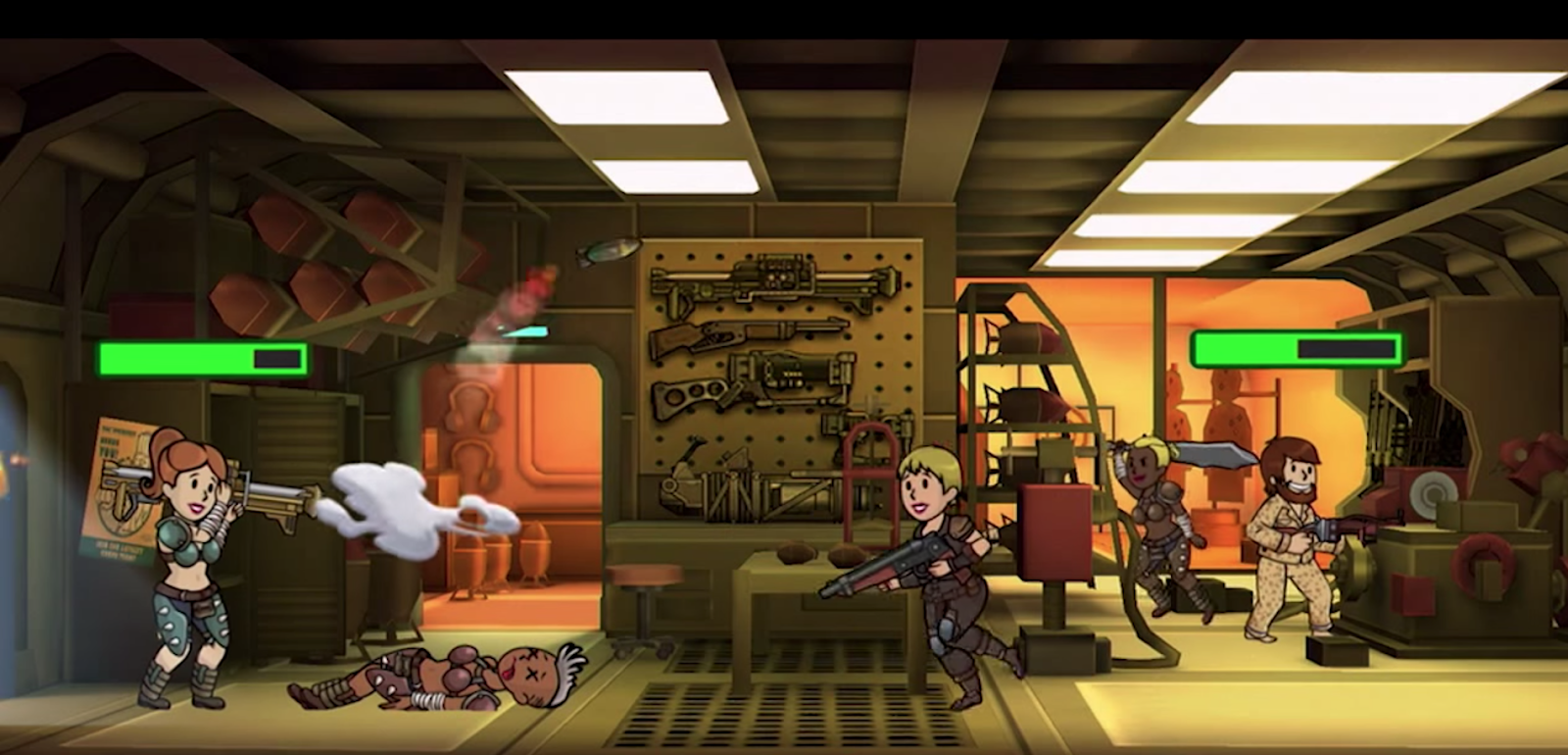
Fallout Shelter: There are characters to whom the Player can assign specific tasks to get more points and currency. What if during a specific day you can put your characters performing extra tasks to get extra perks?

This adds an idle/farming layer which may be not suitable to the core audience of this kind of games.
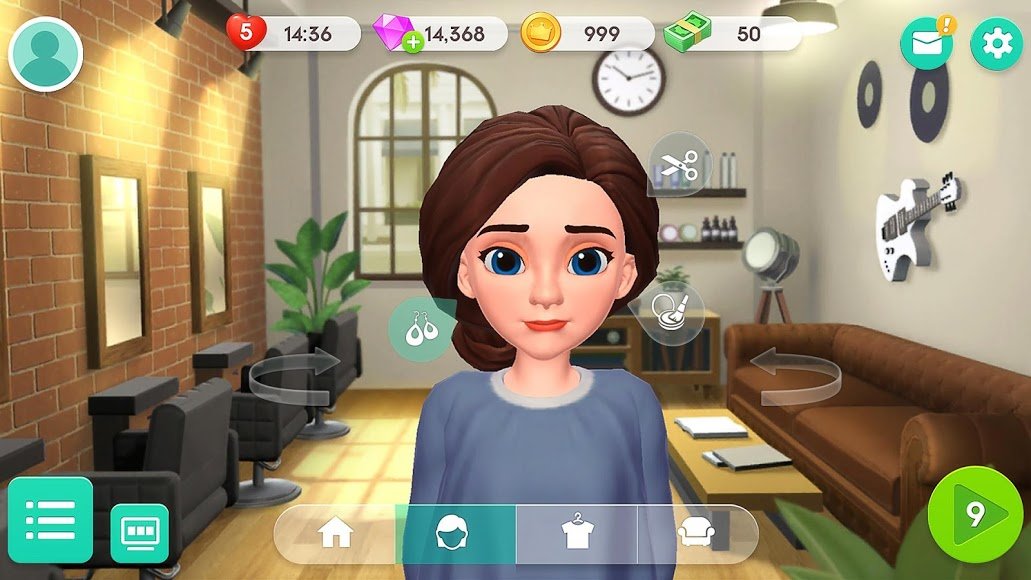
Project Makeover: Customize the aesthetics of avatars in order to make them successful for the end of the episode (day). Maybe the characters of a specific day set can strive to arrive perfect to the end of the arc, in order to the ending be more satisfying.

The risk is to fall in the trap of misogynic and racist narratives, thou. While makeover is great, it should be carefully designed to not offend anyone. Especially when something works out and translates to UA creatives it enters in a dangerous territory. Is that what we want as designers? I don’t think so.
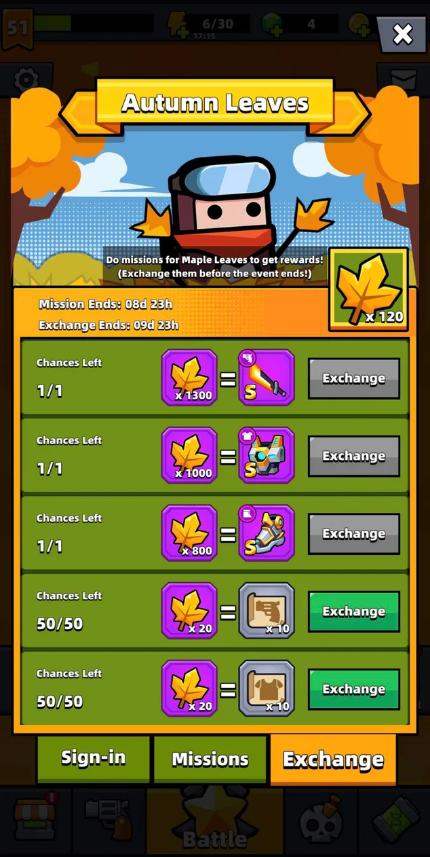
Survivor.io: Complete missions and get an extra currency, useful to be exchanged with other resources during a season. It’s a pretty common practice among casual games and gives lots of agency to the Players.

The problem comes when the event end because Players may accumulate a resource and then they lose it or it’s automatically converted in something not valuable to them.

Selected ideas

I wrote down hundreds of ideas and, since I am doing this alone, preselected some of them. The format I use is: title, wireframe and short description. It is the best way of taking them the day after and decide what to do.

Remember the problem statement decided in the previous article.

How can we engage more the Players more interested in the story, rewarding every effort they make to reach better outcomes during the puzzle part?
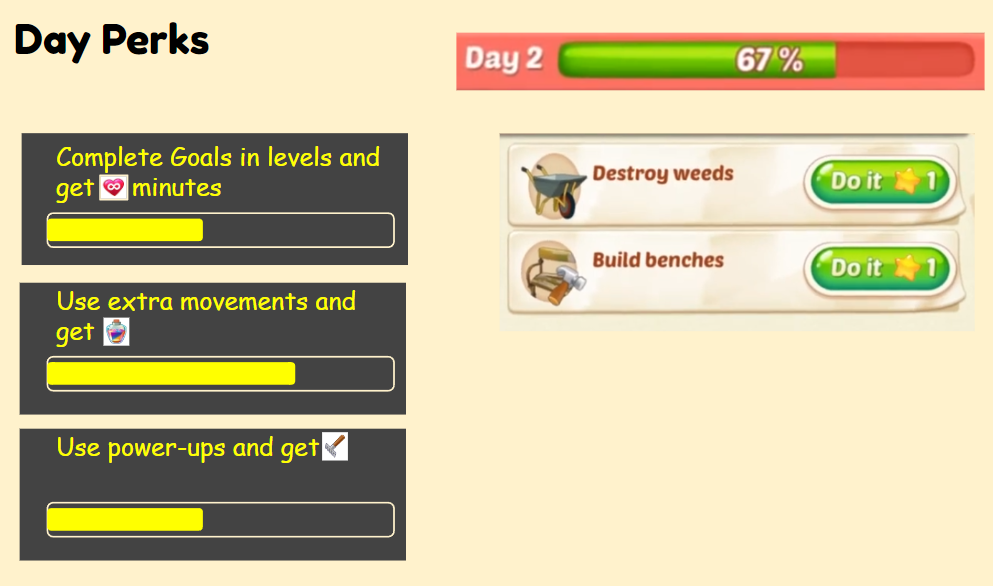
Accumulate perks during a day and collect them based on the positive actions done at the end of the day. Each day has a limited numbers of perks that can be achieved and unlocked at the end.
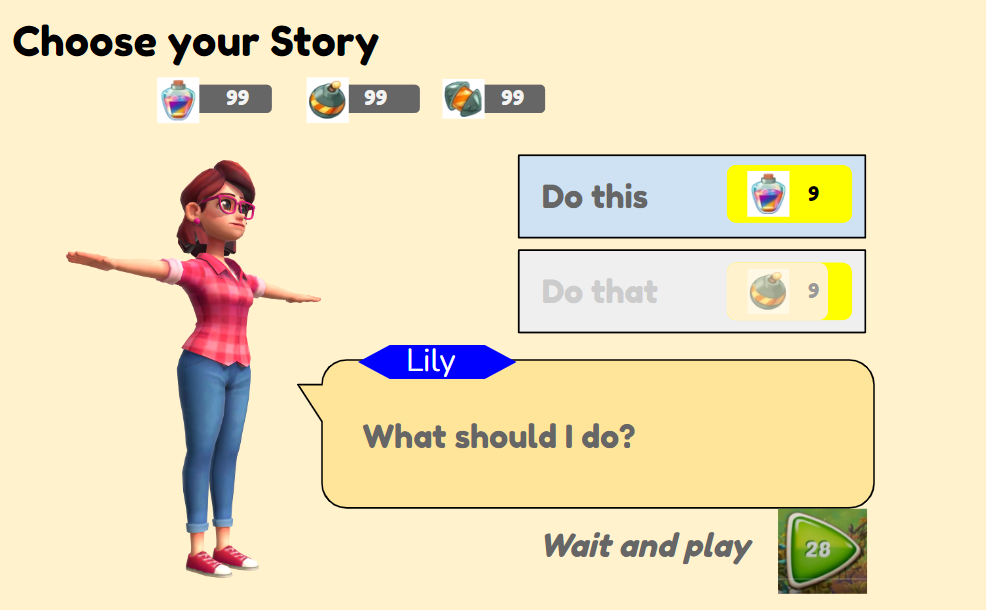
Everytime you create and use a power-up (selecting it in level intro or creating it during the match), you accumulate points useful to take specific paths. If you want to take a specific path, then, you should create use more boosters in the puzzle game.
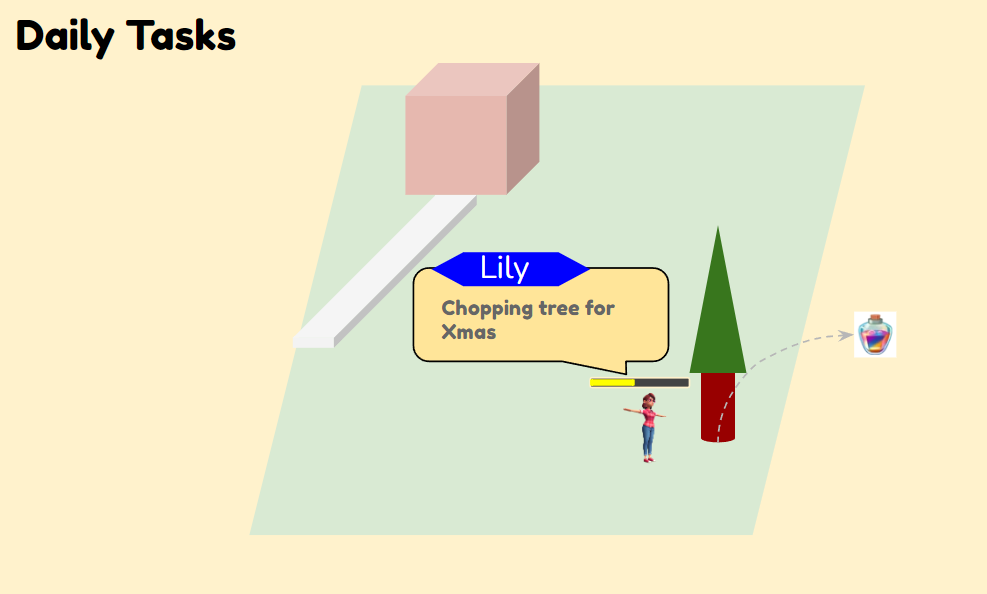
Start specific tasks by performing positive actions and get extra perks on completion. If the day ends, all the tasks are immediately completed.
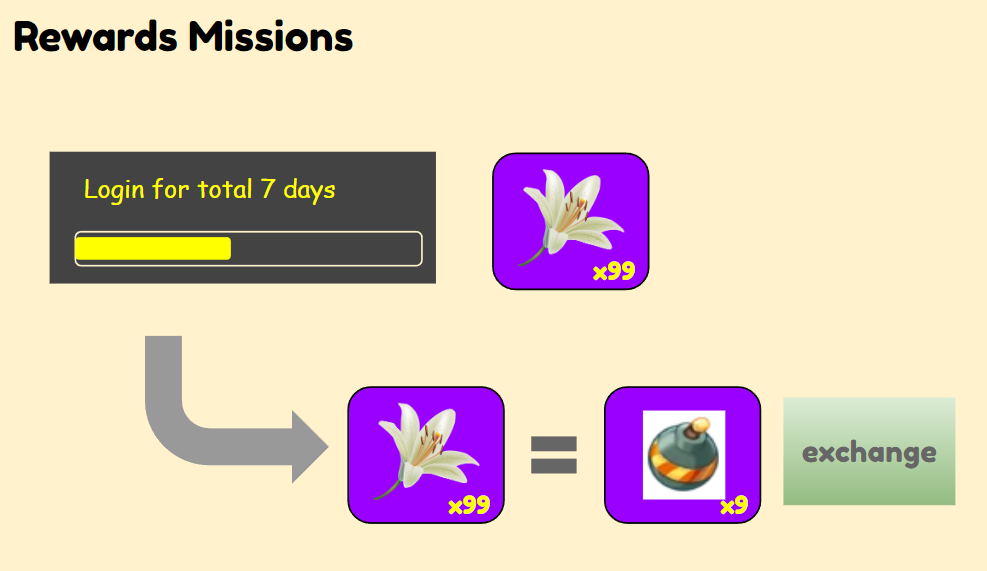
Achievement system for positive actions with special resource to collect and use for special choices during the story.
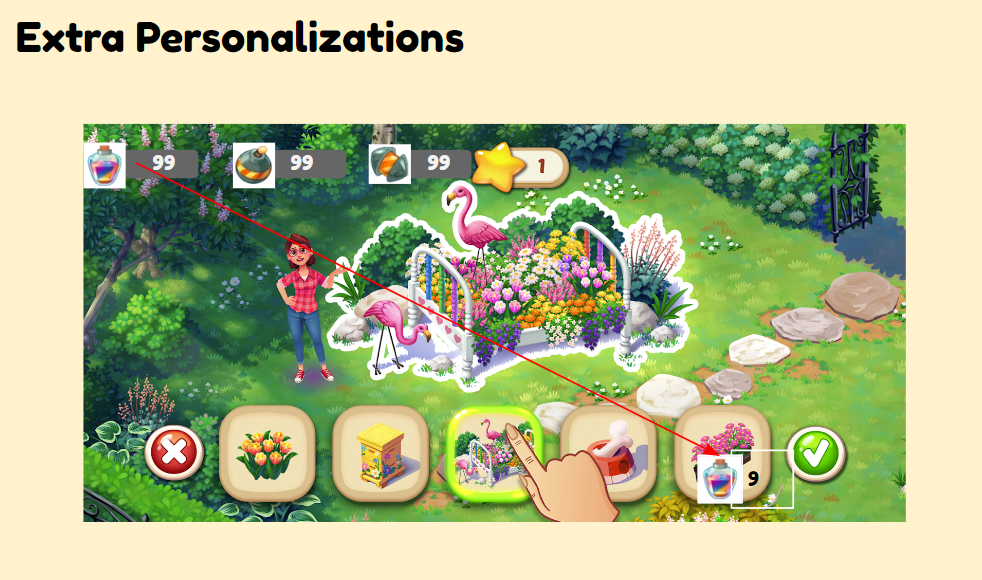
Obtain extra personalization options if you manage to perform a certain number of positive actions.

At the end of an event, recount all the positive actions done and give extra perks according to the milestone. Giving the premium currency can be extremely valuable for the Players, but it may influence the monetization.
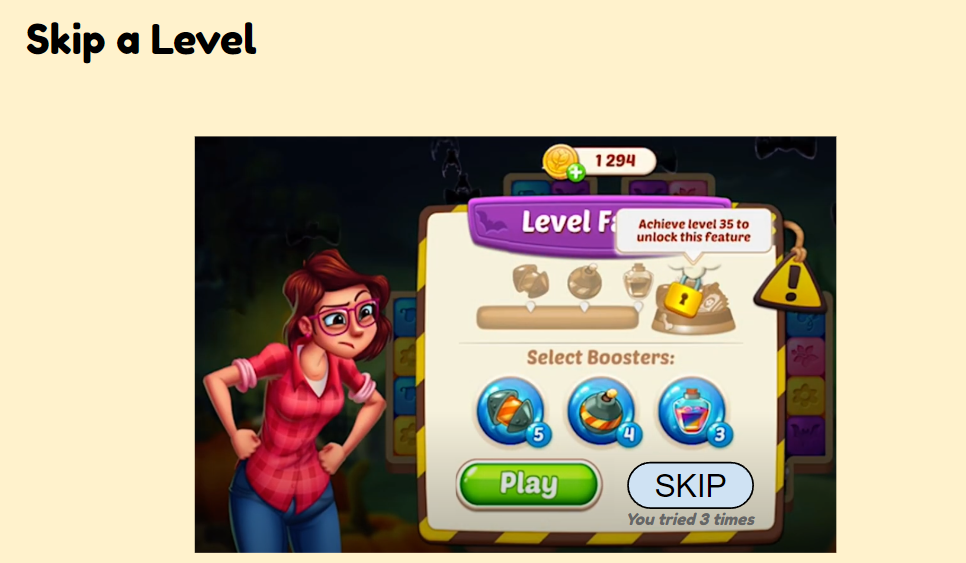
If the Player uses X boosters/power-ups/extra movements to beat a level and still loses, he is allowed to postpone that level for a while.

Conclusion

In a real context with a real team, all this process would be a workshop. Also, the study of top competitors is very important. This exercise is good to keep my mind fresh and to quickly play with narrative techniques I learnt in past weeks.
New narrative system for Puzzle-Renovation games

Puzzle games with renovation mechanic are on top of the charts. They success is tremendous and they are clearly a red ocean market. Many companies try to swim that ocean, so that this week I have decided to make an experiment to celebrate that I got a certification from The Narrative Department.

hooray! I did it! 🙂

The narrative system of Puzzle-Renovation games

The experiment consists of a design iteration to improve the narrative of puzzle-renovation games. I will consider this experiment completed once I have a playable prototype made in Twine featuring the result of this process.

One of the reasons why the Players churn is that they get stuck at some point. The progression curve of levels always goes up, so that with the time the puzzle part gets harder and it’s more difficult to progress through the story.

The issue comes because those games consider a positive outcome the fact of beating a level, but they do not consider all the efforts the Players make at all.

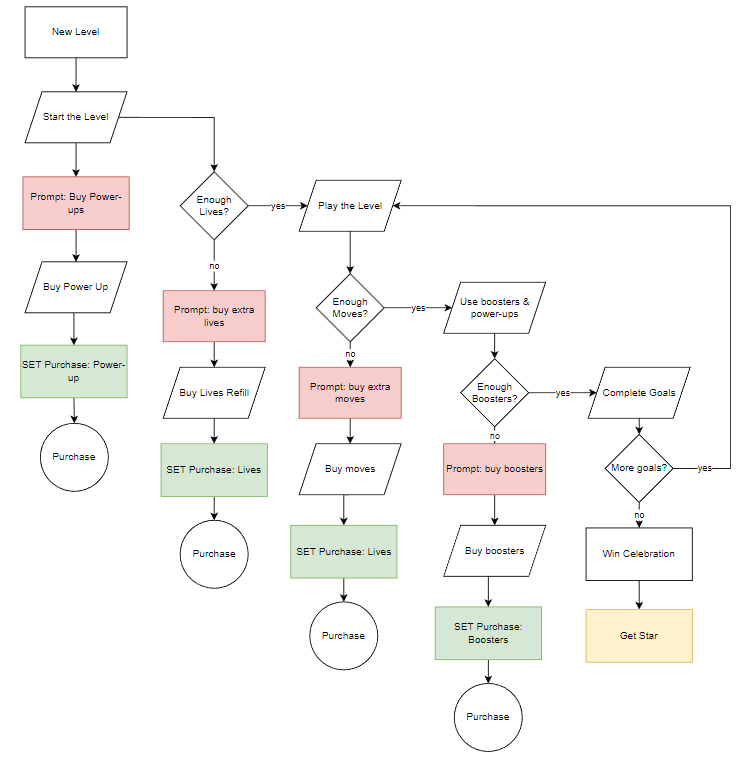
  • At the start of the level, the Player may decide to use a power-up to get help for the level. The first time, the Player will not know how is the layout. Which is why new games warns when there is a hard level.
  • The Player needs lives to start a level. In case they have no lives they should wait or get a lives refill. In order to mitigate this friction, most modern games use lives as an engagement tool. Give the Players infinite lives for X minutes and you will get longer sessions.
  • Puzzle levels are based on a limited number of moves. When they end, the Player can get 2-5 extra moves to beat the level. There is strategy here, in fact the Players study the status of their goals and decide. When the Player is near to the win condition is generally more willing to get extra movements. In order to reach the sweet spot, the number of moves is data driven.
  • During the level the Players may decide to use boosters which are like power-ups but “live”, because they can be got and used on the fly. The Players know the status of the board when they decide to get and use a booster. Boosters add deepness and strategy, they a great driver for monetization.

The Lens of Problem Statement

When the Player completes all the goals, the story continues and the house can be renovated. If we study this flowchart, thou, we can see that the Players can do a lot of things that can be considered positive toward that goal.

They can use a power-up at level start. Get a lives refill. They can get extra moves if they are near the win condition. They can use boosters. All those things are hardly rewarded by the renovation narrative of those games. This is the problem statement for this week:

How can we engage more the Players more interested in the story, rewarding every effort they make to reach better outcomes during the puzzle part?

  • Target: puzzle renovation Players more interested in the story
  • KPI engagement: average session number/day and average duration / session
  • What: create new rewards that help the Players get interesting story outcomes based on puzzle efforts

The game I will use for the exercise is Lily’s Garden, by Tactile Games.

My learnings on leadership

I am thinking on my past with the lens of “why that thing didn’t worked out?” those days. It is an useful exercise to do at times. I have a diary and I like to take old entries and read them with my new point of view.

Finding a good leader is a gift from God. Very often we have to deal with creative leaders that are not creative at all, managers that repeat your job and in general people that want to impose their (often wrong) views.

Enabling others

A great leader almost never says “no”. Best leaders you can find out there, in fact, are capable of taking any of the proposals and discussions from the team and use it as an opportunity for the growth of the entire team. Let’s say I am working on Super Mario Bros 4 and I have the “brilliant” idea of putting long dialogues between level and level. That’s clearly wrong, right? Why is it? A good leader can reason with me simply making me describing well the idea. Then is myself that can realize “ok, not a great one”. The same is valid for very tiny questions.

A bad leader believes that the job is “know when to say no”. When you meet someone like this, believe me: this person will probably make the whole project fail. No one knows when to say no, in fact. The no from a leader is a way of shut down a communication and gives no opportunities to grow. What are the best assets for a company? Teams are! Do not cut them off with a NO. Never.

Being honest

A good leader recognizes when the house is on fire and try to put the focus of the whole team on the problem. The team or part of it must extinguish the fire. Otherwise the house will. It’s very important maintain the calm but being honest at the same time. In case of fire, every member should participate or at least stay aware of it. Try to burn the smallest number of people.

A bad leader shows that everything is great at any meeting. The important thing for them is to stay positive. That person is not interested in the team and the product at all. That “leader” is just interested in taking the salary each month and having the title on the resume. Saying that is all good, until everything falls down. Then they will have the perfect excuse: the project was great, but the company shut down. Not my fault. New companies will see their resumes and see that they were in a leadership position for a while. Someone will hire them again, probably.

The MVP Culture

Over the years I have learned the single thing that product leaders hate most: uncertainty. There is a common myth of epic leaders capable of having a solid vision to spread across their team. It is almost never the case. Usually the game vision is the result of team effort.

During the development of a new game or a feature for an existing game, there are a lot of variables that make the people feel uncomfortable and insecure regarding the return on that investment. Which is why the MVP, minimum viable product, concept has been rented from the startup “fail fast” culture.

You develop the basics of that new implementation and with that you measure the results. In theory, you will eliminate risks.

In practice, instead, often that way of producing things shows a lack of vision and understanding of the market. I saw many times the MVP converting to the final product. The team publishes the MVP of a new features, metrics and analytics seem OK and they pass to the next MVP without putting the right effort to make that feature really awesome. 

This is a short term strategy that never works. Games are a refined craft that require passion for the details. That is where the magic happens.

MVP are useful to:

  • Test the technical context and make proper development estimations
  • Have something practical to show an idea to the upper management
  • Run playtests with some cohort

MVP are NOT the right thing to do if you want to:

  • Run split test with engaged cohorts
  • Prove the growth potential of a new game
  • Estimate the LTV improvement on the long term

Designer VS Author

A game designer is the facilitator of the act of game design among a team. Everyone in a team participates actively to the design of the game. From the producer to the junior QA, everyone is making the effort of delivering a great experience to the Players. Which is to design a videogame.

A friend of mine made me this question today: what if you make a game alone? Are you still a game designer?

I answered him: no, you are not a game designer. In that case you are an author, which is different.

He insisted: but you are designing a game, right?

Yes you are. Making a game alone is game design, too. In that case, all the work is on you. You are not facilitating the act of game design among a team.

To be a professional game designer ready to work for companies you need a completely different set of skills. You should be able to:

  • Understand the business goals translating concepts like scope, budget, KPIs to the gameplay
  • Being able to inspire your team analyzing and breaking down other games and by preparing specific proposals
  • Create and maintain well written documentation so that the vision will be the less ambiguous as possible
  • Run playtests and undestand the pain points of your game. Being able to translate that insight to all stakeholders.
  • Be present in a lot of meetings often facilitating creative workshops.

All of those things are different when you are making a game alone. Which is why I differentiate a game designer from an author. An author is a game designer, but can be a bad teammate. A game designer is a facilitator, but can have not the right talent to make a game alone.

If you want to work for a company as a generalist game designer prove your ability to work in a team. You will unlock a lot more possibilities!

Stadia and Cloud Gaming

Stadia was killed by Google. Cloud gaming is still alive and well in services like Microsoft Game Pass. Google put cloud gaming in the center, selling the idea of cloud gaming as a revolutionary platform. Microsoft instead put cloud gaming in the right place: as an added feature for a great service.

Cloud gaming is a very interesting features. I ask myself when Valve will also adopt it. I have a lot of friends with MacOS willing to play the same games with other friends with PCs. Cloud gaming would be a great add to Steam.

Cloud gaming is not the future of videogames, thou. Until now, in fact, there is not a single scenario in which Cloud Gaming offers something better than classic Console/PC gaming. Usually performances are better on console. Also, people who cannot afford best devices usually has access to worst Internet connections too. So that the market for pure cloud gaming is very small.

Cloud gaming is a feature and not a platform.

People like us

I hear at almost any meeting and occasion to speak about game design people’s personal opinion. To me this is not clear. I like when I do this and that happens. When I see something like this I feel angry. And so on.

That is because we naturally relate with people like us. Fact is that people like us are a myth. A utopy. Each one of us is unique and we have our tastes and behaviors. Which makes our job as designer so interesting.

Instead of referring to people like us it is better to think in missions, journeys and more in general activities that those people like to do. People who like to run with their dogs. People who play chess with friends on thursday afternoon. People who only eat vegetables.

That is where the most interesting things are considered.

Games and stories

I am taking a course on game writing and learning the hard way how a game can live and be successful without a story. Games do not need stories.

When gameplay and story marry well the story can boost the experience for it be remarkable and memorable. This is because play is a problem-solving activity, useful to improve some of the skills useful to survive. Stories instead help us understand better people and how to relate with them. Games are about things, stories are about people. This is why is so hard to link a game with a good story.

Point of touch among design and writing is that designers look for fun. And fun is a feeling. Writers look for feelings. You can easily spot there is an interesting overlap.

How to analyse any game

When you work as game designer for companies you will invest a lot of time studying other games. The best thing you can do is to prepare and evolve a personal framework to optimize this job. This post is to detail what I would focus my efforts on.

Specializations

Game design is a huge word, the word for a container. Jesse Schell writes that game design is “the act of deciding how a game should be”. As you can read, everyone practices that. We, game designers, are facilitators of that act.

To me, game design has four main specializations:

  1. Level design
  2. Narrative/Content design
  3. Gameplay/UX design
  4. Systems design

If you work as a generalist, you should focus on all four. If you are a specialist, it is still good having clear the relationships and overlaps with the others

The Experience

The most important thing for a game designer is NOT the game. Really, it isn’t. The game is a medium to an end. And that end is called: EXPERIENCE.

We can write a book only on this term, but for the sake of the article it is important to mention that we game designers should be able to understand the experience of other games under two lenses:

  1. what is the intention behind them
  2. what does them say actually

Understanding the intention is a matter of dealing with lots of analysis, but nowadays developers publish a lot of content. My suggestion is to watch videos and read articles and hear podcasts to try to spot all that’s possible. Playing the game completes everything, and it is very important to play it deeply. For example, if you are really analysing a free-to-play game you should also buy something to understand how it feels.

In order to really understand what the experience says, the best way is to take notes on everything related with your specialties. And when I say everything I mean absolutely everything.

  • Record all game sessions and take screens
  • Copy all texts, level maps and try to empathize with those designers
  • Create documentation and be detailed.

Practices and frameworks

I discovered recently a great article on how to think in the first steps of the design for a new game. I can’t wait of facilitating some workshop based on this framework.

How to use any framework

  • First you test it with a workshop facilitation. In this way you can understand how the framework you consider is really useful inside of a team. You will see other people interacting with it, which is great.
  • Then you use the framework in question to breakdown and deconstruct existing games, especially competitors.
  • Finally you take notes of all of your learning and create a new framework starting from it. It is almost never a good idea to use a framework in the same way it is. Remember: a specific context and a group of people created that framework, you cannot adapt it to your reality without changes.

Very often we hear about best practices like things we should apply religiously without questioning. That is almost never the case, also because when a practice becomes a best practice, usually it becomes also an old one.