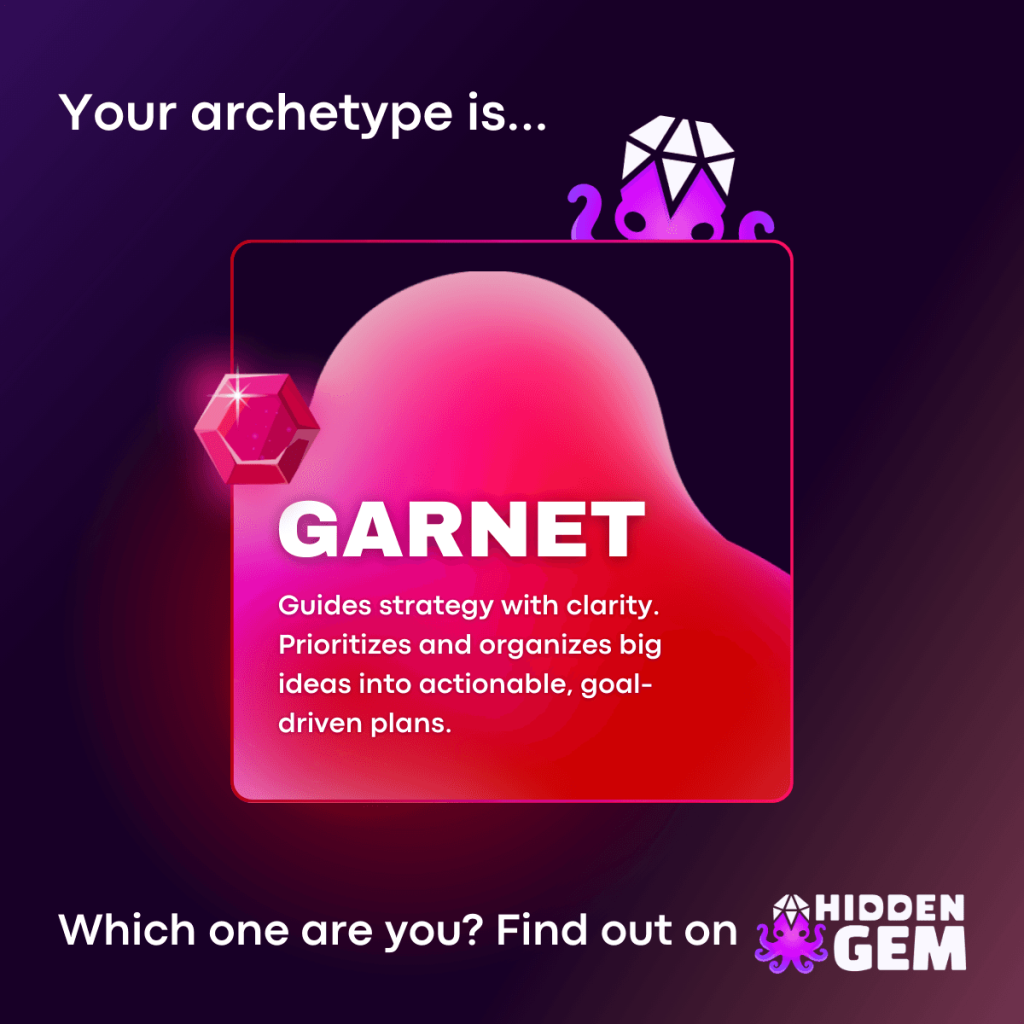
I have to say that’s pretty accurate. If you want to take your test and discover your archetype go here.
I have to say that’s pretty accurate. If you want to take your test and discover your archetype go here.
The CEO of Roblox gave an interview to one of the most popular NYTimes podcasts and the industry didn’t reacted well. I found it insightful and I tend not to judge people, especially salesmen, when they are selling something.
The issue with Roblox stands in its business model. Everybody knows that when a service is for free, the product is you. And in Roblox, the product are the kids. If they would really fix the issue with kids safety, they should start from there. They should put on a subscription model, where 100% of kids (or better, their parents) will pay a fixed amount just to play. In that way, things would change a lot.
And maybe, who knows, Roblox would also become a profitable business. Because since day 1, it has never been profitable. Roblox relies on investors who believe that, at some point, all those users will eventually generate profits. But for now, it’s a leaking bucket.
I work in games not as an individual creator, but to do it with others. Game design is a way to get in touch with others, teammates and potentially players. I am not a solodev, I struggle really hard when I do projects completely alone also if at times is necessary to push my boundaries.
That’s another reason why I do teach and I join online courses, as well. As a freelancer, I don’t always have clients. There are periods in which I dedicate to personal project, such as the book I am writing, and I feel very alone professionally speaking. Having the excuse to meet other people to teach them or to study with them fixes partially that problem. I am also on Discord channels, but I feel hard to follow discussions there because of the way Discord is designed.
I have met plenty of professionals who don’t actually love working in games, including game designers. I’m sure this is not news to you, and I also believe that everyone has a right to work in an industry as big as gaming, even if only for a while.
Yesterday, I met one of these people, who told me, “Videogames are your beach!” (using a Brazilian, Rio de Janeiro slang phrase). And I agree; I genuinely love my profession.
I have proof of that because I often put myself in a vulnerable financial position just for the sake of engaging in game design. A client might offer me shares as part of my compensation. If I like the client or the project, I accept, even if I know I may never see any money from it. I know that my task will end, the client will close the collaboration, and I will lose all shares.
I know this, and I consciously make that choice because I love what I do.
But I deeply respect the professionals who don’t care too much—the ones who pass through the industry like tourists, earn some money, and move on. They will have the opportunity to explore different things, and their minds probably won’t be 110% focused on games all the time, unlike mine. I respect that attitude very much as well.
I believe the single most important quality for indie developers is honesty. This is their secret weapon. It is nearly impossible for a Top 10 company to achieve full honesty because of their size and stakeholder structure. Honesty, however, allows you to consistently put out your authentic voice.
Recently, while consuming content in the indie space (podcasts and video), I’ve noticed a significant increase in marketing awareness. This often translates into the typical marketing discourse: “how to make trending things faster and avoid struggling too much.”
But that, in my humble opinion, misses the entire point of being an indie. Independence requires you to embrace the struggle and invest genuine effort—not just hours, but intense thought and creative energy. If you end up simply chasing trends, you risk falling into the trap of industrialization, product managerization, and creating derivative work.
I am not arguing against trend awareness or chasing money; of course, we work for money. But I am asserting that if you want to truly succeed in the indie space, you must prioritize honest self-expression. Put your authentic voice out there for real—even if your true call is to make a niche friends-to-lovers sim or a niche horror game.
Previous post I talked about being part of a high performance team and how we’re able to become so effective in term of our output. This post is about a personal observation in how I’m able to work in such an environment and keep up with the team.
I’ve noticed that my contribution is not consistent. It is fast one day and slow the other day. Ow how I used to hate the fact that I’m slow on certain days, or sometimes even extended periods of time, while seeing the fast periods as normal. But I’ve come to understand that these slower days have a purpose.
Sometimes, being slow means that you need to recover and reenergize from a previous high performance day.
At other times the slower days means that for that particular moment I should spend my time working on something else. When it comes to new ideas and design solutions they sometimes it just require me to be in a particular mood, a particular zone in order for ideas and solutions to come naturally and fast.
Sometimes, being slow means I do not have enough input, or just not spend enough time on finding the solution. Sometimes, it means that I just need to stare longer at the particular problem I want to solve.
In the end, I came to realize that being able to be fast and productive I have to accept that being slow at other times is just part of the process and one does not exist without the other. I’m becoming more mindful of my energy, my own flow, my own limitations and my own process. I’m more accepting of myself.
This week I started teaching a new bootcamp on video game design and conceptualization. I feel very lucky to have the opportunity to teach, even though it’s not a well-paying job. My method requires a lot of effort, and frankly, I would like better financial recognition for that effort.
I believe in the games education, though I must say there are many courses out there that aren’t worth the investment, they just slow students down and drain their wallets.
I’ve found a surprising number of people who study not to learn, but simply to have something to do, too. They aren’t genuinely interested in the subject; they are just there to fill their time.
My mission is always to leave a lasting mark on my students, and to inspire even the most bored ones. To me, game design is a serious craft. I love it with all my soul, and I want to spread its beauty.
Seth Godin delivered an interesting message this week: there is often no correlation between effort and value.
We, in the games industry, romanticize the “crunch” and value the difficulty of creation: “This game took us five years eating pizza; therefore, it is valuable.”. This happens especially in the indie space, I have to say.
But as Godin argues, software isn’t worth more just because it was hand-coded. The player doesn’t pay for the eight years of blood, sweat, and tears; they pay for something entertaining.
Game developers often sell their effort (months spent developing, solving a massive technical debt, or writing a thousand pages of lore) rather than their utility (the value the player extracts).
A game’s success is not determined by its complexity or its budget. It is determined by how efficiently and deeply it connects with people making them let discover new things. You are selling flow, mastery, social connection (Gregariousness), or the thrill of acquisition. More in general, instincts fulfillment.
That’s why a three-week prototype that perfectly fulfills the instinct of Acquisition with a simple, addictive loop will generate more value than a five-year AAA project with complex mechanics that confuse or exhaust the player. The player will pay more for the thing that is useful (solves their boredom, satisfies their urge to collect) than the thing that was difficult to make.
The moment you shift your focus from effort to impact, your design choices become ruthlessly efficient.
| The Wrong Metric (Effort) | The Right Metric (Value/Utility) |
| “We spent 3 months developing this tool.” | “This tool reduced iteration time by 50%.” |
| “This feature required 10 artists and a custom rendering pipeline.” | “This feature drove 30% higher D7 Retention because it amplified the core [Instinct].” |
| “The lore is 500 pages thick and highly integrated.” | “The player’s curiosity is satisfied in the first 5 minutes of play, leading to high Session Length.” |
Stop selling the struggle. Start focusing on what matters.
To apply the Godin Principle to your work, make this shift today:
I’ve been working in a high performance environment for many years now. I’m amazed about the output of our small team (6 FTE+1 Free Lancer). To give you an example, we’re currently working on a casual puzzle game with a huge focus on narrative and world building. We’re approaching our 2 week release cadence which includes six to seven new fully animated story chapters and 90+ new levels, while releasing big new features every 4 weeks, with small and big tweaks, SDK updates, data gathering and general improvements, bug fixes and localization in many languages, while making sure we keep analyzing incoming data.
The casual puzzle space in which we’re operating is very competitive with thousands of entries a year with only a handful being able to succeed and enter the top 100. To get there, large teams (50-500 members) and large investments (1M-5M) are our competitors. And even in those teams, pressure to succeed is high and nothing but top performance is expected.
I’ve been thinking how we as a team make sure we are coping with this pressure. I believe we each individually have found a way to cope and collectively as a team found a way to facilitate and support each other. A large contributing factor for our small team is working from home. Not only does it cut out commute every day, saving a lot of time for each member. Working from home also afforded the environment where flexibility can occur. This flexibility in terms of working hours for instance is where some of our team members thrive.
We roughly work between 9-5 with strict attention rules around meetings. At least half of our team enjoys the ability to work during the quiet evenings, or pursuit a particular thought in the night. Others are able to schedule kids pick-up or going to the gym. And all of us enjoy the ability to let life happen and attend any important activity during working hours. Our team treats work as the second most important thing, next to our life outside of work. We cover for each other when someone is ill or experiences life changing events, we plan our schedules and priorities around vacations and time off, we accommodate members traveling the world and working from different time zone and generally we all help each other make it work.
But I think all of this would not be possible without a shared goal, without a shared ambition, without our internal drive to want to succeed. This focus enables us to do all of the above and I’m sure will drive us towards success.
Performance Marketing expert Matej Lancaric issued a strong “WAKE UP call” to Supercell, critiquing their slow pace, their seemingly “random” new projects (like the “BOAT game”), and their failure to launch a hit in years.
Matej’s point: Why isn’t Supercell making a strategy game? Look at Century Games and Rivergame—they are launching hits, leveraging years of development and templatization.
Matej and his colleague Jakub Remiar are fundamentally right about the market reality: Supercell is competing in the same giant mass market as these Chinese juggernauts. However, the strategy Supercell needs to adopt is a matter of competitive advantage, not market segment.
Jakub points out that the Chinese giants are masters of scaling and aggressive UA. They specialize in perfecting proven formulas, backed by efficient labor and rapid execution.
The mistake for Supercell would be to adopt this same strategy. Why? Because on the field of quantity, templatization, and low-cost labor, it is a lost battle; a race to the bottom that Supercell cannot win without sacrificing its corporate culture and cost structure.
The argument that “quality will save them” is often seen as a defense mechanism, but quality here does not mean polish on a clone. Quality, in the Supercell context, may mean novelty and emergent gameplay.
Supercell’s strength has always been finding new formulas within a strong social/multiplayer framework. If they discover the right key, a system that generates unpredictable, repeatable fun, they create a lasting intellectual property that is inherently difficult to copy. This is true innovation, and it’s their only path to sustainable, high-margin success.
They must either focus on their core IPs (more Clash Royale and Clash of Clans) or they must find a way to put out content faster while still prioritizing the discovery and novelty that defines their brand.
The great divide in mass-market mobile design is no longer just between Indie and AAA; it’s between The Template Master and The Emergence Hunter.