This post was originally written in Italian by Paolo Gambardella. It has been translated by an AI agent and may contain inaccuracies.
I had a colleague a while back who seemed genuinely brilliant. They had made some specific lifestyle choices, and before they joined, a few people in the work chat had made the odd joke at those choices’ expense. Nothing malicious — just the usual banter.
When they joined the company, this person went through Slack looking at old messages to see if anyone had previously taken a dig at their lifestyle. They found the messages, and managed to work with HR to get the people who’d been laughing fired.
Years later, this person was let go themselves, and since then they’ve been constantly in the middle of some controversy or other. I’m not saying they’re wrong — in principle, they have a point. But I have to say things start to smell a bit off when either you keep getting sacked or there’s always a problem with the CEO or senior leadership.
I won’t set myself up as anyone’s moral compass here — my own tolerance for certain things is genuinely low, and I work hard to train it. For me, professionalism comes before everything else. If your colleagues make jokes that offend you, stop and think about what happens to them if they lose their jobs over it. Professionalism also means being patient when the situation calls for it.
If your company lets you go for any reason — say, because it would rather replace you with AI — the professional thing to do, in my view, is to accept it and move on to the next thing. Turning into a keyboard warrior and leaking company strategies that are covered by an NDA is not professional. I know it’s infuriating, I know it hurts, but professionalism, I’ll say it again, comes first.
If one of your employees calls something out publicly, professionalism requires that you go to your comms department and craft a proper response — not react from the gut, and certainly not without getting some advice first, ideally not from Claude.
The lack of professionalism I see in this industry is staggering. We all need more patience and more professionalism — every single one of us. Have a good weekend.
This post was originally written in Italian by Paolo Gambardella. It has been translated by an AI agent and may contain inaccuracies.
In 2022 I decided to try switching careers, from mobile to PC/console games. You know the ones — in crisis, not growing, running on increasingly expensive hardware, built by hundreds of well-paid people over seven years on unsustainable business models? Yeah, those. Well, not exactly those — I’m being ironic… but you get the idea.
I actually managed it this year. In March I joined the ranks of GSC Game World, the creators of the legendary S.T.A.L.K.E.R., thanks to a recommendation. “We need people like you,” my friend Adrian told me in August 2025, and seven months later I was in. After years of a career in mobile and now moving to PC and console games, I’m realising just how much I still have to learn about game design. The shift in mindset is sharp.
Mobile and premium
In mobile, speed and execution efficiency are everything, because the business runs fundamentally on performance marketing. Companies pay to acquire users (when a game is free, your time becomes the currency), so the whole game is about retaining them and nudging them towards small payments to keep them hooked.
Premium titles are a completely different story:
First of all, there’s a direction to discover — somehow — together with your team. It’s about creating a memorable experience, built on a fantasy that taps into something players genuinely desire. You can’t run quick experiments the way you do in mobile; instead, you have to think carefully through all the possibilities a feature opens up.
Games like S.T.A.L.K.E.R. already have their audience, a good chunk of whom are very vocal online. The ability to listen to all those voices and turn feedback into concrete design decisions becomes essential. In mobile, it’s more about making changes and watching behavioural data, since the players who spend the most and keep the business afloat — the so-called whales — tend to be pretty quiet.
Everyone has their passion, their ego, and their experience, so working on premium game design means finding the meeting point between personal creative vision, business sustainability, and technical feasibility with the developers. A decision made today could have ripple effects five to seven months down the line. Very different from mobile, where you can iterate much faster and where personal creative vision only goes so far (see: dark patterns that nobody actually likes, but that we all end up using anyway because there’s no real alternative).
Technology and AI
Lately a lot of players have been emerging promising to speed up content production, and the most popular technology is obviously artificial intelligence. However, the critical judgement, vision, and systemic sensitivity needed to build this kind of product make these tools less useful than you’d think. You need to think very strategically, and you also need leadership skills to navigate the different habits and personalities within a team. No algorithm helps you with that. You’re far better off picking up a hobby, exercising, reading history and philosophy to understand what makes people tick.
I’m happy, and that’s what matters. My little business isn’t in crisis, I’m also building an indie game, and I’m in a very creative phase of my life. Most importantly, I’m getting my hands on things that are real — things that actually matter.
This post was originally written in Italian by Paolo Gambardella. It has been translated by an AI agent and may contain inaccuracies.
Watch this:
Things like this put me in a difficult headspace. On one hand, I feel all those emotions that led me to choose this career path in the first place. On the other, though, there’s this strange sense of sadness. I’m aware that it’s very unlikely I’ll ever put my name on something so memorable that its soundtrack gets played at GDC in that kind of spine-tingling way.
And not for lack of wanting — let’s be clear about that. But there are a number of things I can’t control, which may or may not put me on the right path. I mean, just imagine hearing the music from your game being played, and catching those little yelps of excitement from the audience who loved the experience.
That’s the ultimate goal I’m chasing in everything I do, but it doesn’t depend on me alone. It depends on a huge number of factors, most of which are out of my hands. The most likely outcome, if we’re being honest with ourselves, is that something like that will never happen. My career will never reach those kinds of milestones — if you just look at the numbers.
That’s why I choose to focus on the journey, not the destination. I’m not really the type who goes “I believe in this game, so I’ll develop it on my own if I have to, because it needs to exist.” I’m someone who grew up — in terms of play and culture — in tabletop RPG clubs. In nerd circles, listening to alternative music, never dressing fashionably. Actually having a real disdain for trends. Today I’m different; I’m still that guy, but also a man with his own values, and my goal is to pass those things on to others. I focus more on my relationships with the people I work with, with my team.
Because, sad as it may be, it’s the truth: in all likelihood, I’ll never work on something that becomes truly memorable. But what matters is to keep working with passion on whatever comes my way.
This post was originally written in Italian by Paolo Gambardella. It has been translated by an AI agent and may contain inaccuracies.
When we design a new game, we enter a battle between personal taste and results. The taste of whoever truly owns the vision is what shapes even the reading of those results. In my career I’ve never seen a 100% scientific team. I have, however, seen a 100% artistic team — meaning a team focused solely on results.
Results as objectives
One of the most common problems in contemporary game development is using KPIs as objectives. This immediately drains them of meaning — the team fixates on hitting the number and loses sight of the bigger picture. And obviously, that harms not just the artistic side, but the scientific one too.
KPIs are useful for understanding two things:
Whether the direction we’re heading in is the wrong one (but they won’t tell us if it’s the right one)
Whether the changes we’re making to the product are moving things in the right direction (but they won’t tell us if the idea itself is any good)
To find genuinely good, winning ideas, we need to make room for creativity and our artistic side.
Taste as an excuse
The problem I see most often on the other side is using the artistic dimension as an excuse to stop thinking about the player’s final experience, and focus only on our own personal challenge of making content. A game is indeed a work of art, but it’s sold in a fiercely competitive market, in a world where attention spans are razor thin. The only way to survive long-term is to create play experiences that are genuinely worth people’s time. And taste alone isn’t enough for that.
It matters to think about the fantasy we’re offering players — what players can become through our game. To structure that thinking properly, and channel our personal taste in service of it. When we’re working with a team, things get considerably more complicated, because as designers we have to constantly worry about aligning, influencing, and communicating. And that’s not always an easy job, especially with more artistically-minded teams. You have to be honest and make yourself vulnerable, even at the risk of being undermined by colleagues. It’s not a role that suits everyone.
Art, Craft, and Science
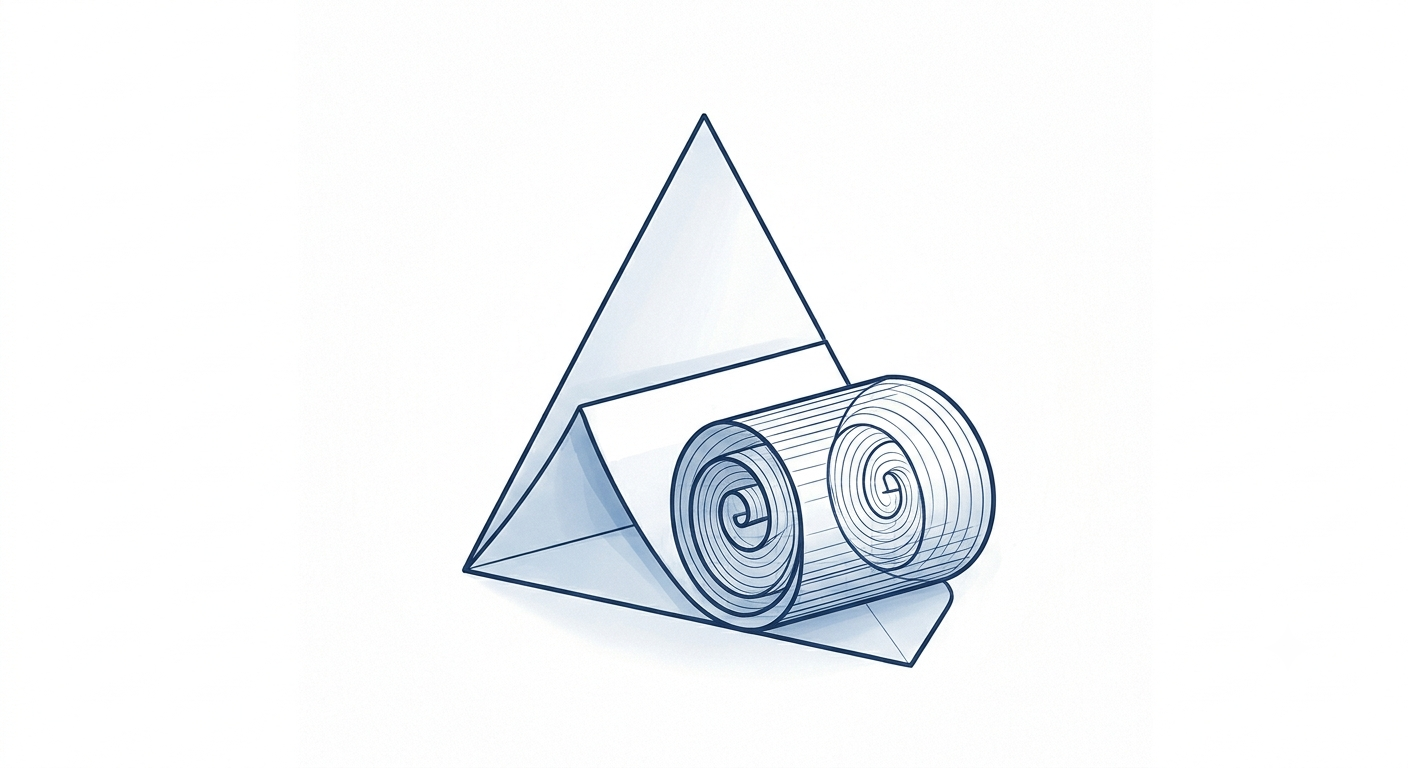
For me, the best approach is always to start from something intimate and personal (again, tricky when working in a team), because games are an art form and players want to live through experiences that are aesthetically rich. Aesthetic here meaning the essence of the experience, not just the visual layer. So the base of the pyramid is the artistic one.
Then there’s the second side, which is the engineering and technical side. Depending on what you want to realise on screen, you’ll need specific resources — and if the final quality is low, it drags everything else down with it.
The scientific side helps you understand where not to go, and how you’re currently tracking, but it generally doesn’t offer a diagnosis. For that, you have to go back to the art. If I picture all of this schematically, it’s like a pyramid with a strong base (art), something that coils around itself and can complicate things (craft/technology), and a final point that doesn’t carry too much weight in the end, but is still essential to complete the shape (science). I tried asking Gemini to visualise this concept and it generated this image:
This post was originally written in Italian by Paolo Gambardella. It has been translated by an AI agent and may contain inaccuracies.
I’ve been working for a few months now with a new team in a part of the industry that’s completely new to me. I keep thinking back to a post I read a while ago by Owen Mahoney about the 4 industries of video games. My hands-on experience is confirming that the different worlds Mahoney identifies really are different.
Communication is genuinely different
In mobile f2p, as a designer I always have to justify everything with KPIs and metrics — that’s just the deal. In the PC/Console world, though, that kind of thing is generally frowned upon. These are games far more grounded in the creators’ personal taste, which brings another consequence with it: to avoid too much noise and keep the development process from getting muddy, people very often don’t communicate properly. You work in isolation, and you have to trust your teammates completely.
My previous professional experience pushed me to look for solutions to this problem, but I was stopped almost at the first attempt. I took it pretty badly at first — I’ll admit I felt almost useless in that context. But then something shifted: as a designer I don’t have to justify every single thing with numbers, and that is genuinely an improvement.
So all I’m left with is complete trust in my fellow travellers — but one fundamental problem remains: the feeling of being lost. Sharing is limited, documentation is all over the place, and it’s easy to feel disconnected from the bigger picture.
How I’m tackling this challenge
My years of experience, even if not directly in high-end games, are still there, and I’m adopting some techniques to get my bearings. Fair warning: they’re not for everyone — not everyone can make themselves vulnerable and risk coming across as the person who doesn’t know what they’re doing. But for me, the goal (my personal and professional growth, and my connection with the team) outweighs any bruised ego.
The first technique, which I call probing, is to keep putting proposals to the team. I structure them properly, make the best case I can, and table them in a meeting with everyone present. The typical response is that it can’t be done that way, that it’s always been done differently, that the game is not what I’m imagining. And that’s exactly what I’m after: the designers who know the product better than I do finally start sharing what they know. Sometimes they even argue amongst themselves — I just sit there and listen, taking it all in.
The second technique I use is reverse-engineering assets and commits. Following comments and discussions in the code helps me really understand what everyone is actually trying to achieve.
The third technique is mapping the team’s knowledge holders. Domain experts, and sometimes short one-to-one chats to concretely understand how something works. The trick there is to go in with an idea already formed, then ask for confirmation. Something interesting always comes out of it.
Finally, the last thing I spend time on is being a bit of a documentation archaeologist. The information is fragmented and often contradictory, but it’s still something. My goal is always to track down documentation written for external partners, because that’s usually where you’ll find the clearest articulation of the vision.
Change isn’t easy, but it makes you richer
Sometimes I have to sit with feelings of helplessness and incompetence — but for me, that’s exactly where the real personal, spiritual, and professional growth lives. I hope this post can be useful to anyone who finds themselves in the same situation, or something like it.
It’s also really important to make yourself useful: pick up simple tasks that nobody wants to do, so the team understands you’re there to help, not to act as a consultant. There’s a bias against people who come from mobile, like me — no point pretending otherwise. The only way I know to push back against it is to roll your sleeves up and get on with it.
This post was originally written in Italian by Paolo Gambardella. It has been translated by an AI agent and may contain inaccuracies.
Sensor Tower has published its first report on ad-based monetisation in mobile gaming. I read it in detail (summary article on Deconstructor of Fun). The figure that caught my eye: hybrid games that put in-app purchases first (IAP-first) earn roughly four times as much as those that put advertising first (IAA-first). Purely ad-based games can still reach nine-figure numbers, but they’re the exception, not the rule.
The report leaves one question open: in ad-based games, free rewards earned through ads compete directly with paid rewards from the store. Solving this cannibalisation is, according to the author, the opportunity still left on the table.
The playbook of someone who’s been building economies for 40 years
These reflections on the report reminded me of a talk by Teut Weidemann, recorded at Digital Dragons.
Mr Weidemann argues that a well-designed game economy is the real source of stable revenue — not flash offers or battle passes. And in making that case, without ever mentioning “ethics” or “player trust”, he lays out a set of rules that are, in practice, anti-manipulation (which brings me back to my own post from yesterday):
Avoid discounts on premium currency, otherwise you destroy the price anchor and players just wait for a sale instead of buying;
don’t do per-user dynamic pricing. Weidemann cites the Zynga case, which ended badly when players compared notes and discovered different prices for the same item;
always leave at least one resource that even the wealthiest whale can’t buy. Even players who pay for everything still need to work for something, otherwise they finish the game in a week and walk away bored;
don’t tie virtual items to a subscription: a portion of free-to-play players are happy to buy a premium account (more comfort, less grind) but consider buying an item “cheating” — so keep the two things separate.
The tension
Weidemann’s rules look a lot like the ones from Self-Determination Theory that I wrote about yesterday: respect player autonomy, don’t break trust, don’t treat players differently from one another without good reason. His stated motivation is: if you break the price anchor you lose revenue, if the whale has nothing left to work towards they leave, if players find out you’re treating them differently they’ll tear you apart in the reviews. It’s risk management, more than ethics. And as far as I’m concerned, that makes it even more compelling than my own thoughts from yesterday — especially when you’re talking business with people who only speak that language.
Which brings me to the question I find most interesting from a game design perspective: does motivation matter, if the outcome for the player is the same? Mr Weidemann proposes optimising for a long-term function, and that happens to coincide with respecting the player. Now I’m left wondering: maybe in the long run, serving players and exploiting them converge on the same rules — and what diverges are only the economies that are thinking short-term.
This post was originally written in Italian by Paolo Gambardella. It has been translated by an AI agent and may contain inaccuracies.
Andrew Kelley, the creator of the Zig programming language, opened a talk with an uncomfortable question: who does the software we write actually serve? The talk is called “Don’t Take the Black Pill” and it was made for an audience of developers, not game designers. But it’s exactly the question we should be asking ourselves every time we design a progression system.
A more honest measure than “fun”
Deci and Ryan’s Self-Determination Theory says that a person is doing well — in a game as in life — when three needs are being met: autonomy (my choices matter), competence (I’m improving, and I can see it), and relatedness (I’m not alone). A system can have spotless retention metrics and still deny all three. There’s a name for that too: coercive retention. The progression is there, but the player comes back because a timer is expiring or a notification dragged them back in, not because they actually wanted to.
Coercionware, outside games too
Kelley calls this category “coercionware”: software whose purpose isn’t to serve the people using it, but to manipulate them. The examples he gives don’t come from games — unsolicited push notifications, A/B tests optimising for the click rather than the experience, recommendation algorithms chasing engagement instead of value. What struck me is that he frames all of this as a design choice, not a side effect. Someone, in a meeting, decided this was fine.
The same problem, different name
In games we call it other things: gacha, limited-time events, season passes that pile on the pressure. But it’s the same mechanism: autonomy is taken away to guarantee a return. I wrote about this last week when talking about dopamine and oxytocin — the relatedness in Self-Determination Theory is, at the end of the day, the same conversation as oxytocin. A player who comes back to spend time in a world or with other people doesn’t need to be held in place by a timer.
A useful habit
There’s a simple habit I use when evaluating a new feature: play devil’s advocate with myself. Assume it fails, and ask why. The list of reasons usually includes things like “it confuses the player” or “it doesn’t convert well enough.” It’s worth adding one more: it fails because it manipulates instead of serves. That question doesn’t come up on its own in a roadmap meeting. You have to ask it deliberately, before you ship.
The next time a feature improves the numbers, the right question isn’t whether it works. It’s whether the player chose it — or got caught in it.
Mobile game downloads have fallen for the second year running: -7.2% in 2025, down to 50.41 billion. In Q1 2026 the decline accelerates — -12% year on year, 11.9 billion downloads — the worst first quarter since 2019. Monetisation, on the other hand, is holding up: in-app spending grew 1.3% in 2025, but has been flat for five consecutive quarters, up just 0.5% in Q1 2026 compared to the previous year.
Fewer and fewer people are downloading mobile games, and the ones who stick around aren’t spending more. The industry is squeezing a user base that isn’t growing, wringing a bit more value out of each download.
The disaster didn’t start yesterday
Part of this story is well known. A few years ago Apple killed off IDFA, the identifier that allowed user tracking across apps for advertising purposes. From that point, user acquisition costs exploded, because targeting effectively became much harder. Many mobile studios had built their whole model around that mechanism. When it broke, so did their ability to grow cheaply.
But that only explains half the problem. Acquisition costs explain why it’s become more expensive to find new players. They don’t explain why spending from players already inside a game has been flat for a year and a half. Plenty of people conclude that “players prefer old games, they don’t want anything new.” That explanation has always struck me as a bit of a convenient excuse.
When the brain stops responding
Most of these games are built almost entirely on dopamine. Variable-ratio rewards, progression loops, notifications, artificial urgency, FOMO. It works brilliantly at first. The problem is that the dopaminergic system adapts. You need an ever-larger stimulus to get the same response, and at some point the stimulus just isn’t enough any more.
Ramin Shokrizade puts it well in an article that addresses exactly this point: an arms race built purely on dopamine, in an attention economy that’s already saturated, can only end badly for anyone who’s staked their entire business model on it. His alternative proposal is to design for oxytocin rather than dopamine — social bonds, cooperation, interdependence between players instead of ever-faster solitary rewards. He cites the player-driven economy of early EVE Online as an example (with the caveat that that history has been somewhat mythologised over time), and notes that the wave of “cosy” games in recent years is essentially a cultural response to the same underlying need: people who want to be kind to other people, inside a world that feels like their own. That’s also why 4X games have been performing better than most lately.
I think Sensor Tower’s numbers are partly this: the dopamine bill coming due. It’s not (only) an acquisition problem. It’s an industry that optimised for short-term stimulus rather than long-term attachment, and now the average player is desensitised.
Speed as a symptom, not a feature
There’s another signal, in a different niche but rooted in the same problem. David Brevik, creator of Diablo, spoke recently about how fast modern ARPGs have become. Screens full of enemies dying by the hundred, instant progression, nothing that feels personal or earned. His defence of Diablo 2, the game that helped define the genre: the pace was slow on purpose, and that’s precisely why it held up for twenty years. I still play it today! By compressing that journey and making it feel almost trivial, the whole experience has been cheapened.
Building worlds instead of chasing the spike
If this reading is right, the way out isn’t an even more optimised loop. It’s the opposite: games that bet on a world worth inhabiting, relationships between players, a sense of place that’s worth coming back to again and again even without a new reward every three minutes.
That’s exactly the territory I work on every day at GSC Game World, the studio behind STALKER. On 20 August, the first major DLC drops:
The trailer says it better than I can: not a new reward loop, but another piece of the Zone to move through, with all its silence, its danger, and its deliberate slowness.
It’s no coincidence that a studio doing this for nearly twenty years is still here, while mobile chases a dopamine spike that’s stopped working.
This post was originally written in Italian by Paolo Gambardella. It has been translated by an AI agent and may contain inaccuracies.
When there’s a new design problem, my first move can be to open Claude and ask it to structure things for me. Sometimes that happens out of laziness, sometimes out of a genuine fear of getting it wrong.
This week I read two articles:
The first, on the Atlantic, argues that when “intelligence” becomes abundant, what actually makes the difference is volition. The winners aren’t those who use AI to do less work — they’re the ones who use it to push themselves harder, to demand more of themselves in the process.
The second, by Lars Faye, argues that AI coding tools remove exactly the friction that builds real expertise. The paradox is that you need expertise to use these tools well, but using the tools can prevent that expertise from forming in the first place.
The HOW matters
For years I’ve written the first draft of a design pillar or a one-pager by hand, before I even open an editor. That’s the effort I need — the thing that makes me truly understand what I’m actually proposing.
If an algorithm decides how a problem is framed, we end up as mere executors, and we lose the part that’s supposed to make us grow as designers. Claude and other platforms bring the difficulty of framing down to nearly zero, but that’s precisely the bit that should stay ours. Identifying a problem is slow work by its very nature — that’s where judgement gets trained.
So the rule I set for myself is a simple one: I sketch out the framing on my own first, even if it’s rough, even if it’s wrong. Then I bring it to Claude to sharpen.
AI isn’t just a tool — I’ve written about this before. The real risk is losing sight of when you’re using it to dodge the kind of struggle that actually matters.
This post was originally written in Italian by Paolo Gambardella. It has been translated by an AI agent and may contain inaccuracies.
Benjamin Carssage, former Riot producer, sums up the AAA crisis in a single sentence in this video: record budgets, bigger teams than ever, longer timelines than ever — and the success rate still dropping. His diagnosis is that it all comes down to two missing ingredients: real leadership and real product thinking. Nobody inside these machines asks themselves why a player would choose this game anymore. They just ask whether the milestone was hit.
I agree, and it hits close to home. At my first job in a social games studio, my manager asked me to copy FarmVille’s progression curve wholesale onto a blackjack game we were working on. I had to explain what a mathematical function actually is before he could understand why a curve designed for a farming game couldn’t simply be transplanted onto a card game. The response: just do it anyway.
The video lands on four solid recommendations and frames them almost like a shift in posture.
Hire real leaders
Find the vision
Don’t scale too soon
Validate with players first.
All correct — but far harder to pull off than the list makes it sound, for two reasons in particular.
The first is that the incentives need to change. Things work this way because leaders are paid to behave this way. You can hire the most courageous person in the world: if the system punishes anyone who looks like they want to pump the brakes, that person either falls into line or walks. Trying to change people’s mindset without touching what gets rewarded is pure wishful thinking.
The second is that the video underestimates how much time and money the transition actually takes. You need cycles of failed projects before an organisation genuinely learns; teams also need to hire a very different kind of person from the ones their current recruitment processes look for — generalists whose whole job is hunting for new ideas.
“Find the fun” is easy to say, but it takes a certain intentionality that goes well beyond Gantt charts. It takes taste, artistic intent — things that are hard to justify when it looks like you’re just messing around. It’s easier to do in smaller, more agile setups, which look set to be the near future of this industry.
We use cookies on our website to give you the most relevant experience by remembering your preferences and repeat visits. By clicking “Accept”, you consent to the use of ALL the cookies.
This website uses cookies to improve your experience while you navigate through the website. Out of these, the cookies that are categorized as necessary are stored on your browser as they are essential for the working of basic functionalities of the website. We also use third-party cookies that help us analyze and understand how you use this website. These cookies will be stored in your browser only with your consent. You also have the option to opt-out of these cookies. But opting out of some of these cookies may affect your browsing experience.
Necessary cookies are absolutely essential for the website to function properly. These cookies ensure basic functionalities and security features of the website, anonymously.
Cookie
Duration
Description
cookielawinfo-checkbox-analytics
11 months
This cookie is set by GDPR Cookie Consent plugin. The cookie is used to store the user consent for the cookies in the category "Analytics".
cookielawinfo-checkbox-functional
11 months
The cookie is set by GDPR cookie consent to record the user consent for the cookies in the category "Functional".
cookielawinfo-checkbox-necessary
11 months
This cookie is set by GDPR Cookie Consent plugin. The cookies is used to store the user consent for the cookies in the category "Necessary".
cookielawinfo-checkbox-others
11 months
This cookie is set by GDPR Cookie Consent plugin. The cookie is used to store the user consent for the cookies in the category "Other.
cookielawinfo-checkbox-performance
11 months
This cookie is set by GDPR Cookie Consent plugin. The cookie is used to store the user consent for the cookies in the category "Performance".
viewed_cookie_policy
11 months
The cookie is set by the GDPR Cookie Consent plugin and is used to store whether or not user has consented to the use of cookies. It does not store any personal data.
Functional cookies help to perform certain functionalities like sharing the content of the website on social media platforms, collect feedbacks, and other third-party features.
Performance cookies are used to understand and analyze the key performance indexes of the website which helps in delivering a better user experience for the visitors.
Analytical cookies are used to understand how visitors interact with the website. These cookies help provide information on metrics the number of visitors, bounce rate, traffic source, etc.
Advertisement cookies are used to provide visitors with relevant ads and marketing campaigns. These cookies track visitors across websites and collect information to provide customized ads.