This post was originally written in Italian by Paolo Gambardella. It has been translated by an AI agent and may contain inaccuracies.
When we design a new game, we enter a battle between personal taste and results. The taste of whoever truly owns the vision is what shapes even the reading of those results. In my career I’ve never seen a 100% scientific team. I have, however, seen a 100% artistic team — meaning a team focused solely on results.
Results as objectives
One of the most common problems in contemporary game development is using KPIs as objectives. This immediately drains them of meaning — the team fixates on hitting the number and loses sight of the bigger picture. And obviously, that harms not just the artistic side, but the scientific one too.
KPIs are useful for understanding two things:
- Whether the direction we’re heading in is the wrong one (but they won’t tell us if it’s the right one)
- Whether the changes we’re making to the product are moving things in the right direction (but they won’t tell us if the idea itself is any good)
To find genuinely good, winning ideas, we need to make room for creativity and our artistic side.
Taste as an excuse
The problem I see most often on the other side is using the artistic dimension as an excuse to stop thinking about the player’s final experience, and focus only on our own personal challenge of making content. A game is indeed a work of art, but it’s sold in a fiercely competitive market, in a world where attention spans are razor thin. The only way to survive long-term is to create play experiences that are genuinely worth people’s time. And taste alone isn’t enough for that.
It matters to think about the fantasy we’re offering players — what players can become through our game. To structure that thinking properly, and channel our personal taste in service of it. When we’re working with a team, things get considerably more complicated, because as designers we have to constantly worry about aligning, influencing, and communicating. And that’s not always an easy job, especially with more artistically-minded teams. You have to be honest and make yourself vulnerable, even at the risk of being undermined by colleagues. It’s not a role that suits everyone.
Art, Craft, and Science
For me, the best approach is always to start from something intimate and personal (again, tricky when working in a team), because games are an art form and players want to live through experiences that are aesthetically rich. Aesthetic here meaning the essence of the experience, not just the visual layer. So the base of the pyramid is the artistic one.
Then there’s the second side, which is the engineering and technical side. Depending on what you want to realise on screen, you’ll need specific resources — and if the final quality is low, it drags everything else down with it.
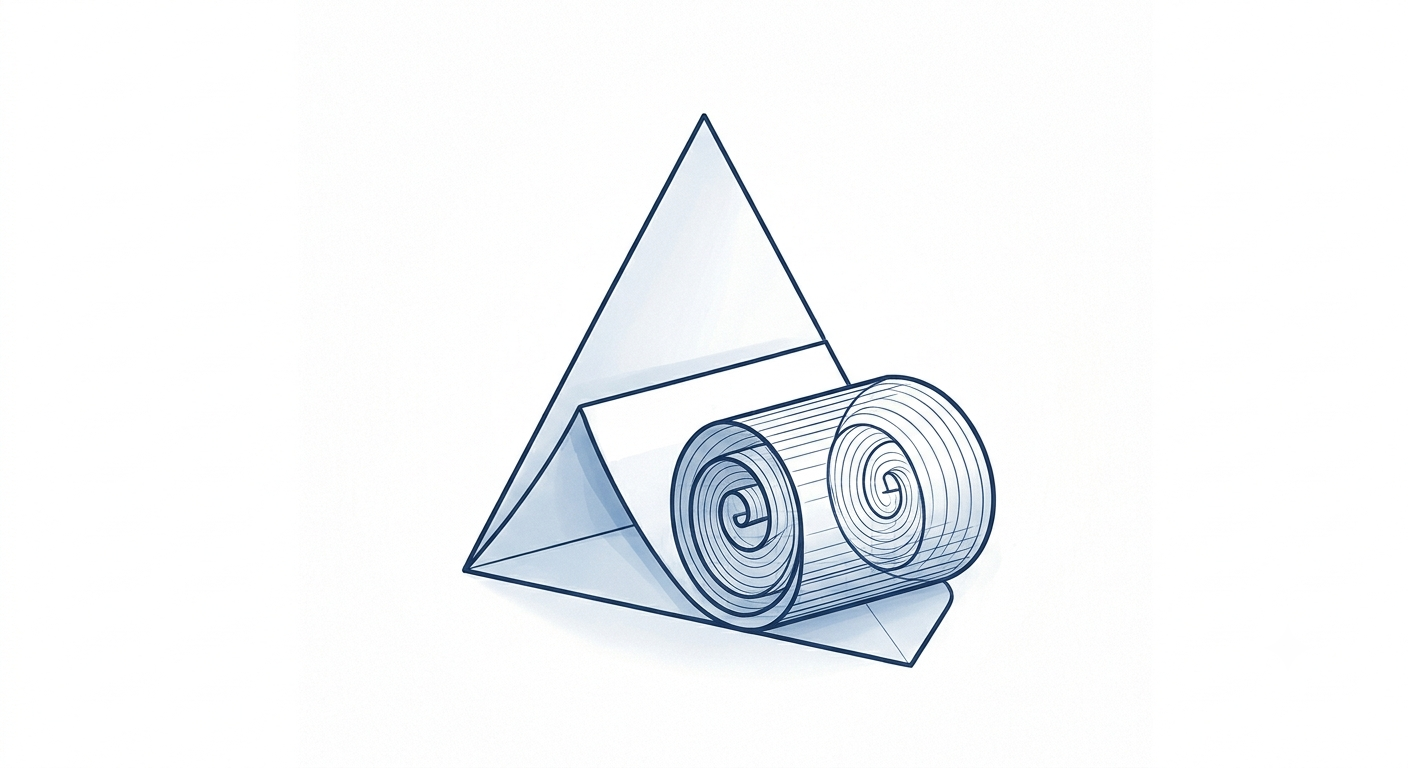
The scientific side helps you understand where not to go, and how you’re currently tracking, but it generally doesn’t offer a diagnosis. For that, you have to go back to the art. If I picture all of this schematically, it’s like a pyramid with a strong base (art), something that coils around itself and can complicate things (craft/technology), and a final point that doesn’t carry too much weight in the end, but is still essential to complete the shape (science). I tried asking Gemini to visualise this concept and it generated this image: