Skip to content

Tag: AI

Digital Eye Strain: The Hidden Cost of Hyper-Focus

This post was originally written in Italian by Paolo Gambardella. It has been translated by an AI agent and may contain inaccuracies.

These days I’ve been getting to grips with the agents from Anthropic and OpenAI, and I can genuinely see improvements in the speed and quality of my work. Where I used to need developers to build prototypes, it’s now much more straightforward to tackle that kind of challenge with Claude or Codex guiding me along.

That said, I’ve recently been noticing a strange heaviness in my eyes by the end of the working day. This weekend was rough, especially Saturday. It felt as though something was stopping my eyes from even moving properly, on top of a general dryness and fatigue.

I found out — credit to Gemini, actually — that this is a pretty common problem. Using AI tends to pull us into states of hyper-focus.

Having to think forces us to take breaks

The first thing worth noticing is that before, I had to take lots of breaks to think things through, look up tutorials, or browse various forums. Everything was slower, obviously, but that also meant natural breaks for my eyes and spending longer on the same block of text.

Now, though, working with an agent means receiving large chunks of text in quick succession. You have to skim through them fast to separate the useful parts from the hallucinated ones, and more often than not you fire off another question straight away — which brings you back to reading another big wall of text.

AI interfaces with dark mode, VS Code with light mode

I’ve moved to using VS Code to manage my agents, since I find it better for keeping an eye on token usage and for other perks like keyboard shortcuts and so on.

The thing is, AI interfaces generally use a dark background, whereas in VS Code I prefer a light one. So I’m constantly switching between the two, which puts extra strain on my eyes.

It seems that parsing text-heavy content like code also makes us blink around 60% less than normal. Medicine calls it Digital Eye Strain, and it’s an increasingly widespread issue.

I hope this post helps others identify the problem. The fix comes down to:

  1. Sync your fonts and sizes so everything is large enough to read comfortably
  2. Reduce contrast where possible, and avoid constantly ping-ponging between different windows
  3. When the AI gives you a long explanation, close your eyes and listen to it instead
  4. Use CLAUDE.md or instructions.md files rather than chatting back and forth with the agent, to cut down on the number of iterations

What if students made the video game instead of studying it?

This post was originally written in Italian by Paolo Gambardella. It has been translated by an AI agent and may contain inaccuracies.

You’re studying how Hitler’s rise to fame unfolded in the Weimar Republic. Economic causes, political crisis, beer hall rallies, cut-price populism. Serious stuff, but heavy going.

Then someone in class says: what if we made a beer hall simulator?

You pour pints, serve customers, make money. Hitler wanders between the tables spouting nonsense. Get him drunk enough and his popularity drops. Let him talk and it rises.

That’s a video game. You just designed it. And an AI builds it while you’re talking.

This is the after-school activity I have in mind.

AI applied to video games applied to the humanities. History, philosophy, literature, economics. Games have always been rule systems built on real-world activities and events.

The format is simple. The class sits down. The teacher is the only interface with the AI agent. The students focus on coming up with ideas and coordinating to give it instructions. The teacher types, guides, asks questions. The agent builds. At the end, everyone plays together.

No one needs to know how to code. No one needs to know how to use Godot. What you need is the ability to reason about a problem and work together.

History translated into mechanics.

When a student decides that “drunk equals less popularity”, they’re reasoning about how political consent actually worked in Weimar Germany. They’re building a causal model. They’re doing what historians do, with a tool that feels like their own.

The game forces you to simplify — deliberately. You have to choose what matters, what to measure, what to leave out. That choice is the critical thinking you’re trying to teach. And then you play. And you have a laugh. And that laugh is memory.

New frontiers

Today, anyone with a clear idea and an AI agent can have a working prototype in hours. Not a masterpiece — a prototype. Something that runs, that you can touch, that responds.

Access to creation is no longer filtered by technical ability. It’s filtered by clarity of thought.

Schools already have after-school activities like robotics, drama, and computing. All perfectly valid. But there’s a new territory I think is worth exploring: using AI to turn humanities subjects into interactive experiences that students design together.

Someone will do it, sooner or later. It could start in any classroom.

The present is cross-functional, the future is high-quality

This post was originally written in Italian by Paolo Gambardella. It has been translated by an AI agent and may contain inaccuracies.

The stores are drowning in games. We can all see it, and it’s a direct consequence of something obvious: making a simple game has become quickly accessible. Godot, Unity, asset stores, AI for code, YouTube tutorials for absolutely anything. Development time has compressed brutally. So everyone’s doing it.

The result is a flood. Clones, games generated through semi-automated pipelines, products assembled rather than designed. Each of these games shares the same trait: made quickly, with a small team or solo, with little investment per unit.

When everyone does the easy thing, the hard thing gains value. Even Roblox is proving this, with its new strategy of focusing on HD games. If simple games become a commodity, then games that require something you can’t auto-generate become rare.

The thing that’s been living rent-free in my head

Teams in the near future have one new defining characteristic: they can be genuinely cross-functional. Not in the buzzword sense we’ve been hearing from companies for years. In a concrete, practical, radical way.

Some examples.

  • A designer no longer has to wait for a programmer to build a prototype. With today’s tools, they can build something functional in hours. They can test their game loop before the meeting with the tech team is even in the calendar.

  • An artist can implement directly in-engine without waiting for tech artist support. An artist who understands a bit of how the engine works is no longer an exotic exception — they’re just a normal asset to the team.

  • A writer can test their narrative in a working build without filing a ticket and waiting for the gameplay team to “find a slot in the next sprint”.

The roles don’t disappear. The excuse does.

To be clear: I’m not saying specialised roles will become useless. An experienced tech artist does things a shader-graph artist will never pull off. A senior programmer solves problems that a designer with an AI coding assistant can’t even properly articulate.

That’s not the point. The handoff barrier between roles gets lower. And with that barrier goes the industry’s most comfortable excuse: that’s not my responsibility.

If in the past you could sit in a cosy niche and wait for someone else to do their bit, today that’s changing. A team that sits around waiting for the “programmer bottleneck” when the designer could prototype, or the “tech artist bottleneck” when the artist could implement, is a team wasting time artificially.

Agility isn’t an abstract value. It’s the concrete ability to take an idea from your head to a working screen in as little time as possible, with the resources available. Today, those available resources have changed.

The thing that’s hard to copy

There’s an underlying question running through all of this: what can’t be automated or cloned?

The answer I’ve landed on is: a team that genuinely works well together, around a vision that’s actually worth building, with enough overlapping skills that no single bottleneck can hold everything up.

That combination can’t be copied. You can’t prompt your way to it.

And it’s exactly that combination you need to make the games that, in the coming years, will have the best shot. What does that mean in practice? That the smartest companies will be the ones capable of retaining talent — not working people into the ground and then laying everyone off the moment the title ships.

A Brief Survival Guide for Junior Designers

This post was originally written in Italian by Paolo Gambardella. It has been translated by an AI agent and may contain inaccuracies.

Last night I was at BCN Gamedev Society, a monthly meetup for game developers in Barcelona. I spoke to a lot of people and caught up with old friends. I also got to chat with several juniors who want to break into the industry — concept artists and game designers. All of them dealing with the same problem: how do you get experience when nobody will hire you because you don’t have experience?

It’s not a new question. But today the answer looks very different from what it did ten years ago.

The code is being rewritten

I read a LinkedIn post that got me thinking. The core idea was this: money has always been the code society uses to translate human time into something its systems can read.

  • You have a skill → it becomes a salary.
  • You have a need → it becomes a price.
  • You have a future → it becomes credit.

The trouble is that money is a low-resolution system. It can measure output, not meaning. It can reward production, not direction.

And now AI is dismantling exactly that promise: if generating asset variants, doing QA on repetitive scenarios, or brokering information between teams are all things machines do better — what’s left for the junior who was learning by doing precisely those things?

The actual problem

Let’s take a concrete example. A junior concept artist wants to break into the industry. They’ve studied, they have a decent portfolio. But a studio will often choose a senior who, with ComfyUI and well-crafted prompts, produces in under a day what the junior would take a week to deliver.

You build experience by doing things — but if the entry-level work gets automated, where do you actually learn? How do you learn by osmosis in this new reality?

Survival tips

Here are some concrete ideas.

1. Stop competing where AI wins.

AI wins on production speed, consistency, and infinite variation. It doesn’t win on taste, art direction, or the intuition for what will land with that player, in that cultural context, with that emotional tone.

If your portfolio says “I can write a GDD quickly”, you’re on the wrong turf. If it says “I know how to choose, curate, direct, and explain why a decision works”, you’re in a much better position, in my view.

2. Ship small things, made with other people.

A junior game designer with five small games on itch.io, all made as part of a team, is worth more than someone with a portfolio full of unrealised concepts. What you’ve shipped shows you’ve been through the full cycle: idea → prototype → feedback → release.

That’s real experience, in a team context. And it doesn’t require anyone to hire you first.

  • Game jams to work directly with other people
  • Personal projects you then put in front of players and take notes on how they actually behave
  • Weekend experiments you publish on a public Discord to collect feedback

The goal is to build a track record of decisions made in response to real interactions — and real player behaviour you’ve observed yourself.

3. Look for a senior to work alongside, not a junior position.

The “senior + AI” dynamic that’s becoming the norm paradoxically creates room for informal collaborations. A senior with too much on their plate and too few reliable juniors is often open to accepting help in exchange for a small financial arrangement and some mentorship. It’s not ideal, but it’s how things work. And when you’re around someone with experience and judgement, you learn by osmosis. That’s always been true.

BCN Gamedev Society, online communities, indie studio Discords — those are the places where those conversations happen.

4. Use AI to develop your taste.

The trap for juniors is using AI to produce more stuff, and ending up just producing more mediocrity, faster.

  • Generate 50 variants with AI.
  • Then pick one.
  • Know why you picked it.
  • Then iterate.

Your ability to judge — what to keep, what to cut, and why — is the one thing that won’t be automated any time soon.

5. Short-term survival is a separate problem.

I’m not going to tell you universal basic income is just around the corner and everything will be fine. Maybe it arrives, maybe it doesn’t. In the meantime, there are bills to pay.

Some concrete options for keeping the lights on while you build your track record:
– Gamification freelance work for clients outside the industry (startups, corporate training, educational)
– Content creation: if you can explain game design in an interesting way, there’s an audience for it
– Tutoring, online courses, local workshops
– UX writing, product design, narrative design for non-game clients

None of these are the career you want, but they’re bridges.

Conclusion

The experience paradox isn’t new, but it’s getting sharper. And the answer is to build real experience in unconventional ways:

  1. make small things and use them as a way to connect with others
  2. stay close to people who know more than you
  3. develop taste, and learn to communicate it.

Money measures what the system can already read. What systems can’t read yet is taste. Intuition. A sense of what’s actually worth making.

For now, that’s still our territory.
A Good Era for Game Design

This post was originally written in Italian by Paolo Gambardella. It has been translated by an AI agent and may contain inaccuracies.

During the free-to-play mobile boom, this corner of the games industry was quickly taken over by product management. In a way, that makes sense — the free-to-play business revolves around player acquisition, which means performance marketing. If the cost to acquire a player is lower than what that player spends on average in the game, you’ve got a working business.

So, working as a game designer in those companies very often became a conversation purely grounded in data. I myself repeatedly found myself arguing with my bosses over things we could summarise as: my taste VS the current state of the market. A practical example: if I — as a designer — felt that a certain fantasy needed to be expressed through specific mechanics because I had a hunch it would work, the default response was: “okay, and where have you seen this? In which other games?” Very often it was something that came from a personal experience, or something else entirely. Maybe an app, a film, or an exhibition I’d visited had sparked an idea. Nothing doing — I had to find a way, absolutely, to back it up with data.

And in fact, the designers who built the most successful careers in that sector very often describe themselves as data-driven. They know how to research what’s already there in successful games and reapply it like a mathematical formula to whatever they’re working on. Fair enough — it’s a real skill. But to me, a designer must have both a sense of the business context and a genuine taste. If we’re going to put this much energy into something, we might as well create something new — put something of ourselves into it. People notice when you actually have something to say.

I think this is our moment, right now. This is the moment for designers who want to express their own taste. In my opinion, data-driven design is dead. It was always repetitive, not particularly creative work, but I believe that in the age of AI — where an agent does all of that in far less time and at a fraction of the cost — we’re better off cultivating our own taste instead. Better to watch films, study different kinds of apps, go to exhibitions. Better, in short, to genuinely search for our own voice.

What I believe in — and have always believed in — is data-informed design. Any self-respecting designer should always try to empathise with their players, and there’s no better way to do that than collecting data. But that data shouldn’t dictate our taste, or else we’ll always be offering horses to people who need something new — like selling carriages in Henry Ford’s time. A designer can’t fly blind.

But a game designer needs to have the freedom to create, to bring something genuinely new into the world. Hiring people to repeat formulas is absurd, and I think that practice is destined to disappear — because now we have the right algorithm. One that lets us focus on what truly matters.

AI Slop vs. Creative Power: A Love-Hate Relationship

I have mixed feelings about the integration of artificial intelligence into our digital spaces. On one hand, public platforms are deteriorating. From YouTube recommendations to mobile game ads, our feeds are flooded with low-quality “AI slop”—clickbait thumbnails and content engineered purely around anger and hyperbole. The internet has become a frantic, exhausting battle for our attention.

Yet, as a creator, generative AI has completely revolutionized my workflow by automating the tedious parts of development:

  • Game Design Documents (GDD): I can instantly generate a robust structural base for 15 GDDs a month without redoing the groundwork every time.
  • Workflow Automation: Converting a massive document into actionable JIRA tasks used to take days; now, it takes an hour of high-level planning and bulk creation.

Beyond productivity, experimenting with these tools has brought back a sense of community. Sharing new AI discoveries in private chats feels exactly like the early days of the internet—reminiscent of finding an old IRC channel or a niche forum.

While the public internet grows increasingly dull due to algorithmic noise, the backend world of AI innovation has unlocked a frontier that is just as exciting as the internet itself once was.

Leveling up in Claude

Yesterday I was speaking with a design director about how I use Claude AI, and he made me discover a new method of using it, I was totally ignoring. In fact, all this AI hype makes me resistant to novelties, and I have to admit that I often lose opportunities because of that.

I think that it’s a very powerful tool, and my feelings are that I will save up lots of time from repetitive tasks such as creating subtasks in JIRA, setting up pages, summarize information that is already there, and so on. It’s definitely a level up in my career.

In the blacksmith’s house, a wooden skewer

The recent stock market fluctuations following the arrival of AI tech that promises to generate interactive worlds from simple prompts speak volumes about the current lack of video game literacy.

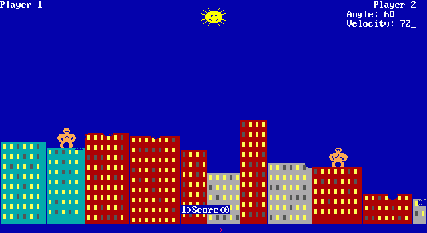
Almost every veteran I know—myself included—started by modding, not just “creating.” My journey began with Q-Basic to tweak Gorillas, then modifying voices in Worms, creating custom avatars for Baldur’s Gate, and hacking Diablo hash codes.

https://en.wikipedia.org/wiki/Gorillas_(video_game)

The best designers were often protagonists of the modding scene, diving into forums to figure out how to add value to the games they loved.

We’ve seen this cycle before. Tech giants often launch “revolutionary” gaming projects to fuel corporate career leaps, only to abandon them when the next trend arrives. But the real issue is the demand for shortcuts. Some entrepreneurs will try to use Genie3 to chase quick profits with flashy trailers, and some might even succeed in the short term.

Long-term success belongs to those who actually expand the horizons of gaming.

Reaching new audiences and solving the distribution puzzle requires more than a “genie.” It requires deep knowledge. While technocrats push “prompting and scrolling,” the smartest players are busy mastering history, philosophy, and art.

My advice? If you want to break into the market, stop looking for shortcuts. Work hard to engage your audience and start by modding what already exists. Read history books, and myths. Rack your brains, expose your work, and take risks.

You are far more likely to find success through craftsmanship than by playing a “word slot machine” and hoping for a believable game.

AI is not just a tool

I’m not convinced by this “AI is just a tool.” We’re wired for stories and narratives, in the sense that our perception is very attentive to them and our memory contains narrative sequences. A tool capable of creating a narrative structure ceases to be a simple tool for me.

It’s a bit like saying “movies are just a tool,” or “video games are just a tool.” Well, it’s certainly possible to use movies and video games as tools. How many times in school were we shown a movie to explain a story? Some teachers use role-playing games or even computer games to explain concepts.

However, these artifacts aren’t just tools. And AI isn’t one for me either. It can heavily influence the way we implement an idea, given that it’s capable of arguing (often bullshit) very well and could catch us at a stressful moment when it’s easy to give in to the temptation to trust. And this inevitably leads to missed opportunities.

Of course, you can cut off your finger with a knife. With Photoshop, you can gather a series of images and make a collage. But that’s a direct use during which you’re aware of the error, either before or just after.

AI isn’t just a tool; it can only be used as a tool, that’s true. But it’s designed, like many things these days, to capture our attention (so we pay the monthly subscription) in exchange for the feeling of being more productive.

And that’s not the case.

Ubisoft and the “Efficiency Trap”: Why Algorithmic Logic Can’t Save a Lost Vision

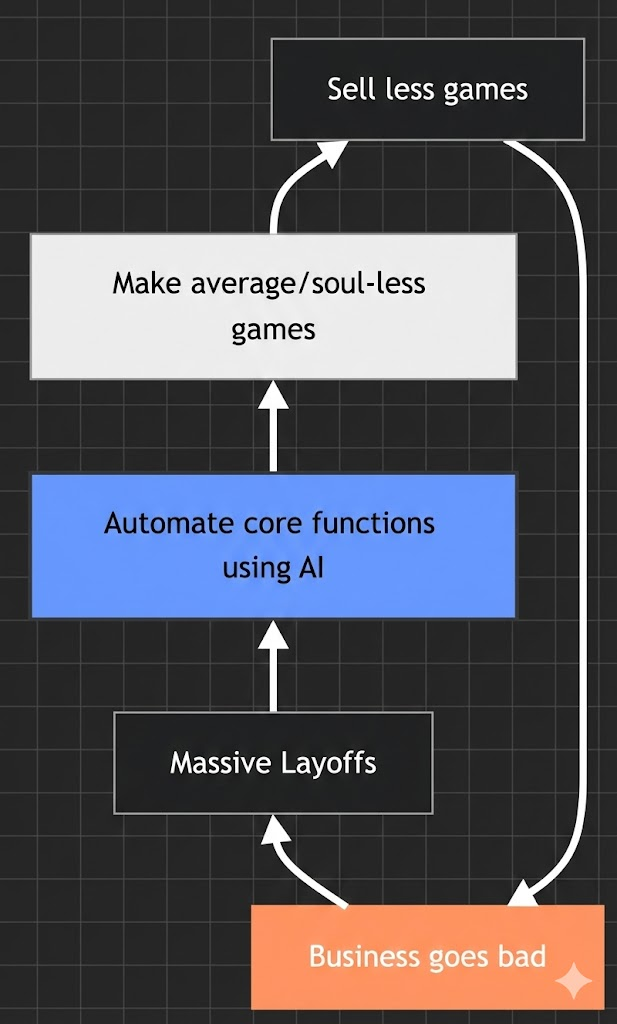
The recent news regarding Ubisoft isn’t just another headline about industry layoffs; it’s a “leading indicator” of a systemic crash. When the numbers don’t add up, the corporate playbook is predictably uninspired: cut the talent, automate the core, and pray the spreadsheet balances itself out.

But creativity isn’t an assembly line, Ubisoft might be the “canary in the coal mine” for an industry chasing its own tail. This isn’t just a trend; it’s a form of “drowning.” When inefficiency (ROI) drops too low, leadership grabs whatever is in reach—AI, NFT initiatives, or massive restructuring—often without even knowing what questions to ask their experts. They are borrowing against a future they don’t understand, hoping that money alone can catch the wind.

The “Glass Ceiling” of the French Elite

A company is only as brave as its leadership, and here we find a significant bottleneck. Ubisoft’s executive team is roughly 90% French, educated at the same elite business schools (ESSEC, ISG), with tenures spanning 30 years.

While these credentials are impressive on paper, they’ve created a cultural monoculture. This “upper-middle-class business elite” is now tasked with innovating for a global, diverse audience they are increasingly disconnected from. When leadership hasn’t seen the inside of another studio in three decades, they stop leading and start rehashing.

The AI Gamble: Partner or “Slop” Generator?

The debate around AI in development is often polarized. Someone argues that AAA gaming is “dead” without AI to reduce the staggering $200m+ budgets. I don’t disagree that budgets are exploding, but I disagree that AI is the silver bullet for quality.

AI isn’t the root of the problem, but it’s a risky “solution”. Relying on a technology that hasn’t yet delivered on its creative promises to save your strategy is a bet, not a plan. If you use AI to generate “slop,” you might save on costs, but you’ll lose the player.

From Rational Design to Brand Decay

Ubisoft once had a superpower: Rational Game Design. It was a method that allowed them to optimize the creation of epic adventures while maintaining a clear vision. But as they chased whales, “Games as a Service,” and unsustainable growth, they lost the creative DNA that made them special.

A software (and AI is just that) cannot solve a brand crisis. AI can’t fix the fact that Ubisoft has distanced itself from player fantasies and instinct—things that aren’t taught in prestigious business schools.

The Opportunity in the Chaos

The failure of long-term vision in these managers is an opening. The collapse of the old guard creates space for those who actually understand imagination and positioning.

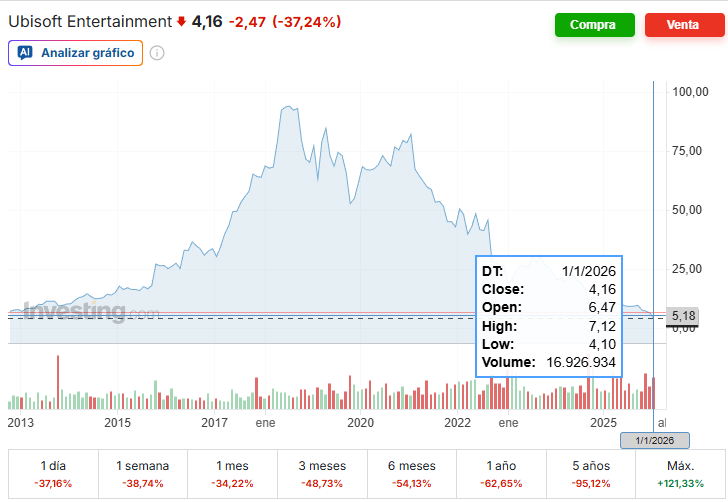
Ubisoft’s stock may be back to 1998 levels, but the talent is still out there. The question is: will they be allowed to lead, or will they be replaced by an algorithm until there’s nothing left to automate?