The fifth edition of the Steam Sale Games in Italy is underway, the initiative dedicated to Made in Italy video games powered by IIDEA!
From today until Tuesday, December 9th at 7:00 PM, discover over 400 Italian titles, including video games, DLC, and additional content: a vast selection that celebrates the creativity of our studios and offers numerous special offers on productions of all genres.
Mr. Owen Mahoney is one of the few outspoken gaming CEOs out there that speaks actual game development language. I listened to this interview and one thing has made me think a lot, also because it’s not well explained.
Mr. Mahoney talks about the importance of looking at the future intentions of a team or company to understand its shape. He makes the specific example of the founder of Embark, who wanted to make something new, something different. But that’s always the case whenever there is a sales opportunity. We do want to show what we did, our experience, but we also want to say, “Hey, we are building the future here; do not miss the opportunity to go with us towards it.”
How can we really understand when we are in front of a good company? Now I want to switch my discourse from the perspective of an employee or a consultant. How to understand that the client or employer we have in front of us is the right bet for our next 2-5 years? That’s a matter of gut feeling, but is there a way to make a sort of due diligence? That’s what I would like to ask Mr. Mahoney.
Yesterday I completed “Detroit: Become Human” for the first time. I think I reached the worst possible ending, but still I loved any minute of the experience. I believe that Quantic Foundry is a fantastic company and should expand its business vertically, reaching more devices with its games and not changing completely its business.
In fact, they are very strong in high quality single player hardcore games, and in recent news I read they are making a MOBA. Apart from the fact that the MOBA genre is not well accepted in the western audience, I believe that these business line extensions are too dangerous for a business. They should insist in going stronger into single player hardcore AAA games, in my opinion.
Detroit: Become Human is a game where your choices matter, the story is the most important part of their formula. And in its story equation we have a unique (and weird) things in its characters. The world is a normal world (accepting the characters of course) and the plot is a good but predictable one in terms of umbrella plot. Then there are lots of interesting twists and expansion that make the experience memorable.
The fantasy of the game is that you are the mind of a robot, but since you have a human mind (right???) it’s interesting that somehow you give a conscience to the artifact. On top of this fantasy, which is cool, the actions are: answer choices, attacks, jumps, defense, movement. The quick time events fit perfectly in the concept of robots and algorithms.
The economy is based on completing story sequences of the three protagonists of the story and earning new story paths and points you can invest into unlocking special content like artworks, models, music and so on.
The world is our world but in the future, the technology is sci-fi and the artstyle is realistic. The story is fantastic, is about cyborgs adquiring concience. Right from the menu you can feel the story with one of them interacting with while you select the game mode and prompting you surveys with existential questions.
I see few games like this and I personally love them. I hope Quantic Foundry will surprise us with something new like this in the future.
Performance marketing for mobile games has become lately a synonym for scam. There is not other world to describe the act of copying others’ creatives and produce massive quantity of low quality, repetitive content to try to catch the attention of people.
Marketing expert Matej Lancaric is happy to show off every week the disaster that mobile marketing as become
The good news is that marketing cannot be like that.
Marketing is the generous act of showing up with a true story that helps people get to where they’d like to go.
Seth Godin
Game design can seriously help to find the true story to tell to the people. The issue stands in the business model of free-to-play, of course. In a model where 5% (at best) of people pays something, and that something is variable and potentially very high, you need a massive volume of installs.
But maybe mobile gaming could be different and not just free-to-play. The point is to convince founders and CEOs to believe in this.
The CEO of Roblox gave an interview to one of the most popular NYTimes podcasts and the industry didn’t reacted well. I found it insightful and I tend not to judge people, especially salesmen, when they are selling something.
The issue with Roblox stands in its business model. Everybody knows that when a service is for free, the product is you. And in Roblox, the product are the kids. If they would really fix the issue with kids safety, they should start from there. They should put on a subscription model, where 100% of kids (or better, their parents) will pay a fixed amount just to play. In that way, things would change a lot.
And maybe, who knows, Roblox would also become a profitable business. Because since day 1, it has never been profitable. Roblox relies on investors who believe that, at some point, all those users will eventually generate profits. But for now, it’s a leaking bucket.
Many confuse casual games with simple games. Casual games permit the satisfaction of instinctual needs in small (2–5 minute) play sessions. However, many hardcore players of these casual games can play them for hours. In fact, they are the players who actually maintain the business.
I’ve worked on a bunch of them, and I feel like a clockmaker. They may feel simple, but they are deep: you move one gear and you must check all the others connected to it. You need patience to achieve the sweet spot (the perfect balance).
To properly study your competitors, you need to analyze them in immense detail. You may even need to record a session and review it frame-by-frame to fully understand the game’s circuit and how it works.
I believe the single most important quality for indie developers is honesty. This is their secret weapon. It is nearly impossible for a Top 10 company to achieve full honesty because of their size and stakeholder structure. Honesty, however, allows you to consistently put out your authentic voice.
Recently, while consuming content in the indie space (podcasts and video), I’ve noticed a significant increase in marketing awareness. This often translates into the typical marketing discourse: “how to make trending things faster and avoid struggling too much.”
But that, in my humble opinion, misses the entire point of being an indie. Independence requires you to embrace the struggle and invest genuine effort—not just hours, but intense thought and creative energy. If you end up simply chasing trends, you risk falling into the trap of industrialization, product managerization, and creating derivative work.
I am not arguing against trend awareness or chasing money; of course, we work for money. But I am asserting that if you want to truly succeed in the indie space, you must prioritize honest self-expression. Put your authentic voice out there for real—even if your true call is to make a niche friends-to-lovers sim or a niche horror game.
Performance Marketing expert Matej Lancaric issued a strong “WAKE UP call” to Supercell, critiquing their slow pace, their seemingly “random” new projects (like the “BOAT game”), and their failure to launch a hit in years.
Matej’s point: Why isn’t Supercell making a strategy game? Look at Century Games and Rivergame—they are launching hits, leveraging years of development and templatization.
Matej and his colleague Jakub Remiar are fundamentally right about the market reality: Supercell is competing in the same giant mass market as these Chinese juggernauts. However, the strategy Supercell needs to adopt is a matter of competitive advantage, not market segment.
Competing on the Wrong Metric
Jakub points out that the Chinese giants are masters of scaling and aggressive UA. They specialize in perfecting proven formulas, backed by efficient labor and rapid execution.
The mistake for Supercell would be to adopt this same strategy. Why? Because on the field of quantity, templatization, and low-cost labor, it is a lost battle; a race to the bottom that Supercell cannot win without sacrificing its corporate culture and cost structure.
Quality as Novelty
The argument that “quality will save them” is often seen as a defense mechanism, but quality here does not mean polish on a clone. Quality, in the Supercell context, may mean novelty and emergent gameplay.
Supercell’s strength has always been finding new formulas within a strong social/multiplayer framework. If they discover the right key, a system that generates unpredictable, repeatable fun, they create a lasting intellectual property that is inherently difficult to copy. This is true innovation, and it’s their only path to sustainable, high-margin success.
They must either focus on their core IPs (more Clash Royale and Clash of Clans) or they must find a way to put out content faster while still prioritizing the discovery and novelty that defines their brand.
Choose Your Competitive Strategy
The great divide in mass-market mobile design is no longer just between Indie and AAA; it’s between The Template Master and The Emergence Hunter.
If You Choose Templatization (The Century Games Path): Your primary focus must be UA efficiency and Monetization Optimization. Rigorously deconstruct the core loop of existing hits (Last War) and focus your design energy on maximizing retention and revenue curves within that proven framework.
If You Choose Emergence: Focus 90% of your time on building a ruleset that generates an unexpected and delightful player experience. If you can’t discover the fun cheaply, put the project on pause.
Know Your Runway: Innovation is expensive; execution is faster. Your choice of strategy must align with your budget reality.
Here is the weekly rundown of industry news and my thoughts:
1. Steam’s Home Console Play
The news about new hardware devices from Steam makes one thing clear: they are aggressively attempting to erode the distinction between PC and Console to win the battle for the home living room.
I can’t predict if their strategy will ultimately work, but if I were Sony, I would focus my energy elsewhere. Sony is proven to be exceptionally good at narrative-driven, high-fidelity single-player experiences. You only need to look at the sales figures for games like Ghost of Tsushima (or Ghost of Yotei, if that is the internal name you meant)—that caliber of experience is Sony’s real golden goose. They should double down on what they master.
2. Embark Studios: Practical AI Integration
Another interesting news item this week comes from Embark Studios (developers of Arc Raiders and The Finals). They appear to have found a cool, practical way to integrate AI into their development process.
This is exactly what I like to see: No hype, just pure gameplay utility. They released a world-class game, and they’ve released useful tools for the community. Embark is positioning itself as one of the most promising development realities here in Europe.
3. The AI & War Reflection
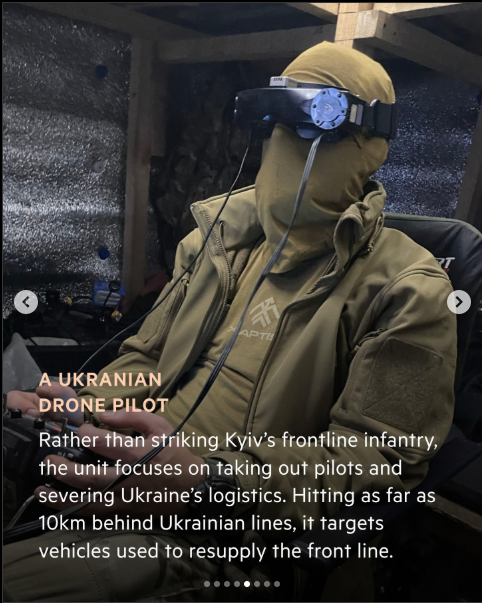
On a more sobering note, a friend recently sent me an Instagram post detailing new tactics adopted by the Russian invaders in Ukraine. This led me to a chilling thought:
Perhaps we are seeing so much investment in AI for games because games are essentially a free and unregulated territory to train models made for war. The complex environment, the decision-making under pressure, and the dynamic systems found in games provide perfect training grounds for military AI development. It’s a sobering perspective on the intersection of our entertainment and global conflict.
I recently read a fascinating article on Enhance, the Japanese developer behind Tetris Effect and Lumines: Arise. Their company vision is, simply put, a breath of fresh air:
“Experience is king, synesthesia is queen.”
Synesthesia—the involuntary experience generated by stimulating one sensory pathway—and the concept of Kondō (to move emotionally) are the core of their design process.
I have a huge weak spot for companies with this kind of vision. They are hard to execute, but they make so much sense to me.
We are currently living in the era of the product managerization of game design, where every creative decision is filtered through short-term metrics. These experience-first points of view come like a breath of fresh air, reminding us of the original purpose of our craft.
We are humans making entertainment. Focusing solely on automation and metric-driven tuning can make us forget the human spark that creates great things.
Intense design discussions, deep conceptualization, and messy prototyping—that’s what I strive for.
Enhance starts by making music and then breaking that music down into pieces to design the right stages (levels). It is an inverted process that prioritizes the sensory and emotional outcome. It’s so interesting; I wish I could be in that room to see it.
We use cookies on our website to give you the most relevant experience by remembering your preferences and repeat visits. By clicking “Accept”, you consent to the use of ALL the cookies.
This website uses cookies to improve your experience while you navigate through the website. Out of these, the cookies that are categorized as necessary are stored on your browser as they are essential for the working of basic functionalities of the website. We also use third-party cookies that help us analyze and understand how you use this website. These cookies will be stored in your browser only with your consent. You also have the option to opt-out of these cookies. But opting out of some of these cookies may affect your browsing experience.
Necessary cookies are absolutely essential for the website to function properly. These cookies ensure basic functionalities and security features of the website, anonymously.
Cookie
Duration
Description
cookielawinfo-checkbox-analytics
11 months
This cookie is set by GDPR Cookie Consent plugin. The cookie is used to store the user consent for the cookies in the category "Analytics".
cookielawinfo-checkbox-functional
11 months
The cookie is set by GDPR cookie consent to record the user consent for the cookies in the category "Functional".
cookielawinfo-checkbox-necessary
11 months
This cookie is set by GDPR Cookie Consent plugin. The cookies is used to store the user consent for the cookies in the category "Necessary".
cookielawinfo-checkbox-others
11 months
This cookie is set by GDPR Cookie Consent plugin. The cookie is used to store the user consent for the cookies in the category "Other.
cookielawinfo-checkbox-performance
11 months
This cookie is set by GDPR Cookie Consent plugin. The cookie is used to store the user consent for the cookies in the category "Performance".
viewed_cookie_policy
11 months
The cookie is set by the GDPR Cookie Consent plugin and is used to store whether or not user has consented to the use of cookies. It does not store any personal data.
Functional cookies help to perform certain functionalities like sharing the content of the website on social media platforms, collect feedbacks, and other third-party features.
Performance cookies are used to understand and analyze the key performance indexes of the website which helps in delivering a better user experience for the visitors.
Analytical cookies are used to understand how visitors interact with the website. These cookies help provide information on metrics the number of visitors, bounce rate, traffic source, etc.
Advertisement cookies are used to provide visitors with relevant ads and marketing campaigns. These cookies track visitors across websites and collect information to provide customized ads.