Skip to content

Tag: inspiration

Same old story

First you fail at getting a job in the video games industry.

Then you try to build your own project, but you fail at building a team.

Then you try to make a solo project, but you fail at managing well your time and you never end it.

Then you start teaching online, but no one cares because you have no real experience.

That is when you start considering buzzwords and trends, and join the downward spiral of events with drinks and lamborginis.

But you don’t belong there, and you never will.

Simple, complex

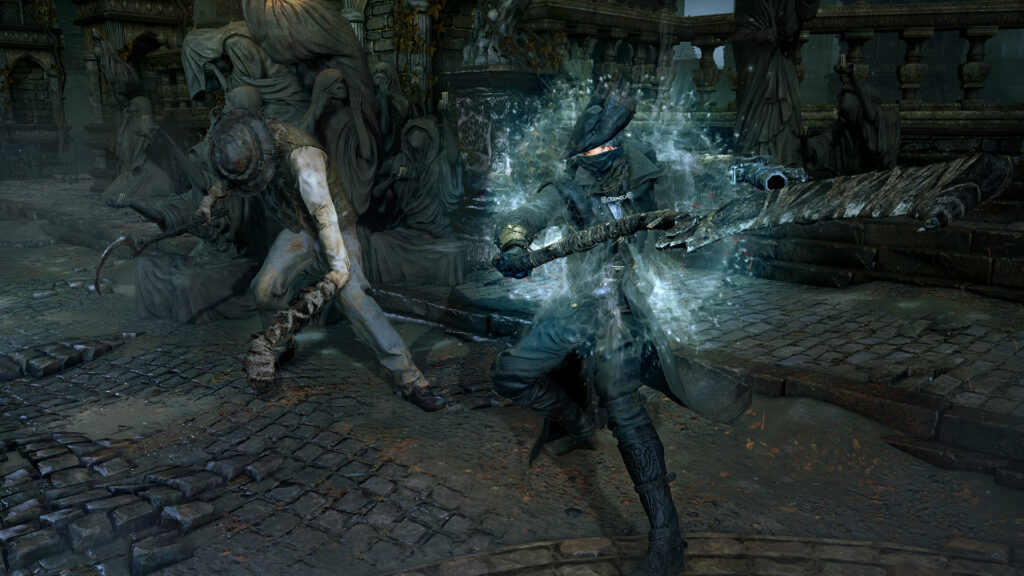
I was playing Bloodborne, because my brother made me a gift. After a few hours I started arguing with myself: why is this game so successful? It is SO complex to me. It wasn’t hard, as everyone says. It was complex. It was complex because I didn’t understood it.

We believe that games can be simple or complex, but simplicity is in our mind, not in the games themselves.

When the mechanics that compose a videogame are understandable, we call the game simple. When the same thing is puzzling, we call it complicated. The combat system of Bloodborne is very puzzling, especially if that is the first game you get of From Software.

Good game design has to inspire, motivate, and be understandable. It is only when all three of these come together that we label the result as “simple.”. Bloodborne is very inspiring and the challenge definitely motivates you. But in order to really understand it you either deal many hours with absolute frustration or speak with your friends and watch YouTube videos.

The skill and knowledge may decay over time, but with well-designed systems, the recovery can be quick. Which is not the case of Bloodborne, if you leave it for a while you definitely lose your ability of beat it.

Better games

The future of games is made of better games. Did you saw the last Bethesda announcement?

Imagine Bethesda saying something like: “and then you can sell your space ship to other Players. You can earn money by playing our game!”

What would have happened? In my opinion, from one side core Players would have been explicitly against that. Also with ignorance, it doesn’t matter. Why? Because Players want to play a game. They want to invest their money to receive entertainment.

From the other side, that would be still a Bethesda game. And it seems a very well made one. So that, of course, some Player would definitely buy into that. What happens when you can earn money? All the motivation levers inevitably shift towards that. At least for the end game.

Some Player may start just playing and living the story with their character. After they complete the game, then, the game has the opportunity of becoming a revenue stream for them. A job.

Bethesda didn’t do that. They could, of course. But they didn’t. They are true game developers and they have clear their business. The future of games is made of better games, not funny jobs.

Best practices

The games industry is estabilishing its processes step by step. Year by year. You work on a new feature and you are constantly studying other games. How is that feature implemented there? Why?

Then you discover an article or a video and you see that there are best practices to do that. Maybe a colleague, maybe your own boss show you the best practice. Often time you discover the best practice AFTER you did your breakdowns, your wireframes, your flows, your brainstorming with your team.

Best practices are the best because there is nothing better, right? They are based on facts. On data. On results. On money.

The temptation with best practices is to just implement those, because someone already figured that out. Why reinvent the wheel?

The risk is design something without even understanding why it should work and how to measure its effectiveness. In the meanwhile, a new trend and best practice popped out. Your design is old, maybe you should iterate on that.

Best practices are those things that, when they are publicly available and well defined online, are already surpassed. So that those are just common practices waiting for a new best.

The only way of making good games

I have learnt this the hard way. Often, people like to make experiments. They hire people like me as freelancer and then they hire juniors fulltime. They want results, good results in possibly a short time. Then our collaboration ends, experiment failed.

Why is that? Because people hardly accepts the reality of games. Making games is a serious thing. You will never make a good game with people part time. You can use part time freelancers, like me, to create specific content for something that already works. But if you want to make a new game you need to really invest heavily time and energies in doing it. 100%. There is no shortcut.

I always speak this clear before with my clients “this is hard, it will hardly succeed. I cannot dedicate more than X hours per week. You need more.”. Nothing. They want always to try. And sometimes they get upset because of the results.

Don’t be upset, I tried to warn you.

The idea: Duchess

I have an idea for an indie game and I am pretty bored at my dayjob, lately. So that I will explain it here, let’s see if thanks to that I meet the right people to do it.

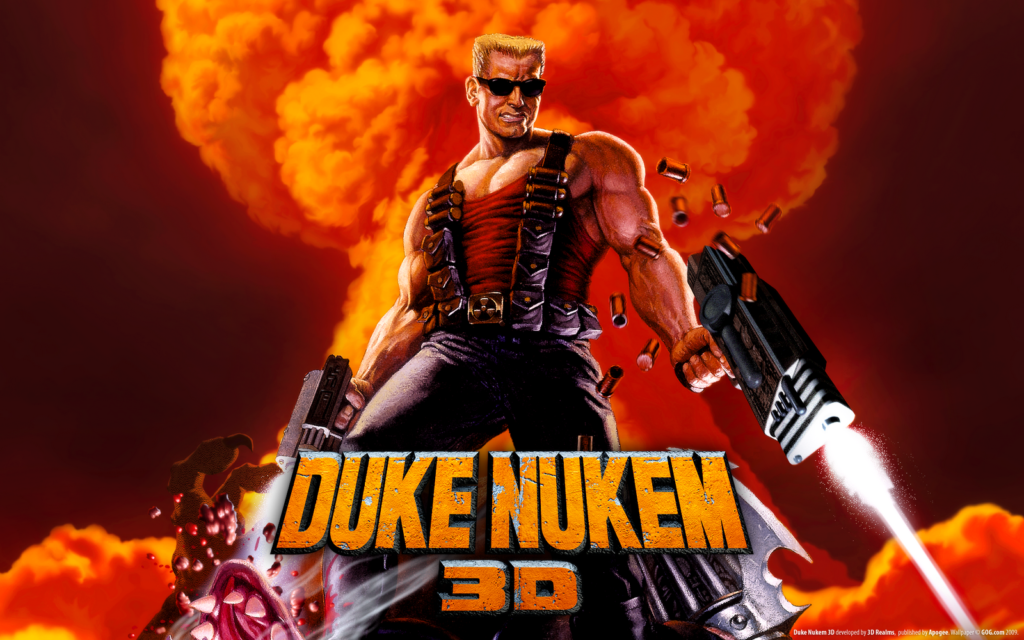
Do you remember Duke Nukem 3D? Well, the idea starts from there. I was taking a mooc on Unreal Engine 5 and the project was a fps. What’s the best shooter I have ever played? Duke Nukem 3D.

come get some!

Why? Because it was simple, with a great level design and lot of monsters and you could really feel the character. Was funny, me and my brother were continuosly joking around his sentences and that badass attitude.

So that I was thinking: how would it be a character like that nowadays? Well, I believe it would be the opposite.

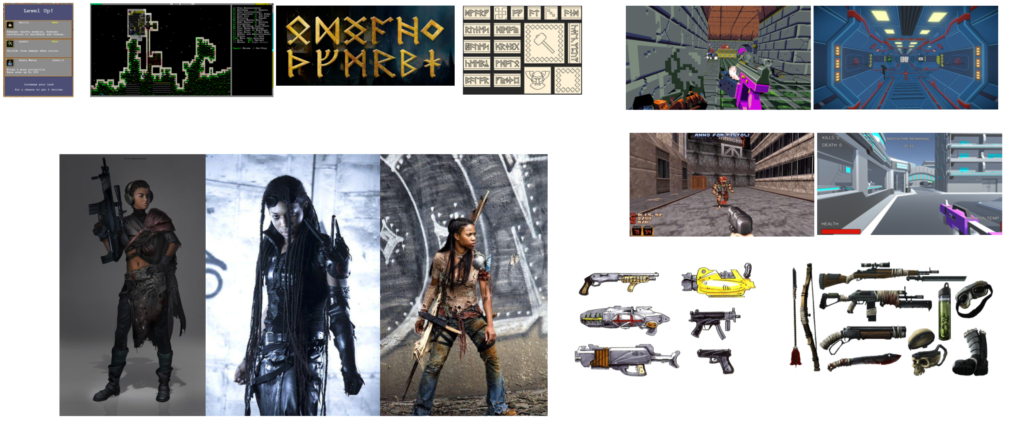
Duke Nukem was a white strong male. Duchess will be a skinny black girl. That’s the vision, basically.

First Moodboard

How about the gameplay?

I would like to try out a game which could be possibly exported to many platforms, also mobile. Recently I discovered Vampire Survivors, a great indie game on power creep. I would like to test out the same mechanics on a 1st person shooter.

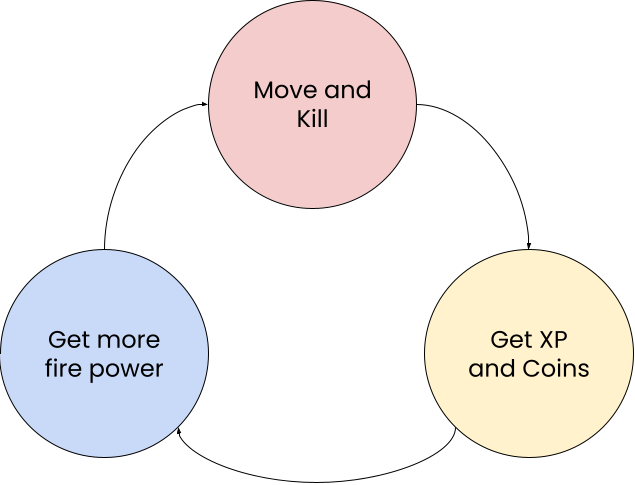
Core Loop

You fire automatically. Just worry about moving and put in the right spot to kill monsters. Collect XP and coins. On level up, the Players will improve their arsenal. On game over, Players will unlock new things with the coins.

Who’s in for that? I think I need a 3d artist first and find out the possible artstyles.

The term I most hate: User

The other day I was listening to a video where the speakers named the terms they most hate to hear. One speaker said he hates “web3”. The other “I hate metaverse”, and so on.

The term I absolutely hate the most (well, hate is a strong word isn’t it?) is: User.

To me there are the People. When the People start to play your game, those become Players. Players may become also Clients in free-to-play, if they decide to invest some money. And some of them become a Fan.

Players, Clients, Fans. Those people deserve their degree of respect. Users is a bad term, reminds me the abuse of illegal substances. I hate to say “Users”. Yet, I say it a lot because is very common used.

Dreaming the dream

I dream of making my own game someday. I have a lot of ideas well organized and stored, for someday do them. There are a lot of indie games there. With indie game, in this case, I mean a game that is not conceived to generate revenue or attract some specific kind of player. With indie game I mean, in this case, a game where I want to tell something.

On Sunday I went to the concert of a supergood rock band, the Schellac. Steve Albini, producer of Pixies, Nirvana and so on. Their rock is minimal, super well played and they keep the rhythm like a clockwork. They are very mathematic while they play. They have really something to say and they seem not to give a damn about making huge revenues and so on.

That concert made me think a lot. In fact, we can consider a gamedev team like a rock band. Everyone has a role and an ego. When you have a team of three people really good at what they do, you can really build something meaningful.

I am a game designer and I have a technical background. So that I am not afraid of using engines, script a little bit and so on. I think that with a supergood artist and with a stellar programmer we could have a good base. Then we need at least one person dedicated to marketing and at least one dedicated to QA. And that’s it, then we can be the Schellac!

Dreaming the dream is not living it, I know. But it’s what I have at the moment.

What successful game companies have in common

I have noticed in those years of carreer three main things that all successful companies share.

When we are joining a game company, many times we are just looking for a job. We study the companies and we look at their games. The most probable thing is working on a game that will not be successful. That’s a fact, there are statistics for that.

The first thing is that they have a great administrative department. They know how to keep the bills in order, how much the company is spending and what is the revenue. They are tracking their burn rate and the house it’s in order.

The second thing is that there is at least one person dedicated exclusively to quality assurance. Testing the game every single day, reporting bugs and creating processes to improve and automate the process of finding bugs. QA people save games. Games without QA will most probably just be bad games.

Ultimately, there is at least one person dedicated to community management and marketing. Games nowadays work a little like a service. Even a small indie game when published receives feedbacks and reviews and devs have to iterate inevitably. You need people dedicated exclusively to the sales, external communications and support.

If you are about to join a project with no QA people, or no administrative people or no sales/support/community people believe me: red flag! If it is your first project it may be OK according to its scope, but not expect quality, security nor players satisfaction.

New game designers, pick a starting point

When looking for information on how to become a game designer the results are quite confusing. There is a famous video from years ago that claims that a game designer must know everything.

That video is right but scary!

In my opinion advices included in this video does not help those who are trying to prepare for the future. Rather, it helps those who are already on the way to feel very very cool!

Learn to design games

Getting started in game design is hard. There is no single path, but all paths have two things in common:

  1. Create something playable.
  2. Let people try it out by observing how they interact with the artifact you create.

It is very difficult because on the one hand you have to arm yourself with a lot of willpower and time to be able to get something done. On the other hand, it takes a good dose of cheek to go and ask people to try a game and be observed.

In my opinion, however, it is the only real way to learn. A lot of people, for example, suggest joining game jams to get started. Game jams are great for the first point, but they lack the fundamental component: the players. Players are by far the most important part of a video game, from a game designer’s perspective.

This article is for people who want to join a company as a game designer. To be a game designer, you don’t need to join a company. You can create and publish your own games. And you will be a great game designer if you insist. But companies look for other things: they pay you to solve practical problems. To learn how to solve them, you should start your journey from another starting point.

Generalist or specialist?

Game design is a very broad discipline and normally people tend to recommend specializing in a game design area. Industry is also looking for more and more specialized professionals. However, if I think of having to take care of only one thing for the rest of my life it is intolerable to me. I understand the needs of the industry, I understand the advice of the experts, but they are not for me. So there will be other people like me. I will never recommend specializing.

The starting point of all achievement is desire.

Napoleon Hill

My advice is, instead: pick a starting point. After, your career will advise you on whether to specialize or remain a generalist like me. Time puts everyone in their place.

Game design consists of four fundamental areas: level design, system design, narrative design and gameplay design. These areas in the mobile world are called level design, game economy design, content design and UX design. It is inaccurate, I know, but what I observe is this.

Choose one of the four areas, scan the companies you would like to work for and their games. Remember to study well the business model behind, try to get an approaximation of their team dimension using LinkedIn, game credits and public information. The business model influences the game design a lot.

Professional game design puts in relationship the Players with the business model, the game theme and the game itself. It’s creating a language between the business, the team and the people playing. A language to deliver stories and experiences.

Level Design

The level design relates the mechanics with the theme and the game experience in a way that is logical and that offers the right degree of complexity and challenge to the players at every step of the journey. It is a very profound art, to really master it it takes years. At first it may seem like a mountain, and it is.

To get started, I recommend to take games that allow the creation of levels. You don’t want to start directly from handling engines like Unity or Unreal Engine (you’ll get there, just don’t start from there), but you better start from other games that already have their metrics and skill atoms well defined. Plus you can connect with their community of modders and grow with your peers too.

  • Get a game that allows the creation of levels
  • Learn the creation system of that game
  • Study and document all the mechanics and the skill atoms for that game
  • Place the skill atoms in vertical and the mechanics in horizontal on a spreadsheet and make a beat chart with the original game level design to understand its philosophy
  • Connect with the modders community
  • Create your own levels and have them try
Great starting point for mobile level designers

If you are interested in the level design of smartphone games, however, you will hardly find level editors. In the Unity engine, however, very often you will find a complete game of that type in the asset store. I recommend that you pay less than 50 euros to have the asset and be able to work on it. In that case you have to start from the engine, yes. Prepare your match-3 or endless runner levels from there!

I may also suggest you to join Steve Lee and Max Pears communities.

Narrative Design

The narrative design connects the theme and game mechanics to the story. It’s about designing how the story is delivered to people through the game. The best way to learn is to create fan fiction about popular games and implement the dialogue in some way: in the game or by recreating parts of the game itself.

A narrative designer reminds a little of a dungeon master when you start
  • Choose the game and create fan fiction
  • Have a few fans of the game read your story and try to improve it
  • Create a version of the game that allows you to receive the story as it is delivered, using Twine or rapid prototyping tools
  • You can also consider of creating a role playing game based on that game
  • Let someone try the new dialogue and watch their reactions!

System Design

System design is the branch of game design that relates the theme to the mechanics at its base, in the invisible part of it. It focuses on the connections between all the atoms of the game. Normally you need to know how to use tools such as spreadsheets well. However, the best way to really learn system design is by creating board games.

  • Choose a game you like
  • Create the tabletop version of that game
  • Try it if possible with fans of the game, but also with normal people
  • Iterate and improve your board game
  • Translate the rules to digital documents and spreadsheets

Gameplay Design

The gameplay design also relates the game’s theme to its mechanics, but from a more player-oriented perspective. It deals with the most tangible experience part, it is one of the most difficult branches and has many ramifications. The best way to really learn gameplay design is to start by researching and watching players interact with existing games.

Learn here how to research games
  • Take a game and have people who have never played it trying it in front of you
  • Take note of all behaviors, beautiful moments and struggles
  • Take detailed screenshots of the entire game and organize them in a file, as shown in the video above
  • Chooe a component of a game and try to create a variation in the form of a prototype
  • Let someone try the variation and see the differences

It takes a lot of willpower to start this profession. There is no single path, this is the one I recommend. Companies look for portfolios, especially in the more junior profiles. If this portfolio is created by working on existing titles, and if these titles are theirs, that’s even better!

Few people, in fact, have the necessary talent to create some work that really stands out from the others. We normal people have to look for shortcuts. Better to work an existing game yourself than to create the “wonderful adventure of the boy in the woods” that everyone creates.