Many years ago, I lost my job ad a dream company and I decided to become the best game designer I could possibly be. Part of this is still within me, also if many things changed. One for all, I understood that teams/clients do not need, nor want, the best in class.
If you are reliable, honest, candid, and humble, generally speaking you will be better welcomed into games teams. I notice, especially among junior game designers, the will to be better than others or more knowledgeable. You can easily end up being perceived as superb, like that.
The best way to do your job is to give the best of your “more or less”, without delivering too much. You will lose less energies and your job will be recognized in any case.
In this age of slop and significative increment of information and leisure that people receive, positioning will be always more critical. One of the mistakes clients make is to think in positioning like something belonging to the game. But positioning it’s in players’ minds, the game is just a medium.
If you see the recent successes you will notice how they well extremely clear in terms of positioning in the minds of people:
Resident Evil Requiem: the original and unique horror game
Crimson Desert: the open world for fun, not story or stat-oriented players
Pixel Flow: high intensity puzzle game, where you should master the speed of the belt
Game design should help in this. In fact, it’s impossible solely using marketing to identify the right patterns to spot a new genre where you position yourself. People in their mind have like 2-3 slots maximum per category. So what’s your?
How to help your team position the game
Every single time a new game starts, you discuss around its genre. The game genre is a shared language among everybody involved. You can say “I want to make a racing game” as a developer, but you can also declare “I don’t like souls-like games” as a player. The genre is a good point of start.
In mobile f2p a common philosophy (because it’s a service business) it to think like “let’s take the players from this other mobile game”. So you are playing to steal somehow players from your competitors. I think it has advantages and disadvantages. The positive thing is that you will become laser focused in offering a bigger/better game that already existed, basing on your own resources and expertise. The disadvantage is that you may ignore the context of your competitor and end up competing with a giant that will crush you. I think in all the companies that are trying to make a Brawl Stars but better. Good luck with that!
Another philosophy is to create your own genre. You spot motivations, study the use cases, determine possible gaps, and innovate accordingly. This is my favorite method, but it holds risks. Because you need real taste and true engagement with the community. You need to really will to also put out fast things that may not work. It’s not for everybody. As a consultant, for instance, I cannot propose that to all my clients.
Conclusions
There are no silver bullets, that’s clear. Otherwise they would have been already taken by others. You need to be really aware of your situation (or the situation of your employer), to decide the best path. Nobody said it was easy, but one thing is important: game design in the AI era is required to care about the game position. Otherwise it will be meaningless.
I use Claude to make my prototypes within Unreal Engine. I don’t have anything embedded in the engine itself, I have the program installed and go back and forth to implement what the LLM suggests me.
It works pretty good, I have to say. On one end, it forces me to structure well the problem to solve; Claude helps with everything, from research to properly framing. I am faster in creating my own JIRA tasks and message my colleagues in a proper and clear way. Then, I use blueprint and I have to say that the results (from a prototype perspective) are pretty satisfying. Also, at the end of each chat I tell it to create a report for its knowledge base, so that in future should be better and better. At least, I hope so.
There is a challenge though: switching back and forth from Claude to the engine to implement what the LLM says is tiring and I end up my days with headache. It’s like having someone giving you suggestions constantly. I know there is a way to integrate everything into the engine, but it’s still experimental and I don’t want to risk on a shared code.
There is no secret formula to make a successful game, otherwise it would have been discovered already. It’s true, though, that success cases generally involve the right doses of inspiration and pragmatism.
The inspiration is needed to create something novel, something unique, something people wants. When I see games starting from charts and SensorTower reports I already know they are doomed. Games should start from something intimate to someone, and inspiring. It can be a childish fantasy, there is absolutely no need to be a tormented artist.
For instance, think in Royal Match the match-3 game from Turkey: they clearly started from the fantasy of breaking expensive dishes and pots in a royal mansion. Something that many of us had when children, visiting historical places with our family or schools. You need something like that, if you don’t have that do not throw away your money and find it first.
Pragmatism is needed because you need to be very aware of what the market actually wants. In this way, we would have avoided the $80B investment in “the Metaverse” by Meta, for instance. Lots of effort, creative energies involved to try to find the Grail, and for what? It is clear that people doesn’t want VR devices covering their faces. Also Activision/Blizzard, recently presenting a MOBA game for mobile phone with Overwatch IP, for Western audience. People here do not want to play MOBAs, why are you greenlighting something like that?
You need to be inspired by some fantasy and read the room before of starting a new expensive venture, things that I would like to see more here in Europe.
Last year I found a great client; good team, excellent leadership, profitable company. The project was (well, is) ambitious and novel. I felt part of the leadership team, I contributed to the development of their MVP. And then, a more expert designer joined and I was out. I had an interesting chat with my client, and he explained me exactly why the decision. It made sense, I learnt a lot. Still, it hurt because everything worth in life hurts a little.
Now that it’s one month since I joined GSC Game World, I already feel there is something very different in the way of managing high-quality projects compared with mobile f2p. Mobile needs pragmatism: you are chasing big numbers because you are investing huge amounts of money to give a highly technological product in the hand of distract people for free with the hope to engage their attention. High quality games, on the other end, are for people who decide to light a console up to be immersed into an experience they paid for.
And this leads to a fundamental difference: (product) management is what leads mobile, while creative direction is what leads high quality games. Of course, I am passionate and prepared designer and I can tackle any challenge, plus I have a certain age and experience so I can be a great leader. But mobile games are managed in a McKinsey-an style, and companies chase perfection. And the best way to avoid the risk of not having it is to hire people with a real pedigree (which I don’t have). On the other end, PC/Console single player high quality games (open world, FPS, survival) look for people capable of prototyping and realize the creative vision being away of design pillars, vision, and so on.
Two different worlds that I am sure can learn from each other. I know I will bring learnings from premium to mobile, and viceversa.
One month ago I have started a new full time gig at GSC Game World. It’s been years of doing extra work to learn the technologies and methods of high-quality games, finally the stars aligned and I got my opportunity. I am excited by this new venture, and I am rearranging forces to keep my consulting services on, thanks to the help of a game design assistant who I recently selected among my students.
I want to say just two things on this; the first is that it would have been impossible to get this new job without the existence of remote working. And it would have been impossible both for me and for the company that hired me. I know that a lot of people believes that we need to be in the same place to make a good job, I am not a guru so I don’t know. I only know that GSC Game World has become more international thanks to the advent of remote work.
Second thing is that I could hire an assistant thanks to the existence of LLM platforms, specifically Claude in my case. Having collaborators and assistants means communication, alignment, management, and lots of other things. I need to measure well my words, and provide concrete schedules. All of this constitutes an overhead that would have been simply impossible to tackle without the help of some automation of sort. Also on the other end, I am able to frame and solve the right problems faster and deliver both with my employer and my clients.
My services are becoming more sophisticated, and I hope to share with you important learnings on this channel. Stay tuned.
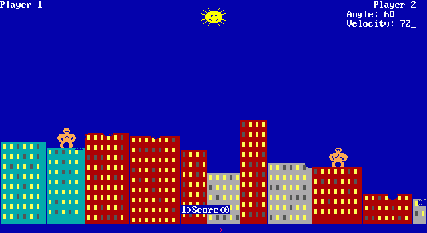
Almost every veteran I know—myself included—started by modding, not just “creating.” My journey began with Q-Basic to tweak Gorillas, then modifying voices in Worms, creating custom avatars for Baldur’s Gate, and hacking Diablo hash codes.
The best designers were often protagonists of the modding scene, diving into forums to figure out how to add value to the games they loved.
We’ve seen this cycle before. Tech giants often launch “revolutionary” gaming projects to fuel corporate career leaps, only to abandon them when the next trend arrives. But the real issue is the demand for shortcuts. Some entrepreneurs will try to use Genie3 to chase quick profits with flashy trailers, and some might even succeed in the short term.
Long-term success belongs to those who actually expand the horizons of gaming.
Reaching new audiences and solving the distribution puzzle requires more than a “genie.” It requires deep knowledge. While technocrats push “prompting and scrolling,” the smartest players are busy mastering history, philosophy, and art.
My advice? If you want to break into the market, stop looking for shortcuts. Work hard to engage your audience and start by modding what already exists. Read history books, and myths. Rack your brains, expose your work, and take risks.
You are far more likely to find success through craftsmanship than by playing a “word slot machine” and hoping for a believable game.
I was watching the last Deconstructor of Fun podcast, shooter monthly, on Highguard.
I downloaded the game days ago, completed the tutorial and played three matches. I am not really into hero shooters, but I have to admit that I also had the sensation, as these expert say, that the game was not properly play tested. Which is a common issue in the industry that leads to many games to fail miserably. You need to engage with your future clients, especially with service games. You cannot simply launch early access anymore, early access in current market is perceived as a full launch, especially if you game has been announced in “pompa magna” at The Game Awards by Jeff Keighley in person.
Regarding the market segmentation
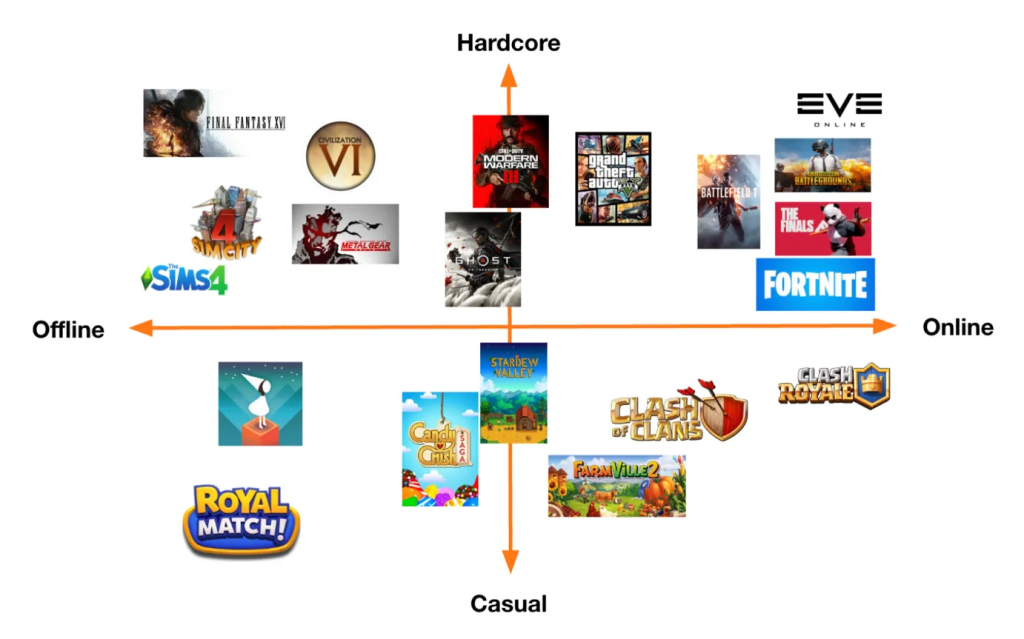
The experts seem to agree (but not fully) on the fact that there are just two kind of profitable shooter genres: tactical and battle royale. I am not sure about that, I prefer this Owen Mahoney’s segmentation:
Owen Mahoney’s view of the industry
I believe that shooter as a genre fits in at least 2 quadrants: online and offline hardcore. Nicholas Lovell also has his view on the industry in general.
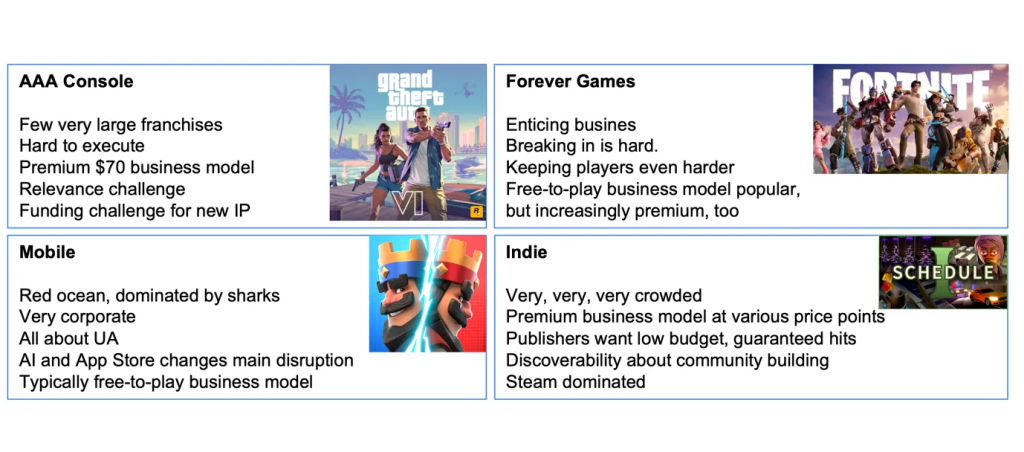
Nicholas Lovell’s view on the industry
And we know there are AAA fps, forever fps like Fortninte, mobile FPS, and also indies who build on top of boomer shooters. Finally, there is Christopher Dring view of the industry:
Under this lens, I see games like STALKER being fps with stories. Fortnite and so on, are for socializing, but also competition/sport. COD and Battlefield as well. Boomer shooters are for passing the time, especially indies like this one.
I believe that the market is more complex and varied than the one pictured by Phillip Black in the DoF shooter monthly podcast.
What I do believe about the game modes
In the podcast, they insisted that the right number of people should be 5vs5 or 3vs3vs3, and I agree with them. But I believe that are also other problems with general game pacing:
Mining crystal is not the best during a shooter session, in my humble opinion. I know it’s a basic in Fortnite, but there you can then build things instantly. Here, instead, is to buy stuff from a vendor.
The vendor itself is slow and boring, can be put in another place
Upgrading/reparing walls is not so exciting, too.
First idea I would try to pitch and eventually design is to buy weapons and repair walls when you die. You die and while you wait, your “soul” can repair stuff. I know, maybe you prefer to watch what is happening, but that can be an extra cam or something while you fix things.
Another thing I noticed is that the most exciting part is when you raid or you need to defend from a raid. Still, I had the feeling that the attackers, the raiders, were stronger than the defenders. Maybe it’s just psychological, but I would like to try something asymmetrical, like 3vs5 (5 defenders).
Running on the horse while shooting is also cool, I remember that from RDR2, which lead designer works for Highguard. Maybe there can be the moment of earning crystals instead of mining.
3 ideas I would pitch:
Buy weapons and manage base on death
Asymmetrical raids
Earn crystals while killing people from the horse
Maybe these would create more exciting/unique moments for Highguard.
I’m not convinced by this “AI is just a tool.” We’re wired for stories and narratives, in the sense that our perception is very attentive to them and our memory contains narrative sequences. A tool capable of creating a narrative structure ceases to be a simple tool for me.
It’s a bit like saying “movies are just a tool,” or “video games are just a tool.” Well, it’s certainly possible to use movies and video games as tools. How many times in school were we shown a movie to explain a story? Some teachers use role-playing games or even computer games to explain concepts.
However, these artifacts aren’t just tools. And AI isn’t one for me either. It can heavily influence the way we implement an idea, given that it’s capable of arguing (often bullshit) very well and could catch us at a stressful moment when it’s easy to give in to the temptation to trust. And this inevitably leads to missed opportunities.
Of course, you can cut off your finger with a knife. With Photoshop, you can gather a series of images and make a collage. But that’s a direct use during which you’re aware of the error, either before or just after.
AI isn’t just a tool; it can only be used as a tool, that’s true. But it’s designed, like many things these days, to capture our attention (so we pay the monthly subscription) in exchange for the feeling of being more productive.
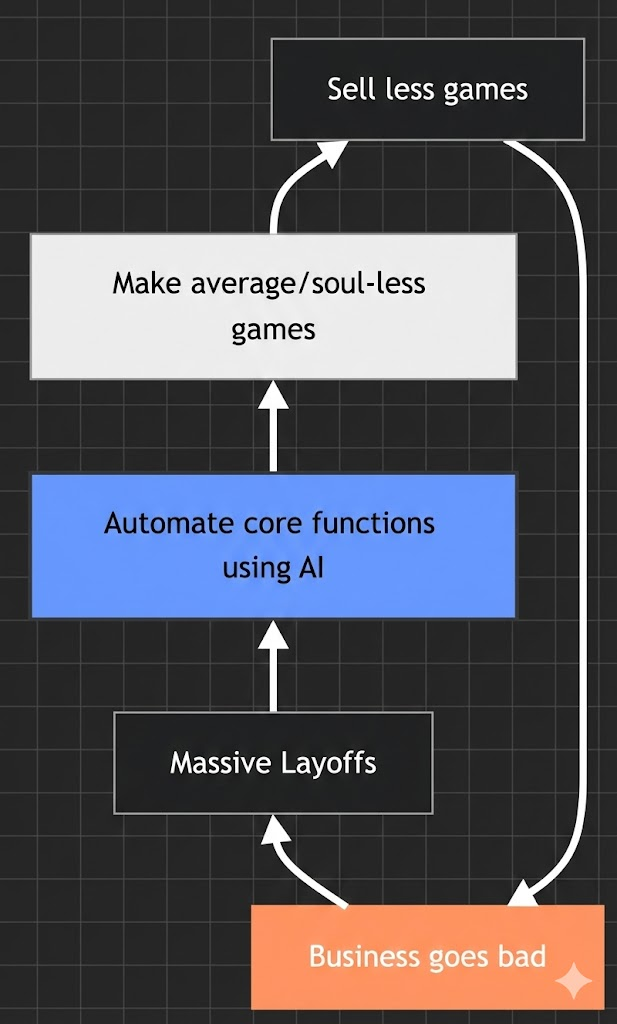
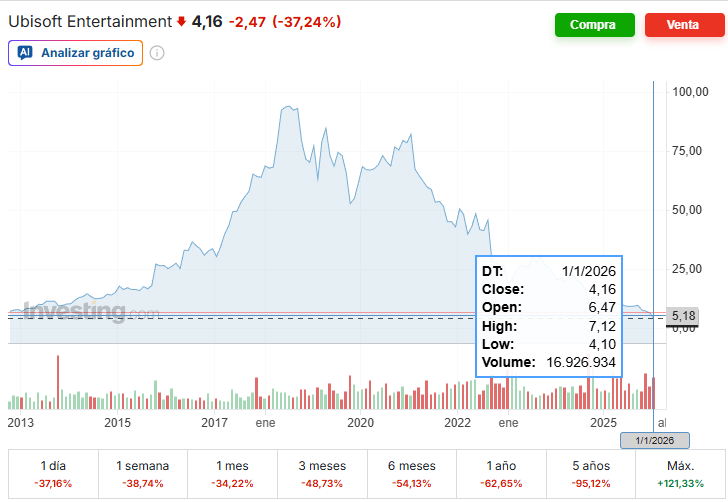
The recent news regarding Ubisoft isn’t just another headline about industry layoffs; it’s a “leading indicator” of a systemic crash. When the numbers don’t add up, the corporate playbook is predictably uninspired: cut the talent, automate the core, and pray the spreadsheet balances itself out.
But creativity isn’t an assembly line, Ubisoft might be the “canary in the coal mine” for an industry chasing its own tail. This isn’t just a trend; it’s a form of “drowning.” When inefficiency (ROI) drops too low, leadership grabs whatever is in reach—AI, NFT initiatives, or massive restructuring—often without even knowing what questions to ask their experts. They are borrowing against a future they don’t understand, hoping that money alone can catch the wind.
The “Glass Ceiling” of the French Elite
A company is only as brave as its leadership, and here we find a significant bottleneck. Ubisoft’s executive team is roughly 90% French, educated at the same elite business schools (ESSEC, ISG), with tenures spanning 30 years.
While these credentials are impressive on paper, they’ve created a cultural monoculture. This “upper-middle-class business elite” is now tasked with innovating for a global, diverse audience they are increasingly disconnected from. When leadership hasn’t seen the inside of another studio in three decades, they stop leading and start rehashing.
The AI Gamble: Partner or “Slop” Generator?
The debate around AI in development is often polarized. Someone argues that AAA gaming is “dead” without AI to reduce the staggering $200m+ budgets. I don’t disagree that budgets are exploding, but I disagree that AI is the silver bullet for quality.
AI isn’t the root of the problem, but it’s a risky “solution”. Relying on a technology that hasn’t yet delivered on its creative promises to save your strategy is a bet, not a plan. If you use AI to generate “slop,” you might save on costs, but you’ll lose the player.
From Rational Design to Brand Decay
Ubisoft once had a superpower: Rational Game Design. It was a method that allowed them to optimize the creation of epic adventures while maintaining a clear vision. But as they chased whales, “Games as a Service,” and unsustainable growth, they lost the creative DNA that made them special.
A software (and AI is just that) cannot solve a brand crisis. AI can’t fix the fact that Ubisoft has distanced itself from player fantasies and instinct—things that aren’t taught in prestigious business schools.
The Opportunity in the Chaos
The failure of long-term vision in these managers is an opening. The collapse of the old guard creates space for those who actually understand imagination and positioning.
Ubisoft’s stock may be back to 1998 levels, but the talent is still out there. The question is: will they be allowed to lead, or will they be replaced by an algorithm until there’s nothing left to automate?
We use cookies on our website to give you the most relevant experience by remembering your preferences and repeat visits. By clicking “Accept”, you consent to the use of ALL the cookies.
This website uses cookies to improve your experience while you navigate through the website. Out of these, the cookies that are categorized as necessary are stored on your browser as they are essential for the working of basic functionalities of the website. We also use third-party cookies that help us analyze and understand how you use this website. These cookies will be stored in your browser only with your consent. You also have the option to opt-out of these cookies. But opting out of some of these cookies may affect your browsing experience.
Necessary cookies are absolutely essential for the website to function properly. These cookies ensure basic functionalities and security features of the website, anonymously.
Cookie
Duration
Description
cookielawinfo-checkbox-analytics
11 months
This cookie is set by GDPR Cookie Consent plugin. The cookie is used to store the user consent for the cookies in the category "Analytics".
cookielawinfo-checkbox-functional
11 months
The cookie is set by GDPR cookie consent to record the user consent for the cookies in the category "Functional".
cookielawinfo-checkbox-necessary
11 months
This cookie is set by GDPR Cookie Consent plugin. The cookies is used to store the user consent for the cookies in the category "Necessary".
cookielawinfo-checkbox-others
11 months
This cookie is set by GDPR Cookie Consent plugin. The cookie is used to store the user consent for the cookies in the category "Other.
cookielawinfo-checkbox-performance
11 months
This cookie is set by GDPR Cookie Consent plugin. The cookie is used to store the user consent for the cookies in the category "Performance".
viewed_cookie_policy
11 months
The cookie is set by the GDPR Cookie Consent plugin and is used to store whether or not user has consented to the use of cookies. It does not store any personal data.
Functional cookies help to perform certain functionalities like sharing the content of the website on social media platforms, collect feedbacks, and other third-party features.
Performance cookies are used to understand and analyze the key performance indexes of the website which helps in delivering a better user experience for the visitors.
Analytical cookies are used to understand how visitors interact with the website. These cookies help provide information on metrics the number of visitors, bounce rate, traffic source, etc.
Advertisement cookies are used to provide visitors with relevant ads and marketing campaigns. These cookies track visitors across websites and collect information to provide customized ads.