Skip to content

Tag: ideas

Steam Sale Games in Italy

The fifth edition of the Steam Sale Games in Italy is underway, the initiative dedicated to Made in Italy video games powered by IIDEA!


From today until Tuesday, December 9th at 7:00 PM, discover over 400 Italian titles, including video games, DLC, and additional content: a vast selection that celebrates the creativity of our studios and offers numerous special offers on productions of all genres.

I connect through game design

I work in games not as an individual creator, but to do it with others. Game design is a way to get in touch with others, teammates and potentially players. I am not a solodev, I struggle really hard when I do projects completely alone also if at times is necessary to push my boundaries.

That’s another reason why I do teach and I join online courses, as well. As a freelancer, I don’t always have clients. There are periods in which I dedicate to personal project, such as the book I am writing, and I feel very alone professionally speaking. Having the excuse to meet other people to teach them or to study with them fixes partially that problem. I am also on Discord channels, but I feel hard to follow discussions there because of the way Discord is designed.

Vulnerable latitude

I have met plenty of professionals who don’t actually love working in games, including game designers. I’m sure this is not news to you, and I also believe that everyone has a right to work in an industry as big as gaming, even if only for a while.

Yesterday, I met one of these people, who told me, “Videogames are your beach!” (using a Brazilian, Rio de Janeiro slang phrase). And I agree; I genuinely love my profession.

I have proof of that because I often put myself in a vulnerable financial position just for the sake of engaging in game design. A client might offer me shares as part of my compensation. If I like the client or the project, I accept, even if I know I may never see any money from it. I know that my task will end, the client will close the collaboration, and I will lose all shares.

I know this, and I consciously make that choice because I love what I do.

But I deeply respect the professionals who don’t care too much—the ones who pass through the industry like tourists, earn some money, and move on. They will have the opportunity to explore different things, and their minds probably won’t be 110% focused on games all the time, unlike mine. I respect that attitude very much as well.

Be honest, be indie

I believe the single most important quality for indie developers is honesty. This is their secret weapon. It is nearly impossible for a Top 10 company to achieve full honesty because of their size and stakeholder structure. Honesty, however, allows you to consistently put out your authentic voice.

Recently, while consuming content in the indie space (podcasts and video), I’ve noticed a significant increase in marketing awareness. This often translates into the typical marketing discourse: “how to make trending things faster and avoid struggling too much.”

But that, in my humble opinion, misses the entire point of being an indie. Independence requires you to embrace the struggle and invest genuine effort—not just hours, but intense thought and creative energy. If you end up simply chasing trends, you risk falling into the trap of industrialization, product managerization, and creating derivative work.

I am not arguing against trend awareness or chasing money; of course, we work for money. But I am asserting that if you want to truly succeed in the indie space, you must prioritize honest self-expression. Put your authentic voice out there for real—even if your true call is to make a niche friends-to-lovers sim or a niche horror game.

Fast & Slow

Previous post I talked about being part of a high performance team and how we’re able to become so effective in term of our output. This post is about a personal observation in how I’m able to work in such an environment and keep up with the team.

I’ve noticed that my contribution is not consistent. It is fast one day and slow the other day. Ow how I used to hate the fact that I’m slow on certain days, or sometimes even extended periods of time, while seeing the fast periods as normal. But I’ve come to understand that these slower days have a purpose.

Sometimes, being slow means that you need to recover and reenergize from a previous high performance day.

At other times the slower days means that for that particular moment I should spend my time working on something else. When it comes to new ideas and design solutions they sometimes it just require me to be in a particular mood, a particular zone in order for ideas and solutions to come naturally and fast.

Sometimes, being slow means I do not have enough input, or just not spend enough time on finding the solution. Sometimes, it means that I just need to stare longer at the particular problem I want to solve.

In the end, I came to realize that being able to be fast and productive I have to accept that being slow at other times is just part of the process and one does not exist without the other. I’m becoming more mindful of my energy, my own flow, my own limitations and my own process. I’m more accepting of myself.

Why I teach

This week I started teaching a new bootcamp on video game design and conceptualization. I feel very lucky to have the opportunity to teach, even though it’s not a well-paying job. My method requires a lot of effort, and frankly, I would like better financial recognition for that effort.

I believe in the games education, though I must say there are many courses out there that aren’t worth the investment, they just slow students down and drain their wallets.

I’ve found a surprising number of people who study not to learn, but simply to have something to do, too. They aren’t genuinely interested in the subject; they are just there to fill their time.

My mission is always to leave a lasting mark on my students, and to inspire even the most bored ones. To me, game design is a serious craft. I love it with all my soul, and I want to spread its beauty.

Le futur et l’avenir

Tatu Pohjavirta, an experienced CEO and futurist, recently posted a brilliant take on why Venture Capitalists, and so developers, get stuck. They ask, “Are you the next Supercell?” or “What’s the next Netflix?”

As Tatu points out, they are looking for le futur, the foreseeable sequel to the present, when what truly changes the world is l’avenir, the radical, unexpected break from the past.

“The true future doesn’t really inherit the present—it breaks from it.”

This is an inability to step outside the invisible grasp of the present. We assume that our current systems are permanent. But they are just historical accidents waiting for the next great interruption.

Building the Unforeseen

Our job as game designers is to increase the risk of predictability by building something genuinely “other.”. Our work is not to design the next of something; it is to design the first of something else.

But how do you design l’avenir when you don’t even have the language for it? This is where your methodical approach, the discipline you apply to strategy and prototyping, becomes the most powerful creative tool.

Design a game where the question becomes, “What is that?”

  1. Deconstruct Your Genre’s Assumptions (The Historical Accident): Take the genre you know best and list all its “permanent” features (e.g., Shooter: First-Person Camera, Health Bars, Headshots). Identify the Historical Accident, the feature that isn’t essential to the instinct (Combat, Acquisition, Escape) but exists purely because of platform or technology limitations 15 years ago.
  2. Prototype the Vocabulary: Tatu asks, “What’s the wildest thing you can imagine into existence that you don’t yet have language to describe to others?” Your job is to prototype the vocabulary. Build a prototype that demonstrates this “wildest thing” using only simple geometric shapes and text. Playtest it with people and watch their reactions.

Your job is to stop being trapped by le futur and start building the unexpected arrival of l’avenir.

From The Finals to the front lines

Here is the weekly rundown of industry news and my thoughts:

1. Steam’s Home Console Play

The news about new hardware devices from Steam makes one thing clear: they are aggressively attempting to erode the distinction between PC and Console to win the battle for the home living room.

I can’t predict if their strategy will ultimately work, but if I were Sony, I would focus my energy elsewhere. Sony is proven to be exceptionally good at narrative-driven, high-fidelity single-player experiences. You only need to look at the sales figures for games like Ghost of Tsushima (or Ghost of Yotei, if that is the internal name you meant)—that caliber of experience is Sony’s real golden goose. They should double down on what they master.

2. Embark Studios: Practical AI Integration

Another interesting news item this week comes from Embark Studios (developers of Arc Raiders and The Finals). They appear to have found a cool, practical way to integrate AI into their development process.

This is exactly what I like to see: No hype, just pure gameplay utility. They released a world-class game, and they’ve released useful tools for the community. Embark is positioning itself as one of the most promising development realities here in Europe.

3. The AI & War Reflection

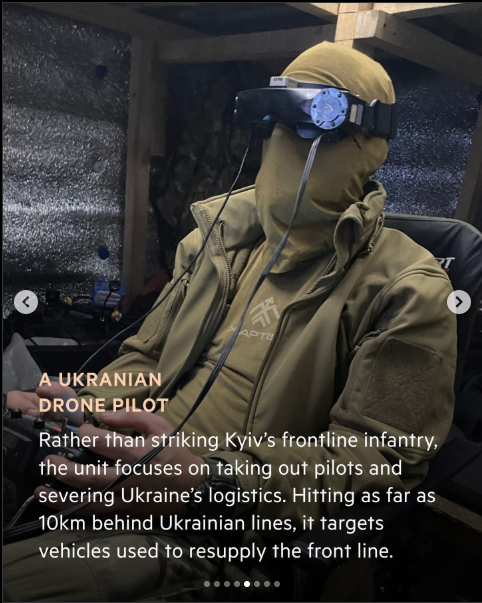
On a more sobering note, a friend recently sent me an Instagram post detailing new tactics adopted by the Russian invaders in Ukraine. This led me to a chilling thought:

Perhaps we are seeing so much investment in AI for games because games are essentially a free and unregulated territory to train models made for war. The complex environment, the decision-making under pressure, and the dynamic systems found in games provide perfect training grounds for military AI development. It’s a sobering perspective on the intersection of our entertainment and global conflict.

Offline networking

Here is one of the advices I give to people trying to break into the industry: make sure you constantly meet people in real life.

Instead of staying at home preparing and sending résumés to dozens of applications, it is far better to spend two hours per day outside, perhaps at the gym or at a local course on something entirely unrelated to games.

This approach offers three crucial advantages:

1. Maintain Human Energy

You keep your energy levels high because you are meeting and talking with real humans, not just staring at a screen. Waiting for a response to an online application is passive and draining; engaging with the world is active and vital.

2. Design for Reality

When you meet people outside your professional bubble, you gain invaluable insight into their context. I often use these interactions to think about game design.

For example, I currently attend a Catalan language course twice a week. The class is full of nurses and public service workers who are there primarily to get a better contract, not necessarily to master the language. I notice they are tired, easily bored, and don’t want too much complication. Their lives are already full, balancing jobs and children.

How would I entertain someone like them? Not with a complex console game, right? They need a simple casual game, but it has to load fast and get straight into the gameplay. This helps me stay in touch with reality. It forces me to design for the actual, busy human being, not the idealized, endless-time “gamer.”

3. Unlock Lateral Opportunities

You significantly increase your chance of finding job opportunities in lateral sectors by meeting people who have nothing to do with the virtual bubble you’ve created in your online networks.

I honestly have the feeling that nowadays, it is often easier to find a job by going to the gym than by applying on LinkedIn.