Skip to content

Tag: howto

The Secret Is Making Them Feel Smart

This post was originally written in Italian by Paolo Gambardella. It has been translated by an AI agent and may contain inaccuracies.

Many game designers start from a flawed assumption: they think the player needs to be skilled, attentive, strategic in order to enjoy the game. They build systems that only reward people who read tooltips, calculate probabilities, and optimise resources.

The reality is that most people don’t do any of that. And the real craft of design is making the player feel like they made a smart choice — even when the system quietly steered them there all along.

Building the feeling

A good combat encounter doesn’t ask the player to figure out the winning move from scratch. It puts options in front of them, makes one of them slightly more readable, and lets them get there “on their own”.

The same logic applies to puzzles: the solution feels like a personal insight, but the game has already silently ruled out ten red herrings before the player ever considered them.

Attribution matters more than difficulty

When a player wins and feels like the credit is theirs, they come back. The right question during design is: what can I remove, simplify, or surface, so that their conclusion lands easily and still feels like their own?

A designer’s skill is measured by how much invisible work they can do to make the player feel a certain way.

Gender Is Not the Answer

This post was originally written in Italian by Paolo Gambardella. It has been translated by an AI agent and may contain inaccuracies.

Many analysts and consultants give software houses the same advice: “look at the genres that sell, and make one of those.” If roguelites are exploding on Steam, ride the wave. If survival games are dominating the charts, build one.

What players actually evaluate

When I jump into a new game, I’m looking for something visceral: a feeling, a sense of stakes, a specific pleasure. I’m trying to live out a fantasy: that of the lone survivor, the strategist who bends chaos to their will, the hero who beats the impossible.

Genre is the container. What the player is buying is the experience inside it.

It’s not a new idea — the MDA framework (Mechanics, Dynamics, Aesthetics) by Hunicke, LeBlanc, and Zubek has been articulating this since 2004. But the convenience of taxonomic classification keeps winning out over actually studying player experiences. It’s much easier to put a genre label on a spreadsheet, after all.

Fantasies have a historical context

Fantasies don’t work in a vacuum. They’re rooted in the cultural moment they emerge from.

The survival game boom (DayZ, The Forest, Rust) grew out of a decade of economic crisis, political instability, and distrust of institutions. The fantasy of “starting over from scratch with your own two hands” resonated because it spoke to something millions of people were feeling in the real world.

The same goes for city builders and management games: they sell the fantasy of control and order in a world that feels chaotic. And when that collective feeling shifts, the fantasy that sells shifts with it — regardless of genre.

Identifying which fantasy is culturally ripe at any given moment is a completely different job from watching which genres are performing well on Steam. And it’s far more useful.

Where enormous budgets aren’t enough

Concord (Sony, 2024) is the textbook case. Estimated budget: over $400 million. Genre: hero shooter, going after the Overwatch and Valorant market. Everything looked right on paper — popular genre, quality studio, near-unlimited resources.

But players had no real reason to choose it over what they already had. It was pulled in under two weeks.

Skull & Bones (Ubisoft, 2024) followed a similar trajectory: eleven years in development, estimated budget around $650 million. Genre: naval combat with live service elements. The pirate fantasy — being a free-roaming corsair, master of the seas — was barely present in the actual gameplay, replaced by a hollow grind loop.

In both cases, the genre was “right.” The fantasy was empty.

The right question

Before asking “which genre is doing well?”, the productive question is:

What dream do players want to live out, right now, in this cultural moment, that nobody else has yet figured out how to deliver?

Answering that question takes empathy, a feel for the times, and the ability to connect culture with design.

Genre, for its part, is a handy map — but it’s not worth navigating by, because it was never built for that.

The Focus is Saying No

This post was originally written in Italian by Paolo Gambardella. It has been translated by an AI agent and may contain inaccuracies.

The most common problem I see with my clients is that they often know too much. They listen to podcasts and take online courses, study competitors, gather feedback, analyse trends… and then they freeze.

Steve Jobs, in a famous 1997 interview, said that focus doesn’t mean saying yes to the most important things. It means saying no to hundreds of good ideas. Too much information can push you towards choices that are right, but not yours.

How I analyse the competition

When I analyse competitors for a client, I work in two columns:

  1. What interests me about this competitor? What are they doing that points in an interesting direction: vision, audience, priorities — in that order.
  2. What doesn’t interest me, and why? What are they doing that works, that the market accepts, that isn’t a mistake — but that simply isn’t right for me. Not for the audience I’m serving, not for the identity of the product I’m building.

It’s important to tell the difference between things that are too vague and things you can actually act on:

  • “We want to make something accessible” is vague.
  • “We will never build a system that requires an external guide to understand” is concrete, operational, and defensible.

The one thing to cut

In game design I often use a simple mental tool: find the one thing to cut. Almost always, it’s a good idea that someone has grown attached to. It’s not wrong in itself — it’s just wrong for this product, or at this moment.

The same logic applies to a strategy, a piece of communication, a roadmap.

Saying no to a good idea is the hardest part of the job. It requires knowing precisely what you’re trying to be, not just what you’d like to do.

And that clarity comes from deciding what to leave out.

Design from Below

This post was originally written in Italian by Paolo Gambardella. It has been translated by an AI agent and may contain inaccuracies.

Years go by, tools come and go, but the spreadsheet remains the most useful and irreplaceable tool in any good game designer’s kit. When I start working on a new project, I open a spreadsheet.

In practice, I put into a table what’s already there: the mechanics that exist, the numbers in play, the things the team has already built.

There’s always a moment in a project — especially on the big ones — when nobody really knows which direction things are heading. Putting everything into a table is the best way to find out.

The designer as ethnographer, not as lawmaker — that’s sometimes the most useful version of a game designer there is.

What Hellblade Makes You Become

This post was originally written in Italian by Paolo Gambardella. It has been translated by an AI agent and may contain inaccuracies.

A mid-June 2026, while Ninja Theory was still showing off its next game at the Xbox Showcase, Microsoft was already having internal discussions about shutting the studio down.

According to Bloomberg and sources confirmed by multiple outlets, Ninja Theory, Double Fine, and Compulsion Games are currently in talks to buy their independence from Microsoft. (Sources: IGN, Kotaku)

Microsoft’s justifications

On 10 June, the new Xbox CEO Asha Sharma published an internal memo that went public: “Next 100 Days: Xbox Reset”. The tone is the kind of corporate candour that’s more about preparing staff for cuts than sharing a vision.

The numbers cited are hard to ignore:

  • Xbox has invested over $20 billion in five years across content, platform, and hardware
  • Over that same period, annual revenue has fallen by nearly $500 million
  • The projected margin for 2026 is around 3%, down from the previous year
  • Hardware memory costs have quintupled in two years

The document talks about an “overstretched studio portfolio” and the need for speed, margins, and a guaranteed annual pipeline. Sharma comes from EA and is known for a data-driven approach. Applied to studios like Ninja Theory, the result is predictable.

The paradox of doing your job well

What’s striking, though, is that Ninja Theory did exactly what we’re all told to do: build a recognisable artistic identity, reward creative risk-taking, make games the industry has talked about with genuine respect for years. Creative excellence is no insurance policy against budget decisions.

Times have changed. Large corporations buy studios to consolidate a catalogue, then optimise when the numbers stop adding up. The difference between Ninja Theory in 2018 — freshly acquired by Microsoft, future apparently secured — and Ninja Theory in 2026 is the financial context they find themselves operating in.

It’s an uncomfortable lesson, and it applies to everyone working in the industry: doing your job well is necessary, but it’s not enough. Protection comes from other factors — margins, positioning, financial autonomy. None of that has much to do with design quality.

That said, doing your job well remains the one thing you actually have control over. And this post is, in part, a small tribute to those who did it at the highest level.

What Ninja Theory leaves behind: the tool

I never worked with Ninja Theory, but like many people in the industry I watched what they did with genuine respect. The analysis below is an attempt to understand why their work worked.

Ninja Theory’s strength lay in the fantasy they delivered to the player. And that’s a distinction many people — inside and outside dev teams — struggle to make.

One of the most common mistakes I come across in my consulting work is this: a team can describe their game in terms of mechanics, genre, and art direction, but can’t answer the fundamental question:

What do you let the player become?

Not “what does the player do” (verbs and systems). Not “what is the game about” (theme and narrative). But: what does the player become while playing? What fantasy do they inhabit?

Case study: Hellblade — Senua’s Sacrifice

Subject: Hellblade: Senua’s Sacrifice, Ninja Theory, 2017. The product in its entirety.

Stated fantasy: Ninja Theory talked about “experiential storytelling”, about wanting to simulate psychosis authentically (with genuine psychiatric consultation), about a third-person experience playing as a Celtic warrior. The stated fantasy is loosely “warrior + dark journey + Norse mythology.”

The player’s verbs — what you actually do, on loop

In Hellblade the player:

  • Moves through hostile, often disorienting environments
  • Interprets the world through visions and voices (the Furies) that comment, deceive, warn
  • Solves visual puzzles by finding shapes in the landscape — but the solution is never objectively certain; it’s your interpretation
  • Fights in situations that feel overwhelming, against enemies that regenerate
  • Carries a burden (literally: Dillion’s skull) that cannot be set down

None of those verbs is “be a powerful warrior”. None of them promises dominance or mastery in the classical sense.

The emotional promise

The best moment in Hellblade isn’t when you win a fight. It’s when you manage to keep going despite everything. Despite the voices. Despite the feeling of being watched and judged. Despite a world that resists being understood.

The emotional promise is persisting in the face of internal suffering.

Separating the fantasy from the thematic skin

Strip away the Norse mythology. Strip away the Vikings. Strip away Helheim.

What’s left: a person who perceives the world differently from everyone else, who must act despite that distortion, and who doesn’t stop.

That is the fantasy. It’s completely independent of the setting. It’s systemic, not cosmetic.

Fantasy conflicts

The main risk sits in the combat. In some segments the player can start to feel competent in the classic action-game sense. When that happens, the fantasy of the “survivor pushing forward despite psychosis” starts to crack.

Ninja Theory manages this by keeping the visual and audio pressure high even during fights. But it’s a delicate balance. Had they deepened the combat system to compete with other action games, they would almost certainly have broken the fantasy.

The choice to keep it simple isn’t a technical limitation. It’s a design decision in service of the fantasy.

Design implications

Three direct implications follow from Hellblade’s core fantasy:

  1. Don’t give the player too much control — if they feel like they’ve got the situation handled, the fantasy of surviving under internal pressure weakens
  2. The voices must interact with the gameplay — not as flavour text, but as elements that shape the player’s decisions in real time
  3. Avoid any explicit “right answer” — the fantasy depends on perceptual ambiguity; a clear HUD or a direct tutorial destroys it

Closing thoughts

Microsoft ran the numbers and concluded that Ninja Theory isn’t profitable enough for the scale Xbox has built. But there’s one thing the numbers don’t capture: Ninja Theory knows how to answer the hardest question in game design — “what does the player become?”

If the studio closes, we lose one of the few voices in the industry that had genuinely understood that the player’s fantasy matters more than the mechanics, more than the genre. And perhaps, in the long run, more than the margins.

The Sensations of F-Zero

This post was originally written in Italian by Paolo Gambardella. It has been translated by an AI agent and may contain inaccuracies.

When I start conceptualising a new game or feature, I prefer to focus on feelings rather than on a feature count. For me, thinking about the impressions a game leaves behind after you’ve played it is a great way to start identifying the systems you’ll need to build it.

  • What emotional promise are we making to the player?
  • What should they feel during and after a session?

Case study: F-Zero (SNES, 1990)

The first step is to name the dominant feeling. For F-Zero, you might say “speed”. But I like to push a bit further: the feeling of barely holding on to something too powerful for you.

There’s a constant tension in the game between the machine you’re trying to tame and the track slipping away from you. The emotional promise is: you’re on a knife’s edge — prove you’re good enough.

How does this feeling register, in body and mind?

The emotional texture of F-Zero is: cold, metallic, tense but not anxious, solitary, futuristic, unforgiving.

Mapping the emotional field — adjacencies and antagonists

Around the target feeling there are emotions that support it and emotions that undercut it.

Adjacent to F-Zero: intense focus, controlled adrenaline, perceptible growth in skill, a dignified kind of loneliness, the future as aesthetic.

Antagonists to F-Zero: comfort, humour, nostalgia, warmth, perceived randomness. If the player feels they lost because of the game rather than themselves, the promise breaks.

How does this feeling translate into concrete choices?

Let’s try to identify all the elements F-Zero puts to work — the emotional palette the designers had available when they were building the game.

Visuals: saturated neon colours on dark backgrounds. The track is readable in a single frame. The horizon rushes towards you at the speed of light. Mode 7 gave them the visual language of speed itself on that platform.

Audio: Mute City, Big Blue, Silence — aggressive synth-wave, high BPM, strong melodic hooks. The game’s heartbeat. Crash sounds are metallic and final.

Environment: tracks suspended in the void. No living world beneath you — just an abyss or a landscape impossibly far away. Space is wide open vertically and razor-thin laterally. The track is the world.

Characters: they don’t exist during the race. The driver disappears inside the machine. Captain Falcon, Samurai Goroh, Dr. Stewart, Pico — their profiles live only in the manual. I don’t know whether that was a deliberate choice; maybe it’s partly why it was one of Miyamoto’s least favourite games. No narrative during play, just racing.

What would break the mood?

It’s worth pinning down what we don’t want in our game. In F-Zero’s case:

  • Slow or soft music would break the rhythmic tension
  • Warm or pastel colours would contradict the “metallic future” promise
  • Humorous elements would introduce warmth, which is the exact opposite of F-Zero’s cold, clinical feel
  • Any narrative during the race (even a single line of text) would interrupt the flow
  • Results that feel random — if I lose because of the game, the fantasy of control collapses

The design heuristics

From this canvas you can extract short, reusable principles to return to during review:

  1. Speed over comfort
  2. Readability over visual detail
  3. Tension without anxiety: the game can be hard, but it’s always your fault
  4. The future as aesthetic: don’t explain it, show it
  5. The machine is the character: any feature that adds humanity to the driver during the race is an anti-pattern

Why did F-Zero stick in people’s minds?

Because every single choice — visual, audio, mechanical — serves the same emotional promise. Nothing is superfluous, but more importantly, nothing contradicts it.

And that’s the whole point of this post, the reason I’m sharing this emotional canvas with you. Games are getting more and more expensive to make, and I think from a design standpoint it’s worth thinking carefully about these things before you even start counting up all the components you’ll need.

The best design does the right thing with everything it’s got.

Gaudí Didn’t Build the Cathedral

This post was originally written in Italian by Paolo Gambardella. It has been translated by an AI agent and may contain inaccuracies.

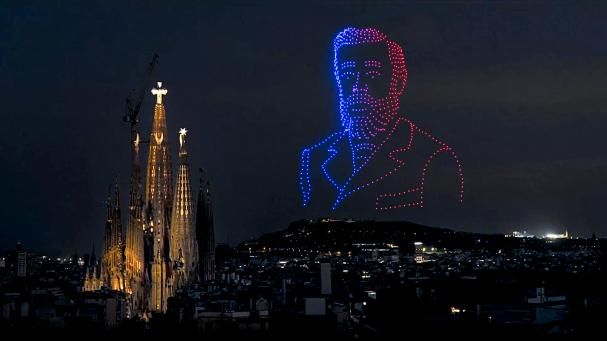
La Sagrada Família has been under construction for 144 years. Antoni Gaudí died in 1926, yet we still call it “his cathedral”. He didn’t lay even a tenth of the stones that make it up. He designed it, his whole life — that much is true.

La Sagrada Família nearly complete, June 2026

The same thing happens with video games. Audiences love attaching a single name to a work. It’s a cognitive shortcut: it’s easier to remember a face than an org chart. Miyamoto is Mario. Kojima is Metal Gear. Molyneux is Fable.

The name on the cover represents the original vision, but the game is the result of a building site.

The new Fable

Peter Molyneux is the perfect example. For twenty years he was the face of Fable: its promise, its vision, its name. Then Lionhead closed. Microsoft handed the franchise to Playground Games. Molyneux is gone.

Yesterday the gameplay demo for the new Fable dropped. Have a look:

Fable – Gameplay Demo (2025)

The game seems to carry forward the fantasy — the storybook England, the dark humour, the flawed hero — that Molyneux lit the spark for decades ago. But it’s being built by different people, at a different studio, with a different budget.

I’m a little worried, actually, given that Molyneux’s target audience was kids like me. And the freedom on show in the gameplay video assumes a type of player quite different from whoever buys Fable on the big consoles. Those people are on Roblox and Switch, not PS5 and Xbox.

What the visionary actually leaves behind

If the game isn’t “made by the director”, then what exactly is an auteur’s contribution?

Two things, mainly.

The first is the fantasy: the emotional promise that the player is chasing. What the player becomes while playing. In Fable, you become a morally ambiguous hero in a world that doesn’t take itself too seriously. That feeling is Molyneux’s signature. Whether he’s there or not, the new team is going after it — even if they’re steering away from black-and-white (good versus evil) and leaning into grey. Moving with the times, I suppose.

The second is the design pillars: the principles that guide every single design decision, even when the original author isn’t in the room. Gaudí didn’t need to be alive for his vision to be followed. What mattered was that he had set it down with constraints clear enough to hold up across decades of subsequent interpretation.

Directors direct the vision. Game designers don’t execute it — they facilitate it within the team. Game design is a constant negotiation:

  • between the original vision and what the technology makes possible (any game worth its salt always has some kind of technological leap baked in)
  • between the designer’s intent and how it’s read by the player and the rest of the team
  • between what you want to do and what you can actually ship in time.

Every programmer who decides how to implement a mechanic is doing design. Every artist who figures out how to make a space readable is doing design. Every level designer who places an enemy is doing design. The game designer isn’t the one holding the whole thing together.

Gaudí started the building site. The architects who came after him interpreted it, completed it, sometimes corrected it. The Sagrada Família is great because of that collective effort.

Video games work exactly the same way. The genius lights the vision. The building site — made up of hundreds of people with different trades, different skills, different perspectives — makes it real.

The next time you say “Miyamoto’s game” or “Kojima’s game”, it’s not wrong. It’s just incomplete.

Like saying “Gaudí’s cathedral”.

Ocarina of Time: A Masterclass in Designing a Tragedy

This post was originally written in Italian by Paolo Gambardella. It has been translated by an AI agent and may contain inaccuracies.

There’s an article by Renan Fontes on Goomba Stomp that analyses The Legend of Zelda: Ocarina of Time as a classical tragedy. Link loses his childhood to save a world he can never return to, and even when Zelda sends him back in time, that act is the final confirmation of the loss.

It’s worth a read. I came back to it when the remake of this all-time classic was announced.

The tragic mechanism

The core of Fontes’s argument is straightforward: Link is a war orphan, already separated from the Kokiri before the story even begins. The Sword of Courage punishes his impatience with seven years of sleep. Waking up as an adult in a ravaged Hyrule, he has become someone else.

At the end, Zelda sends Link back to the past — but Navi leaves at exactly that moment. Even if you could go back to being a child, you would no longer be the same. You can’t unlive time.

That feeling doesn’t come from the writing itself, but from how the game was built around a coherent emotional identity, and from how the memorable peaks were distributed with care.

Peak-End: the moments that stay with you

Peak-end psychology tells us that people don’t remember an experience as the average of every moment they lived through. They remember the emotional peaks and the ending. Everything else settles into the background, but doesn’t shape the overall judgement.

In OoT, the peak is probably Navi’s departure. It’s the silence in the Temple of Time as the world takes shape again. It’s Saria saying goodbye without knowing it’s a final goodbye.

A mediocre game would have put the emotional peak in the boss fight. OoT puts it in a quiet loss. The ending — young Link in the castle courtyard, Zelda watching from a distance — resolves nothing. It leaves a wound open. A wound players carry with them for decades. The same one that, for me personally, changed something fundamental inside.

Lesson: the most powerful peak often doesn’t coincide with the mechanical climax. If you want an experience to be remembered in a particular way, design the memory, not just the event.

The emotional promise

OoT has a precise emotional identity: heroic melancholy. The feeling that growing up costs you something you can never get back, and that courage won’t save you from paying that price.

Every element of the game is charged with that atmosphere. The music (Saria’s Song, the Bolero of Fire, the Song of Time) anticipates the action and then comments on it. The temples feel like places abandoned by someone who once loved being there. Hyrule Field at night is as vast and silent as a promise that might not hold.

When a game knows what its emotional promise is, every decision becomes coherent. The colours, the silences in the dialogue, the distance between characters — all of them are carrying the same feeling.

Lesson: alongside designing mechanics or systems, it’s worth naming precisely the emotion you want to leave behind. Something specific. This can lead to uncomfortable conversations with the team or with management. But it matters.

Player Need Satisfaction: why the loss hurts

Self-Determination Theory breaks down fundamental psychological needs into three areas: autonomy (I feel like I’m acting), competence (I feel like I’m improving), relatedness (I feel like I belong).

OoT is a tragedy in part because it satisfies all three — and then takes them away before the credits roll.

You have autonomy: you choose where to go, when to return, how to use your tools. You have competence: you grow up, defeat impossible enemies, master magic. You have relatedness: Saria, Navi, Malon, the sages — a web of connections built piece by piece.

Then the game pulls it all apart.

  • Saria is trapped in the forest forever
  • Navi leaves without explanation
  • Zelda sends you back, but the version of you who lived through those seven years can’t come with you.

Lesson: loss in a game hurts in proportion to how much the player has invested in building something. If you want a tragic ending to land with real weight, the psychological needs have to be fulfilled before they’re taken away.

Conclusion

Fontes wrote a narrative analysis. But underneath it there’s something more interesting: OoT works as a tragedy because the design choices and the narrative choices are pointing in the same direction. That’s coherence. And I’m glad my daughter will get to experience this remarkable game in its updated form.

Read the original article on Goomba Stomp

Action, Response, Reaction, Consequence, Implications

This post was originally written in Italian by Paolo Gambardella. It has been translated by an AI agent and may contain inaccuracies.

When we’re designing a new game, we very often look for verbs that describe what players can do. One way to stress-test those actions is to use a framework that forces us to think through every possible consequence.

  • Action: describe an action in three words or fewer
  • Response: the immediate feedback the system gives the player to confirm their action has been registered
  • Reaction: other entities in the system need to react to the action in order to give it meaning
  • Consequence: the game’s economy must be affected by the action, even if only slightly
  • Implication: wherever possible, the game’s narrative should also be something the action can influence

Players are the ones who make the story — we simply give them the tools to do it. That’s the best way to think about narrative, in my opinion.

Let’s look at a concrete example:

  • Action: throw a rock
  • Response: sounds, particles, objects hit and broken
  • Reaction: one NPC runs away in fear, another starts attacking us…
  • Consequence: there’s now a rock on the ground, plus scattered debris that could be picked up and used by the player or by NPCs
  • Implication: if you break something that belongs to someone, your reputation might take a hit until you’ve paid for the damage

Not every action needs to be put through this lens, but I do think games today should be thinking about these things — it’s what allows a system to respond meaningfully to whatever a player decides to do.

A useful cut rule: when you can’t afford to implement all five layers for an action, ask which layer is load-bearing for that specific action. Response and Reaction are almost always required — without them the action feels dead. Consequence is required if the action involves a resource. Implication is a bonus unless narrative is your core loop. Stripping a layer intentionally is fine; stripping it because you forgot to design it is where games start feeling hollow.

Digital Eye Strain: The Hidden Cost of Hyper-Focus

This post was originally written in Italian by Paolo Gambardella. It has been translated by an AI agent and may contain inaccuracies.

These days I’ve been getting to grips with the agents from Anthropic and OpenAI, and I can genuinely see improvements in the speed and quality of my work. Where I used to need developers to build prototypes, it’s now much more straightforward to tackle that kind of challenge with Claude or Codex guiding me along.

That said, I’ve recently been noticing a strange heaviness in my eyes by the end of the working day. This weekend was rough, especially Saturday. It felt as though something was stopping my eyes from even moving properly, on top of a general dryness and fatigue.

I found out — credit to Gemini, actually — that this is a pretty common problem. Using AI tends to pull us into states of hyper-focus.

Having to think forces us to take breaks

The first thing worth noticing is that before, I had to take lots of breaks to think things through, look up tutorials, or browse various forums. Everything was slower, obviously, but that also meant natural breaks for my eyes and spending longer on the same block of text.

Now, though, working with an agent means receiving large chunks of text in quick succession. You have to skim through them fast to separate the useful parts from the hallucinated ones, and more often than not you fire off another question straight away — which brings you back to reading another big wall of text.

AI interfaces with dark mode, VS Code with light mode

I’ve moved to using VS Code to manage my agents, since I find it better for keeping an eye on token usage and for other perks like keyboard shortcuts and so on.

The thing is, AI interfaces generally use a dark background, whereas in VS Code I prefer a light one. So I’m constantly switching between the two, which puts extra strain on my eyes.

It seems that parsing text-heavy content like code also makes us blink around 60% less than normal. Medicine calls it Digital Eye Strain, and it’s an increasingly widespread issue.

I hope this post helps others identify the problem. The fix comes down to:

  1. Sync your fonts and sizes so everything is large enough to read comfortably
  2. Reduce contrast where possible, and avoid constantly ping-ponging between different windows
  3. When the AI gives you a long explanation, close your eyes and listen to it instead
  4. Use CLAUDE.md or instructions.md files rather than chatting back and forth with the agent, to cut down on the number of iterations