One of the things I need when I start a new project or when I work on a new feature, is the time of seeing ideas settling down.
Good ideas are goods after 2-3 days too. After a brainstorming is better to let the board rest a couple of days. Then you and your team will return back to it with a fresh mind and select the best ideas.
And then, again, you let the selection settle down.
It is not always possible, but I noticed that it is way better let ideas settle down. Sometimes you improve them. Some other time you see you enthusiasm as a team go down and reality force (similar to gravity force) do its job.
The Villager is the first character that the Player of Clash of Clans meets opening the game for the first time. I see margins of improvements for this specific character. She helps the Players understand the game’s basics, but especially in the second part of the tutorial she is too formal. The Players will learn the core loop of the game with the help of standard messages. My goal is to improve the narrative function of this character making her more memorable.
The Lens of Problem Statement
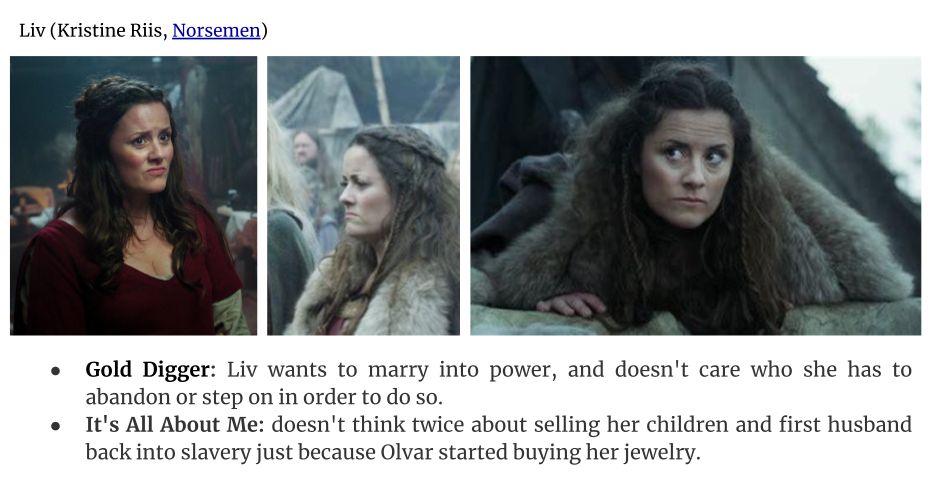
The main reference is taken from one of my favorite TV shows: Norsemen. Particularly, my intention is to use as a guide the character of Liv interpreted by Kristine Riis.
“Can Liv from the Norsemen become a character capable of engaging the newbies of Clash of Clans better than the Villager?”
Problem Statement
Resuming:
Target: Newbie Players of Clash of Clans
Challenge: transform Liv in the new Villager
Playtest: observe people that never played Clash of Clans react to the new tutorial and check heuristics
Ideation
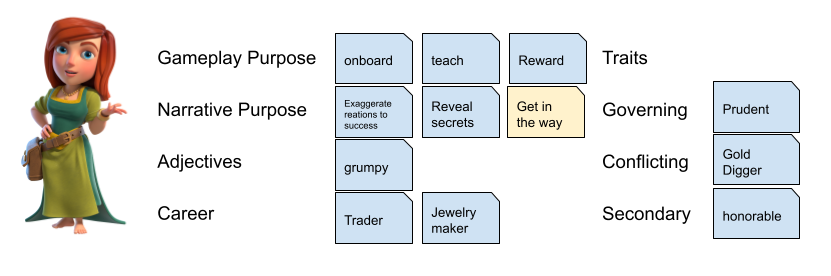
I created a brainstorm framework using chapter 6 of the book Game Writing – Narrative Skills for Videogames. Mr. Andrew S. Walsh writes an essay on game characters. The chapter invites game writers to reflect on the Gameplay Purpose VS Narrative Purpose of the character we create.
Summary of brainstorming process with ideas already selected
The new Villager should onboard the Players, teach them the game’s basics and also reward them when they do good.
Narratively speaking, if I imagine Liv from the Norsemen having to do that:
I imagine pretty exaggerated reactions toward the success (she is capable of doing anything for her status).
I imagine her getting a little bit in the way of the Players, in order to achieve what she wants.
She may also reveal secrets, things she believes she only knows.
Thinking in adjectives, Liv is generally grumpy (except when she wants something). Grumpy can be funny for the Players, let’s keep this adjective for her personality.
Regarding traits, my brainstorm was focused in finding the right governing, conflicting and secondary traits. After reflecting, double checking the pre-existing tutorial dialogues, I believe that the fact that Liv is a gold digger can be a good reference as a conflicting trait. So I decided that the governing one should be something more like Prudent: showing care and thought for the future. I think that it is a positive trait, since this character will also show the future of the game to the Players, in the revised tutorial. In order to further mitigate the “gold digger” trait, using the same book as reference I opted for “honorable” as a secondary trait.
Final Touches
I notice that the last drawing of the villager has a collar. So I looked for Viking professions and I found the trader and the jewelry maker pretty interesting for my purpose.
Finally, a good character has a name. I looked for Viking names and their meaning and I found an interesting link. The name Brita means ‘dignified’ or ‘noble’, which fits the personality of the new Villager!
What’s next?
Time to revise the dialogues of the tutorial and see if Brita may work the way I am thinking of her.
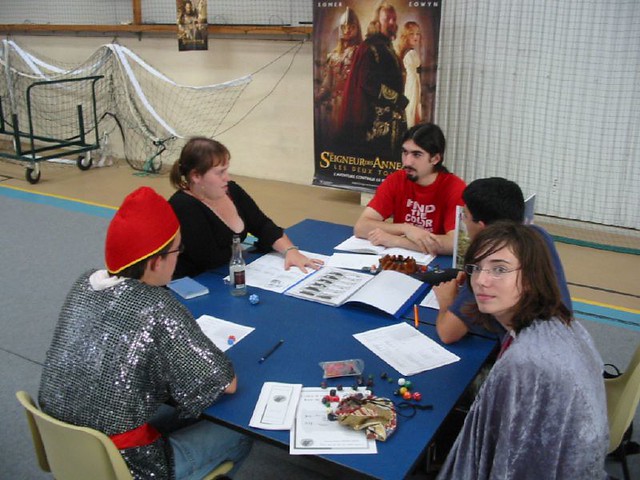
There is something that I have always missed out while playing role playing video games: interpretation.
Producing a story with many branches and possible endings costs too much, then you have to translate it in many languages. That is simply not viable. Reproducing that feeling of “do whatever you want” that is present in tabletop role playing games is hardly achieved by the videogames of today.
You will also need a human (dungeon master) to adapt the scene and the story to the spontaneity of the moment.
What we have
What is possible right now is to provide tools for the people to connect together in a server. Create and explore virtual worlds, also in real time.
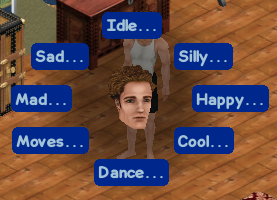
Having a customized avatar that can interact with things and make gestures is also pretty suitable nowadays.
I was just thinking that maybe those new technologies which promise uniqueness and decentralization may grant tabletop role players being rightly represented inside a virtual community.
The journey
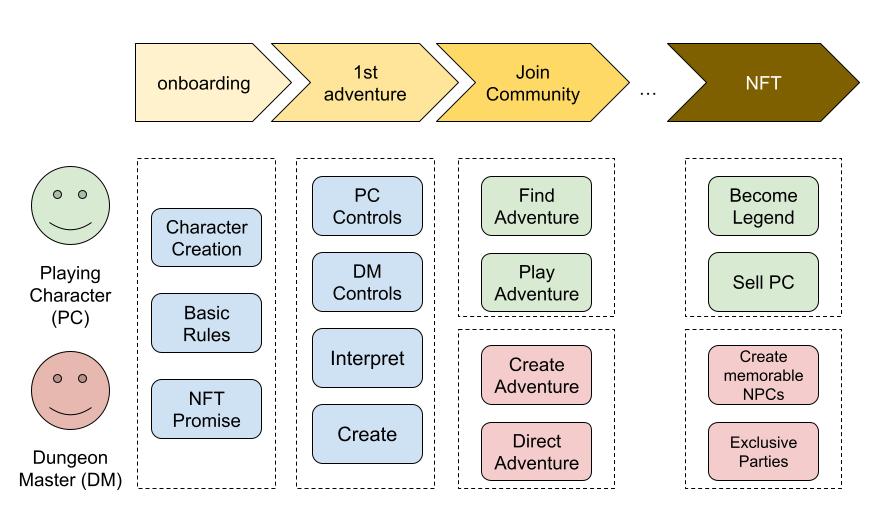
You start playing some designed adventure, just to get in touch with the controls and functionalities from a Player standpoint. Then you can look for your first party.
When you reach a certain status in the community, playing or mastering stories, the game government (developers) recognize your contribution by issuing NFTs.
If you are a player, the more you play, the higher the value of the Character (PC) represented by the NFT. You can sell it and start with new characters. New players may decide to buy a PC and skip the process of getting noticed, for instance. Developers earn a part of every transaction.
If you are a DM the Worlds and Stories you create will become publicly visible and free for everyone. You may want to pay for the developers to issue you a World-NFT or Story-NFT. Having one of those you can decide to let parties having an entry fee to your adventures, because you got a name in the community. As a dungeon master you should also create and use NPCs. The more you use those, the more your Players will be able to get in touch with them and enrich their background. Developers may decide to issue you an NFT to the highly recognized NPCs inside of the community, encouraging you to create meaningful NPCs.
Your creativity and interpretation, in that way, can be truly compensated!
Yesterday a contact on LinkedIn asked for help because he is not able to find any job sending resumes to companies. I told him that that system is completely broken. To me, in fact, it is. I suggested him to focus on his job, to do the job. Then the salary will find him. I am pretty sure about that, especially in a talent eager industry such as the games industry.
Today I read the same guy saying that he would like to create a network of people who can donate maybe 1 euro for him to research and learn new skills everyday. On the same network, on LinkedIn, which is a professional network.
If I imagine to be a company recruiter and I read something like this, in this exact sequence, what can I think about this guy?
Creative work is very different from performing creative activities. If you really want to work in a creative industry like the games industry you should really show off your ability to solve problems, from one side, and be professional from the other side. If you can, you should also worry about what you are sharing with your community.
Working in the games industry is not having creative freedom or being in a hippie community. This is a business that moves billions. You should constantly do the job and learn new things to stay in line with the times. You are there to create serious value bringing fun to people.
It is what I think. In fact, any software industry is a concept. An idea, an adaptation of something physical that does not have a concrete form in our context.
People does exist. I mean, people making software. People making games. So why do we care so much about the industry? People matters, not abstract concepts.
Life is a great adventure, and as every great adventure you need people to live it fully. Good characters for your plot. Good writers. We should care more and more about the well being of the people of the industry.
It is really hard to spot the future and make predictions. Hard and funny at the same time. Funny because if they work, you told it. If they do not realize, you just stay in silence and nobody cares.
For 2022 I don’t know what will happen, of course. The market is growing but its growth is slower. The Pandemic probably is coming to an end and people will enjoy different forms of entertainment.
What I can say is what I see right now. I see that the interest toward campfires is growing. For campfire I mean a virtual and small virtual place where people share a common interest. The community around a game like Clash Royale, compared with Facebook for instance, can be considered a campfire.
Looking at new trends of Web3 and Decentralized Finance, I think that this interest for virtual campfires will join with the need of community creation. So that probably the next big thing in videogames will pass from there. Let’s take a successful genre: shooters. Those are successful on AAA, indie and free-to-play. I would probably look for shooters which permit to the Players create their own campfires (look at club features in mobile games) and create meaningful content for their campfire mates. I could apply the same reasoning to different genres too.
This year (and the past one, too) has been very fruitful on the M&A side of things. We saw a whole lot of companies being acquired or merged with others.
For the next year I hope to see the early fruits of all that movement. I would like to really see how big corporate can improve their portfolio giving always better experiences to the people.
Also, I hope to see more deals made with small realities. I am noticing that investors are always more betting on teams without a single game published. I suppose they bet on their own experience bias, because the founding teams are always composed by industry veterans.
Young talent has a lot to say, and also if I am aware that investors are not willing to trust newbies, I believe that corporates should. They were young and junior at some point. They know how hard is getting. And maybe they can delegate to young startups some quick prototyping or more in general activities which are not core to the business but still really important.
Simple is not easy, of course. I am writing this post because of the continuous DMs on all channels from small ad agencies who would like to have the help of some cheap designer in southern Europe to build what Mark Zuckerberg is building.
Instead of just adding their contact to the spam filter, I would like to give them a guide to build their Metaverse themselves. Let’s go!
Simple Step 1 – Have a team
Games are made with a complete team of people working hard together to serve some audience with a game product or service. If you don’t have a team already, it is very simple: you have to build one! You don’t want to pay a third party to build your core business, don’t you?
Simple Step 2 – Have a team that completes projects
You have to know that the vast majority of video games that are being produced right now will never be released. The reasons are multiple: no money, no people, no idea of the business are the main ones. Once you have a team, be simple: research small games and let your team make them. Let them prove they can complete a project from start to finish. Don’t be complex, don’t think in the CRYPTOMETACHAIN yet, think in just complete games.
Simple Step 3 – Have a team that completes projects and sells them
The next thing is to be able to market and sell your video games. That is not an easy task, statistics out there speak clearly: more than 90% of video games never get their investment back. Before conquering the World with your fantastic metaverse on the crypto whatever you may want to assure that you know how to sell your games.
Simple Step 4 – Have a team that completes projects and sells so many copies of them that creates an intellectual property
Apart from passing fashions, one thing is clear regarding metaverses: they are virtual places where real people value virtual things equal or greater than real objects. For a metaverse to be really successful in terms of revenues you may want your Players to receive and create great stories on your platform. If you have a strong IP such as Super Mario or Sonic, you will more probably attract the interests toward your platform more than the other metaverse done by one of the richest men in the World. Which is clearly not your case, because otherwise you were not reading these words.
Remember: simple is not easy. In fact, those are very hard steps. Making video games is not like playing video games, but it can be very simple: is just a matter of controlling your ambition according to the resources and the people you have to realize them.
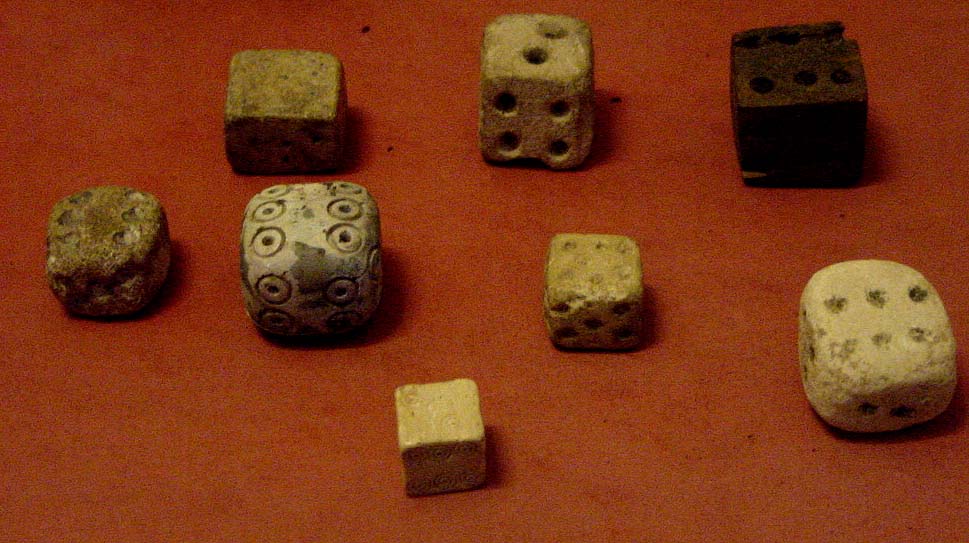
This truth is the basis of many of the first games that humans have played. I believe many have seen artifacts of ancient dice at some exhibit in the city.
Many people today condemn games that include gambling in their experience. “It’s just gambling, it’s not a game!”
And who are you to decide what a game is? To me it’s very simple: if there is a form of fun we can consider it a game. If people can learn something new without dying in the test, we can consider this test a game.
Gambling games, play-to-earn games, they are all games. They all offer their own form of entertainment.
Can a game ruin people? No. People ruin themselves. Accept it. People are a lot smarter than you think. Those who fall into addictions do so for a series of personal problems. It is impossible for a game, or any product, to be able to manipulate any human being.
Yesterday I was reading an interview to a games industry leader in Barcelona. He was speaking about the play-to-earn games and predicting how companies will behave in 2022. He said “it will be a blood bath”.
The other day I was listening to the video channel of a famous industry expert. He was talking about leadership and defended openly the need of “being cruel” in manage people and projects. Not hold the hand, for instance, when someone doesn’t work. Just fire them.
If we really want to have a better industry, we should double check the word we spread to the World. Our words are an important medium of influence of other people. We are all responsible for that.
When we say words, people listening us interpret our speech with their own perception. Perception almost never is equal reality. Perception imposes over our own realities. We are responsible, then, for everything we say and for how we say it.
When you say blood bath, I propose high competition. High competition is safe, is normal in our system and blood baths sadly happen every day in our World. When you say “lead with cruelty” I propose you to lead with patience. The same patience that built the great companies that today publish the greatest game we play.
We use cookies on our website to give you the most relevant experience by remembering your preferences and repeat visits. By clicking “Accept”, you consent to the use of ALL the cookies.
This website uses cookies to improve your experience while you navigate through the website. Out of these, the cookies that are categorized as necessary are stored on your browser as they are essential for the working of basic functionalities of the website. We also use third-party cookies that help us analyze and understand how you use this website. These cookies will be stored in your browser only with your consent. You also have the option to opt-out of these cookies. But opting out of some of these cookies may affect your browsing experience.
Necessary cookies are absolutely essential for the website to function properly. These cookies ensure basic functionalities and security features of the website, anonymously.
Cookie
Duration
Description
cookielawinfo-checkbox-analytics
11 months
This cookie is set by GDPR Cookie Consent plugin. The cookie is used to store the user consent for the cookies in the category "Analytics".
cookielawinfo-checkbox-functional
11 months
The cookie is set by GDPR cookie consent to record the user consent for the cookies in the category "Functional".
cookielawinfo-checkbox-necessary
11 months
This cookie is set by GDPR Cookie Consent plugin. The cookies is used to store the user consent for the cookies in the category "Necessary".
cookielawinfo-checkbox-others
11 months
This cookie is set by GDPR Cookie Consent plugin. The cookie is used to store the user consent for the cookies in the category "Other.
cookielawinfo-checkbox-performance
11 months
This cookie is set by GDPR Cookie Consent plugin. The cookie is used to store the user consent for the cookies in the category "Performance".
viewed_cookie_policy
11 months
The cookie is set by the GDPR Cookie Consent plugin and is used to store whether or not user has consented to the use of cookies. It does not store any personal data.
Functional cookies help to perform certain functionalities like sharing the content of the website on social media platforms, collect feedbacks, and other third-party features.
Performance cookies are used to understand and analyze the key performance indexes of the website which helps in delivering a better user experience for the visitors.
Analytical cookies are used to understand how visitors interact with the website. These cookies help provide information on metrics the number of visitors, bounce rate, traffic source, etc.
Advertisement cookies are used to provide visitors with relevant ads and marketing campaigns. These cookies track visitors across websites and collect information to provide customized ads.