Skip to content

Category: Uncategorized

Good old days

This week I watched a couple of videos on PRAGMATA, a game coming out tomorrow on major high-quality platforms. Reviewers seem to agree that it’s a game made with courage, that reminds of the good side of PS3 era.

I just watched Street Fighter Movie trailer, and honestly: just the music (What’s Going On?) unlocks so many memories. A movie to watch, definitely.

The trend of this year is clear, companies and Hollywood invested the last year in legacy IP and CAPCOM is heading this in the games industry. Whether if they are creating new IPs, or making art with the strong IPs they have, they are clearly playing on nostalgia for their positioning.

Weapons, Pictos, Luminas

I am playing Clair Obscur: Expedition 33, and I cannot avoid to notice that there are flaws mainly under the gameplay/UX perspective. Also the GOTY is not immune to imperfections, and that’s actually one of the main reason why Players play games. We love imperfect things!

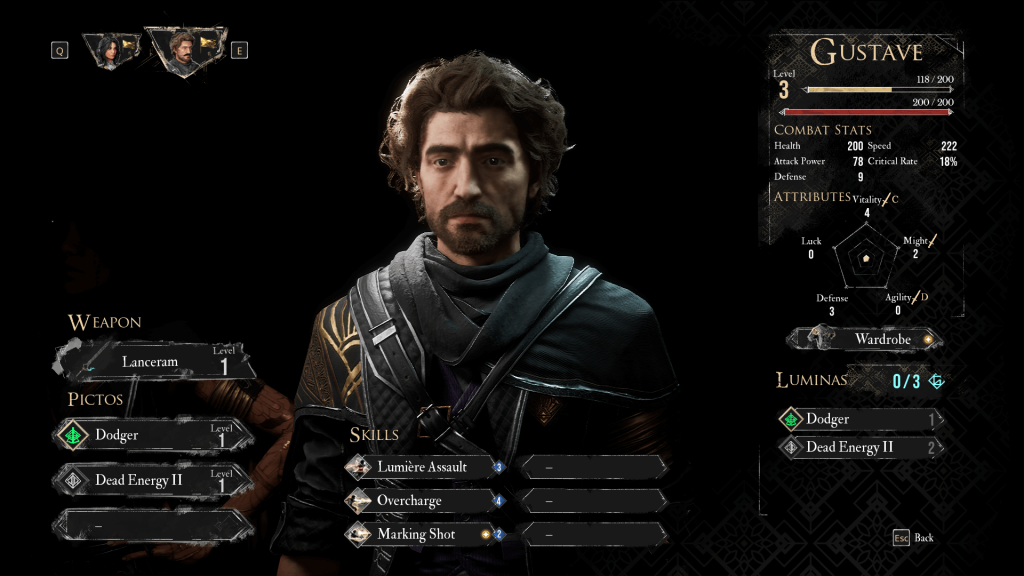
From this screen you can set up everything for selected character(s)

There is a system which is very interesting, it permits you to create different builds for your team. It opens when you decide to see the detail of one of the members of your team.

Weapons

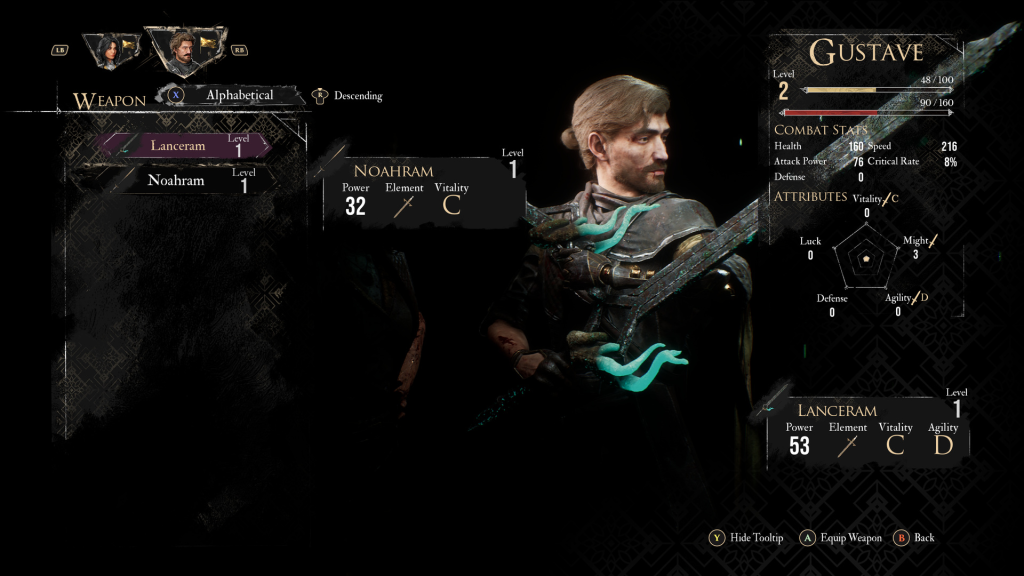
This is how the weapon screen at the start of a game

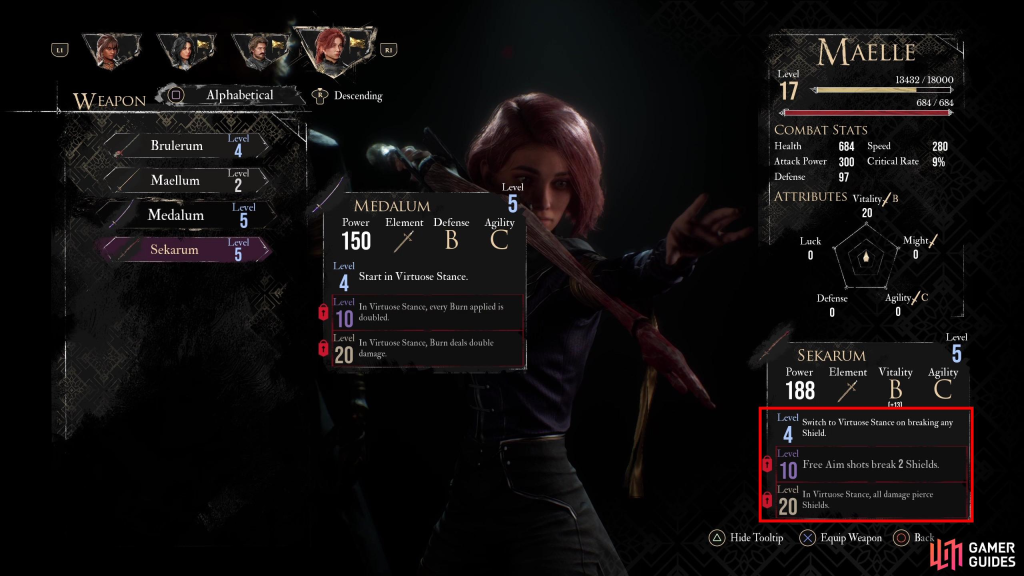
Each character has a set of weapons available. You can find weapons mainly by beating specific monsters (in the game they are called: Nevrons) like bosses or mini-bosses. These weapons are related with damage, but also with 1-2 stats each.

Weapons may offer extra benefits, and they can be leveled up at the camp. They are readable, and also different: you can see the weapon currently equipped in battle.

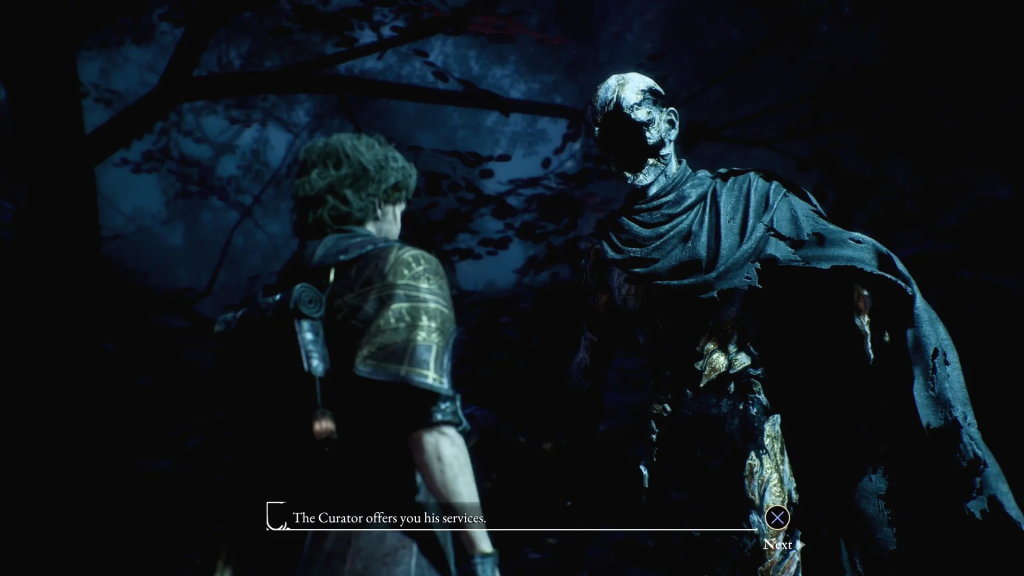
This creepy guy lets you upgrade your weapons at the camp

The struggle with weapons is that you cannot predict where they can arrive, how powerful they can become. So it’s hard to decide to invest in a specific one, especially sooner in the game.

This weapon looks cool, should I upgrade it or keep resources for later?

Pictos

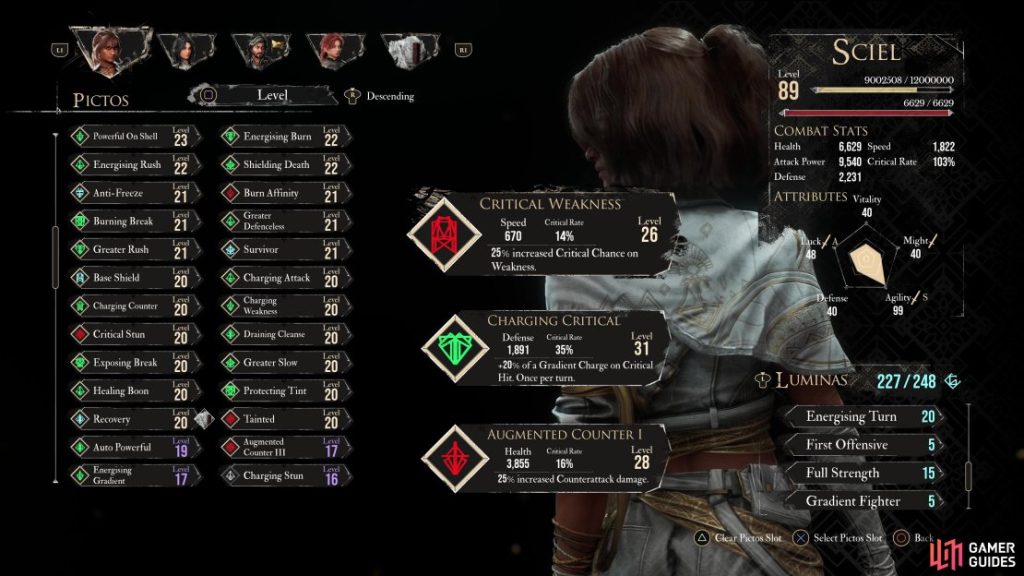
During the game, you collect Pictos, which are things you can put in 3 slots per character to get extra benefits on stats and effects in battle. In theory, you can study the advantages you have in certain stats and decide accordingly which Picto to equip to your character.

your slots are the ones in the middle. On the left, all the pictos you collected

In practice, you are overwhelmed by them, and it’s hard to make a choice of which to equip, in my opinion. Also because the stats they influence are not directly the main ones, but secondary/calculated. So you should be very knowledgeable about the game systems to understand properly this one. Also, when a Picto is equipped on one of your member, you cannot use it with another.

Luminas and Lumina Points

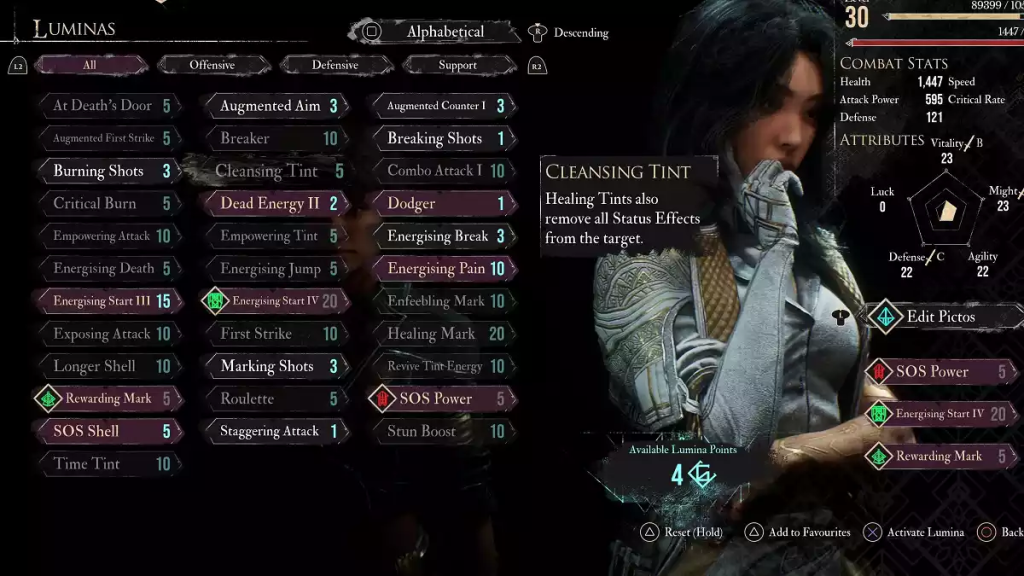
In order to solve the Picto issues and to encourage you to swap them continuously, Sanfall Interactive designed Luminas: using Pictos more than 3 times (in more than 3 battles) unlocks the possibility to use their special effect only using another resource, called Lumina Points.

This system is complex and hidden in the menus, I am sure that most players will ignore them completely and focus on mastering the dodge/parry mechanics in combat. I believe that the UX doesn’t serve well the system, which is already very complex to be fully understandable. Maybe in the future, with the integration of more systems to provide real-time guidance to the Players, these things will be easier to grasp.

Optimize Screen Real Estate

I was asked to review a game recently. The game was a simple puzzle game, something we’ve seen around. It had some cool level design, but the overall experience was underwhelming.

One of the thing I noticed is that screen real estate wasn’t used optimally. Buttons were too small, important elements weren’t visible enough and the camera was distant to the puzzles.

In the grand scheme of developing a game, developers -especially solo developers- can have blind spots. Everyone has their own strengths and weaknesses and this developer’s strength was more about the puzzle design.

When thinking about screen layouts and how to optimize screen real estate you need to be very deliberate in your decisions. There are a couple of things to take into account, such as the importance of each element in your game. You can break importance up in multiple segments, such as importance to functionality, importance to communication of function, importance of game feel, importance to theme, importance to story and there are probably some more factors that could possibly be added to the pile of importance.

In addition, games and particular genres and even particular devices have conventions that player’s expect. It is important to make very deliberate choices if you want to break those conventions, but in most cases you want to adhere to them.

After having a clear understanding of the importance of every element on screen, it is simply a matter assigning the amount of space it deserves. The most important element needs the biggest amount of space, and the least important elements need the least amount of space.

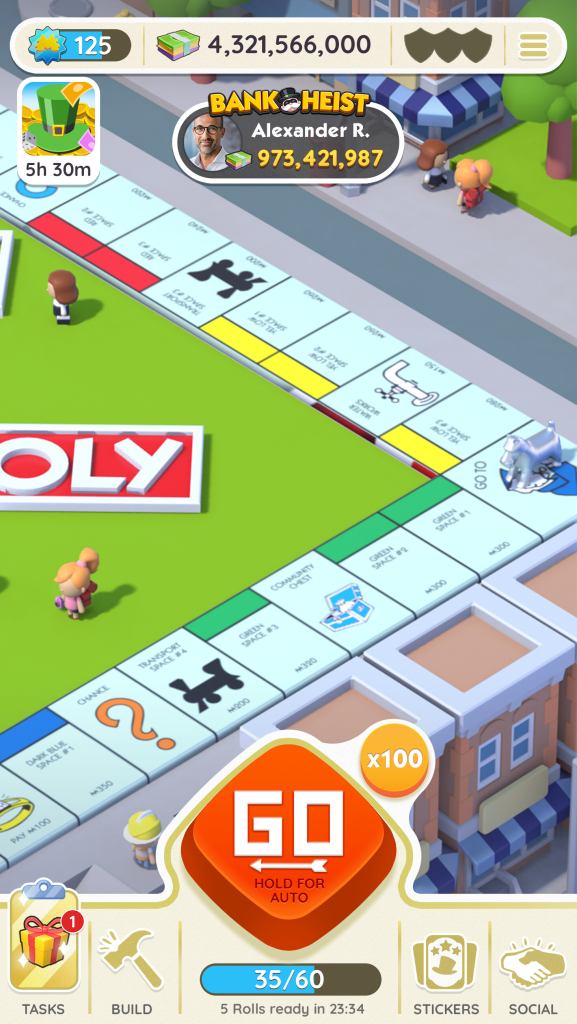
Consider Monopoly go and it’s visual hierarchy and the real estate every element occupies.

There are 2 main things that stand out, the monopoly board and the giant GO button.

It is logical and intuitive that the board is a big part of the experience and no one would question to make the gameplay field occupy the the largest space on the screen.

But it is undeniable that the big GO button is the center of attention. Your eyes are automatically drawn to it, due to its size and contrasting color. It communicates “press me” and “easy one button game”. It screams to the player that this is a deliberate design decision and players are drawn to these clear decisions.

Deliberate design is the key.

Don’t let circumstances decide anything about your game, every decision needs to be deliberate and conscious, as your players will feel it without them understanding why.
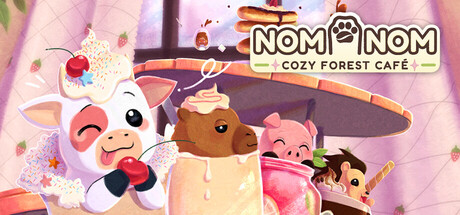
An industry friend of mine showed me this game called Nom nom Cozy Forest Cafè:

You own a cafeteria in the middle of the wood and you receive your first client, a racoon. Soon you will discover how to make coffee, with a simple rhythm minigame. According to your accuracy you will earn more or less coins. Then the game teaches you how to customize your cafeteria and you will discover a vending machine to earn extra coins. Then you will unlock the second customer, a frog, and continue evolve your cafeteria.

Core loop: prepare -> serve -> earn -> get new furniture and personalization options

There is no pressure at all, that’s why it’s a cozy game. For instance, a client may wait indefinitely while you customize your cafeteria or prepare items for your vending machine, and that’s no problem. If you don’t like the result of the minigame you can repeat it indefinitely.

The economy is very simple:

  • You earn currency by serving clients
  • You unlock new clients by progressing on an achievement system
  • Every client comes with a dish and a progression
  • Every time you serve the same client you progress on its personal bar and unlock new furniture
  • Every time you complete achievements you get new personalization options

Plus, this game was made by a single person, a former student of this friend of mine over the course of 3 years. She managed to stay focused for 3 freaking years on her vision without stopping. That’s a great achievement which very few people have in their bags.

Give it a try, give her some love!

Convincing NPCs

I am playing Where Winds Meet these days and there is a feature that let’s you talk freely with NPCs. I have tried a couple of things, some of them give you quests and things like that. It’s a cool feature, but I try hard to convince them doing something they cannot (like “follow me”, “go out and hunt bears”), and they find always an excuse to not do it.

The whole system is based on LLM, I don’t know which API they use, but I have to say that it’s fun to try convincing them.

Update on Sentendo

This week I decided to take down the Sentendo thing. If you’re reading for the first time, Sentendo is the name that I give to my small business of game design consulting. It means a lot to me, but it’s clearly not working.

I prefer from now on to go simply with my name and surname. Being seen as a brand can put some interesting client in a weird spot and they can go away. I prefer to be more natural.

I am finishing the deck to send to my clients, and it’s hard.

Can effective teaching inspire narrative design?

I love to teach. Every time I am allowed to do it, I do it. It can be videogames, it can be Computer Science, or math. I love to put that seed inside of people. And I honestly think I am pretty good at that.

I was reading an article on effective teaching that appeared on The Guardian some while ago. I am doing it because I am taking a language course in Catalan and I believe that the teacher is really good. And I am asking why is that good to me. So I need also to make my mental model, as always. Designer professional deformation, I guess.

I am also taking a 3 week intensive course on narrative design with Kim McAskill these weeks. It’s very interesting, so my mind makes analogies and connections of course.

Telling stories

Although narrative design is different from storytelling, the purpose is always the same. It is actually the same as game design. Telling something, telling a story. If you want, we always want that. We always want to tell a story, our job and profession is one way of doing it.

And teaching is also telling a story, but you need your students to learn. In games you need your players to have fun. And having fun means, at the end of the day, to learn. That’s the spark of my idea on how to import things from teaching to improve narrative design.

Ideas for a better narrative design

I will grab the points describe in the article linked above and adapt them to narrative design. That is a branch of game design that puts in relationship the systems with the stories, creating settings, worlds, people, characters and the way of deliver them (dialogues, cutscenes, set pieces, and so on).

Narrative design is game design, and game design always creates narratives.

Let’s go:

  • Know your subject -> Have clear how Players can reach their goals: the most important quality of a teacher is, of course, to know what he’s teaching. The most important quality of a good narrative design is to know what the players need to reach their goals.
  • Praise can do more harm than good -> Giving too many rewards early make the Players skip some important step for learning. Players may feel frustrated later and quit, as well as students that may suppose that the teacher will be good with them.
  • Instruction matters -> Stories matter: the quality of teaching has impact on the students. The same is valid for a story. Games do not need a story, but games with a story may literally change lives.
  • Teacher beliefs count -> Designer beliefs count: there is something personal and unique in every teacher and designer. Our way of seeing how to teach or how to create fun influences the outcome. There is no best practice or rulebook, there are beliefs. It’s personal, it’s unique,
  • Think about student-teacher relationships -> Think about player – designer relationships: the interaction of the teacher with the students have a tremendous impact on the climate of the classroom. In a similar manner, designers especially in small realities have the opportunities to create relationships with students.
  • Manage behavior -> Manage behavior! Study the characteristics of your students and the data of your players to be more effective.

New project: UEFN Good Ol’ FRAG

Starting today I want to explore more the world of UEFN. I played a little with the experiences you have available on Fortnite right now and… oh my goodness, they are complete disasters from a level design perspective. What are we feeding our kids??? what?? *dramatic*

So I had this idea: recreate the most beloved maps from classic FRAG multiplayers within Fortnite. I need of course to tweak for 3rd person these maps, but my vision is pretty much this: to recreate classics in Fortnite. Because I want the kids to grow with serious stuff! (and if I can generate some income meanwhile, better)

I started by going on Copilot to look for data:

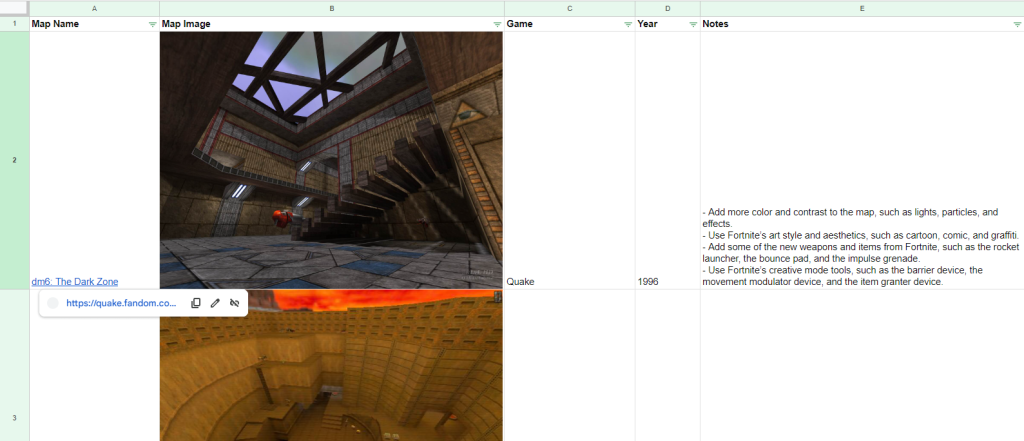
You are the lead game designer of a new project that involves Fortnite. Using UEFN, the project is to recreate the best maps that belong to classics of frag games (quake, unreal, and so on) in Fortnite. Converting them into modern versions. Make a table with the most enjoyed maps. On one column put the map name, on the second one a map image, third one the game, fourth column put the year and last column put notes on how to give them a modern touch

Prompt for Copilot

And I got a whole spreadsheet with a couple of tweaks:

I added some metadata and screenshots for the maps. So I am ready to start exploring classics!

Game design audit | find new ideas

Today I published this video on my LinkedIn profile.

Many companies struggle to find new ideas, so that I believe that it would be great to provide an audit on certain games to give them a starting point. This can become a subscription based service I can provide online.

The key to me is to start by playtesting your competitors to really understand why their games are working and what can be enhanced and improved. Then I complete my study by both playing the game for a week and studying its reviews. Finally, I create a game design audit. If you read this on my blog, here you have the audit for FREE.

What you gain in pre-production

I work for businesses, someone says B2B. My clients are usually medium-sized companies that are willing to find new formulas. New ideas to disrupt the market out there. And I think it’s a great choice for them to hire contractors like me for this stage. Someone calls it 0-to-1, but I still prefer the classic pre-production.

With internal teams, it is very hard to innovate, because of many factors. External contractors, instead, can help you find new ideas or variations to your ideas. You don’t have to pay the salary to an employee for this research, plus you engage with someone who is doing this every single day. I am looking at different challenges from different realities every single week of my life. My vision is broader than a common employee working on a single project every time.

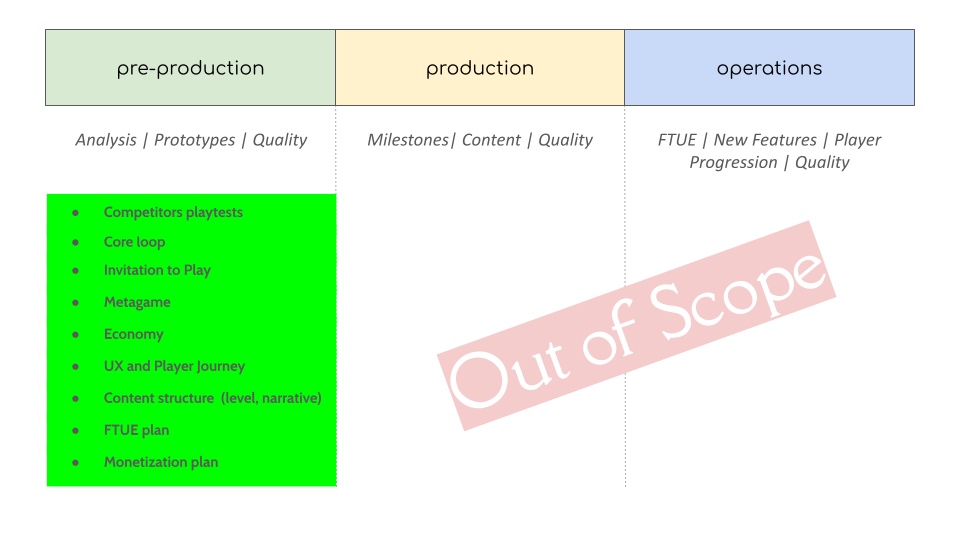
Because the games industry has changed a lot in recent years, many companies are looking for people that make the whole games from start to end, but I think this should evolve. We need specializations in specific development areas. Pre-production, production, operations.

Over the last few years, I think I acquired huge experience with the first stage, the pre-production. This is because of specific requests from my clients. My clients helped to build my little business. My technical skills let me focus on both vision/strategy and content (level design with Unity, dialogues, and so on).

  • Pre-production: this is where I operate. I help you find new ideas to work on.
  • Production: your team will develop the complete game, once you decide to go for it. Once you have the 1 of the 0-to-1 stage.
  • Operations: your team operates the game. Still, sometimes I do small consultations for new features that need pre-production. New ideas for service based games.

One thing that I put the focus on is on the fantasies and aesthetics (more on this in another post), but the most important thing to me is quality. Oftentimes people tend to avoid quality in pre-production to quickly pass to production. For good games, the duration of pre-production is 1/3 of the whole project. Imagine your development time is 3-5 years, we are talking of 1-2 years of pre-production. A good 0-to-1 is fundamental to go 1-to-1000.